Chill the Champagne, Pack the Pearls, Tune up the Bugatti
The title was the cry of the wealthy as they set off for the spas and beaches of Biarritz in the 1920-30’s.
For us, in the early 21st Century, this meant chill the Blancquette de Limoux (4 Euros), pack the Philippine pearls (they might be plastic, who knows), tune up the Ford Fiesta (a cereal box but not a bad one at that)!
Yes, for our last fling in France we decided to head south to the Spanish border and hang out with the glitterati of France.

The Road Trip
We first headed to Limoges to look at china. Yes, France, and in particular, Limoges is famous for china. It was on the way so what the heck we thought it would be a good place to wander the streets looking at china. Yes, it’s just an old fascination that goes back years when I loved making pottery and the life that went along with it. So it wouldn’t hurt to see what Limoges is trying to do to entice younger buyers. There was some incredible pieces but it would not have been a wise move to load up with china considering we were about to set off to sea in 6 months time and all that china would just end up on the cabin sole! So we wandered the streets of this old town and enjoyed the evening.

Limoges – love the windows. How long is this building going to stand?
After Limoges we headed off to see some old sailing friends that we hadn’t seen in 20 years. Jacqueline and Christiane are two sisters who have circumnavigated twice, lived and worked in French Polynesia, rounded the south end of Chile and crossed the Atlantic innumerable times. They just returned from a three-year sojourn to Brazil and back and have their boat up a small canal near Noirmoutier on the west coast of France.

Maris Stella in the mud
Their mooring is a five-minute drive from their house but it does have the disadvantage of not moving through mud at low water. So timing a weekend away has to be done with great care. Who knows perhaps we might get Sage up here one day.
We spent a few days with Jacqueline and Christiane re-connecting to water and the sea. I think living in the Montagne Noir made us seasick for the ocean. It was great to smell the salt water despite the low tides and all the smells associated. We managed to swim in the ocean each day

Our favourite swimming hole
eat seafood and re-ignite an old friendship
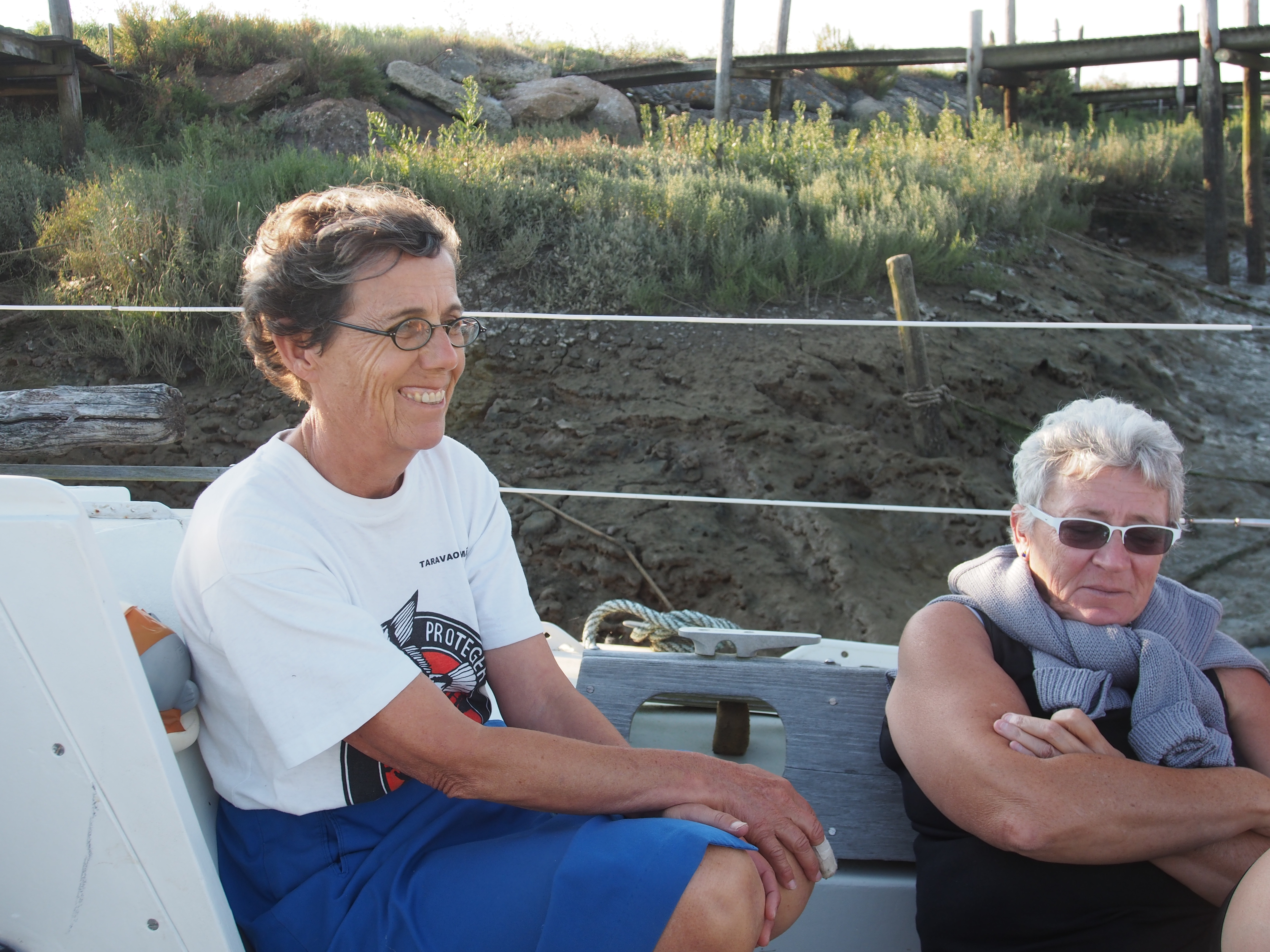
Christiane and Connie onboard Maris Stella
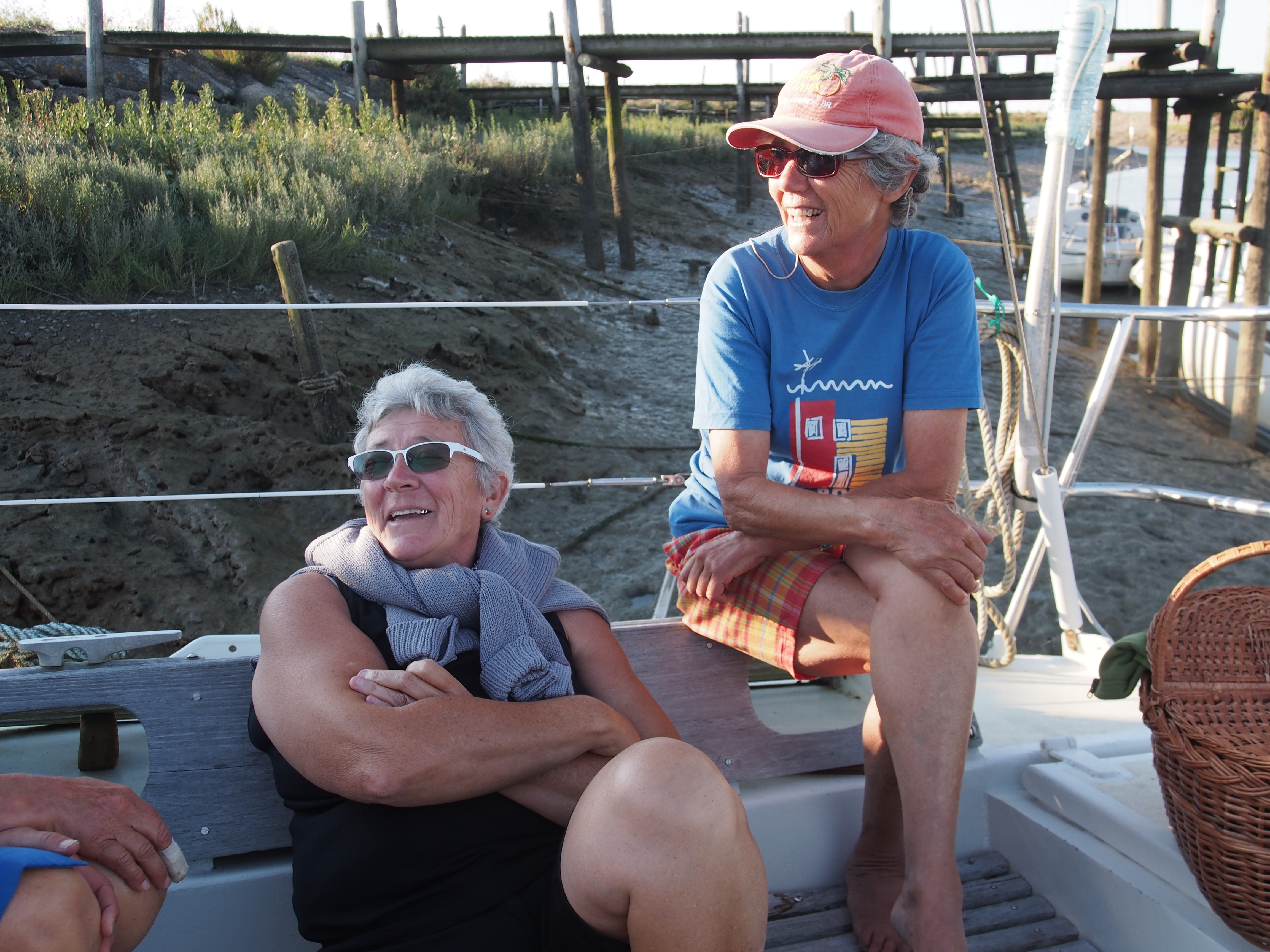
Connie and Jacqueline onboard Maris Stella

The Noirmoutier salt pans
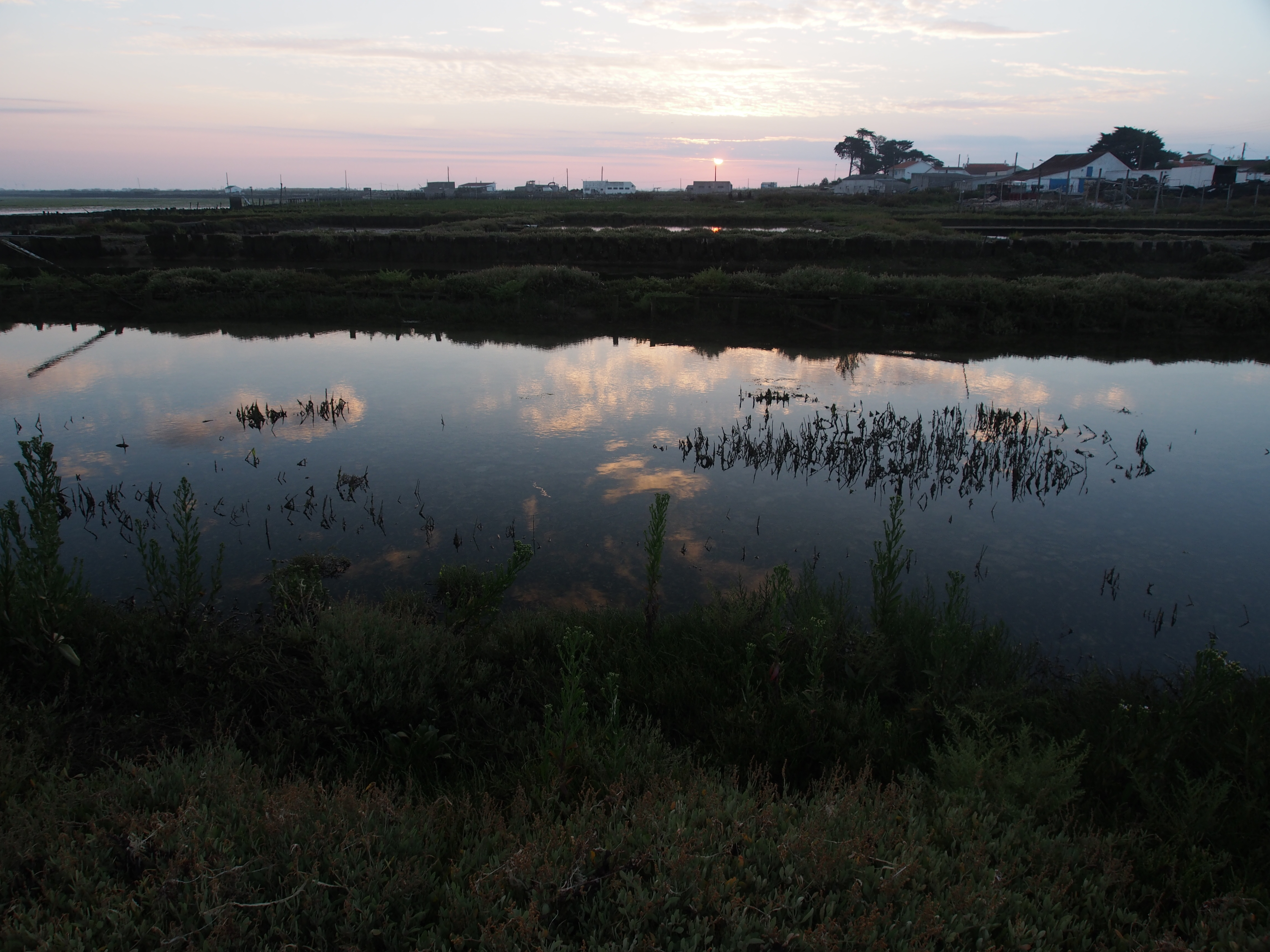
Sunrise in Fromentine as we’re leaving
But time was limited. We only had two weeks in which to make our last tour of France and we really wanted to see the west coast and get down to Basque country. So off we went with promises to Christiane and Jacqueline that yes we’ll sail Sage in to Fromentine soon.
Of course, before heading to Basque country we had to see some of the more famous ports of western France. Two particular places we wanted to see where Les Sables-d’Olonne and La Rochelle. They are famous in the boating world. Les Sable d’Olonne is the port where the single-handed round the race starts so we headed there first to walk the harbour wall.
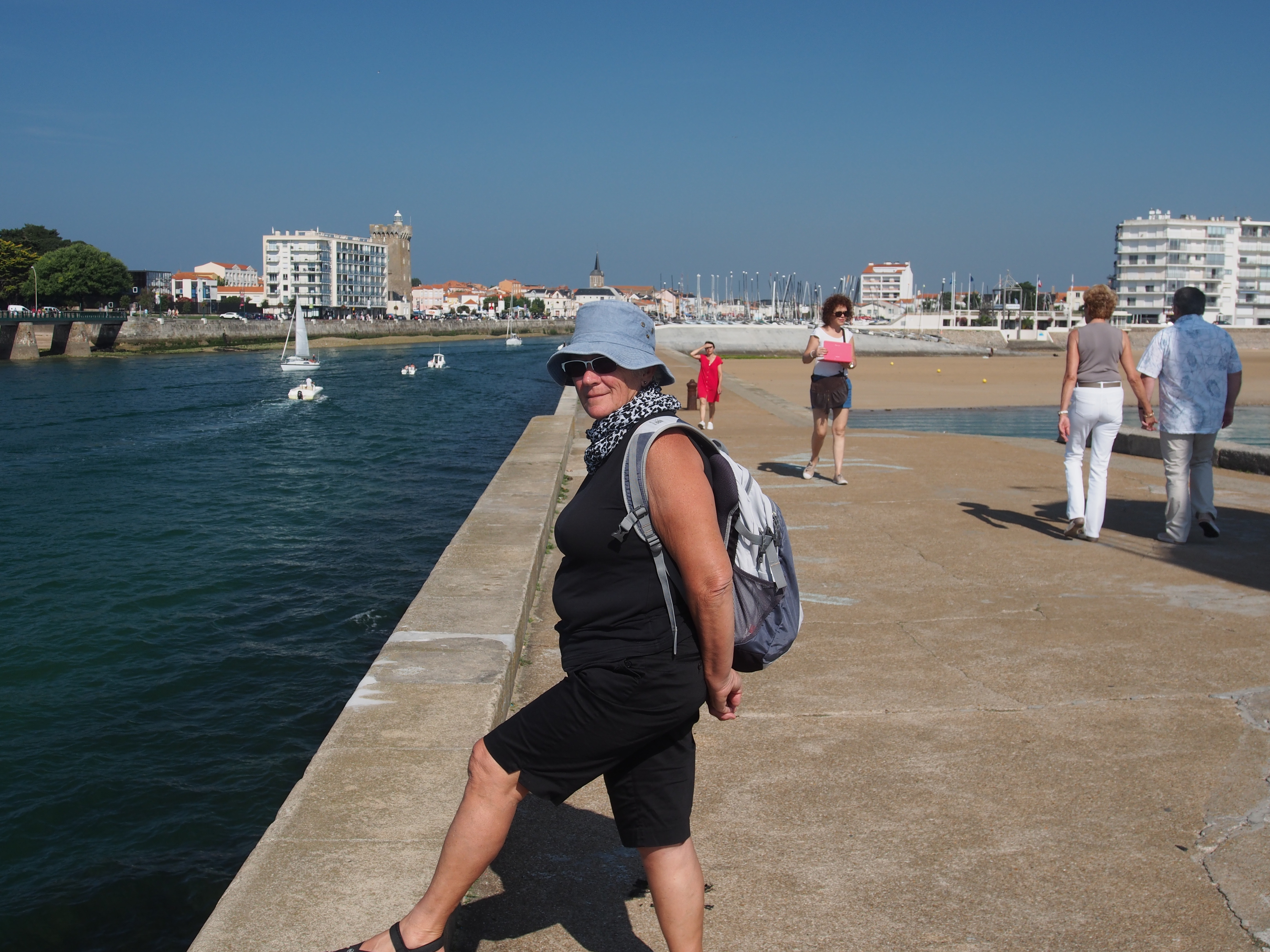
Connie on the breakwater at Les Sable d’Olonne
Check that one. Still time to make it to La Rochelle. Only a few kilometres down the coast we come to the historical town steeped in naval history. What a harbour. It has an amazing entrance that we would love to sail Sage between.

The entranceway to La Rochelle (take note of the flag of Quebec flying from the ramparts?)
So we spent the night walking the streets of yet another old French coastal town admiring the old buildings and sniffing at the wonderful smells coming across on the evening breezes from the numerous tourist restaurants in the harbour.
We made our getaway the following morning heading further down the coast to Biscarosse Plage. But first the ferry across from Royan to Solac sur Mer to avoid having to go in to Bordeaux (we’ll save this for a later date). Always on the look out for interesting boats we were drawn to a couple on the wharf in Solac Sur Mer. We just couldn’t decide which one was better for us.
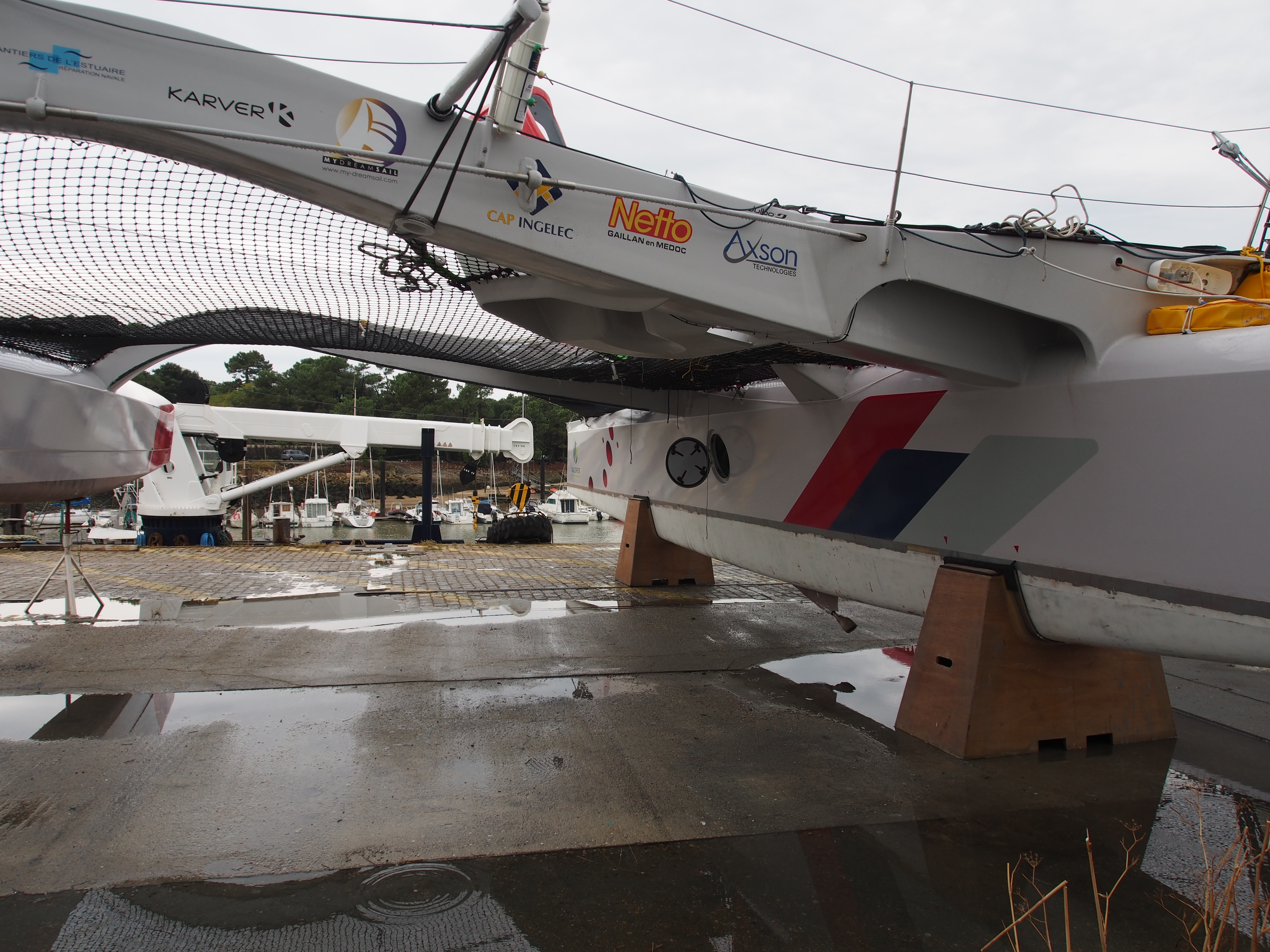
The go-fast trimaran
OR

The deep keeled ocean racer
In the end we put away the bank book and headed down the coast dreaming of sitting on the beach with a drink in hand to watch the setting sun.

The drink. The sunset. The beach
Okay we do see enough of these in Thailand but we are headed to the Atlantic soon so we just wanted to compare what sunsets in the Pacific and Indian Ocean compared to those in the Atlantic.
So the next day we headed down to Biarritz – the old watering hole for the wealthy of Europe looking for spa treatments, champagne, Bugattis and parties. Things have changed a little over the intervening 50 years but the area has not lost its charm. This is the beginning of Basque country and immediately the architecture changes and I only wish I had the contract to supply red paint.

Red, red and more red
Yes, Basque country is not the place you want to own a home in a paint it blue, yellow or green. Every house without exception uses white with red highlights. I believe it all comes from the love of the pepper called piment d’espellete. It originates from Mexico but is not a hot pepper and is used by the Basques in much of their cooking (and paint, ha, ha) and is a key ingredient in piperade.
But, yes, our goal of Biarritz was reached. It’s quite a change in scenery from the flat country of the west coast of central France. Here is the distance one can see the Pyrenees rising upwards of 1,550 metres. The craggy coastline is a warning to sailors of dangerous entrance-ways to harbours but the weather is gorgeous with sparkling waters and gorgeous beaches.
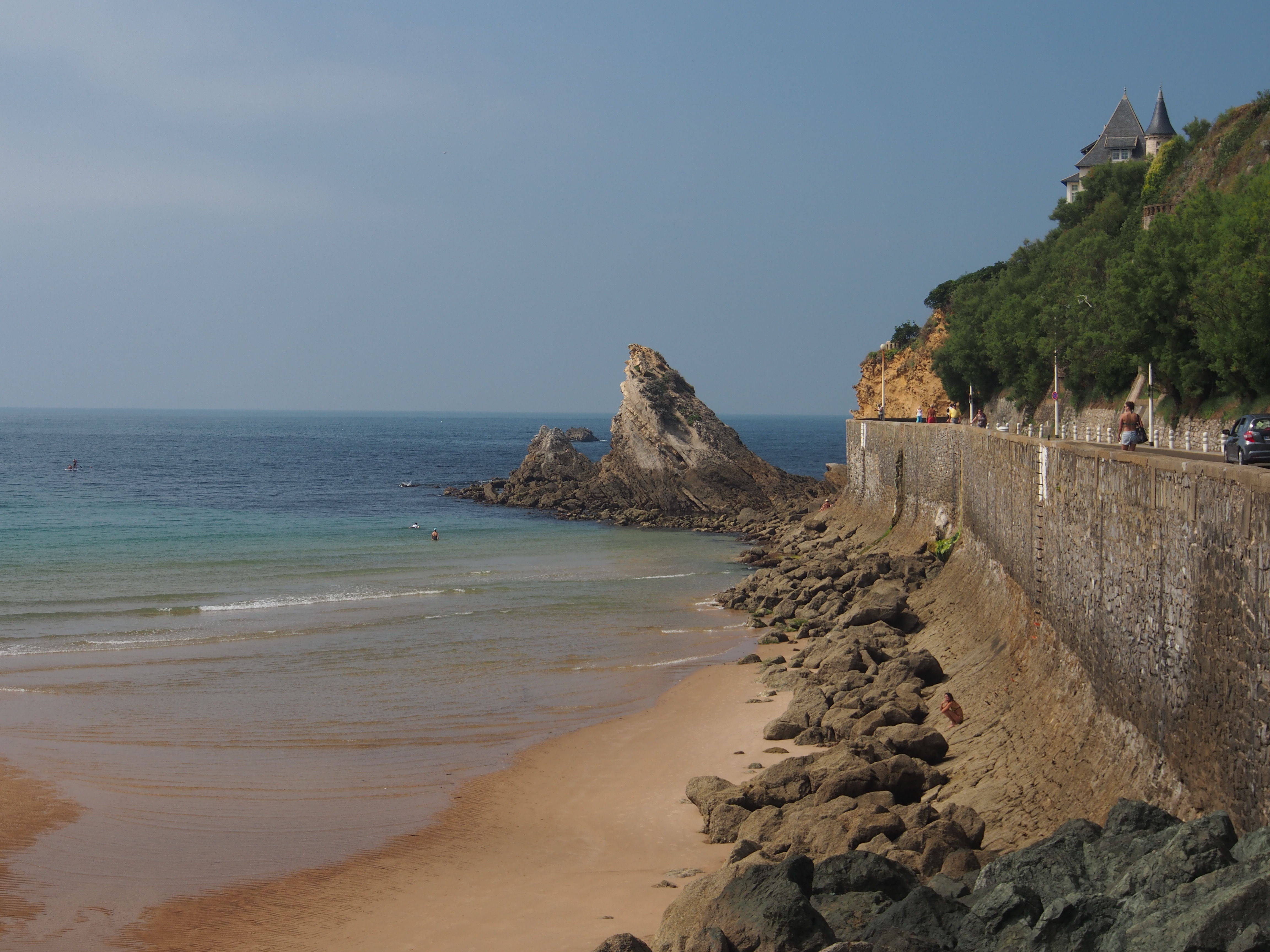
Southern shoreline of Biarritz
It’s also here that we find our fake Bugatti
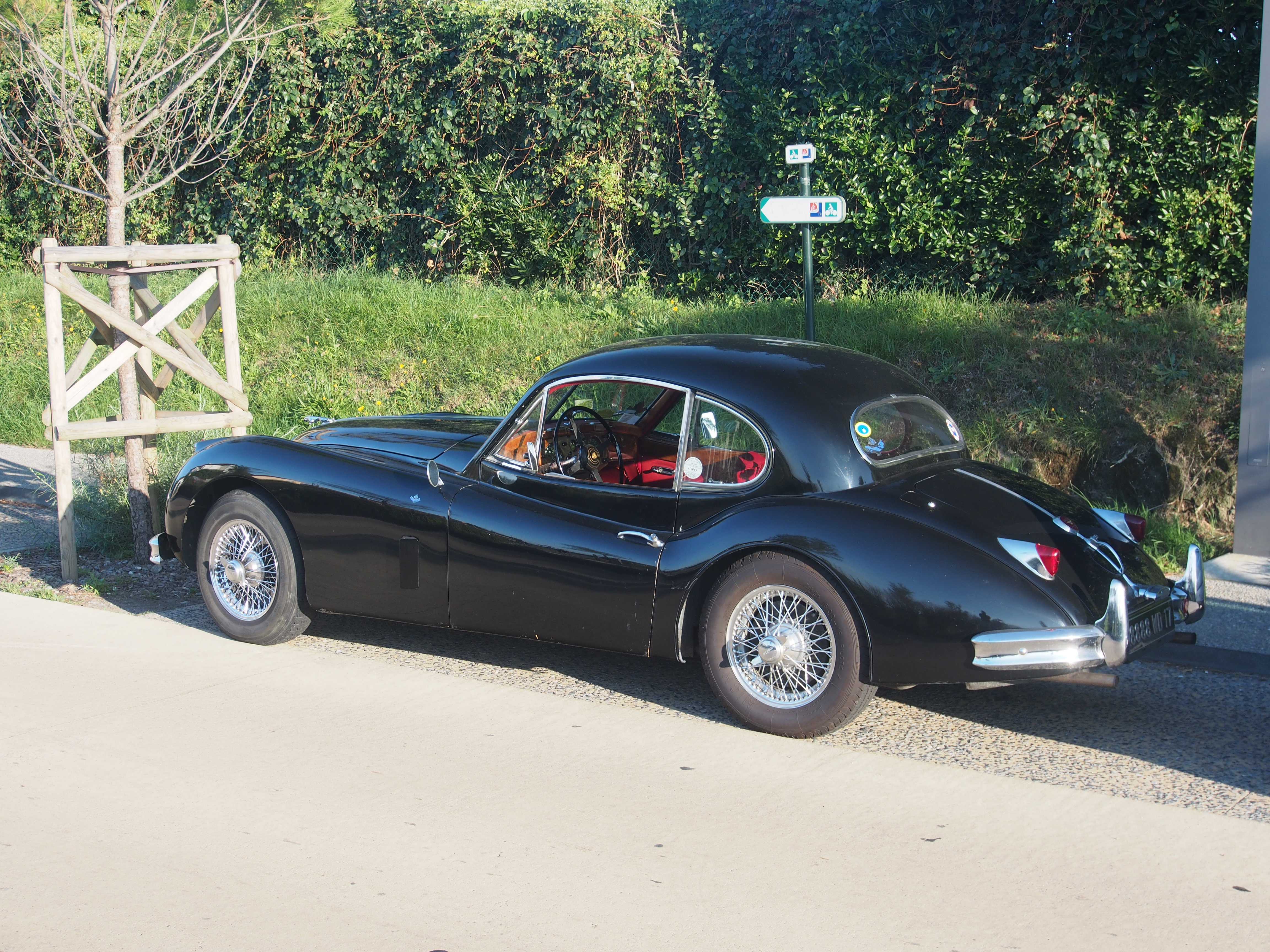
It’s actually a jaguar
And our Connie’s pearls
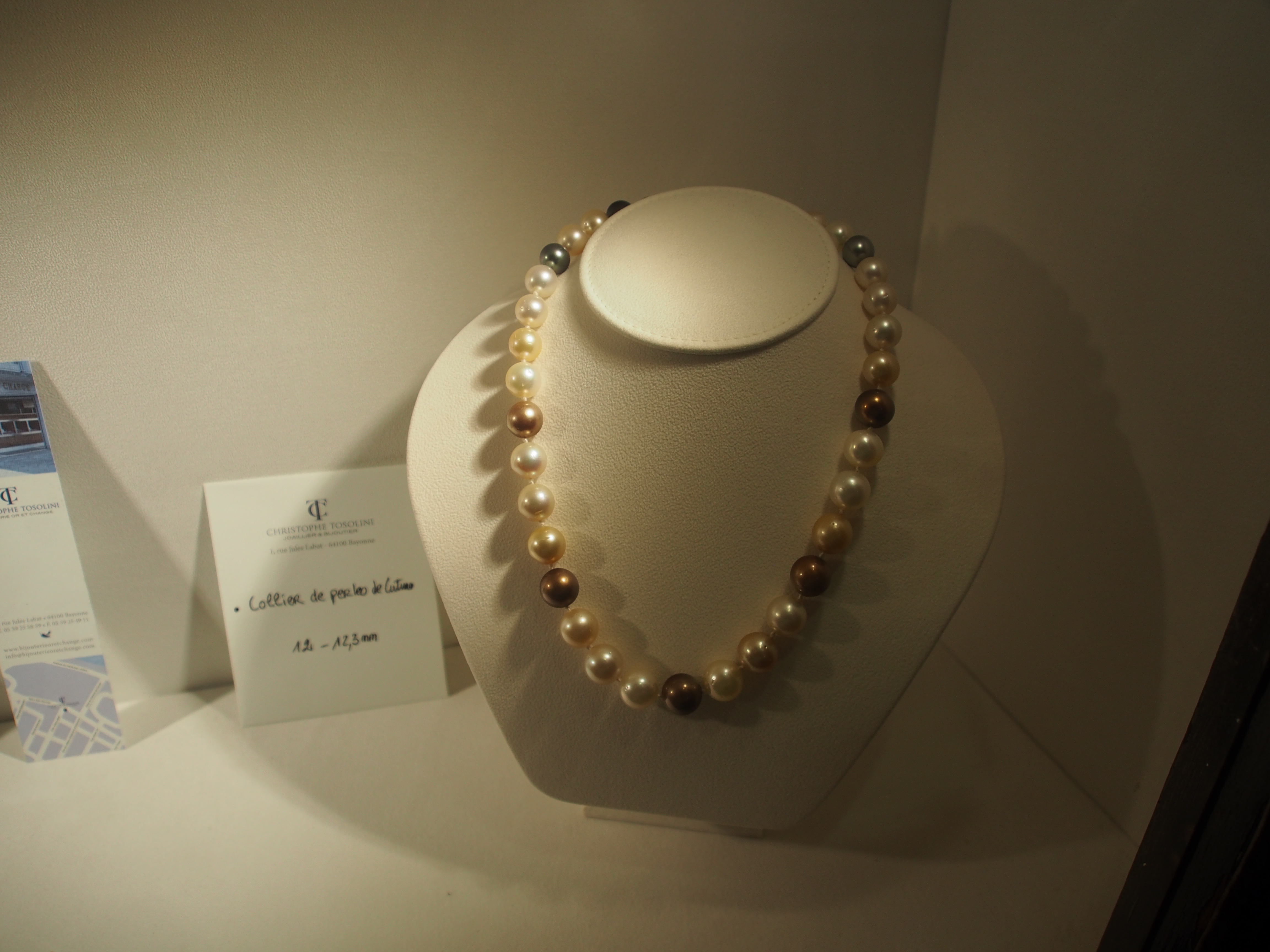
Pearls for Connie
But alas having spent all our money on the Jaguar and the pearls there’s nothing left over for champagne.
We loved this part of the coast and France and will some day come back to explore the Basque region on both sides of the border. We spent a few days here hoping the surf would rise as many of the younger people were doing. It’s a big surfing mecca but for the time we were there it was very tame and no opportunities to enjoy the wilder ocean other than taking a swim each day. We had a great accommodation thanks to Airbnb and our host. Located halfway between Bayonne and Biarritz we were close to the beach, shopping and strolling.

Hotel de Palais
The Hotel de Palais was built by Napoleon 111. It’s a gorgeous located hotel located on the north end of the beach in Biarritz and the interior is done in the traditional French elegant manner.

Connie is checking the menu in the Hotel de Palais
Funny, one day, on a stroll, the back gate to the hotel was open and we strolled in. No-one confronted us although in our shorts and sandals we were obviously not staying there. However, on returning to our apartment one day we tried going in the front gate but were stopped by the guard. Putting on my best stuffy English accent did no good and we were thrown out by the scruff of our necks! Haven’t had that happen before.
Oh well, just to get even we did go down to the pool.

Hotel de Palais pool
I’m sure if I had dipped my big toe in this pool they would have dragged me off to some dungeon somewhere to conduct a serious interrogation. Probably at a place like this below
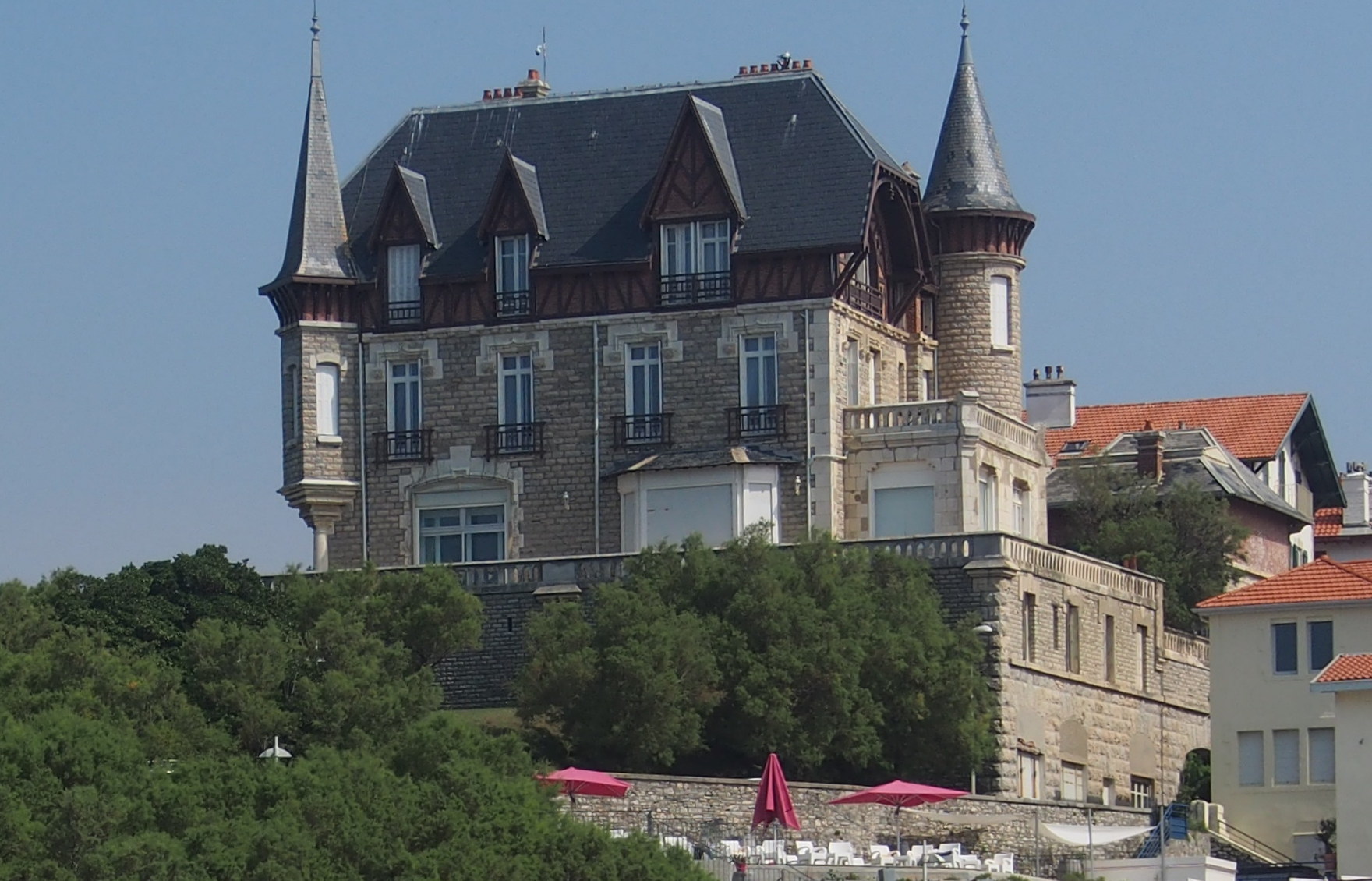
We did a side trip further down the coast to St Jean de Luz. A lovely quaint old fishing port with a lovely harbour.

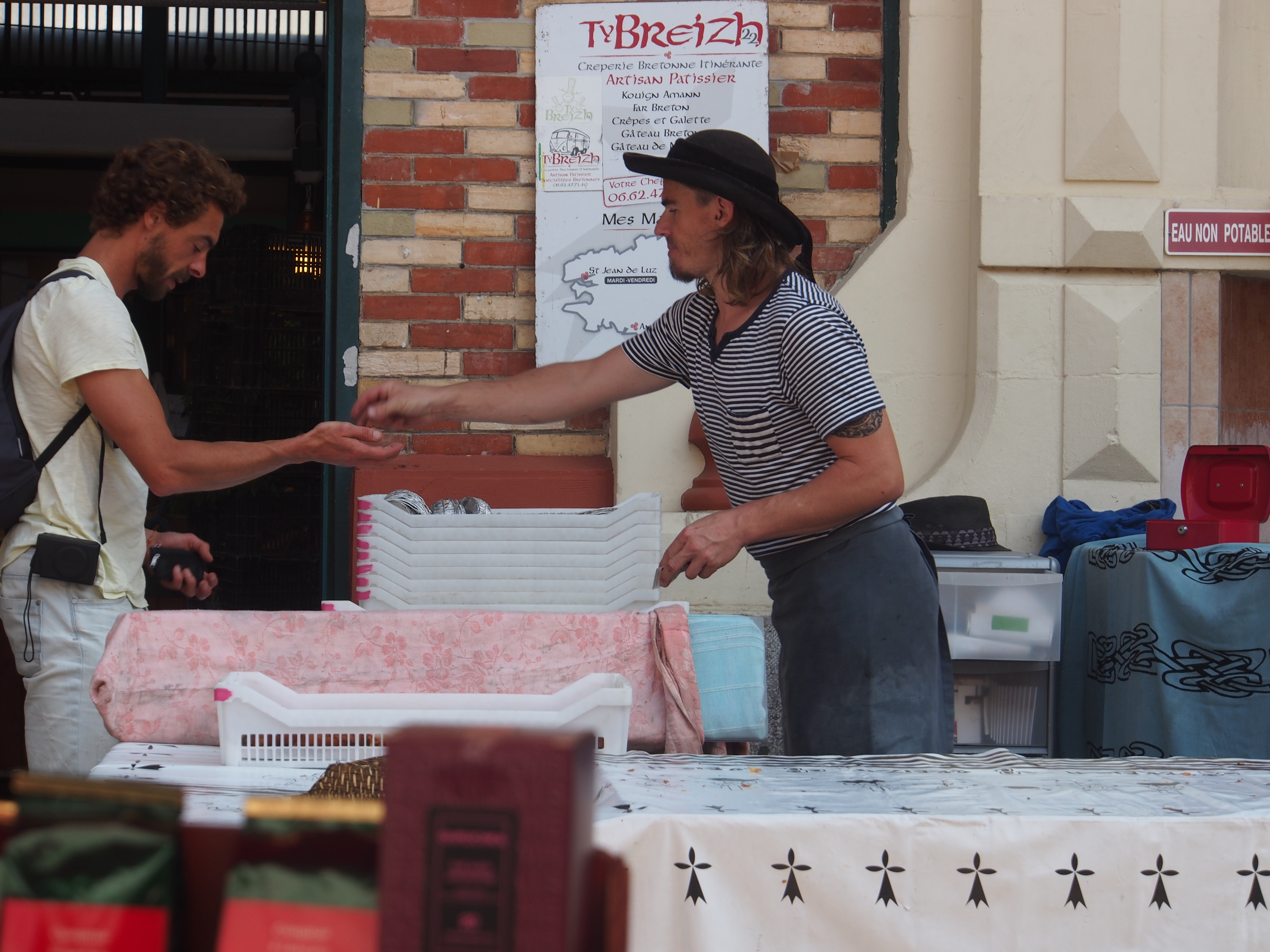
Market day in St. Jean de Luz

And what with distinctive Basque fabric designs why not decorate a VW Van
I think, though, what blew me away the most was the church in St. Jean de Luz called Eglise St.-Jean-Baptiste. I was walking along a street and like many other times thought why not just pop into the church for a quick look. We’ve seen many on this trip to Europe and I was not ready for what I was going to see. The video below is of the inside of the church. Warning – there is a lot piercing foghorn-like sound right at the beginning. When I was in the church they were obviously tuning the organ. I was not prepared for this style of church and it really brought home the fact that we were in a very different area of France.

Sunset in Biarritz
Time to move on. We have a few more stops to make before we get on the plane. It’s time to head up into the Pyrenees so we drive up to a place the owner of our accommodation mentioned as a lovely little spot high in the mountains – St . Jean Pied Au Port. It’s a gathering point for those people wanting to head off on the Compestella trail south to Spain. It wasn’t quite what we had been looking for but nevertheless it gave us a taste of what the mountains in this region could offer. St. Jean Pied Au Port is extremely focused on servicing the ‘pilgrims’. It seemed like there were hundreds going in either direction.
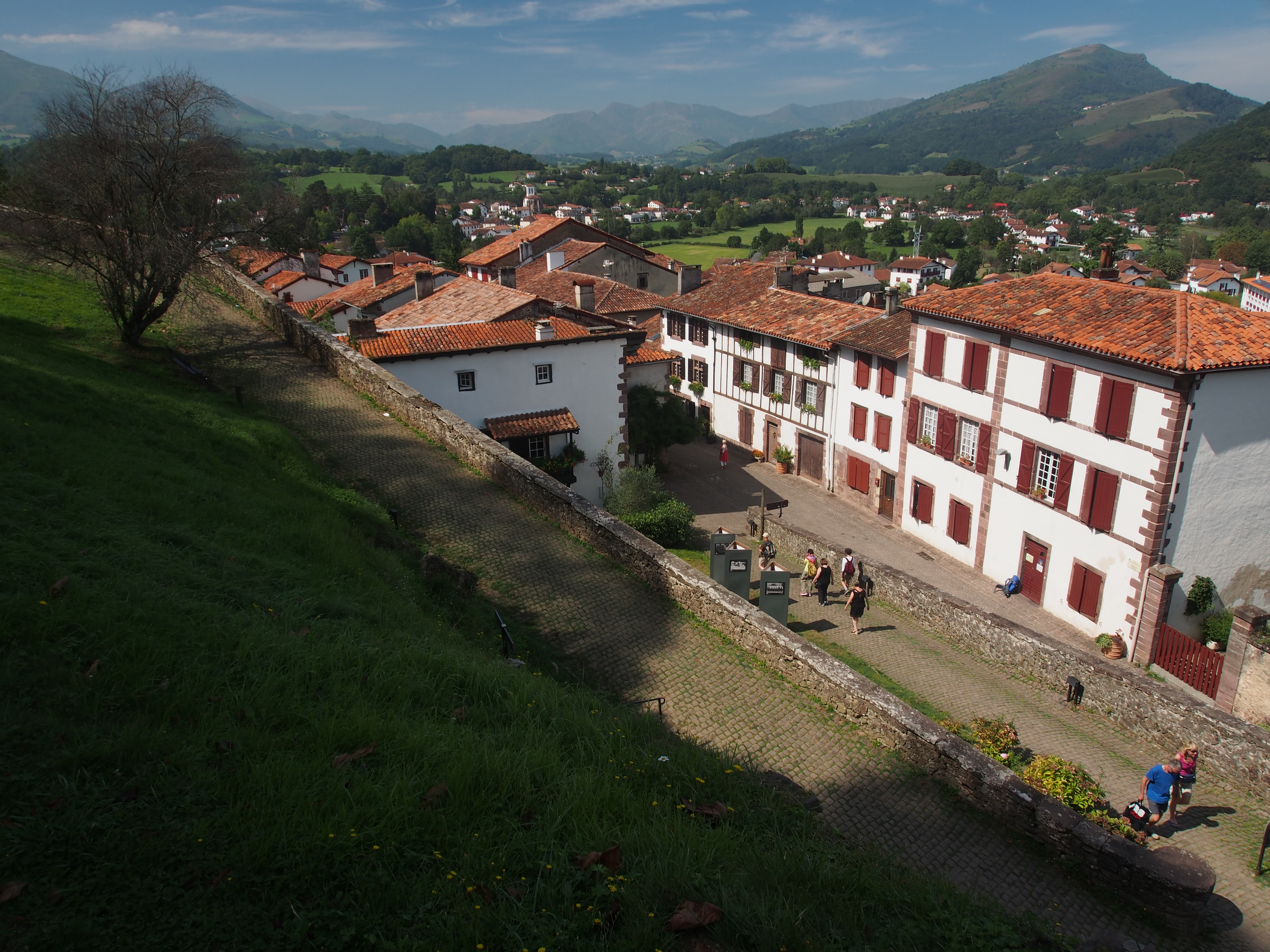
St. Jean Pied Au Port as seen from the college above the town

Despite the fact St. Pied Au Port is used as a servicing point for Compestella trail walkers it is quite quaint and beautifully maintained.

Downtown St. Jean Pied Au Port
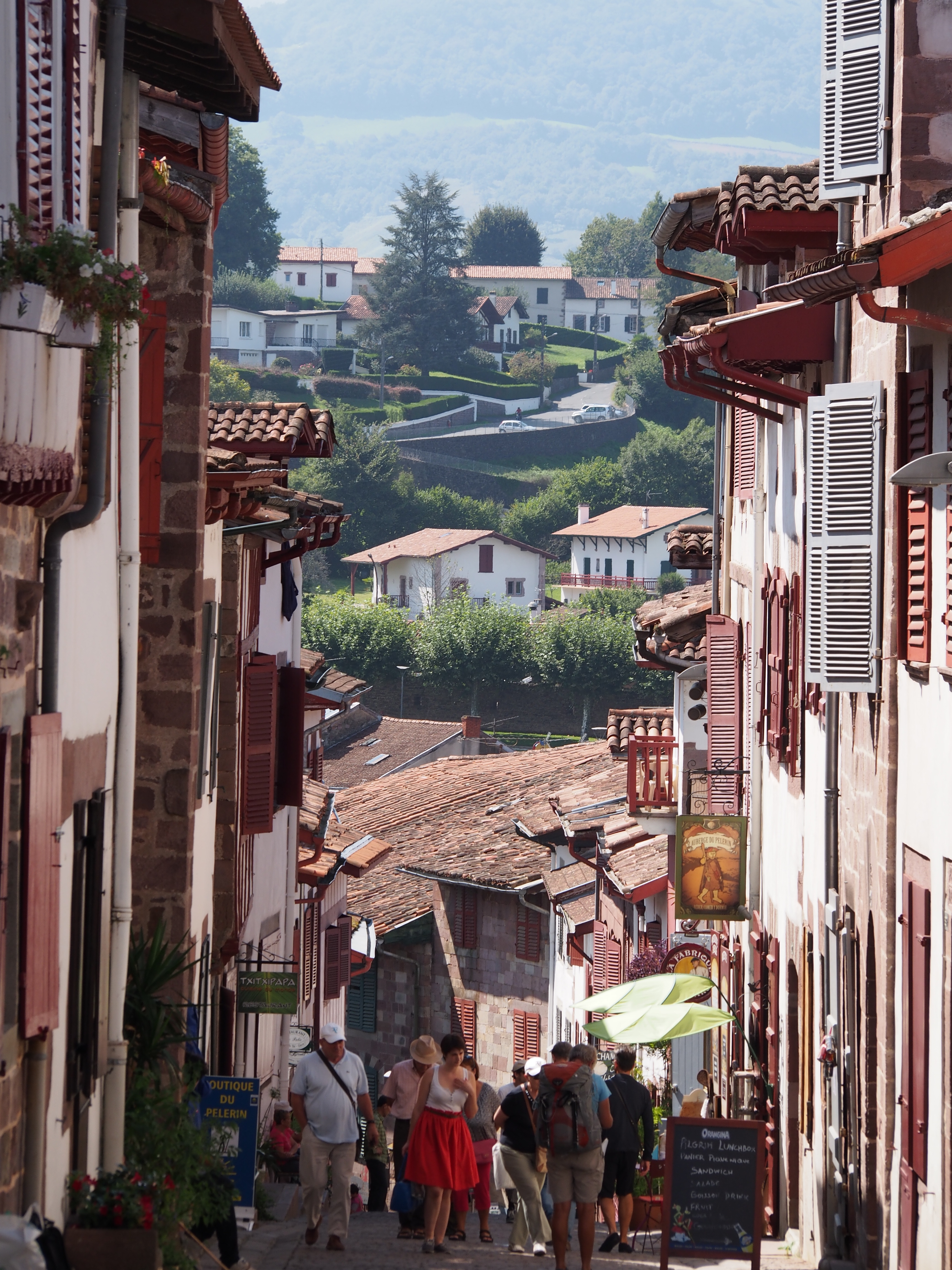
Main Street
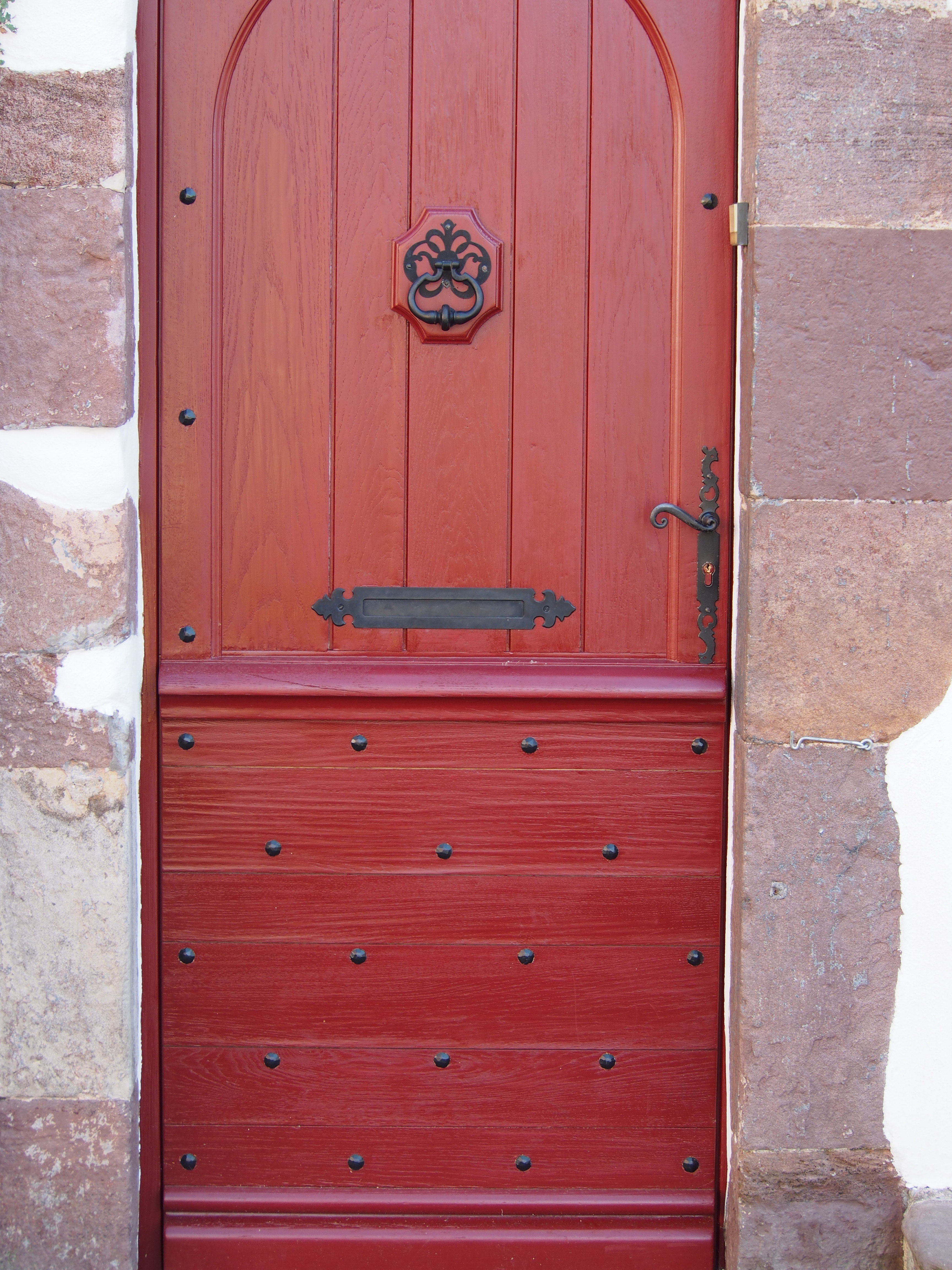
And always the Basque door
Okay off again. This time we are headed back to St. Antonin Noble Val to pick up our suitcase from our friends Evelyne and Herve.
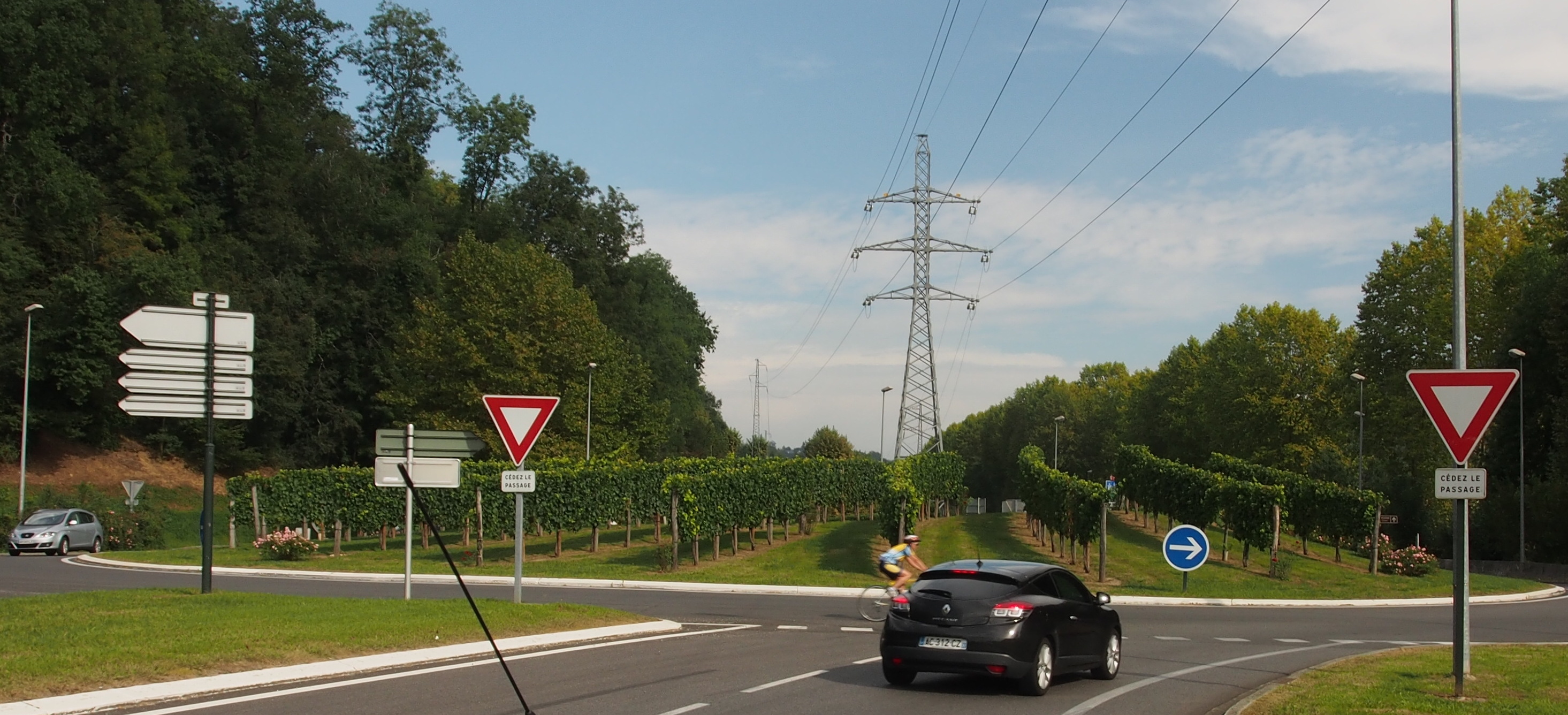
This is the planting that all round-a-bouts should be planted with
We had left the suitcase there at the beginning of July. It’s alway a nice stop there and while there we managed to see a Hollywood movie starring Helen Mirren called Les Recettes du Bonheur. It was filmed in At. Antonin Noble Val and was showing in the local cinema so we couldn’t resist.
The next day, saying goodbye to Evelyne and Herve, we headed to Toulouse for our last night in France. We had one more market to stop at before getting to Toulouse and almost came home with the animal below. He’s so cute and does have a purpose in life as explained to the pig by the cat in the movie Babe

Was tempted to take with us
Toulouse is a great city and it’s another place we will return to someday to explore more. It’s a fantastic place for bicycles with great infrastructure, canals and pedestrian friendly areas. But it’s time to go.
Enough of pearls, Bugattis and champagne. It’s time to return to some work and planning.

Pont Neuf – Toulouse
So, we bid adieu to France.
France – People
Here are a few pictures of people we know, people we have met or just people seen
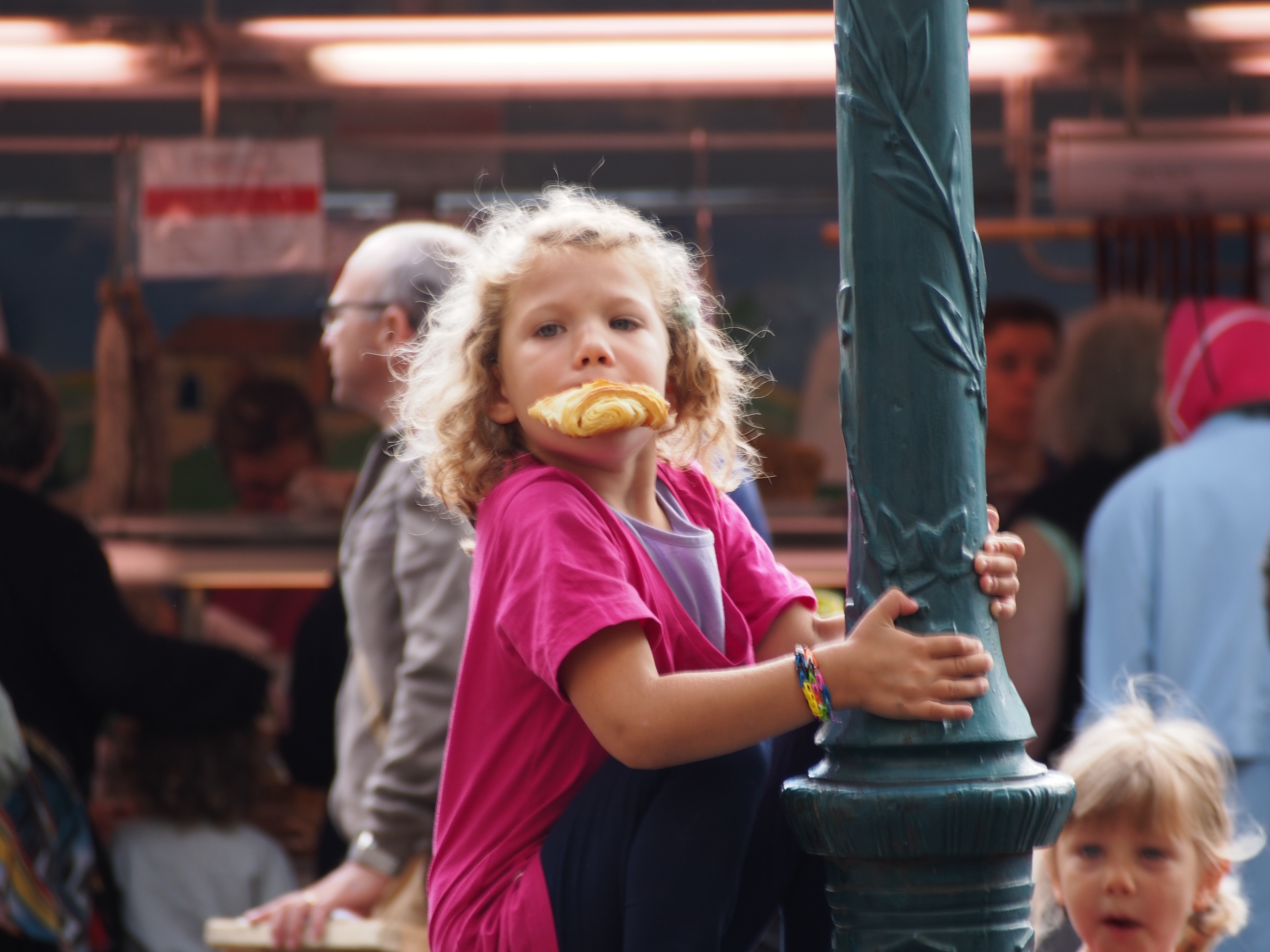
God, I love coming to the market for breakfast

Would you buy French cheese from this vendor?

OK – so I smoke a lot. I’m French

I’m coming, I’m coming. A waiter we got to recognize in Sete

Oh yes. That looks good
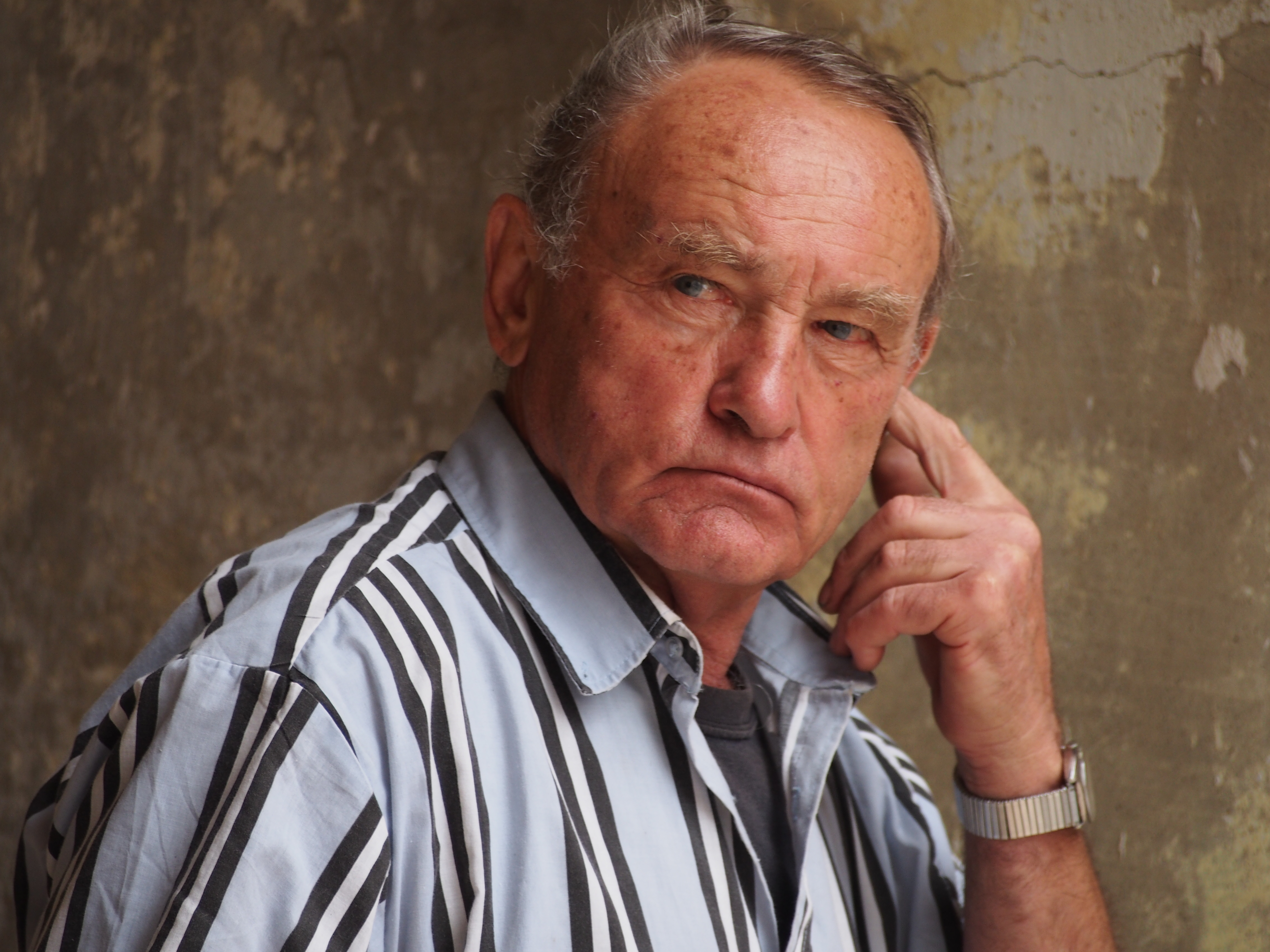
Yes, I’m French. Why do you ask?

Bonjour
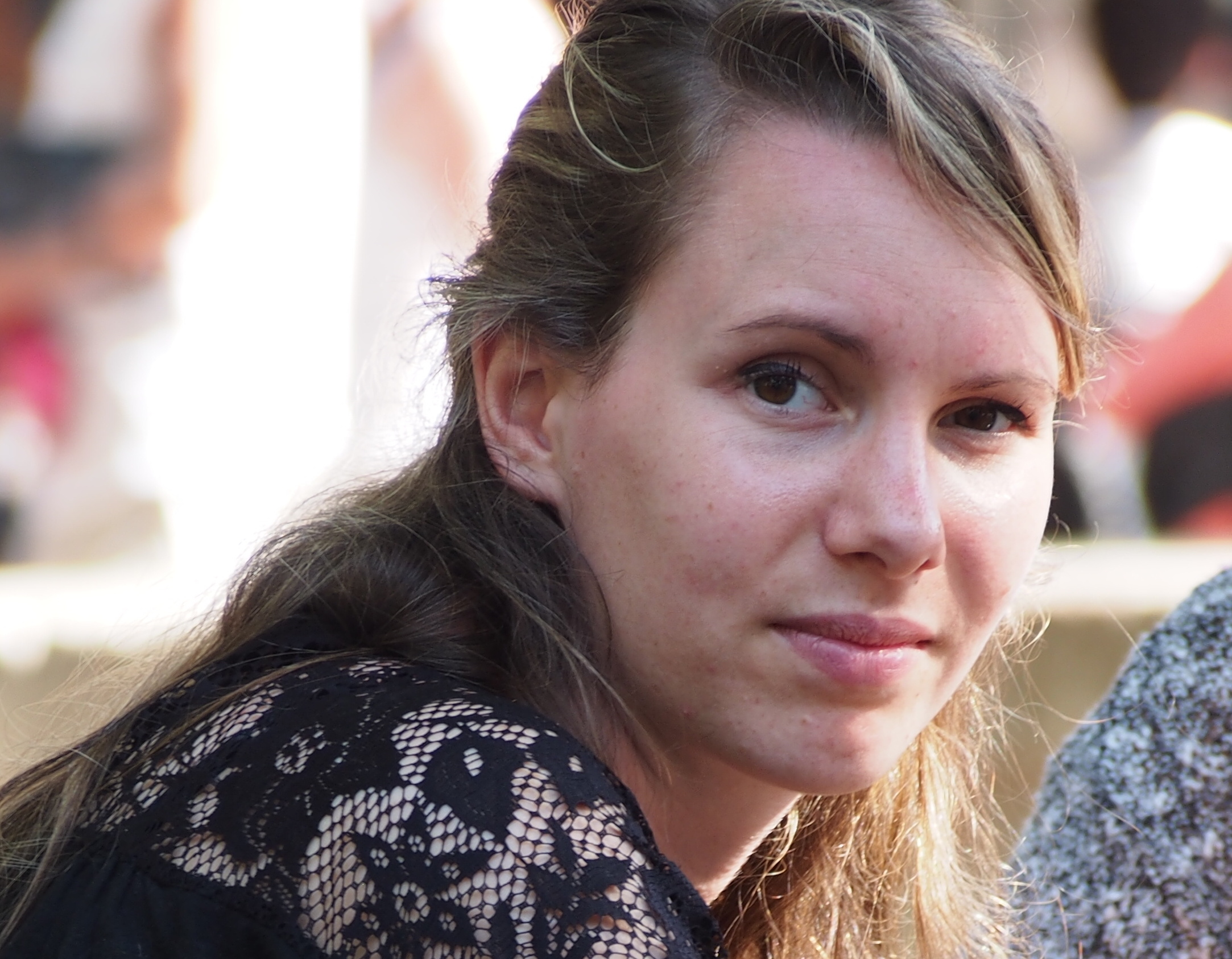
Can you repeat that.
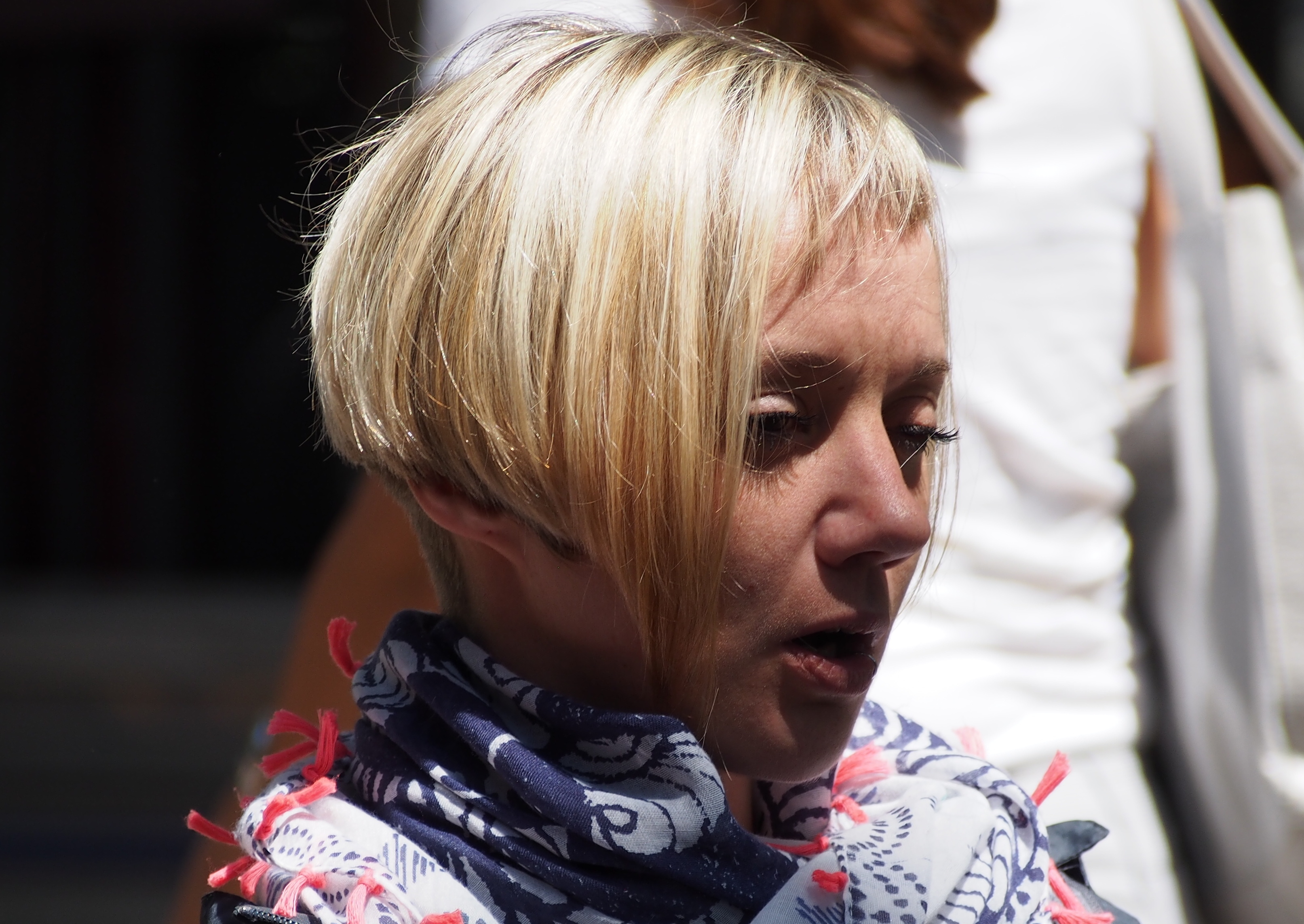
I’m thinking
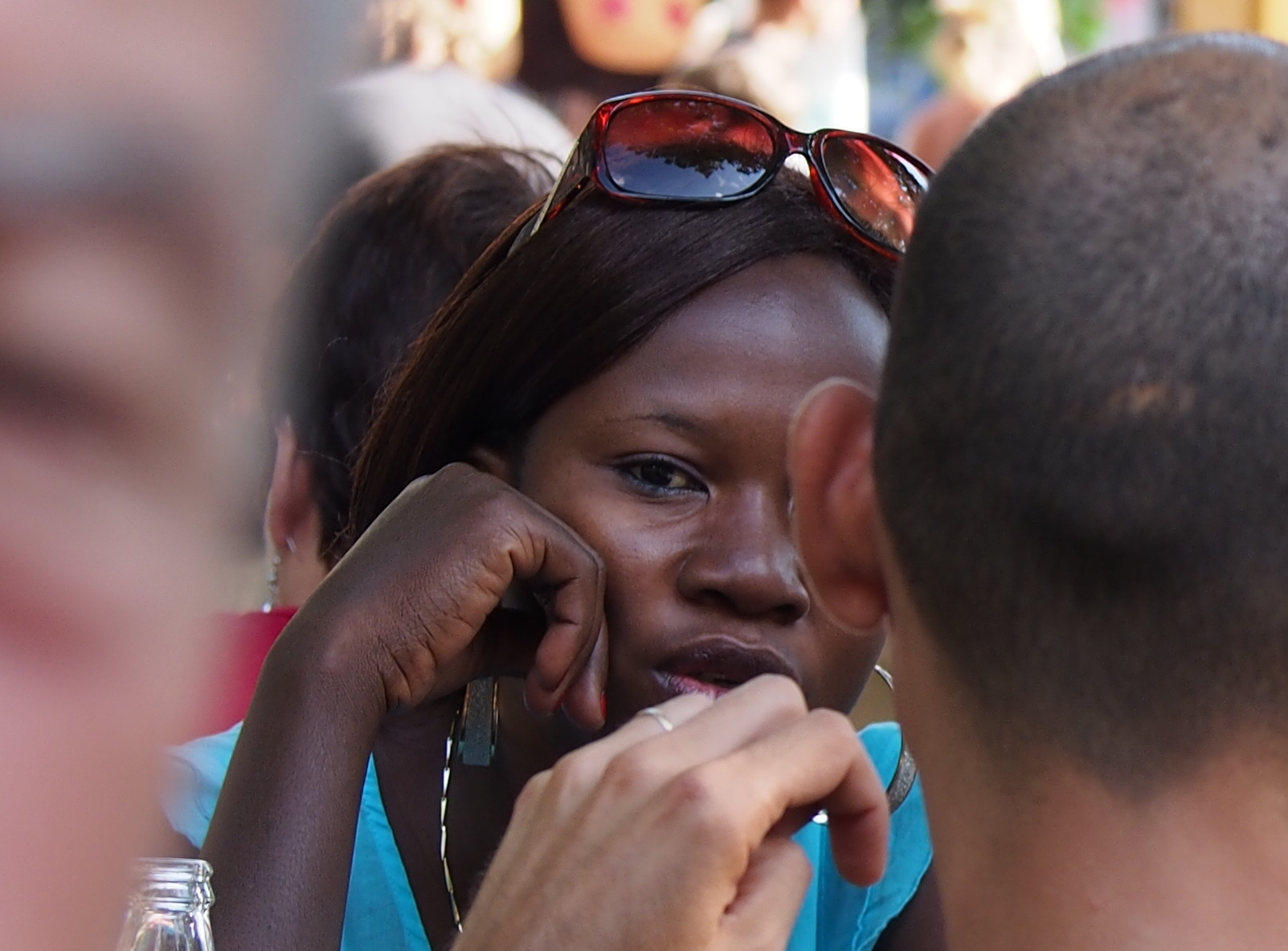
In deep conversation
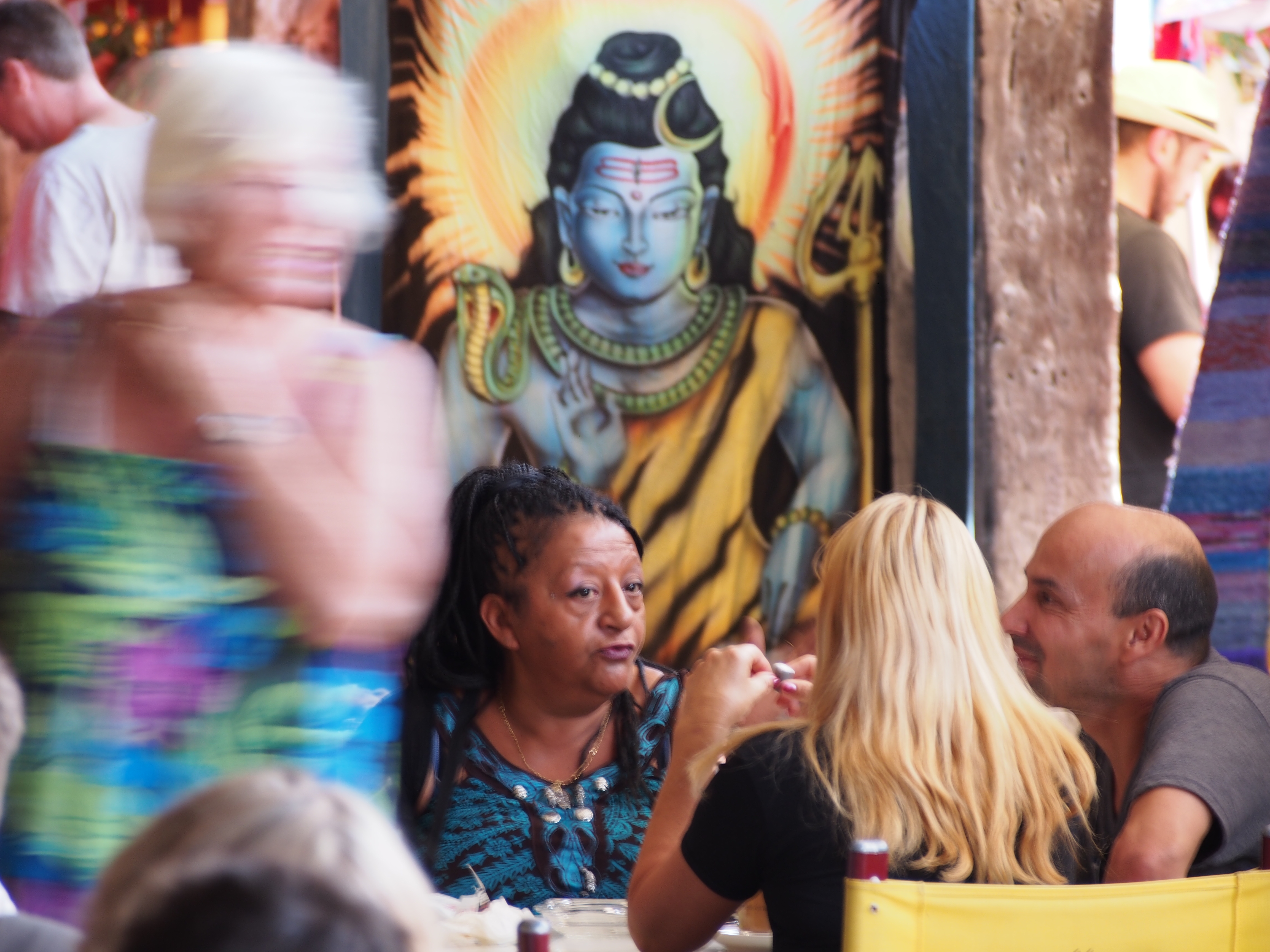
A beatific moment

Gite St. Marie – Connie, owner and Dave
And a few who came to visit
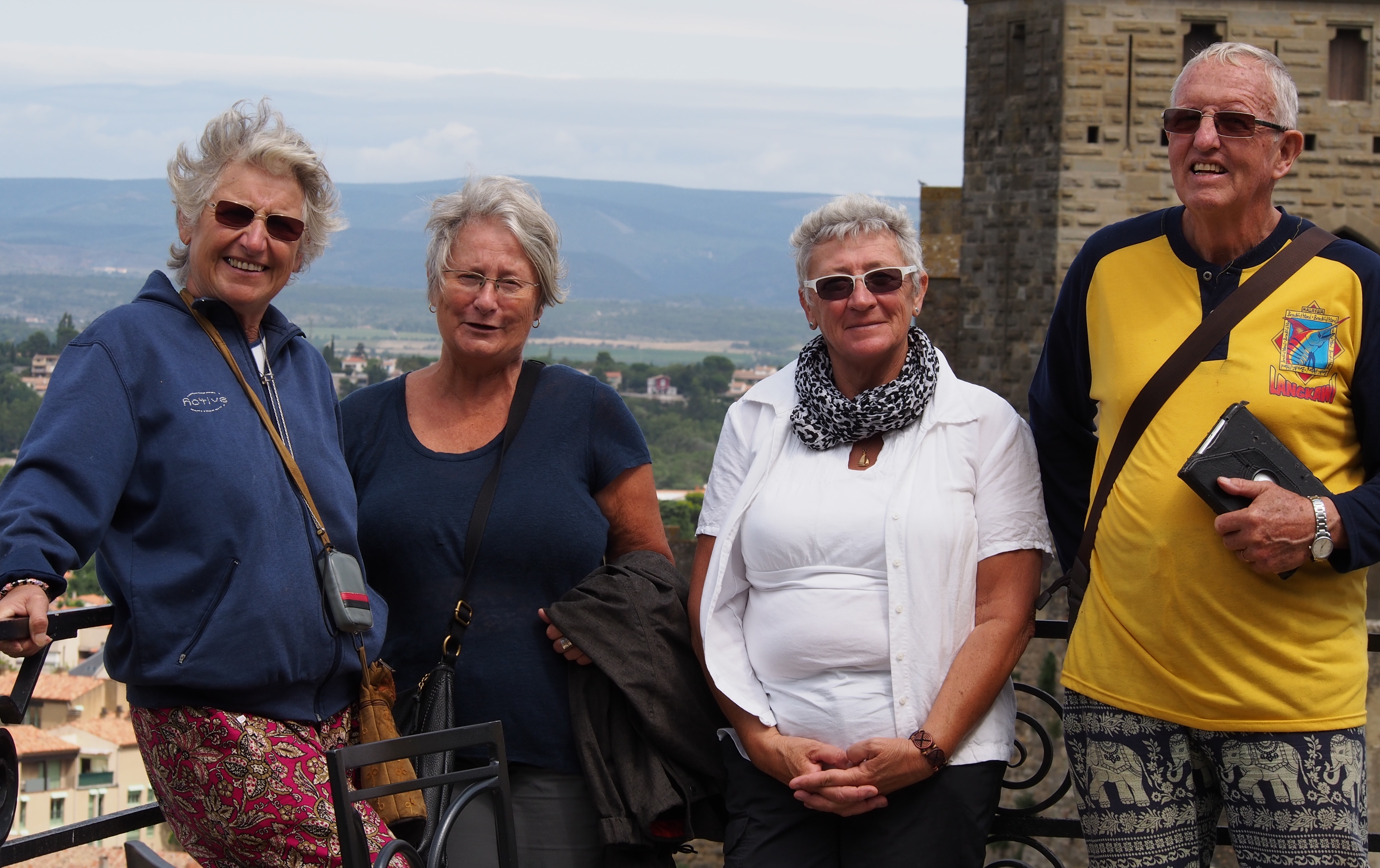
Eveleyne, Sue, Connie and Herve – all sailing friends

“OK – I booked for Hawaii so how did I end up in Saissac” Petko and Sammie from London, England

Connie, Petko and Sammie

Leslie, Connie and Dave – all here to bicycle
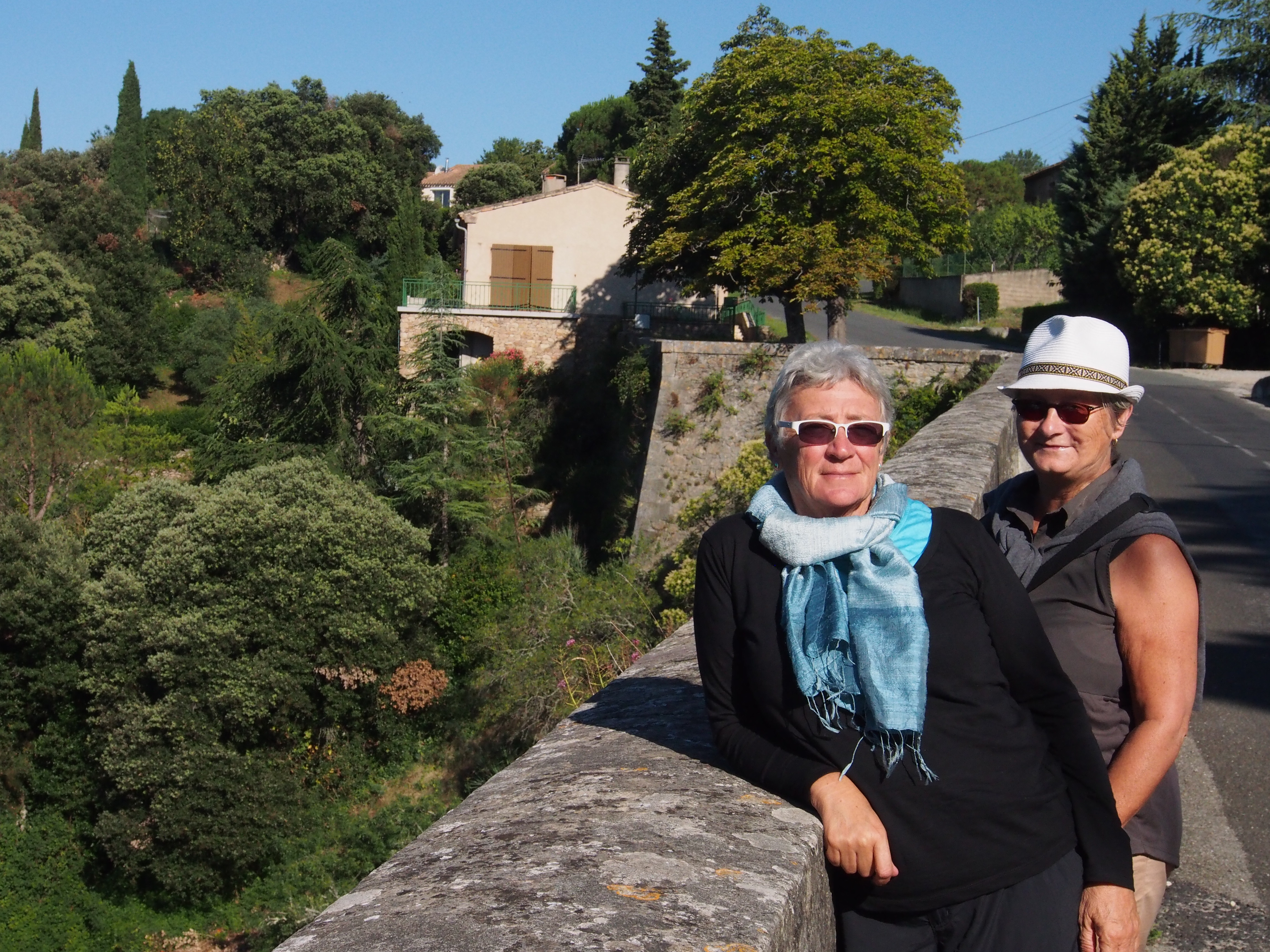
Connie and Sue, our flat mate
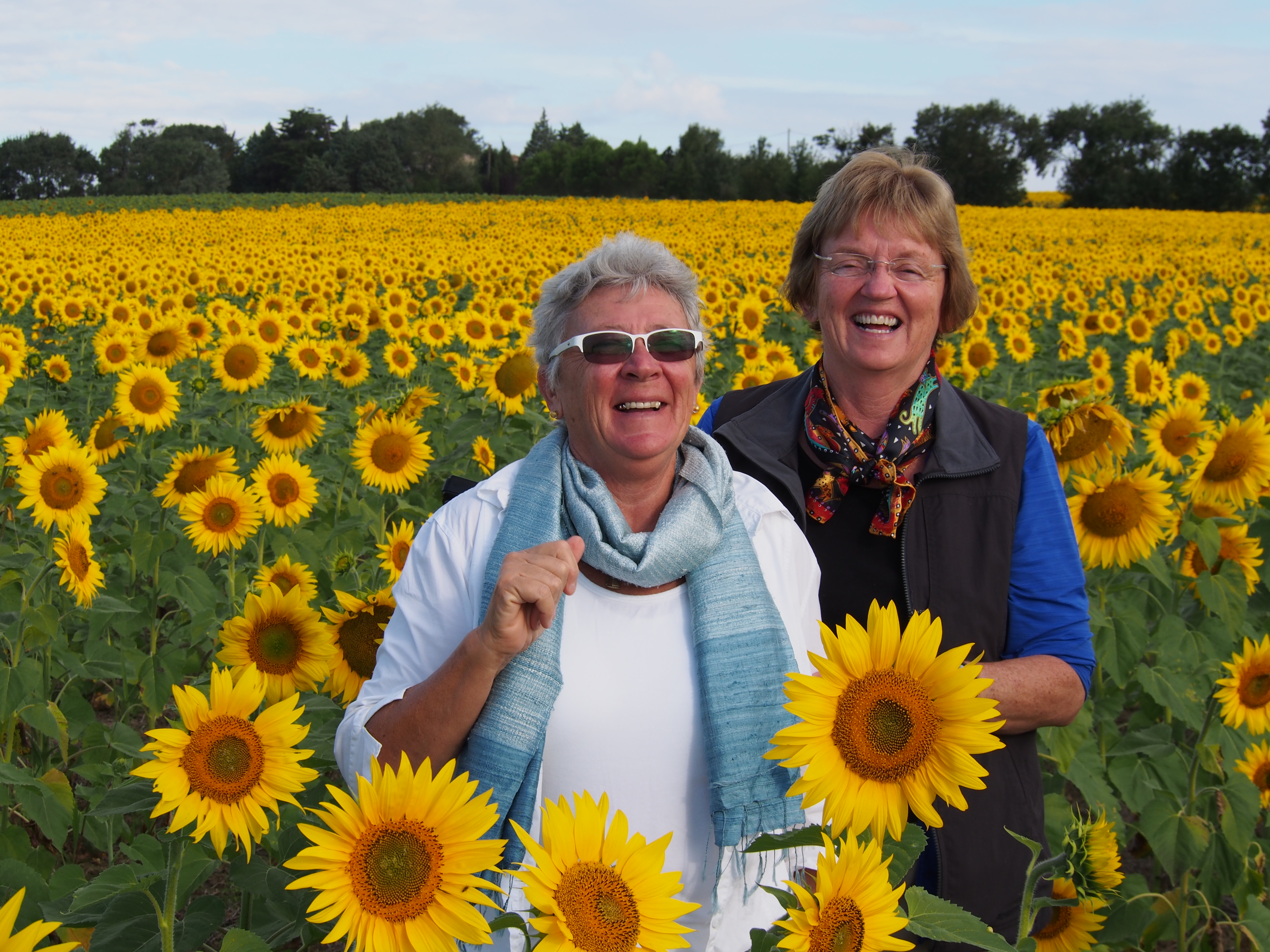
Aren’t we having fun.
And then there are the sea stories and here below are some sailing friends we last saw 20 years ago. Christiane and Jacqueline are back in France and have their boat in Fromentine, Barre de Monts, a short distance from their home

Visiting old sailing friends onboard Maris Stella
Connie and Jacqueline onboard Maris Stella
Christiane and Connie onboard Maris Stella
So much to catch up on with lots of sea stories, recommendations of where to go and what to do.

Solid friends
Food and Wine
French food. Many people gone before rave about French food. Yes, it’s very good but it all starts with where the ingredients come from and what people insist on demanding. In North America we are so tied to the huge companies that have gobbled up the land, intensified the production so that they are almost killing the land and then they pack it all up and truck it thousands of miles across the continent. In France, food is produced locally as a first choice on land that has been in production for 2,000 years and sometimes more or it comes from relatively close fields. People here demand food that has taste, texture, quality and in many cases is organic.
So it’s not that the French can make good food but they respect its origins and treat it accordingly. That’s not to say other areas can’t. On a recent trip to California we noticed restaurants were naming the farms where the produce was grown and it all came from farms within one hundred miles of the restaurant. They also were using the same techniques to get good ingredients to produce great food. It can be done we just have to demand it. And then pay for it.
So here’s just a few pictures of food and some of the fun we had experimenting:
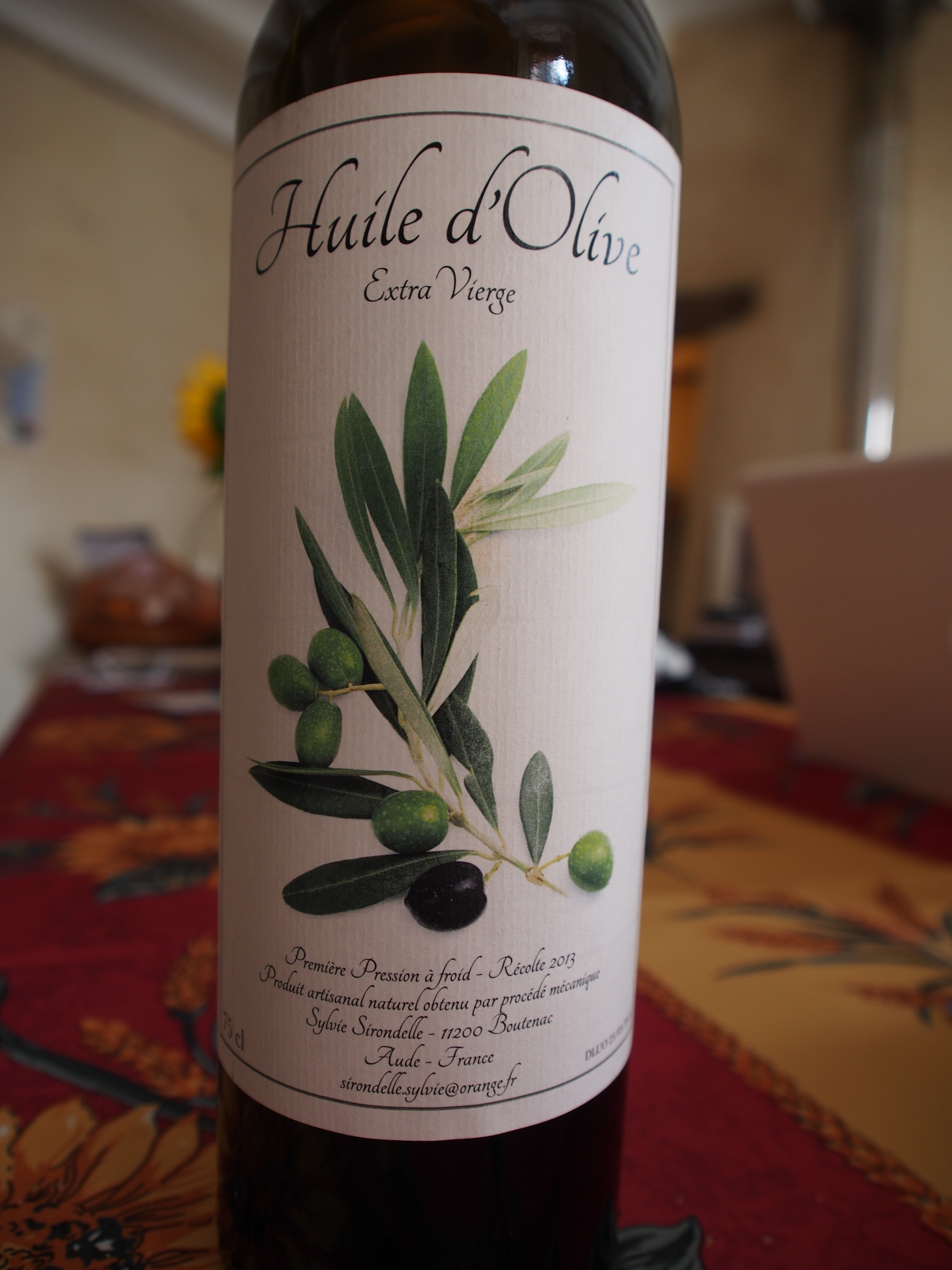
And the first thing we did was buy a good olive oil produced locally i.e. Aude. At least this gave us a start at the game of trying to produce something good that kept us out of the restaurants.
We were able to go down to the local bakery at the end of the street, about 100 metres, at 0700hrs to buy our bagette or croissant and that was a good start to the day. The bakery was open every day except Tuesday and for about $1.75 but a bagette or two that needed to be consumed that day as the only way to have bread is fresh!
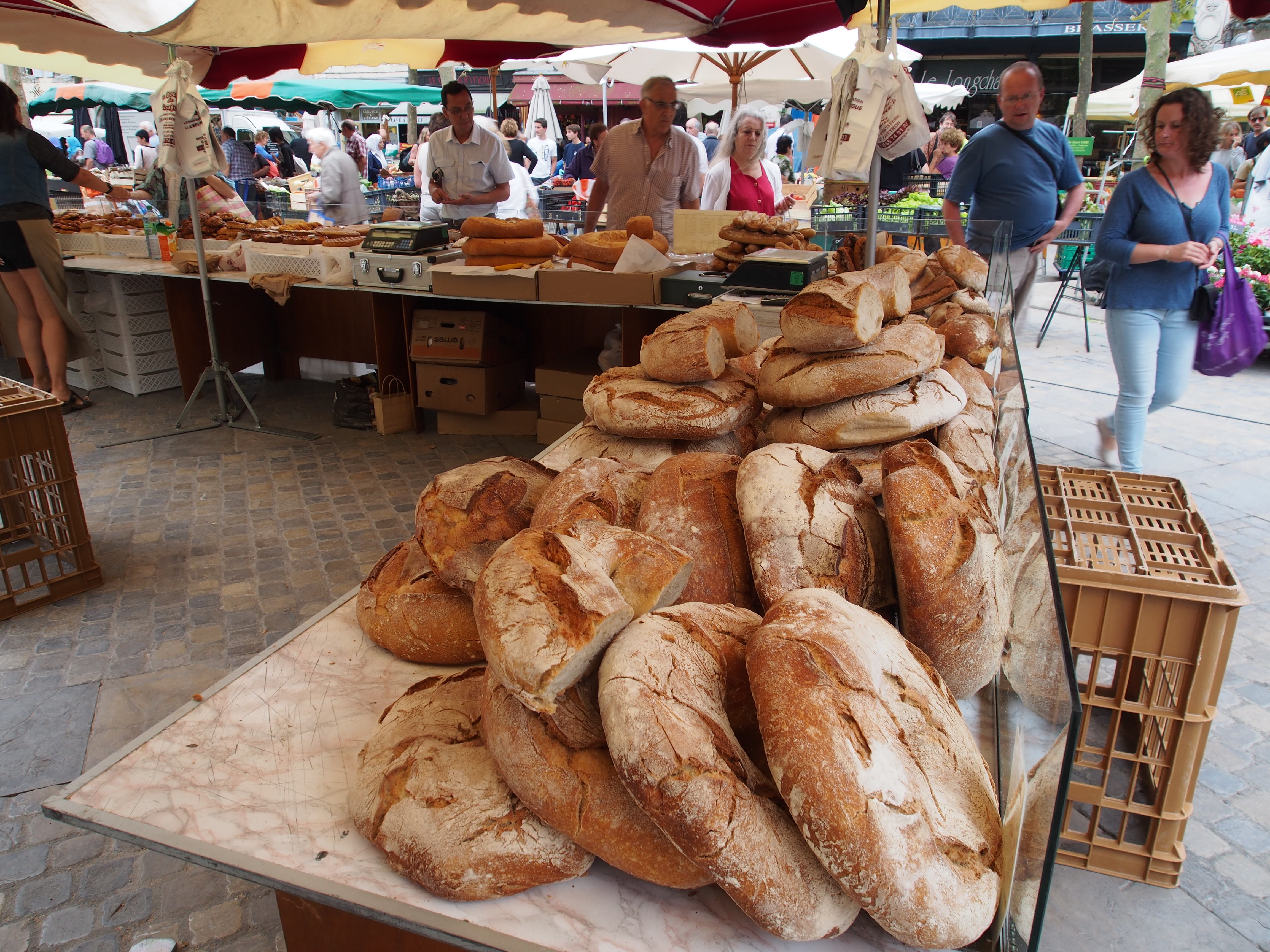
Bread sold by the pound. All kinds and without doubt great.
This was not our bakery but rather the market in Carcassonne on Saturday. Yes, buy bread by the pound for those large loaves and then there are all the other choices.

Fromage – goat’s cheese, regular cheese, everything cheese – Wow the cholestrol is increasing and the weight is out of control
And then there’s the cheese. Cheese, cheese, cheese….One almost drowns in cheese. Innumerable varieties, goat ones, cow ones and am sure one could find elephant ones if there were elephants in France. Smelly ones, mild ones, soft ones, hard ones and ones that tease your brain and clog your innards. It’s all in a worthy cause though as there’s nothing like a great cheese. I always remember working as a tour guide in the Canadian Rockies as the Japanese telling me that westerners smelt of rotten cheese! It’s true – it’s all the mild products we use.

Moules and frites – my favourite
Ah yes then if you are lucky in France and you are close to the coast you can eat as much seafood as you like. However, in and around Carcassonne the best and most common are the moules, mussels. Usually served with frites but at the market they just come straight.
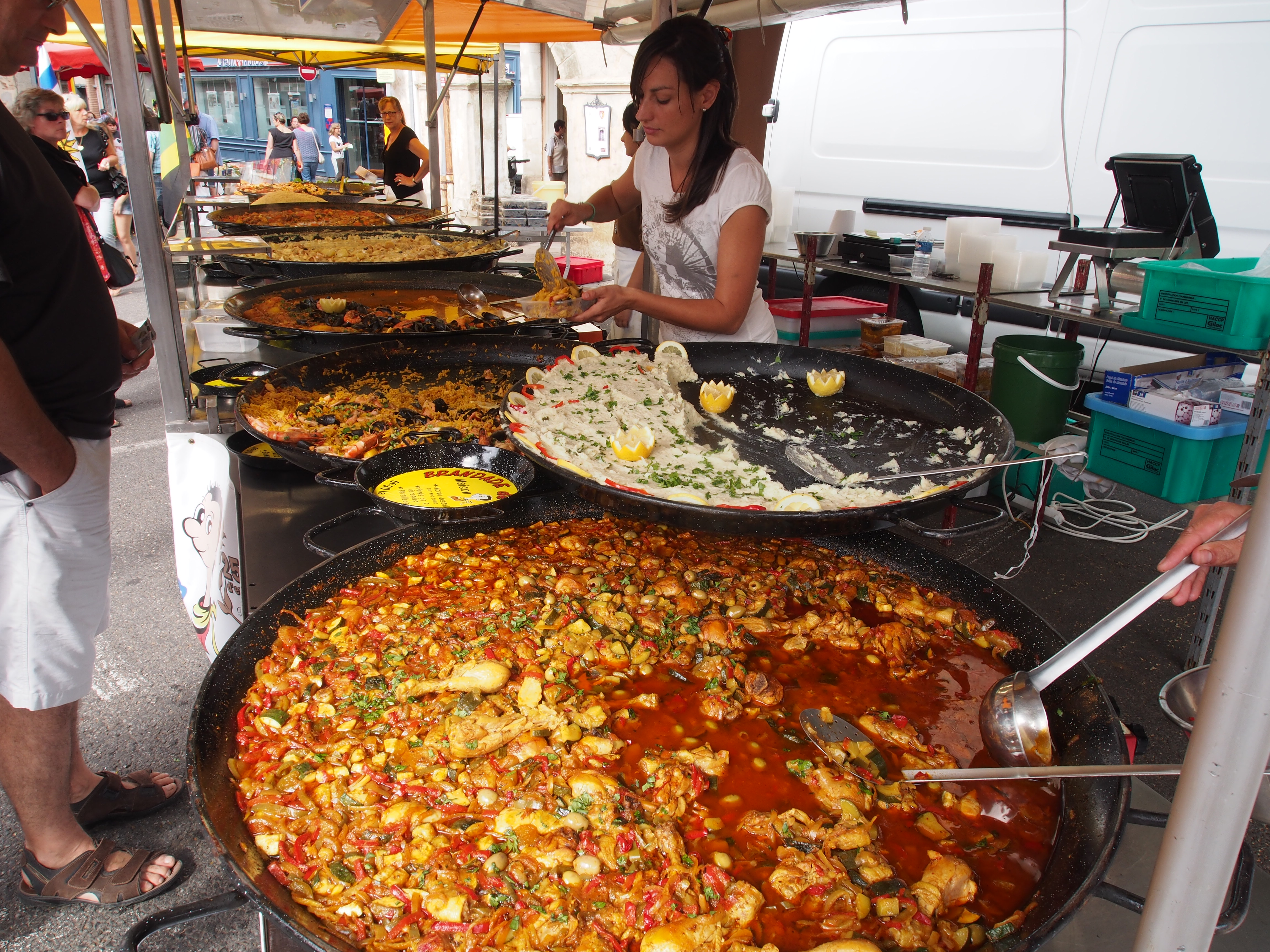
What selection
Yes, well then there is also the paella. Being in the south of France in Catalan country and close to Spain everyone enjoys their plate of paella. However, I will say the best paella is to be had a Chez Sierd in Victoria BC. cooked over a wood/charcoal fire and filled with wonderful west coast Canadian seafood. (see first paragraph in this Globe and Mail review
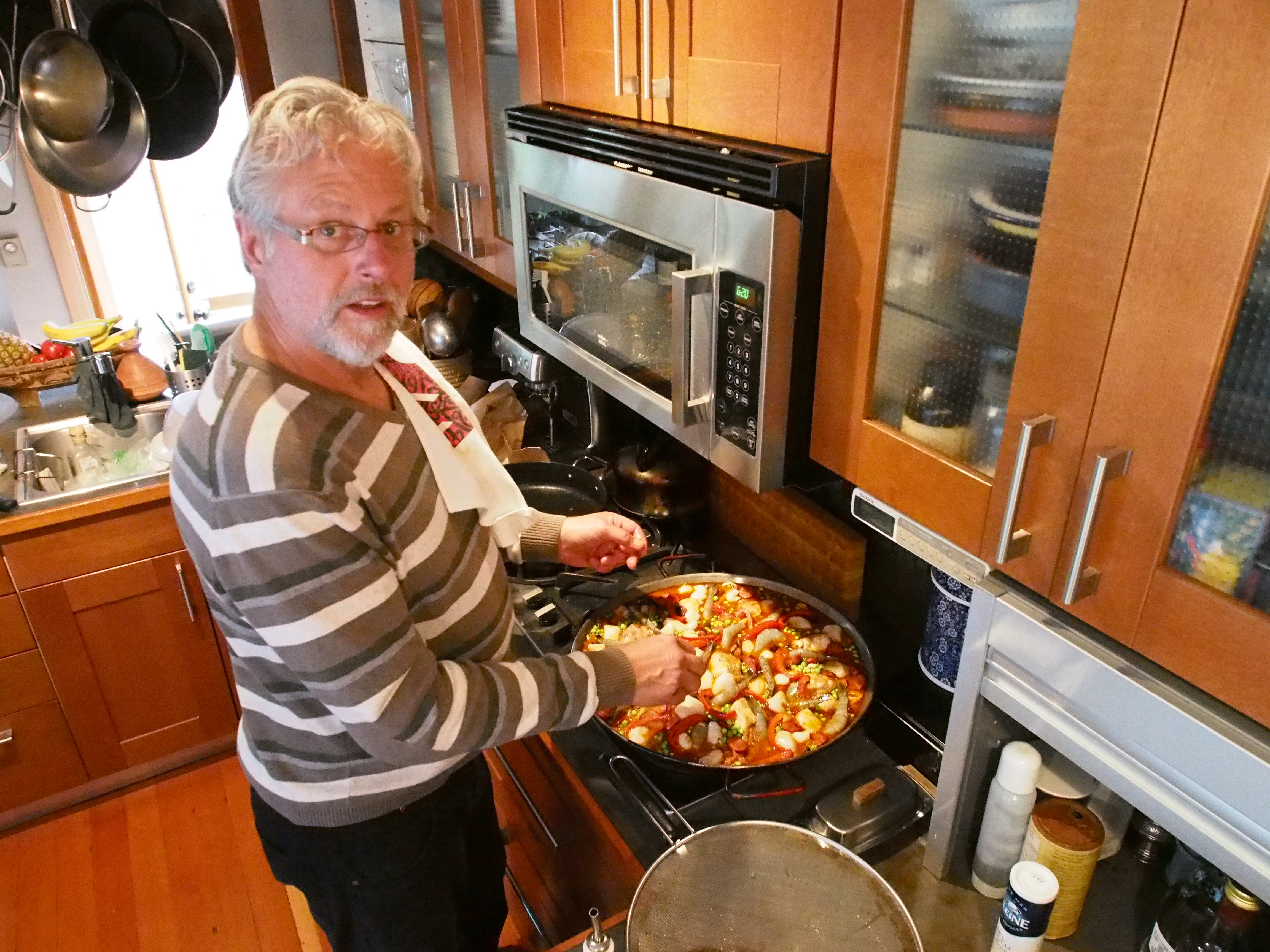
The begbinnings of a paella masterpiece
And then there is aligot –

What the —- is aligot? It’s a mixture of melted cheese, garlic and mashed potatoes. What a heart stopper.
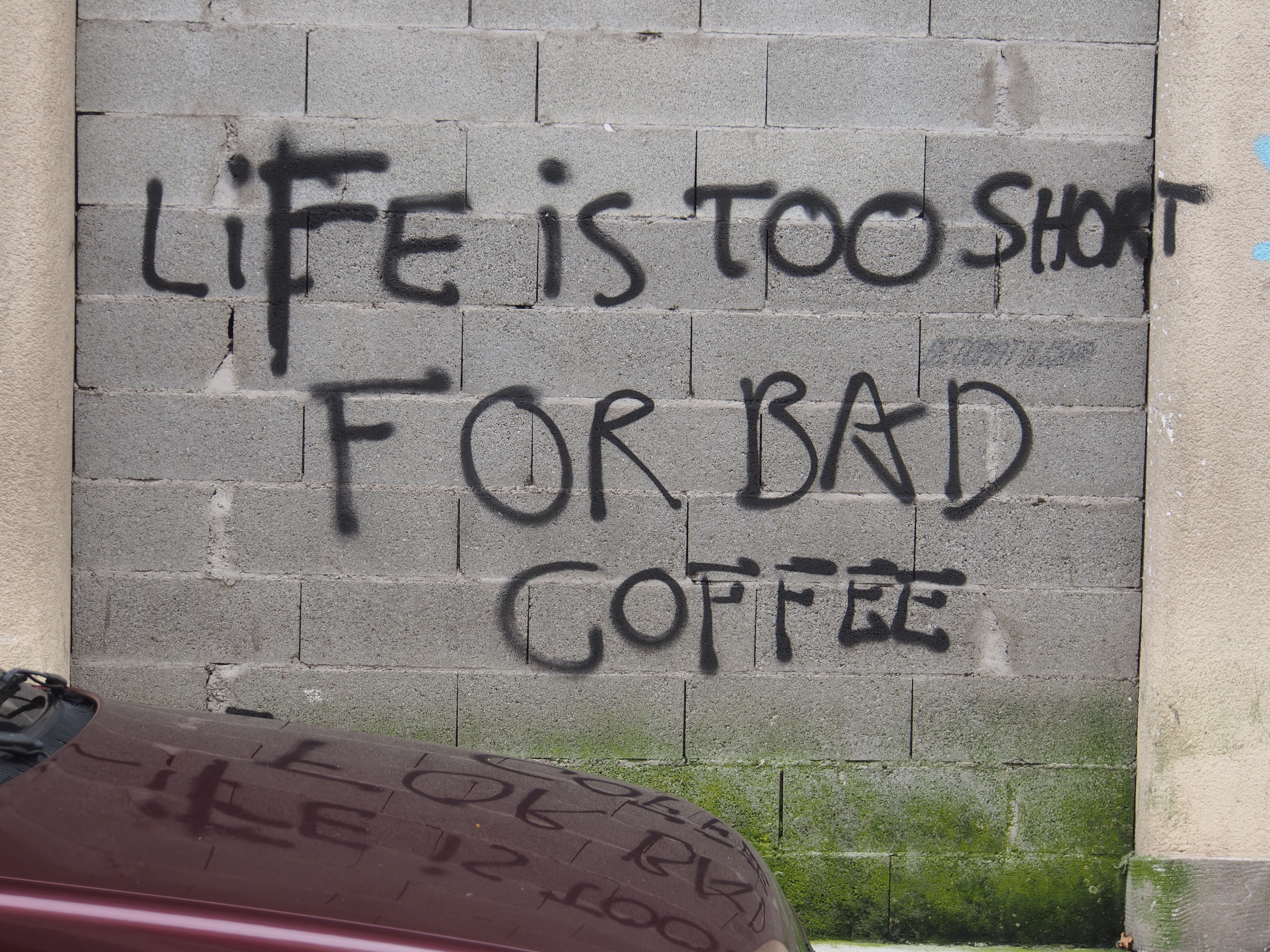
So what is it that France doesn’t do well? The graffiti above was seen on a wall in Carcassonne. I have to say it’s very appropriate. Surprise to me but I have yet to find good coffee in France. The restaurants, bistros, bars etc serve an OK espresso but try and buy some good coffee to take home and make at home. No way. One can even walk down the aisles of coffee in the supermarkets and you can’t even smell coffee. And, no, it’s not because of the cheeses in the next aisle. I am beginning to believe now that one just can’t but it unless Paris has something. I have to admit I have always held up Europe as fine connoisseurs of coffee but it can’t be France. Perhaps I’ll just have to stay here longer.
But to top it all off, in Carcassonne at least, there is cassoulet. It’s really a winter food made from white beans, sausages and duck confit. When 2 friends, Gail and Jim, came to visit we went to the Castelnaudary Cassoulet festival to sample some of the best regional cassoulet.

Cassoulet Festival in Castelnaudary
The stickers tell all. There were so many kinds of cassoulet for the taking but then one wonders how many different ways can you make cassoulet.
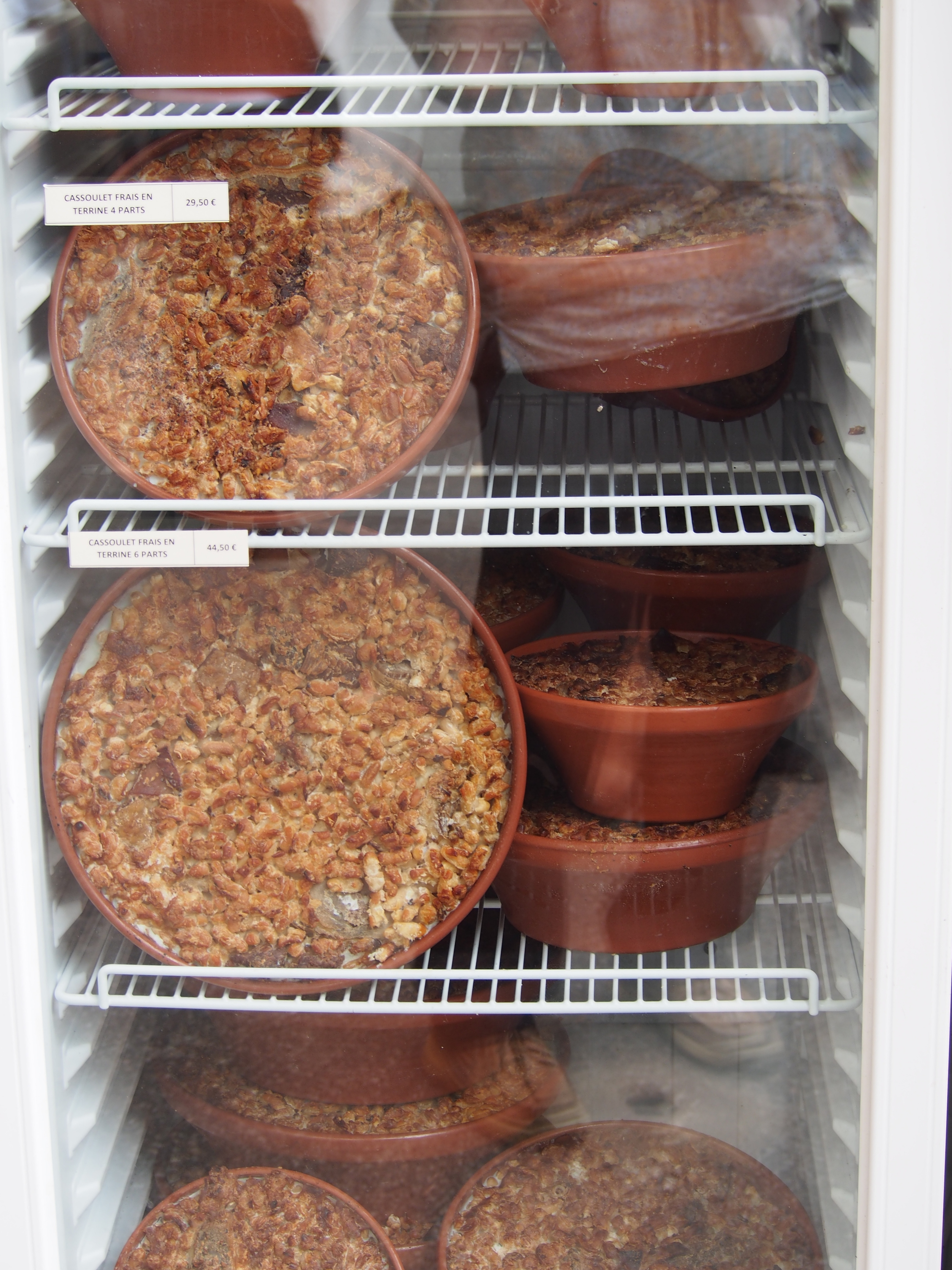
If you want they even have all their different kinds of cassoulet emporter i.e. to-go. I guess one way to get through the winter.
And then there’s wine.
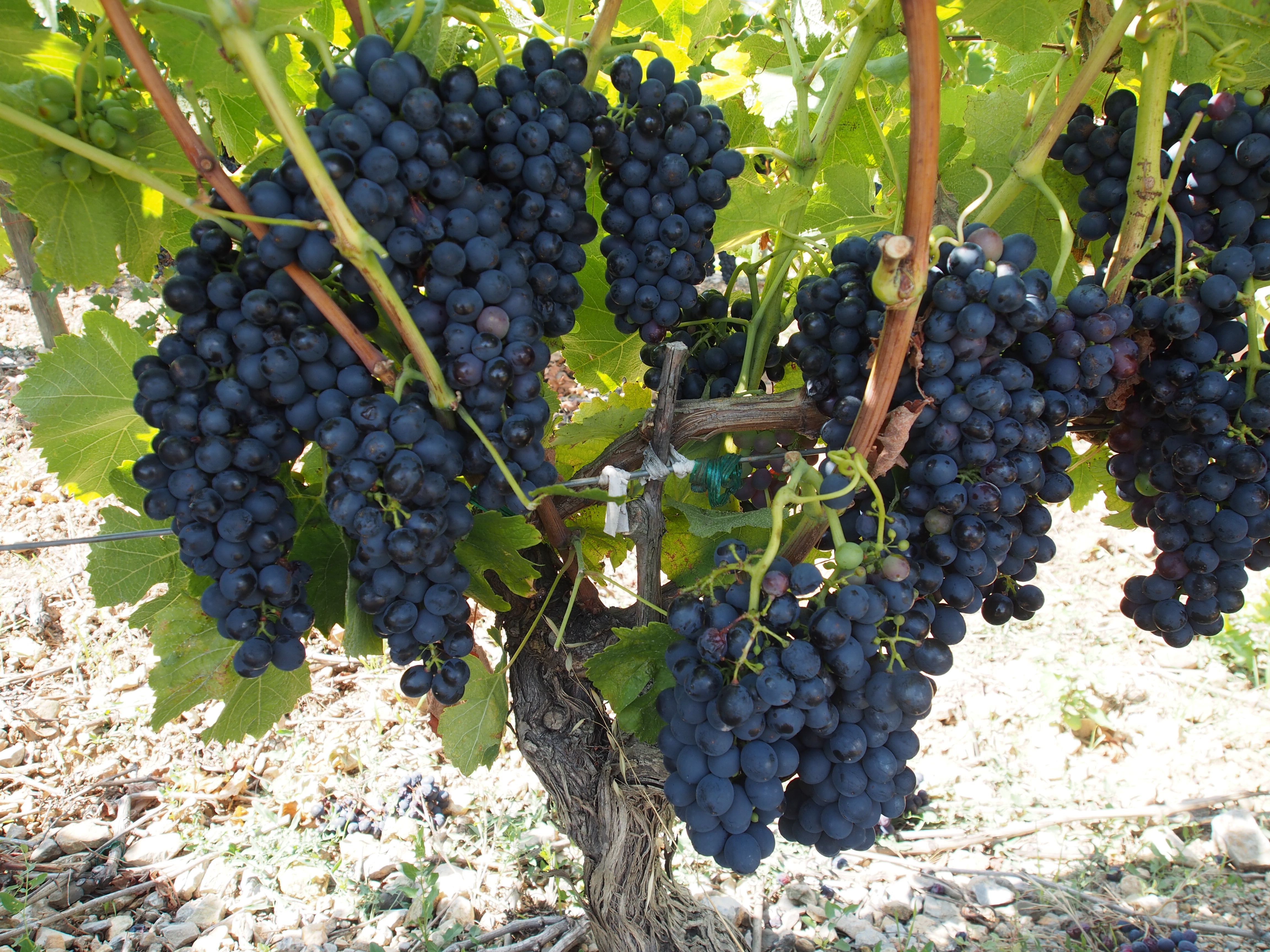
Cabardes
Lucky for us we were only in a couple of regions. While I would have loved to have spent my afternoons with a bottle of wine snuggled in my arms I was saved by the fact that although there were lots of vineyards to visit there was a limited number of types of wine. Thank god for that. It still doesn’t mean the recycling didn’t have to be taken out every second day.
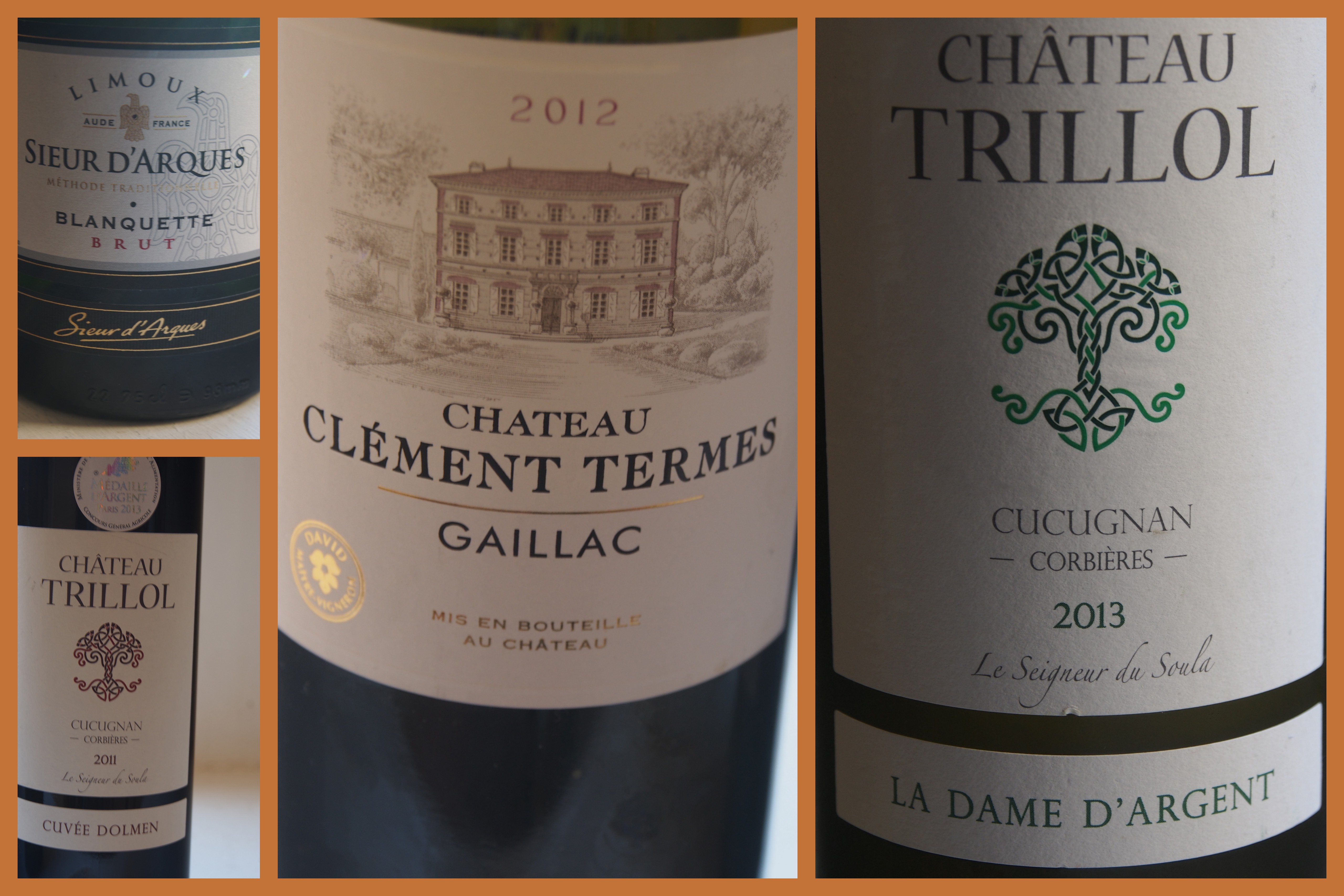
Only a small sampling
Connie was pleased. Although a bit of a teetotaler before coming to France she had learnt to enjoy kir royale – a mixture of cassis and champagne. We weren’t in the champagne region of France but luckily there is a wine here that’s close to champagne called Blanquette de Limoux. I won’t tell you home many bottles of that made it into the recycling but at least enough to keep bottle makers happy.
Okay I can hear you “stop already. enough is enough”. Ok but just one last picture

Back to Thai food next week.
France – Market Days
We’ve been to markets in Carcassonne, Revel, Bram and Mirepoix. They have all been excellent with some bigger than others. They all feature food that is the freshest and more than likely from somewhere within 100 miles. If not 100 then at least from somewhere in the EU.
Moules and frites – my favourite
Tasting is the best part of going to the market. Vendors are always willing to allow you a taste of whatever they are selling. Not only is there the fresh food but there’s also quite the selection of cooked food as well. I can’t admit to having bought any of the cooked food other than a rotisserie chicken. It’s usually to early in the morning for eating or thinking about mussels or paella. However, it all looks good.

Choices
We have made a habit of going to Revel on Saturday mornings for their market. It’s more of a social thing than any buying spree but it does help to fill up the larder. However, we have got to know the waiter at the restaurant where we sit before we begin the market tour. We divide up the list of things we need to buy, have a coffee and perhaps a liquer and then head out to our favourite vendors. I love the chatter, the politeness, the pace, the social interaction, great combination of country and city and the selection.

And there’s the live animals on can take home and cook!
Bread sold by the pound. All kinds and without doubt great.
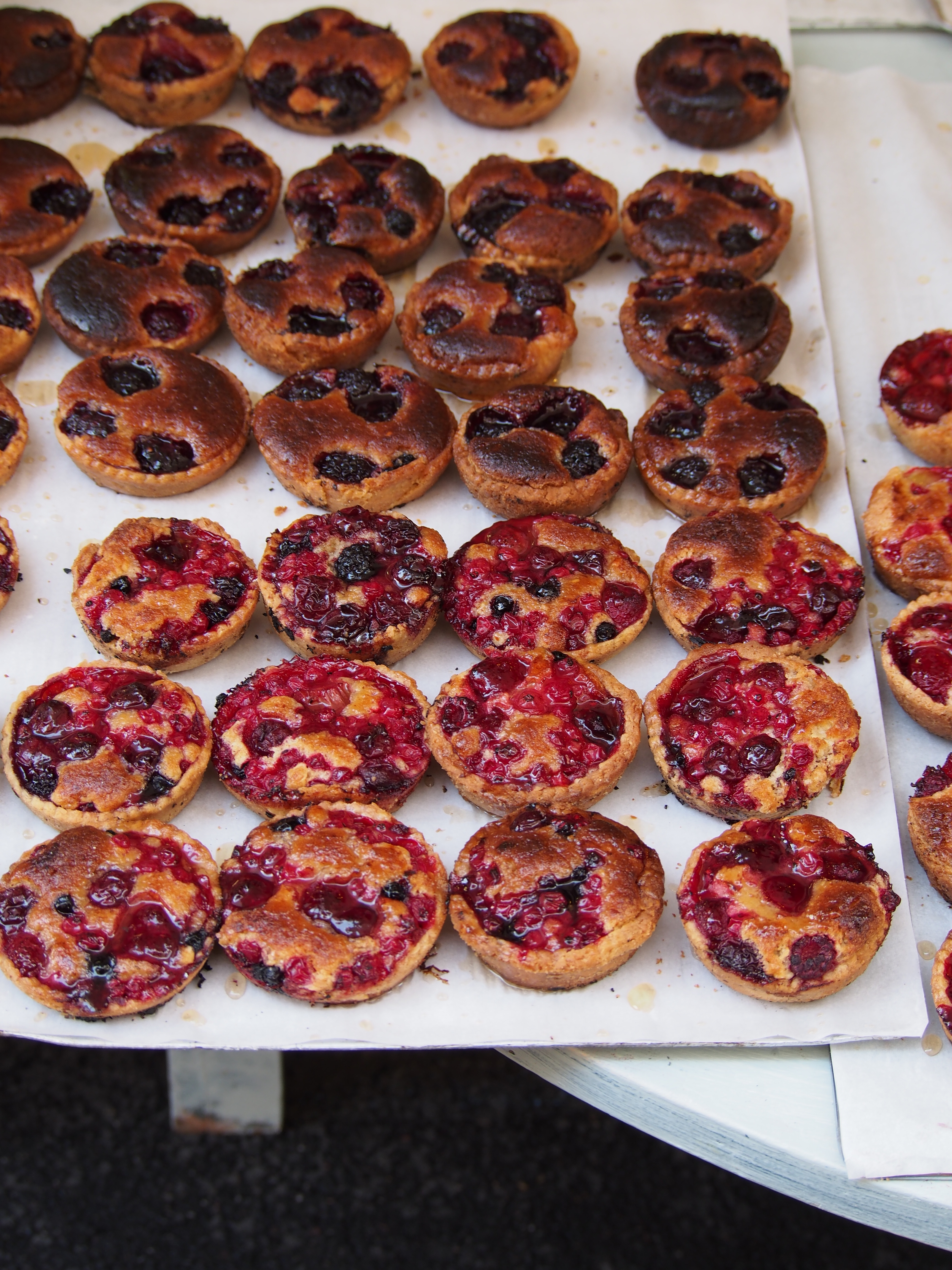
What can I say
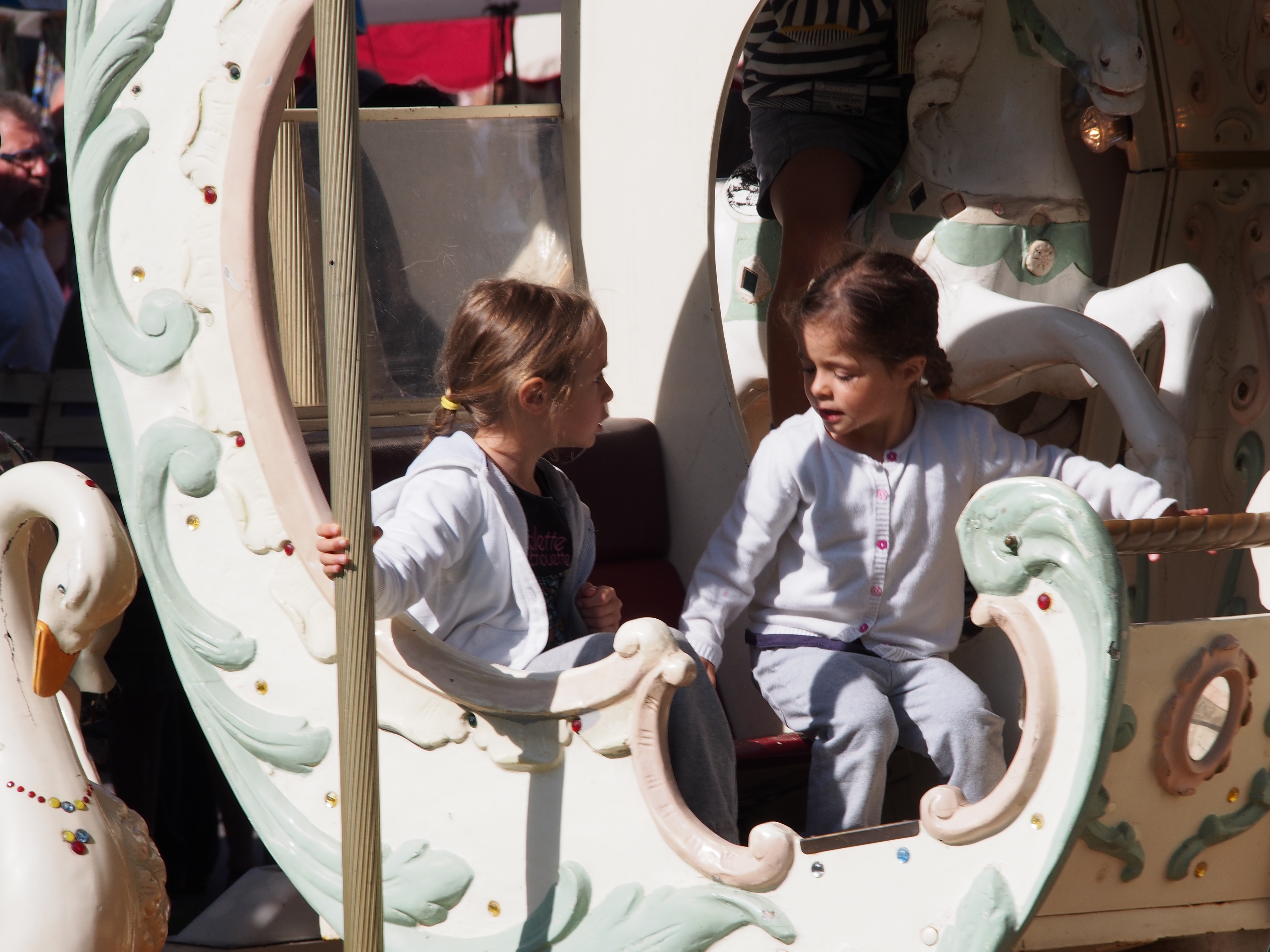
And there is always entertainment for the kids
And last of all there always seems to be music at the market
And then there are the musicians and puppeters
France – Odds and Sods
Here’s a bit of a collection of odd pictures taken in a variety of places that I either I think are good pictures or they evoke a memory that I cherish.
They come in no order as I don’t feel they need to. I have written a description of some of them and others need none. I hope you enjoy.
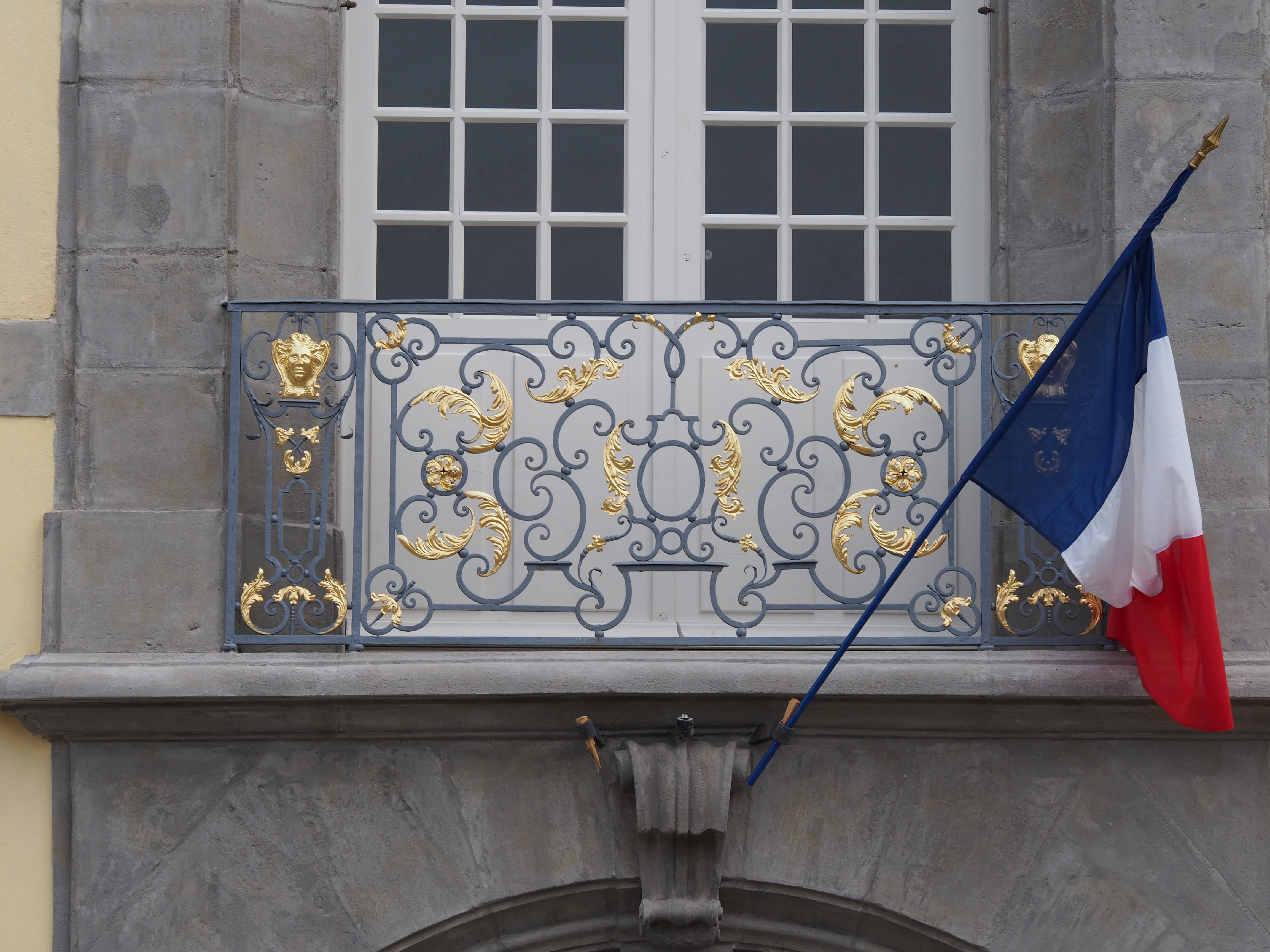
Vive La France
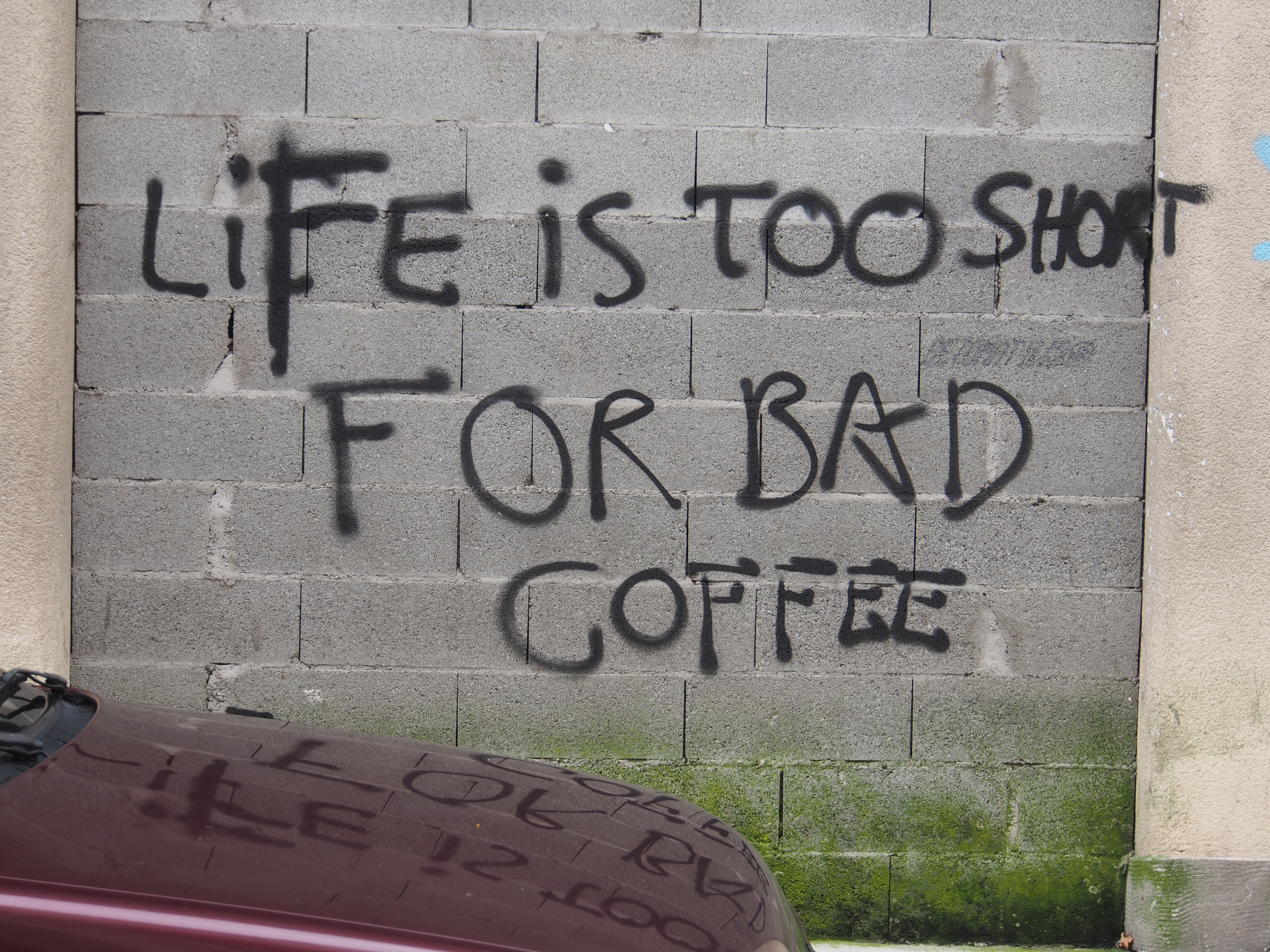
Yes, it is difficult to find good coffee to buy in France to make at home
Seen in the Corbiere region
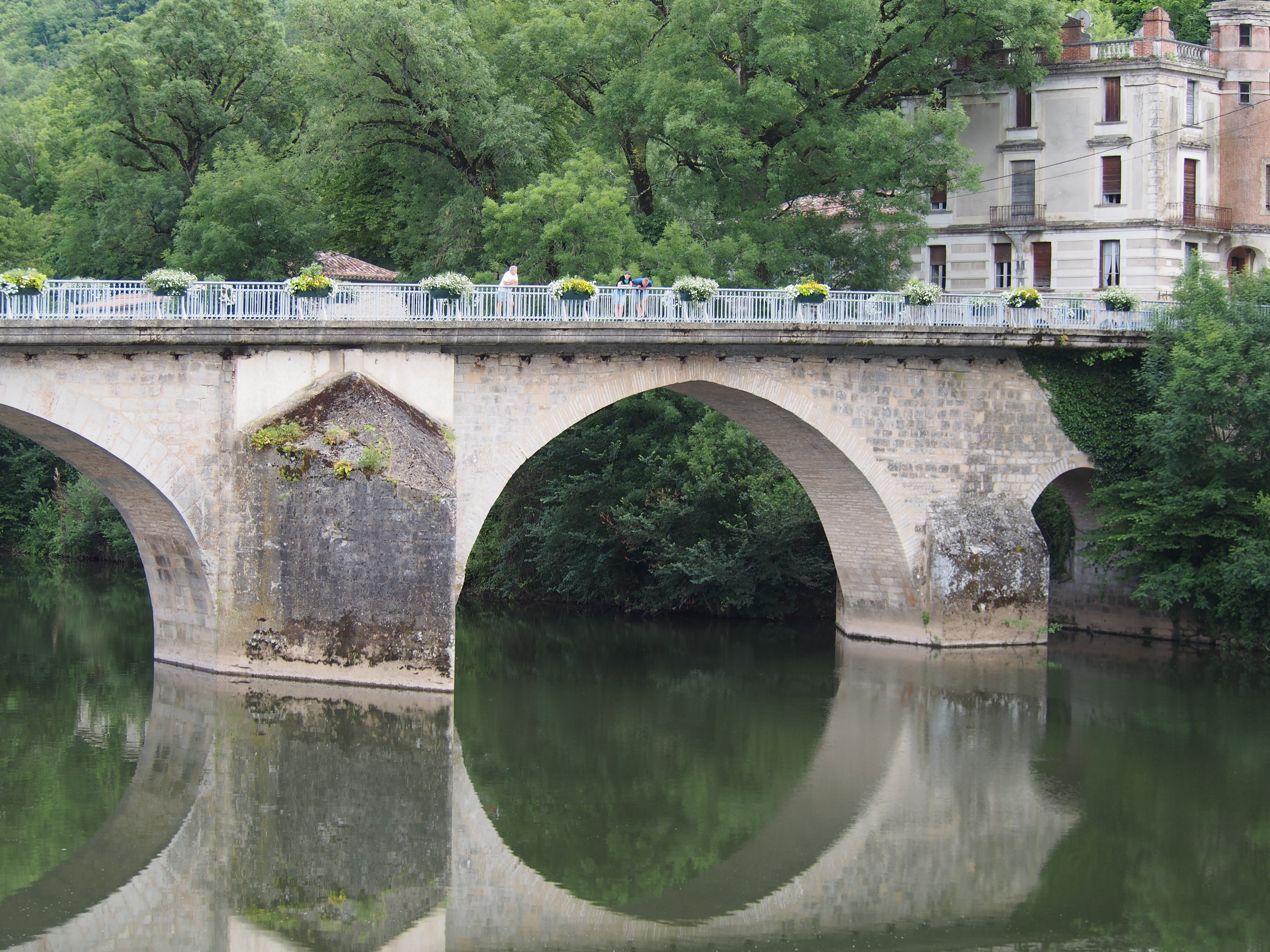
The quintessential European scene. This one is in St. Antonin Noble Val

Corbiers grape. It’s almost the season for picking grapes. Should we stay in France?
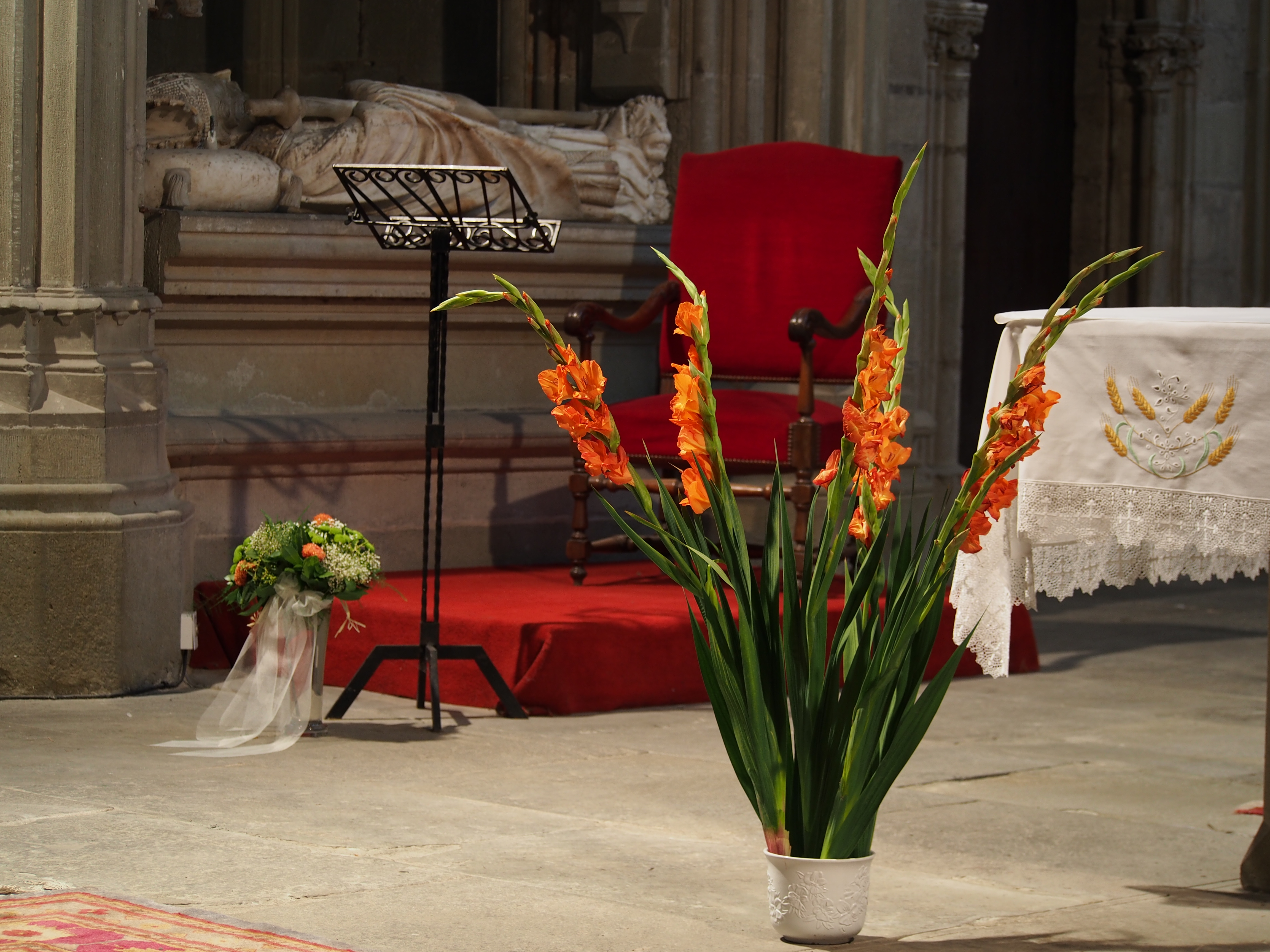
La Citie – Carcassonne. The altar. An amazing nave

Carcassonne. Where don’t they have a ferris wheel.
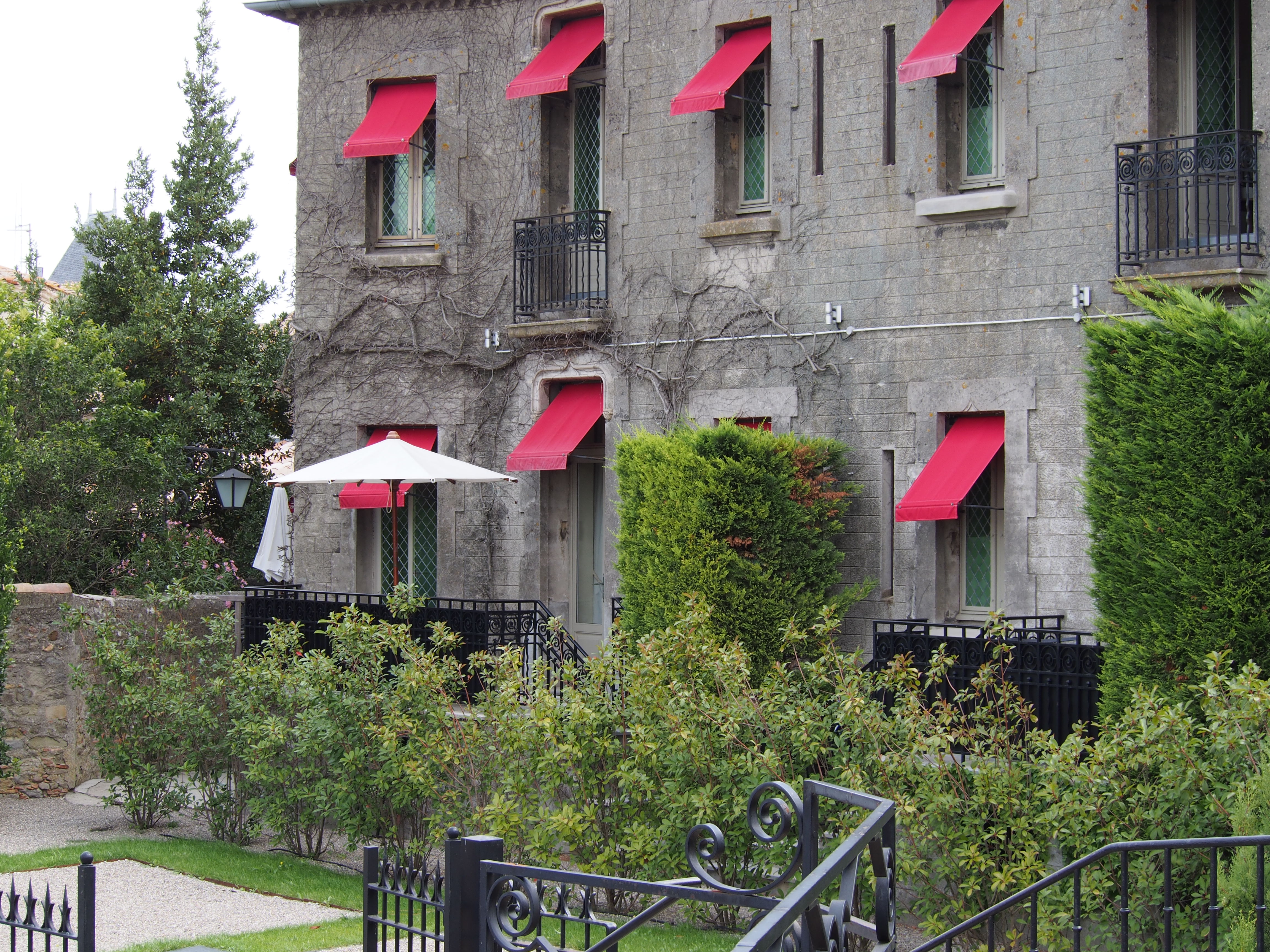
La Cite – Carcasssonne. The Hotel de la Cite located right in the centre of La Cite – beautiful place
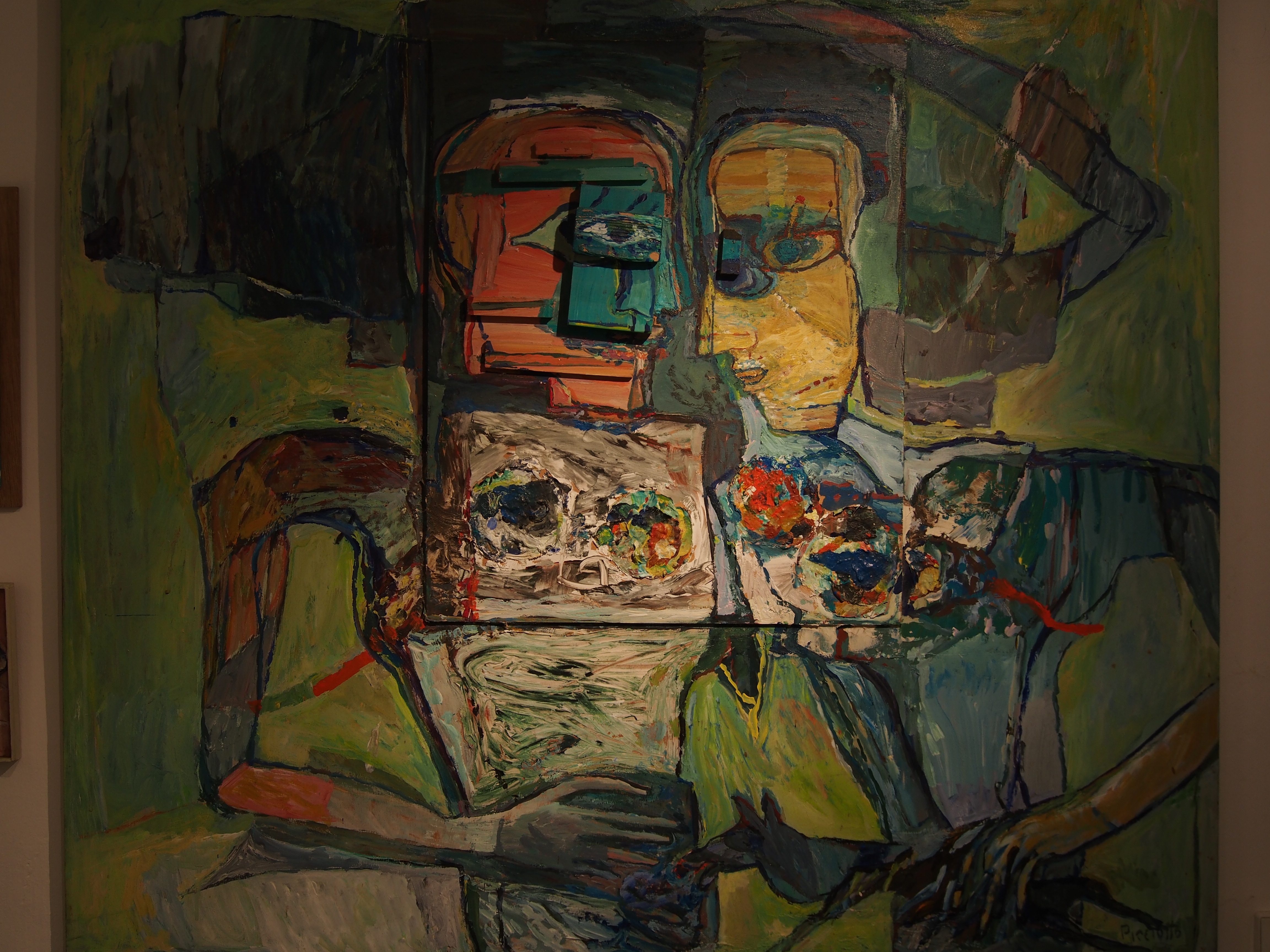
Lagrasse – a piece for the Ceres Franco collection. A must see if you go to Lagrasse. 2 houses packed with art
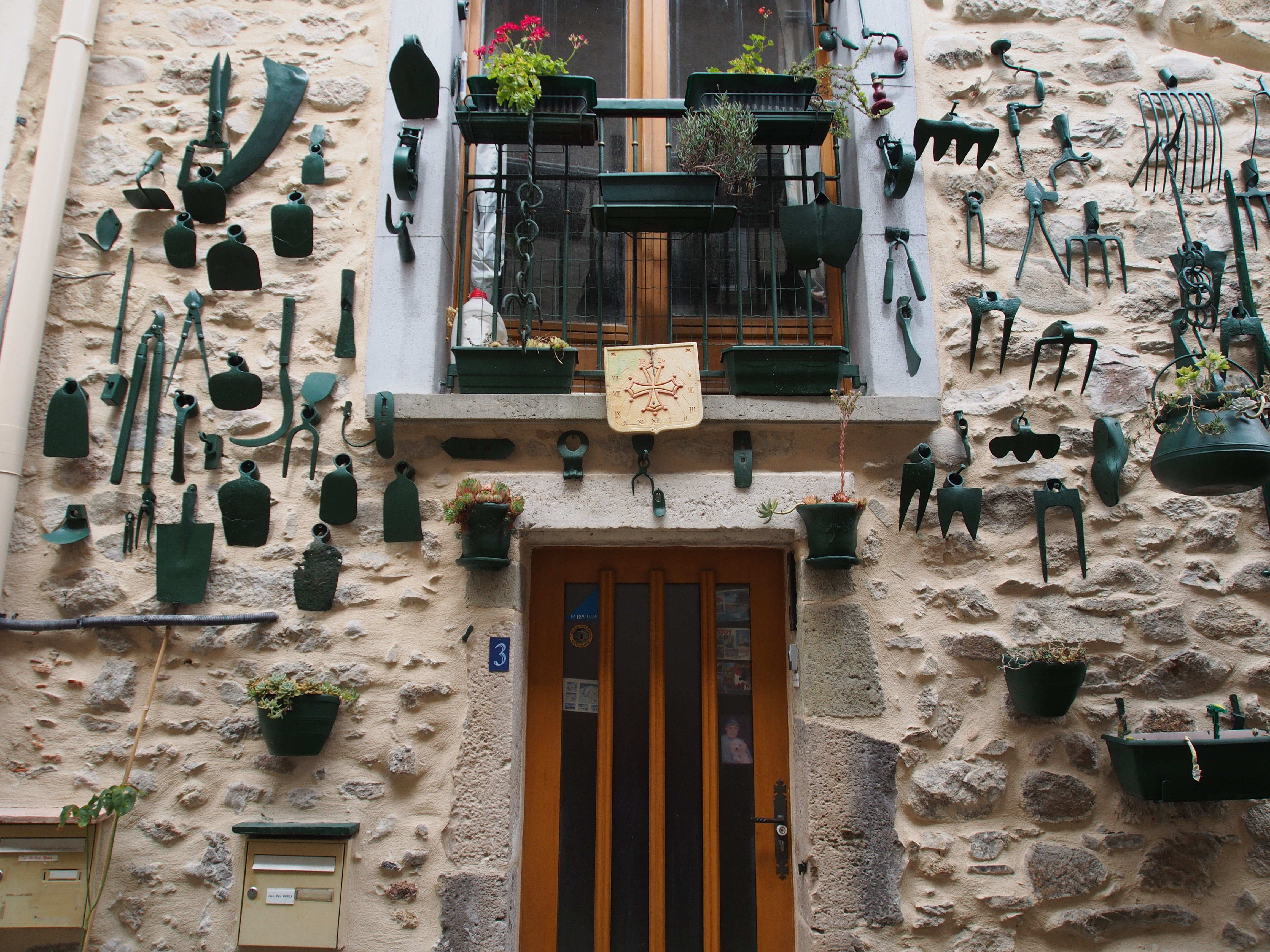
A farmer who has retired to town
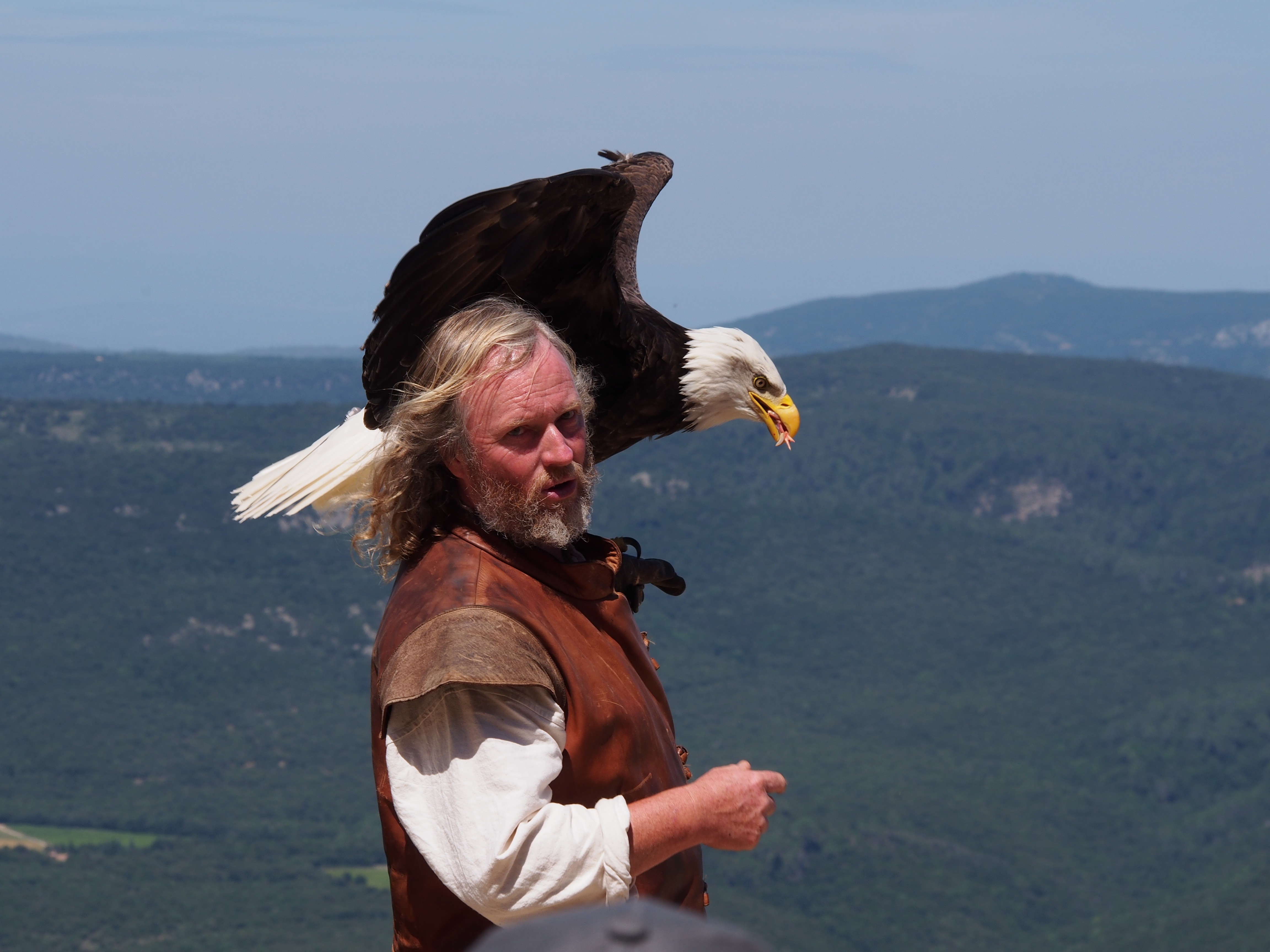
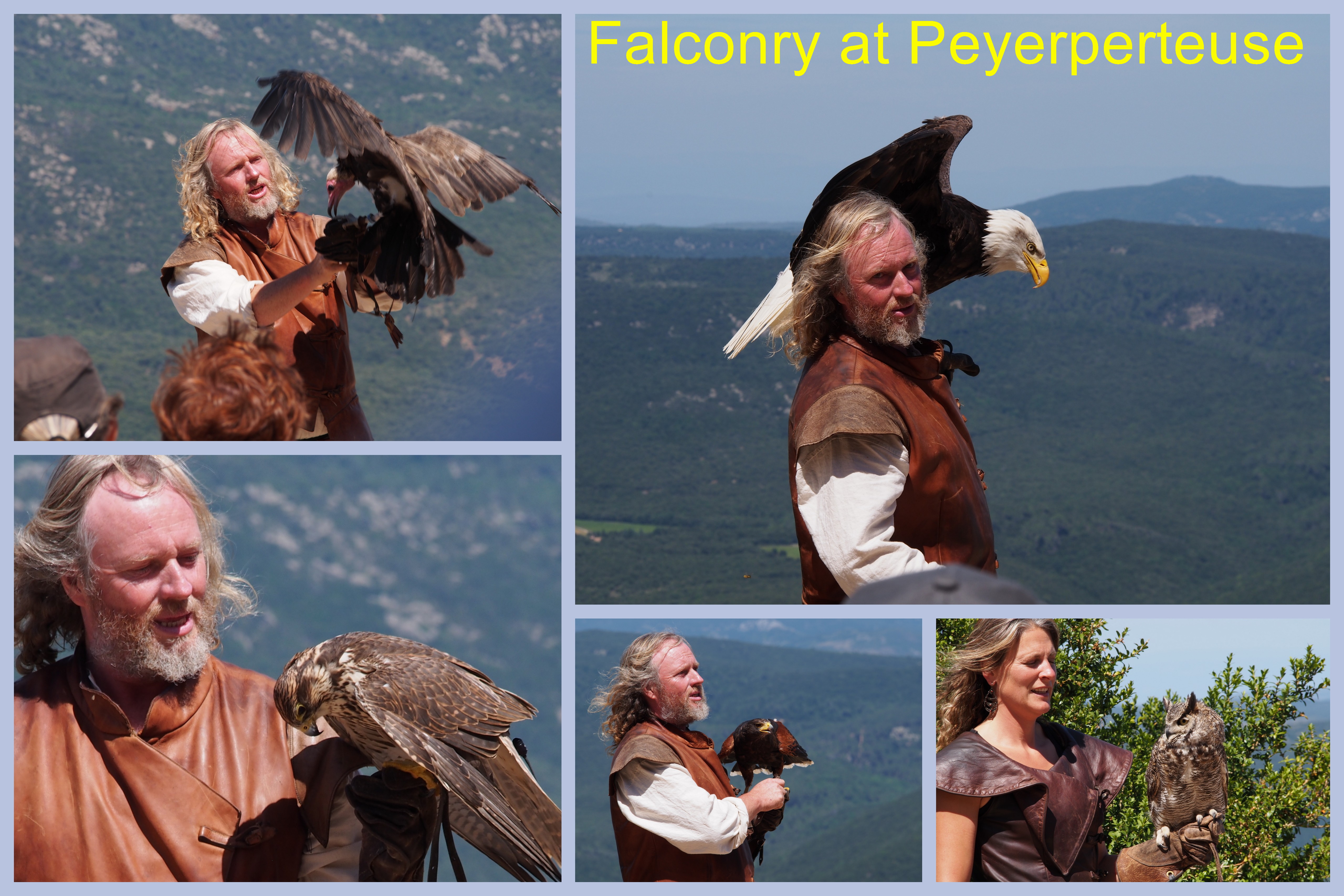
Peyrerpertuse – the falconer

Peyrepertuse – the eagle has escaped and flying free
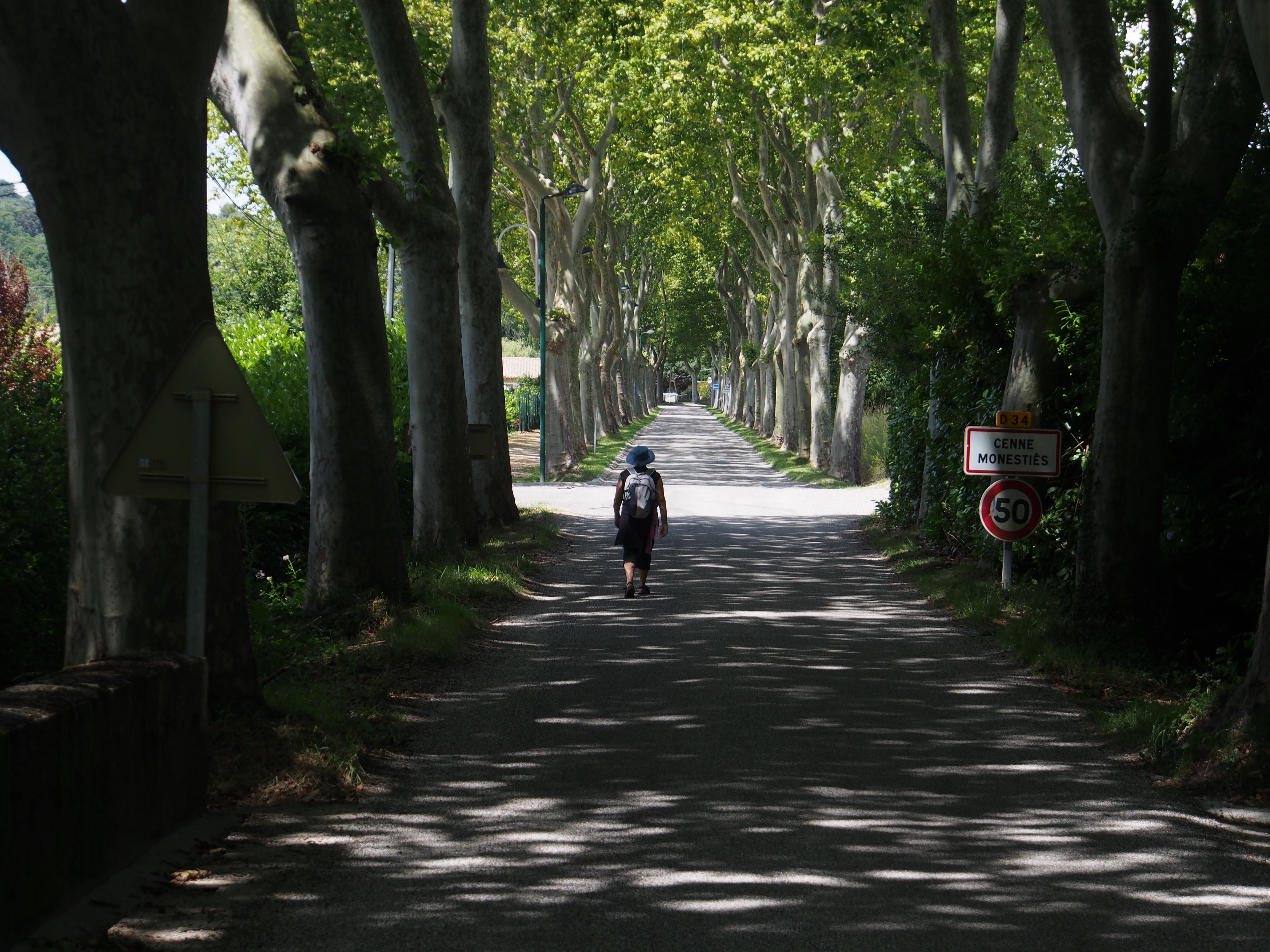
Cennes – nothing like the plane trees
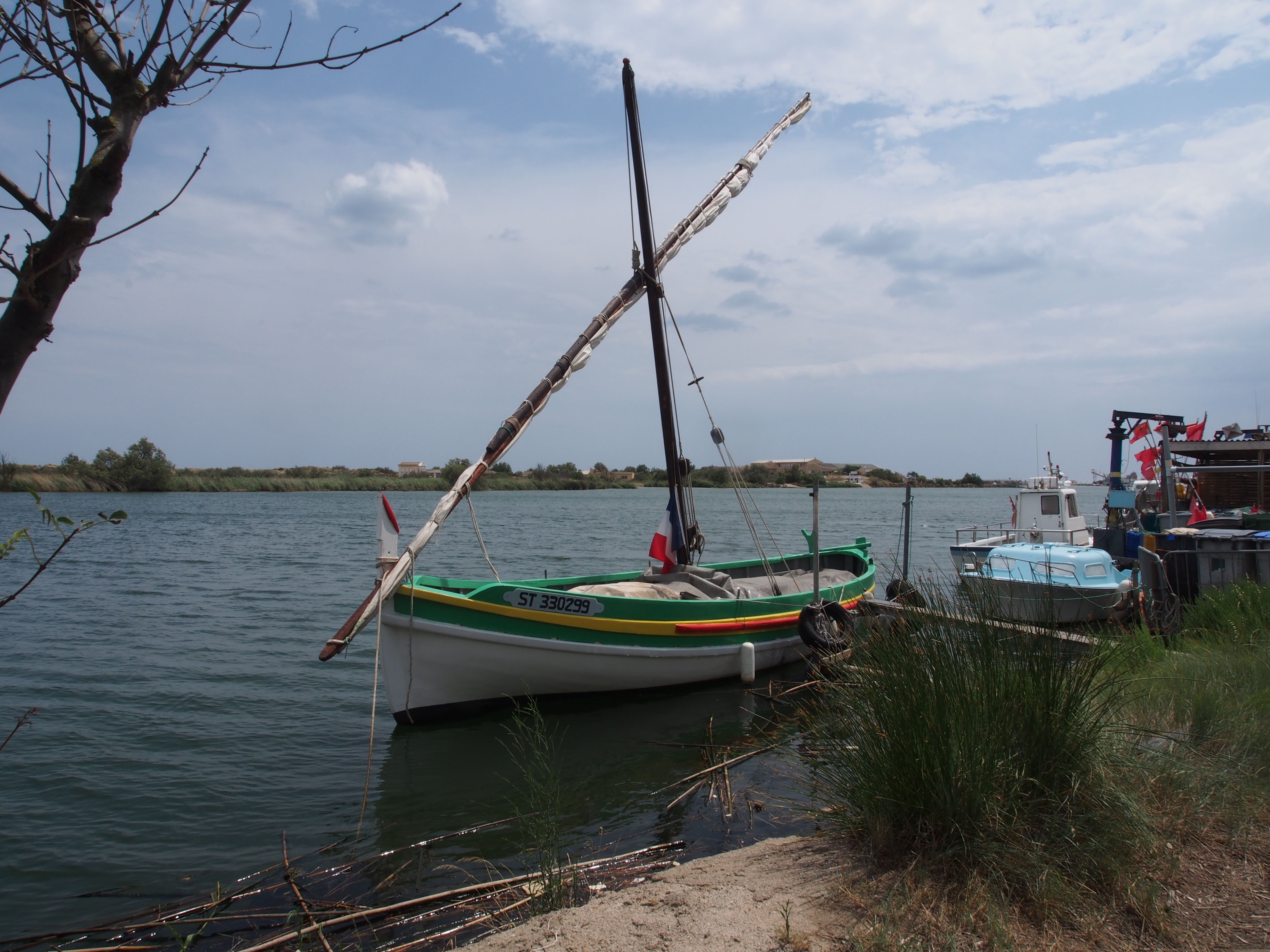
Cap d’Agde. Haven’t stopped looking for that perfect offshore sailing vessel
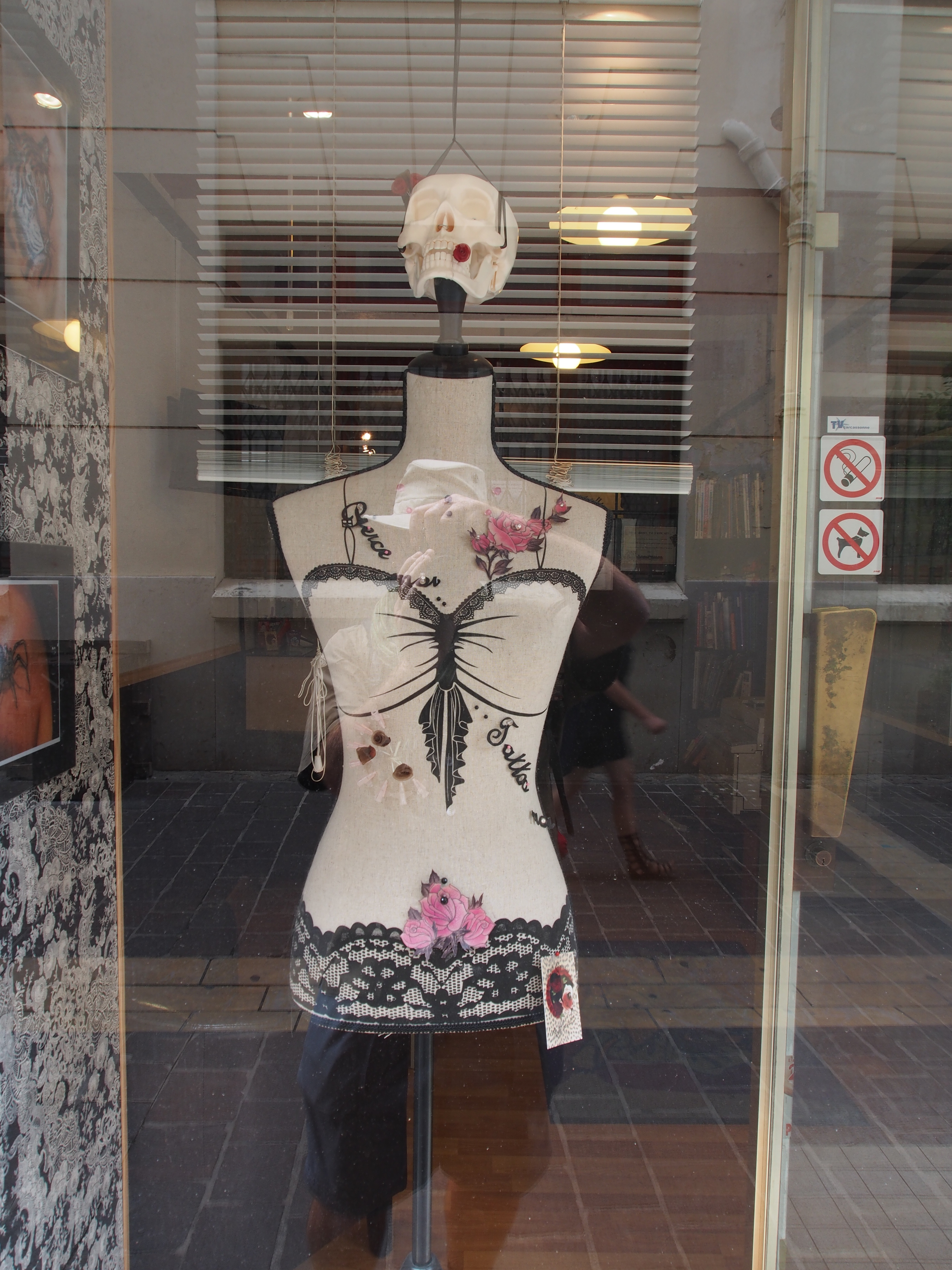
Carcassonne – the tattoo shop
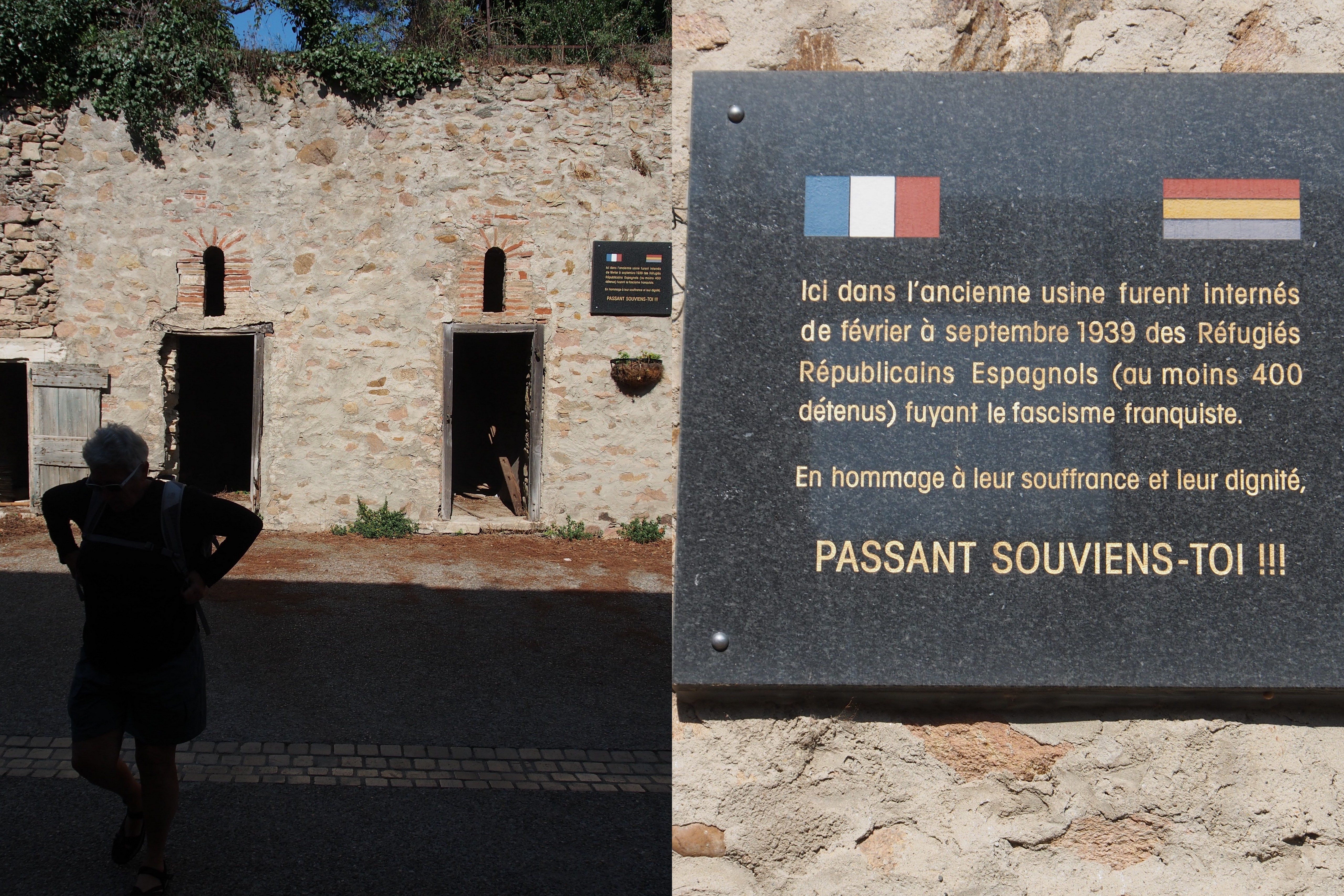
Montolieu – 1936- 1939 incarceration of Spanish communists during the Spanish Civil War
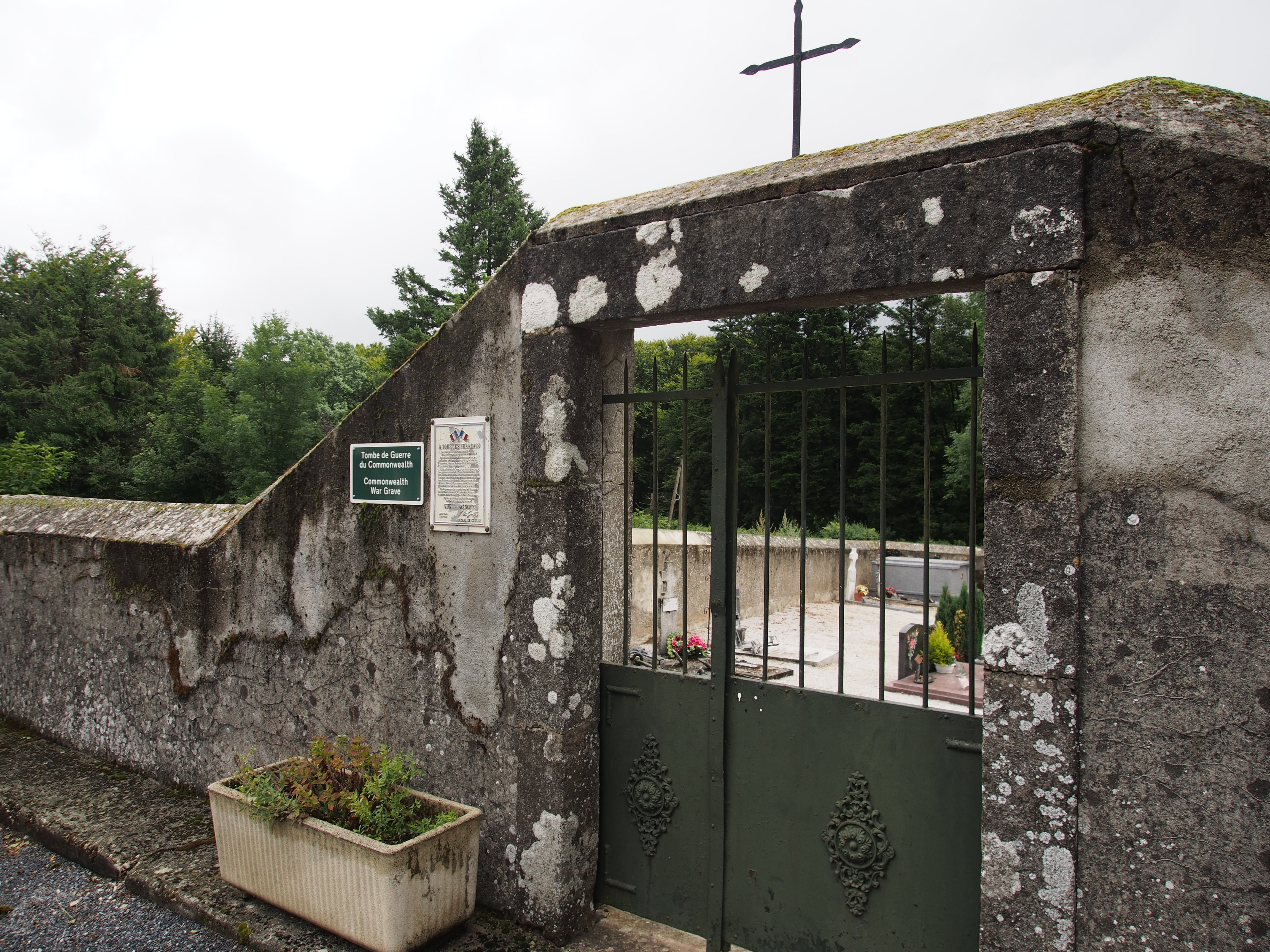
Commonwealth War Grave – Montagne Noir. A cemetery and monument to the resistance fighters of WW11

Montolieu – seen creeping around town

Brousse – the annual paper dress festival. Brousse has one paper making establishment still in operation. Worth visiting
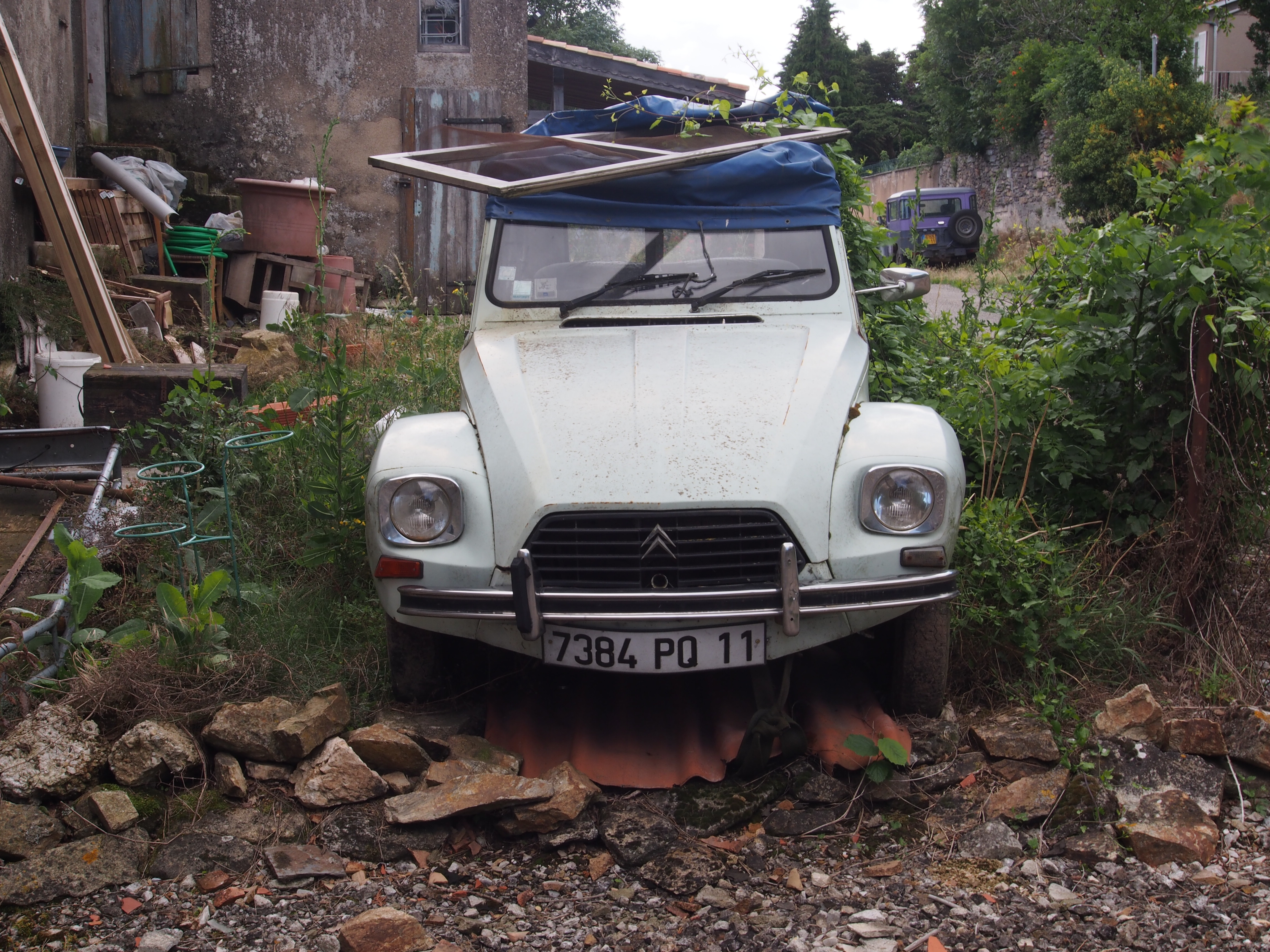
Saissac – my getaway car
BYE
Chateaus, castles and abbeys
The last blog left everyone on the road in Beziers having dropped off our bicycles and Relax Rentals. We did make it back to Saissac by train and bus and since then have been exploring south and south-eastern France. This area includes the Aude Valley and the foothills to the Pyrenees.
Historically the area has been invaded many times, settled in by the Romans, conquered by the Visigoths, lorded over by the aristocracy, counts and feudalism, repressed by the Inquisition, administered by the Revolution, devastated by the Nazis, The summation above misses much of the history of the area and each can be delved into and explored in great detail. However, over the centuries the area represents two proud and strong cultures of Occitane and Catalan, both of which have survived through many changes throughout history. We have met people not only in Saissac but also in other areas here that proudly identify themselves as not French but rather Occitane or Catalan.
So, as part of our stay here we have made an effort to get out and see a little of the countryside and experience through walks, museum visits, château wanderings and lots of food and wine (!). Below are some pictures of chateaus, castles, museums, art, food, cities and people.
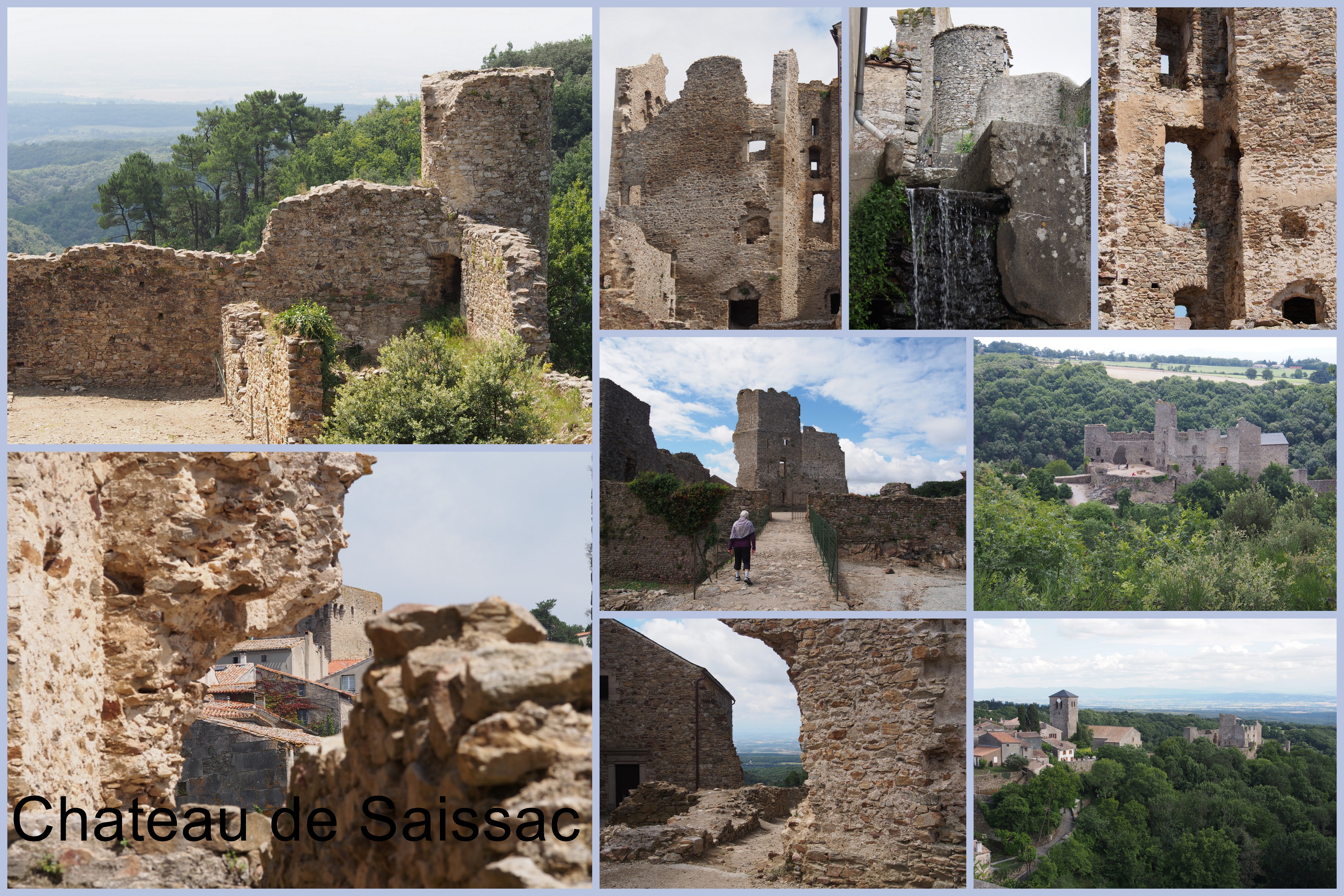
Of course, our first visit was to our local village Chateau:
The next château took a little more effort as did many of the others. To get to Chateau Montsegur was an incredible climb starting with a steep climb up into the mountains with the car and then a 1000metre climb from the parking lot up to the Chateau. We drove through the valleys of the foothills of the Pyrenees and slowly climbed up to a parking area. Our thoughts were on the sign which indicated an incredible view from the top of the Chateau and an incredible site. The picture looked like this:

Chateau Montsegur
And the reality was this:
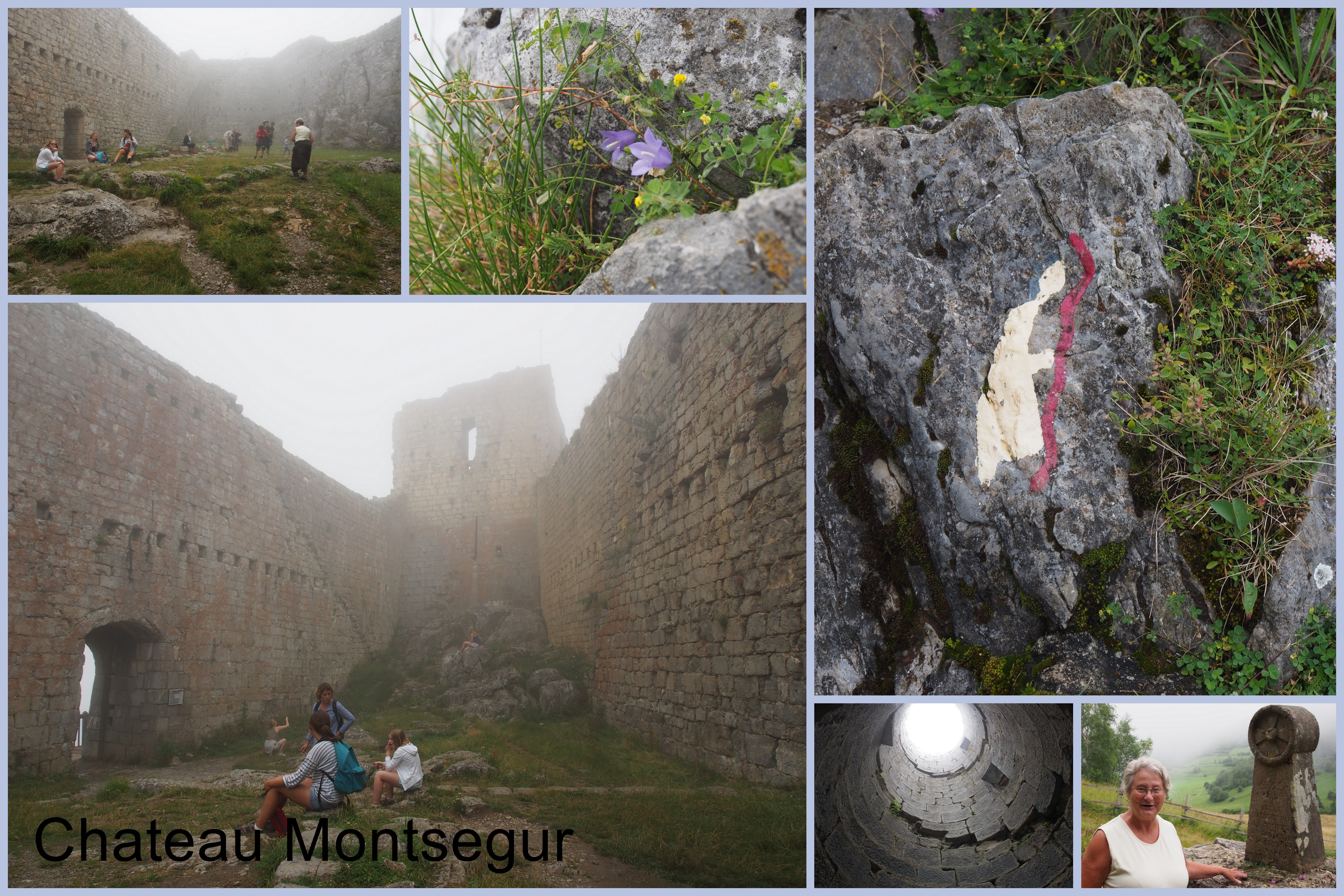
No loss. We enjoyed what we saw and on our way to the next château we stopped for lunch one can see below the château in the ‘clear view’ picture of Chateau Montsegur. Our lunch was terrific and prepared us for the next climb at Chateau de Puilaurens a Lapradelle
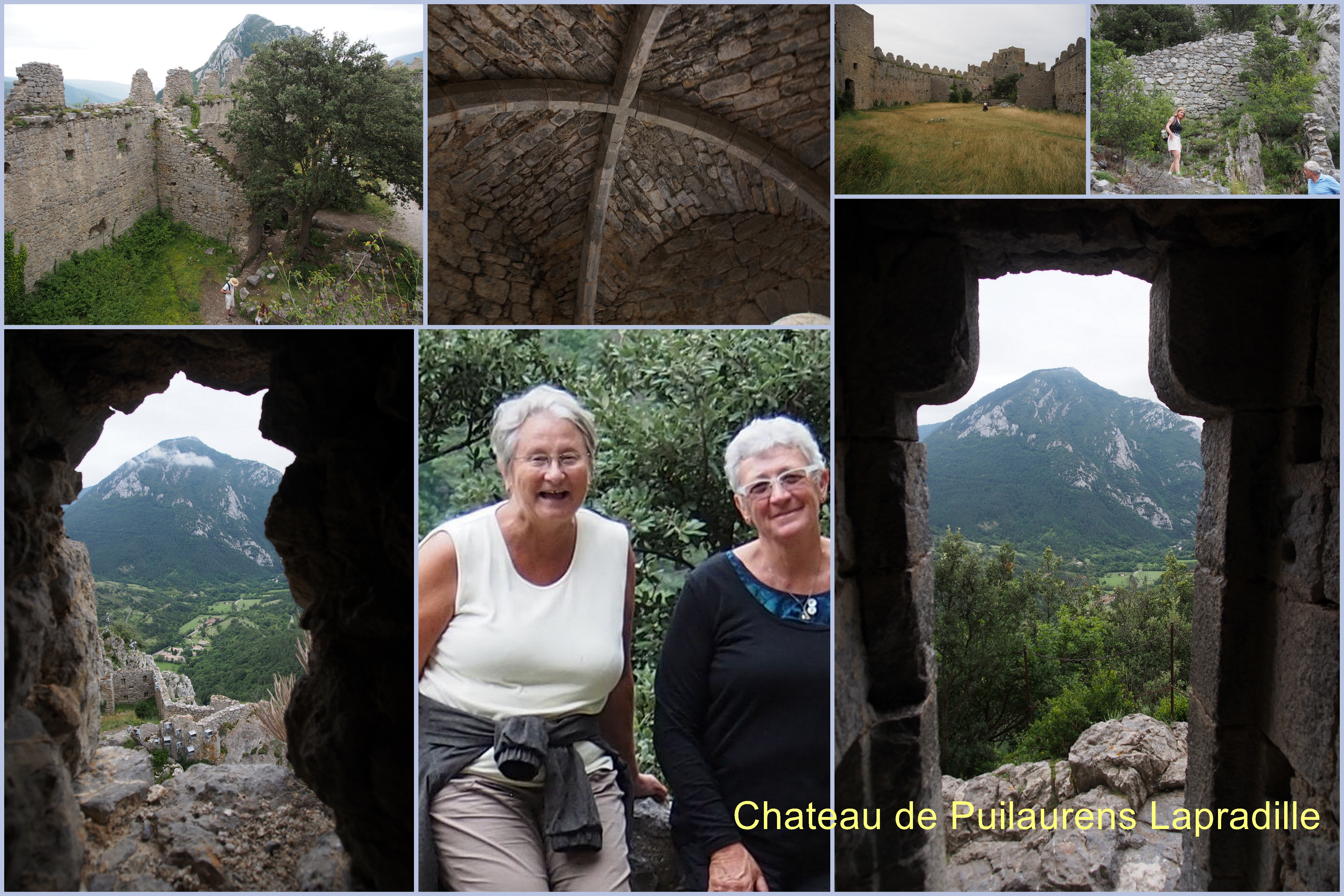
That was it for that day. We certainly don’t like to rush things but by the time we got back to Saissac we were so enthralled with our tour that we got up the next morning to head down to view Chateau de Peyerpertuse a Duilhac. This is a most spectacular Chateau and if one has only one chance to see a Cathar castle then I propose this one is it.

It was a beautifully long climb up to the top and we were rewarded a spectacular view out over the valley and could even see the Mediterranean Sea. What a defensive position. Once at the top we timed it perfectly to be treated to a wonderful exhibition of falconry. Not only did the falconers have falcons but also vultures, a Pacific North West bald-headed eagle and an owl.
It was a spectacular showing of falconry skills and was amazing to be at such a height and see these birds circling the landscape. If you look carefully at the collage of pictures above there is a bald-headed eagle circling the Chateau. Amazing…
Ok enough of chateaus. We are now on to Abbeys, On the same day as visiting Peyrepertuse we looped around and headed back to Saissac through Lagrasse stopping for a look at an art gallery and then it was time to head back to Saissac.
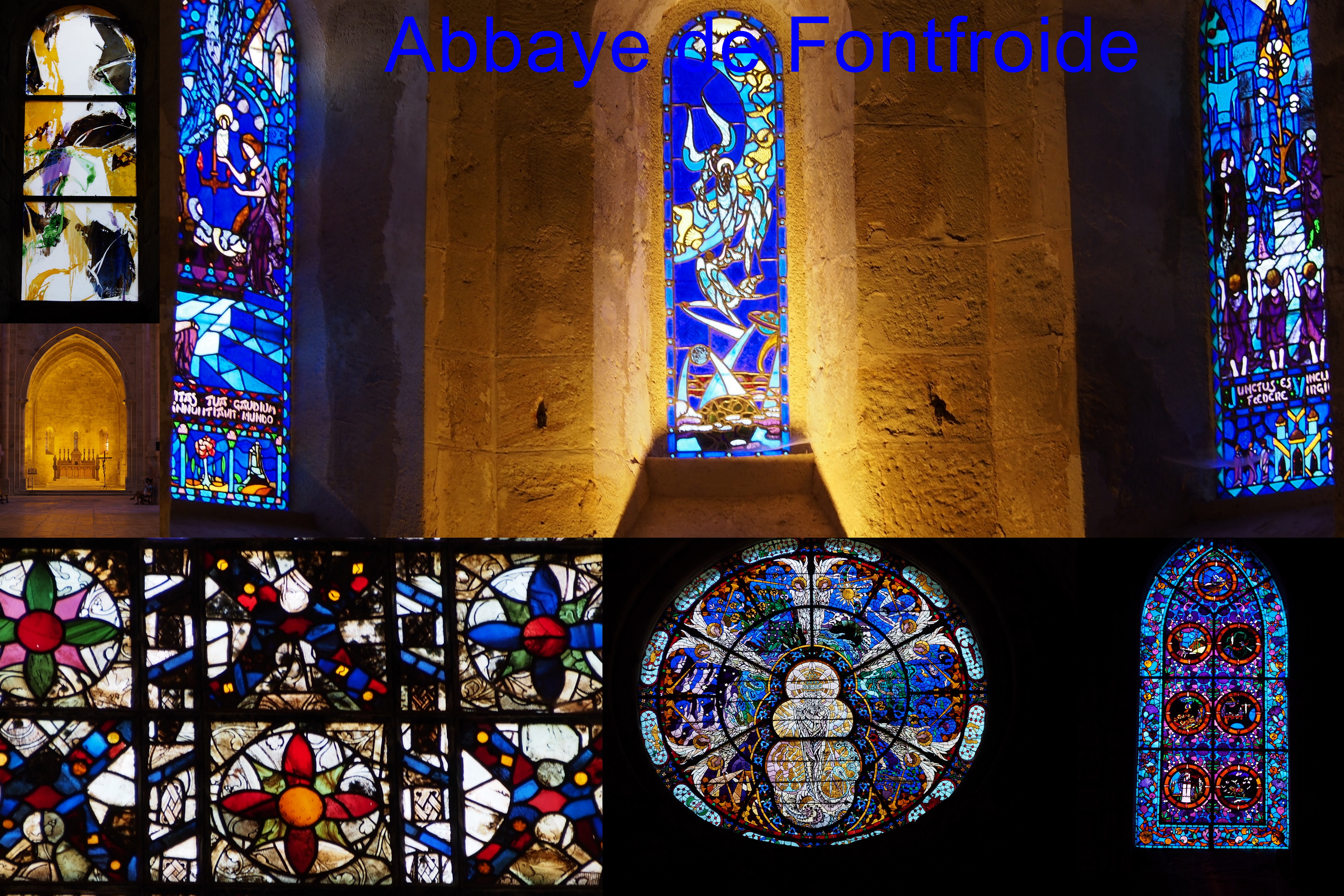
However, undeterred we headed out the next day to view a few abbeys. Heading east in the morning we went through Narbonne, stopping at the central market to pick up a picnic lunch, and then on to Abbaye Fontfroide. Abbaye Fontfroide is held in private hands and is in amazing condition. As well as the Abbaye acting as a tourist magnet to the region the owners also have vast vineyards producing a corbieres variety of wine of very good quality.

We pulled out our cheeses, cold meats, fresh fruits and drinks on the property of Fontfroide surrounded by roses, planus trees and sculptures. Who can complain. The sun shone, no-one asked us to move on, it was quiet and so we munched on oblivious to the other tourists strolling through looking longingly at our lunch. Planning, planning, plannning….ha, ha.
After we walked around the Abbaye staring in disbelief at the beautiful gardens, the stain glass and the abbaye itself.
Our most recent foray and the last one for Sue as she was heading back to Victoria was a trip to take in one more abbey and a Chateau.
The first was the Abbaye Villelongue. It lies in the valley below us only a 20 minute drive from Saissac. Tucked away in a remote area on a very small road it presented an interesting contrast to all the others abbeys as much is in ruins but it is still a family home.
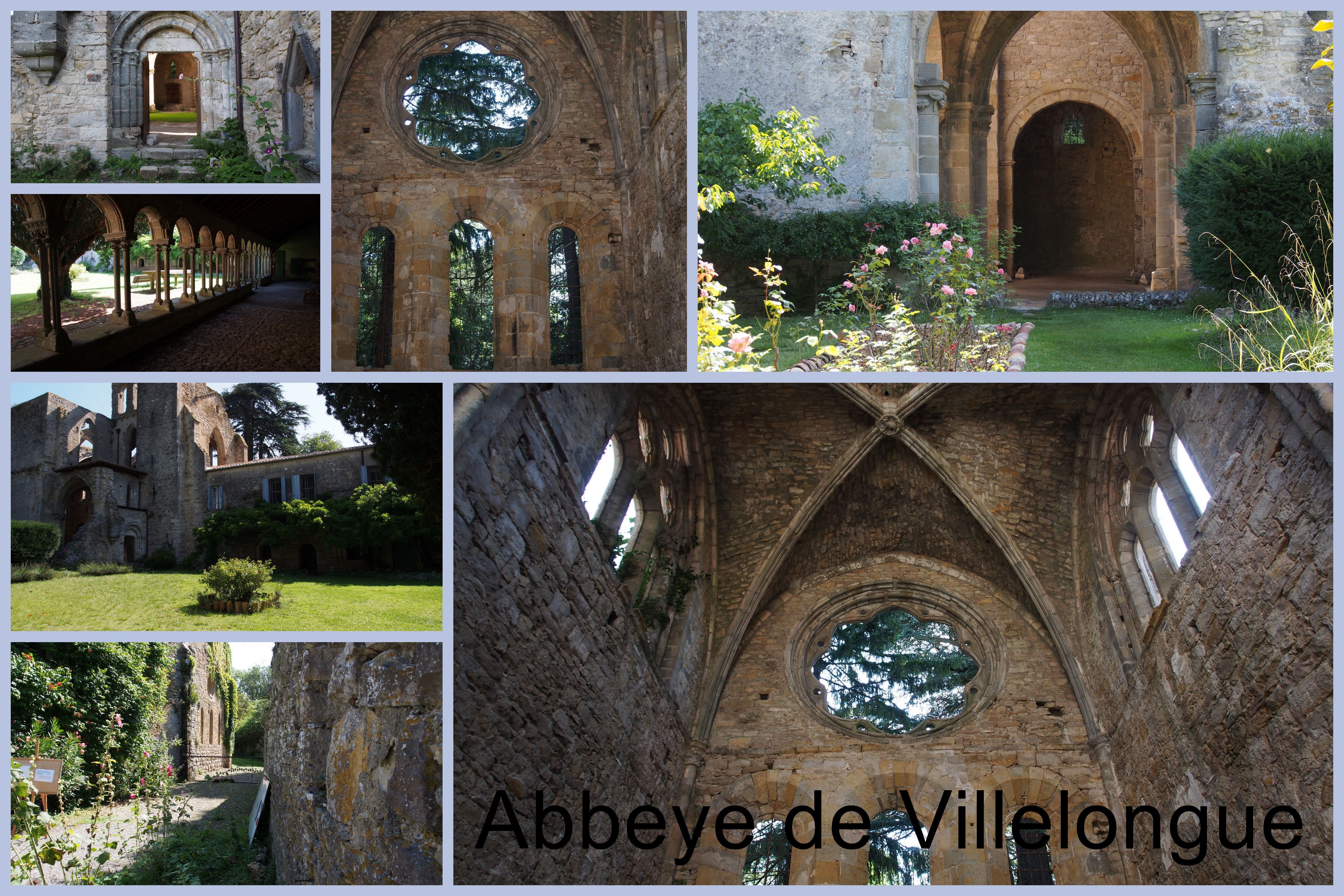
There is a very old garden which is still maintained and productive. It’s also a lovely spot to stay if one was looking for a quiet night or two in the countryside as there are several Auberge D’Hote including one run by the Abbaye.
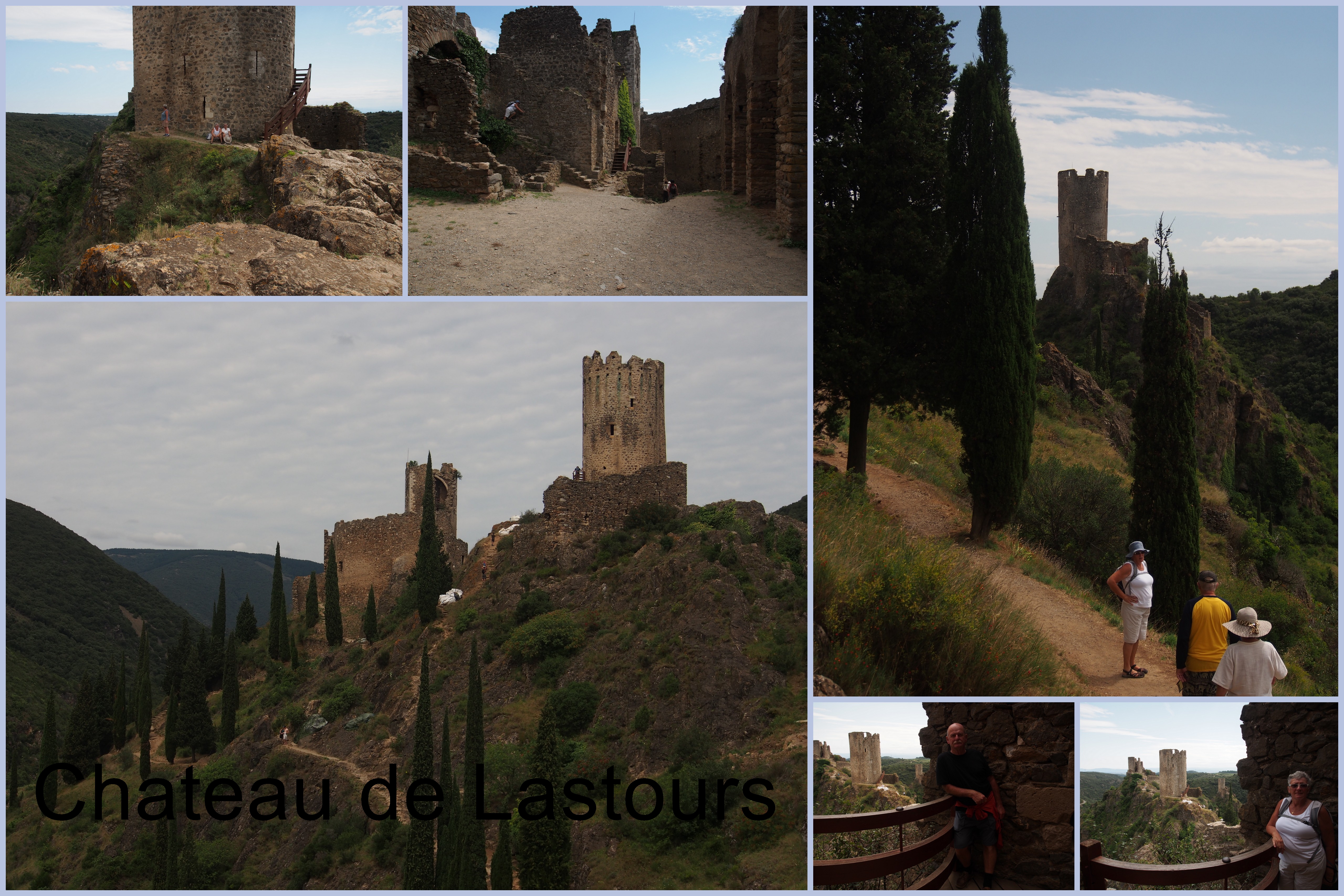
Then on to our last Chateau for a while – Chateaux Lastours

Chateaux de Lastours as seen from the town below
Like all the châteaux, perched on the highest point and from a defensive viewpoint almost impregnable, but not quite for the persistent. No-one actually successfully besieged the châteaux but rather the inhabitants capitulated. There are actually 4 châteaux that make up the whole all of which are in ruin but there is still enough left to give a pretty good idea of their layout.
Almost last on the tour of the countryside was the Abbaye de Saint-Papoul. Again, another abbaye close to Saissac and all in pretty good shape.

We still haven’t completed our tour but we have lost an adventuring mate, Sue. Thanks Sue for being such a great driver and guide. I tried my best at navigation and we got lost lots of times but we always had fun discovering unexpected gems. And thanks Connie for putting up with all the detours, long days in the car and our penchant for searching out the most outrageous art.
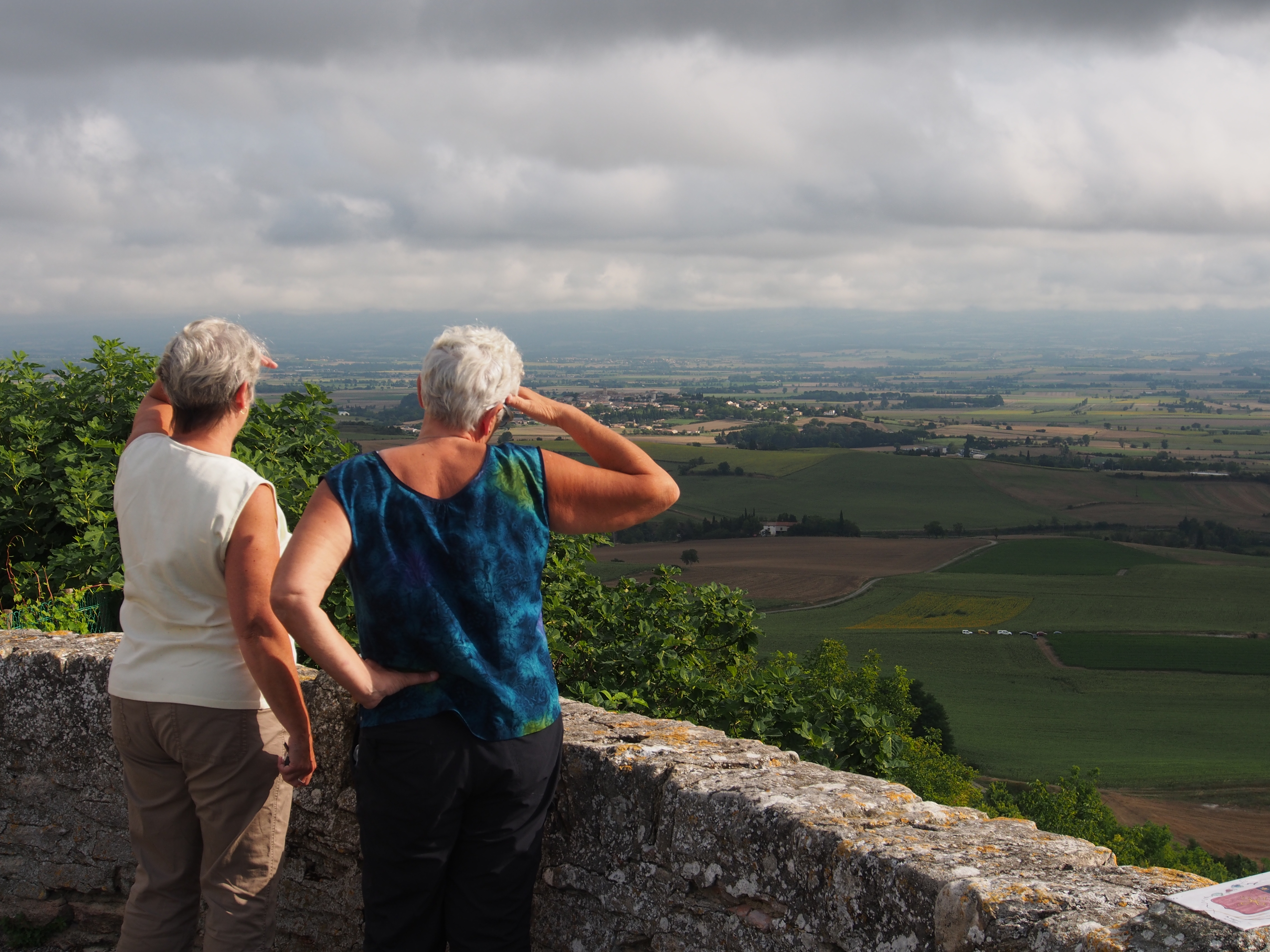
Sue and Connie gaining the high ground to ensure no-one is following us and we are going in the right direction
And last but not least is the queen/king of all the Chateau – Chateau de la Cite de Carcassonne. It is a highlight because of the condition of the grounds around the Chateau but still within the walls. Up until 30 years ago there were still close to 30,000 people who lived within the walls of the city. But as tourism grows the walled city has become a huge tourist attraction. It’s still worth wading through people from all over the wall to get into the centre and see both the ramparts and the cathedral – both stunning.
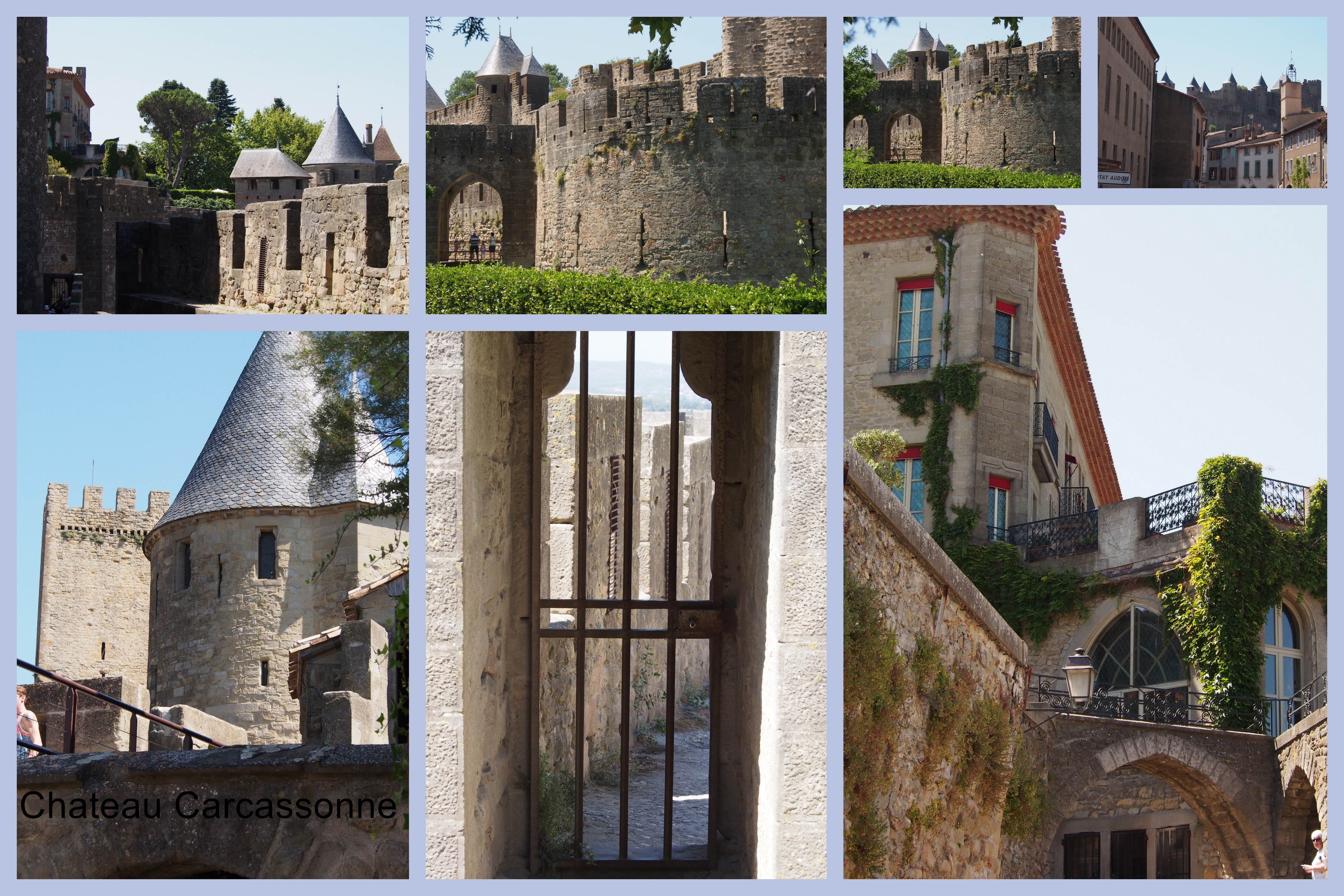
A reminder of our other life
Canal du Midi – Day Five and Six
It’s true. I can’t believe I didn’t take my camera off my shoulder for day five cycling. It was a long day. Had to find our way out of Agde in which one is directed to go off the trail and take an alternate route which is much longer than the direct route along the ocean.
We were now ‘out in the open’. The day was blistering. The bitumen trail was hot but traffic at a minimum. Eventually we made our way around the Etang, or salt marsh, and back on to the direct route between Agde and Sete. I have to say that without the tablet
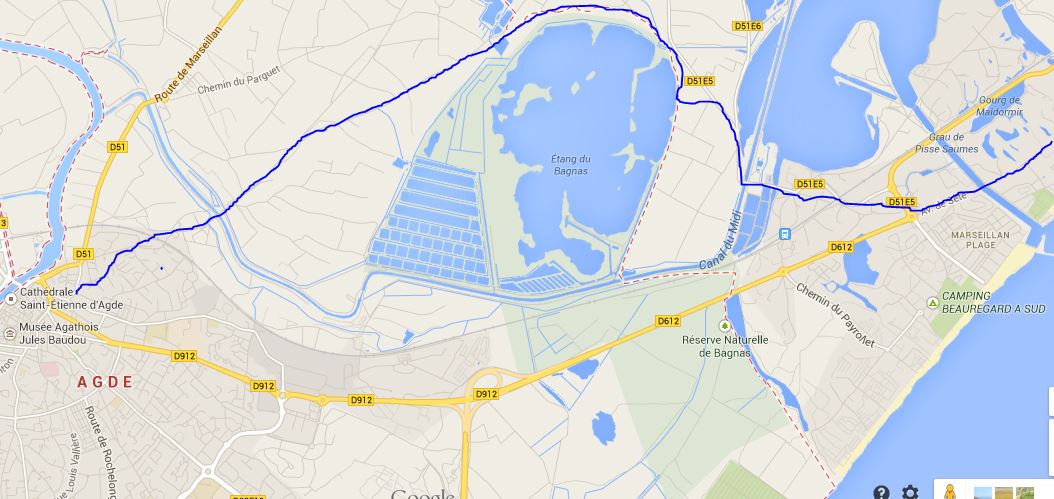
Agde to Sete
to help with navigation we would have had a hard time finding our way around the Etang. Supports for cyclists were minimal in terms of signage but once back down close to the ocean things changed drastically.
The old road between Agde and Sete had been converted into a bike path and a new road built parallel to the old road 1/2 km away. So, the path we got to ride along followed right along the edge of the dunes and we would get glimpses of the Mediterranean where access gulleys existed.

Photo by Leslie Ewing Converted road to bike path of 20+km
The cycling was hot and dry. However, there were bathrooms along the way where one could stop and refill water bottles, stand under the shade for a while and then on to the next section. This section between Agde and Sete is about 20km. By the time we got to the end of the path and the beginning of Sete we were ready for a beer or maybe more.

Drink French beer?
Finally we got back into the saddle and cycled through the town to our Airbnb accommodation we had arranged for the previous evening. It was a small apartment located very close to the main town market and a few minutes walk to one of the major waterways that make up the town.

Photo by Leslie Ewing
Art on the path
Sete is a working town. It’s not prettied up for tourists and I kick myself for not speaking good enough French to walk up to a group of fisherman at the docks and asking if I could take a picture of them as they mended their nets together. It was such a quintessential photo of the Mediterranean fishing port and I missed it.
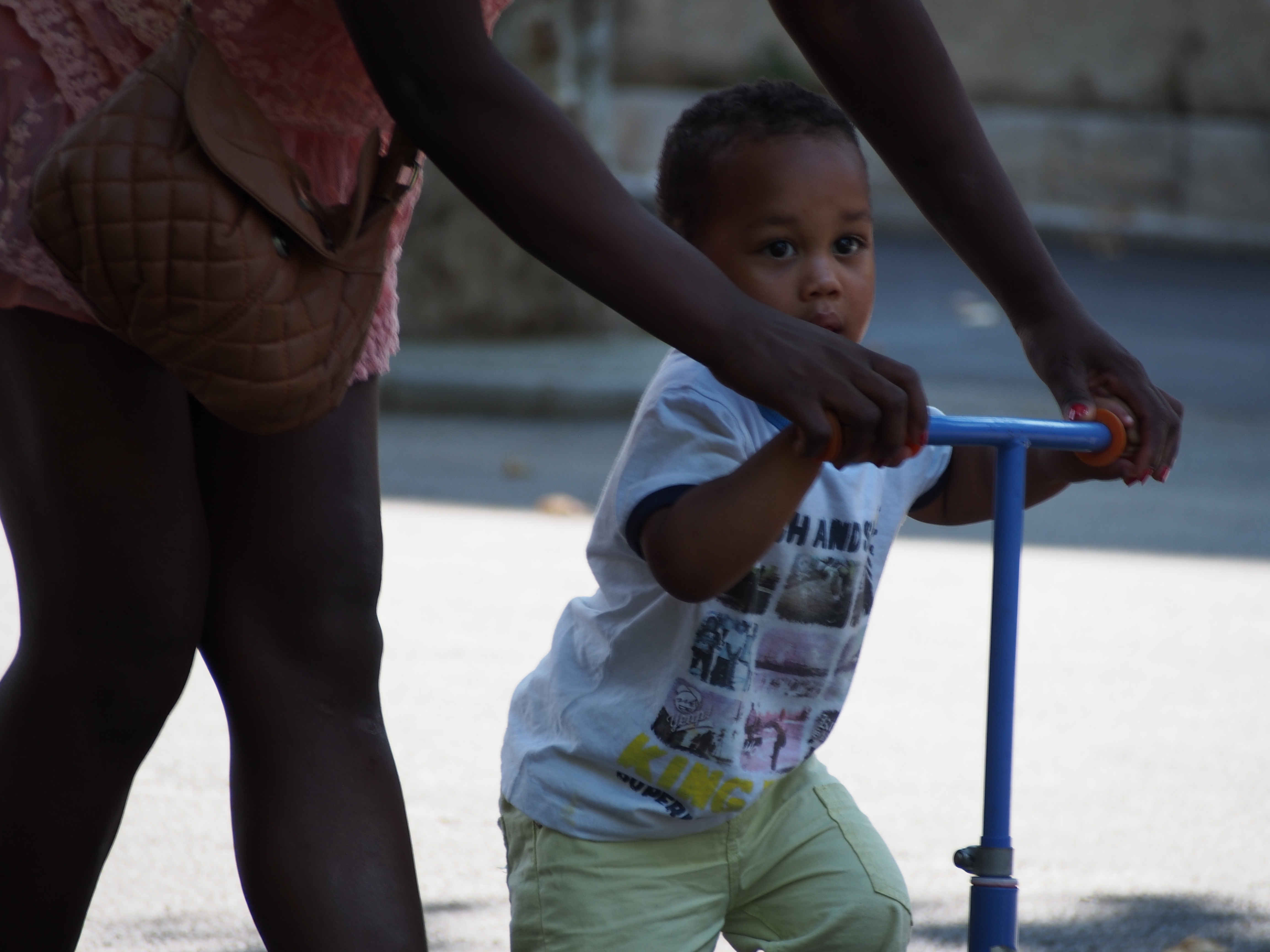
A little more ethnic diversity than Saissac!
Sete also has a ferry which goes to Tangiers. Historically this connection is long-term and as a result there is a heavy Arabic influence on the town recognized by men in their djellabas and Muslim headgear. It’s a city reflecting more the diverse French population than places like Saissac and Carcassonne.
Sete’s earlier years saw numerous Italians settling as they became the mainstay of the fishing industry. There is an ‘Italian’ section of Sete that is quite colourful and is close to the downtown area.
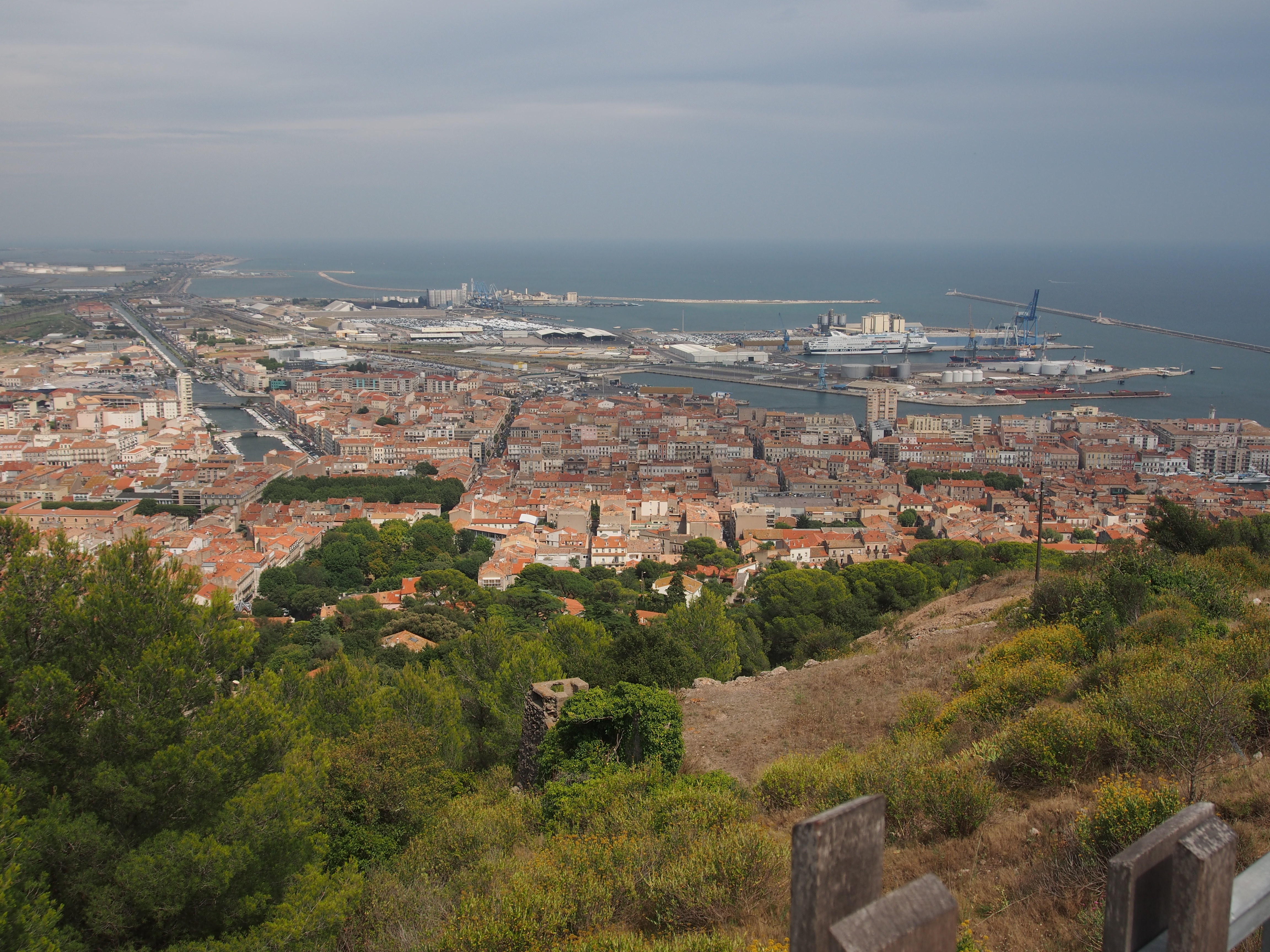
Overview of Sete from the hilltop with the Tangier ferry in port
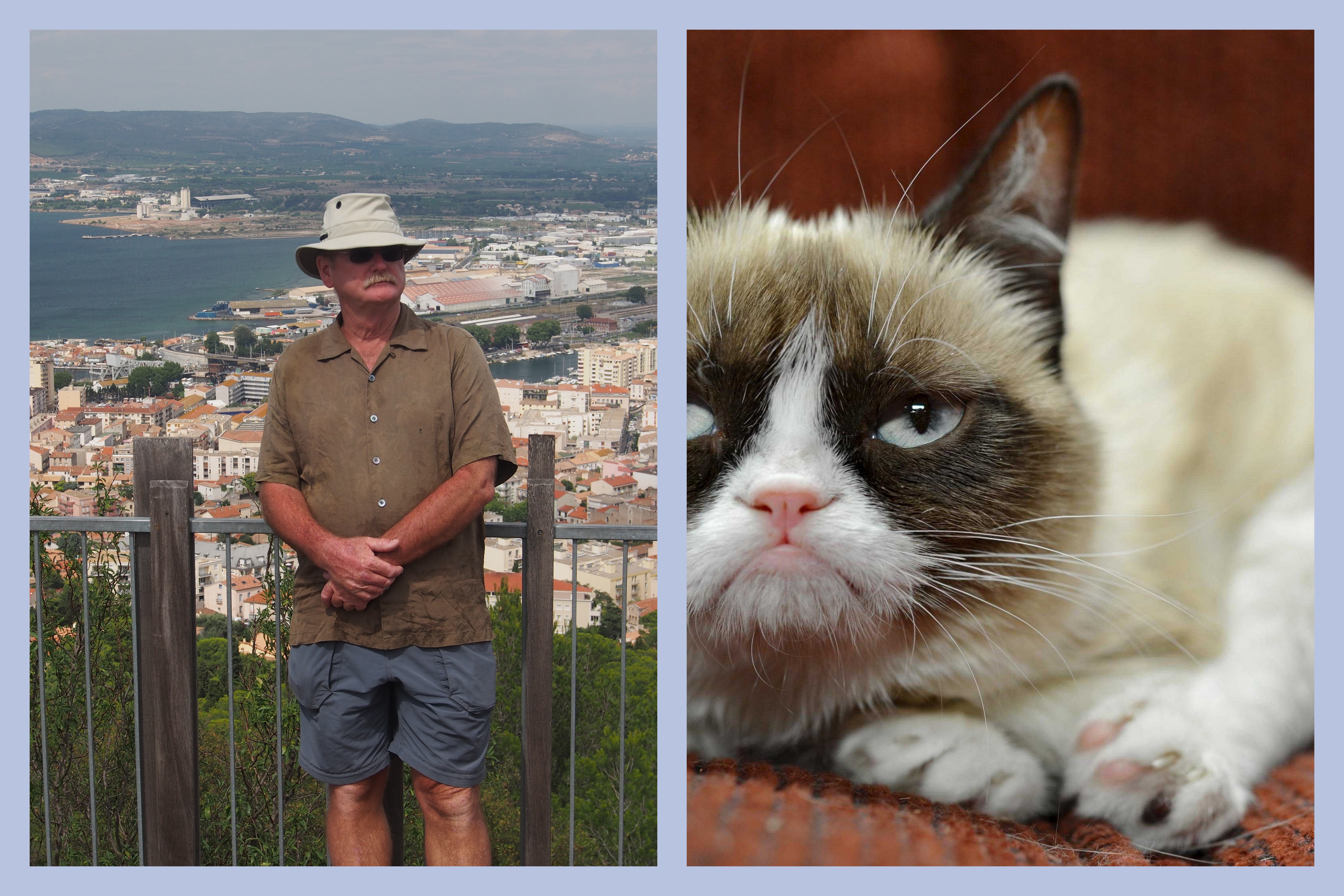
Who looks grumpier. Me, after walking up that damn hill or, grumpy cat?
The beaches do attract the tourists but they are to the south of Sete along the cycle route we had taken. To accommodate the beach lovers there are lots of resorts/hotels in the stretch leading into Sete but the town is thankfully isolated from their impact other than along the main shopping street.
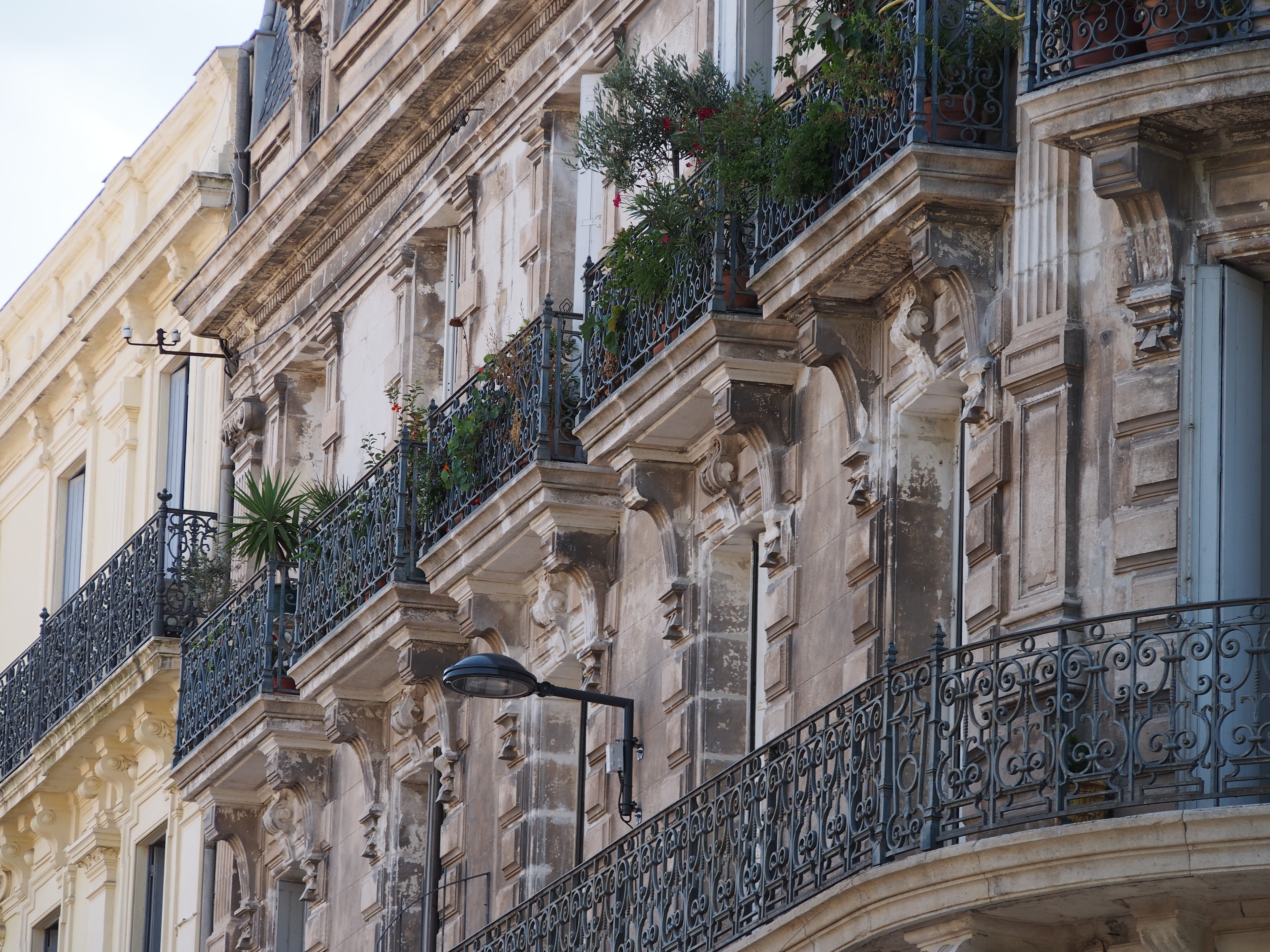
Love the iron railings in France
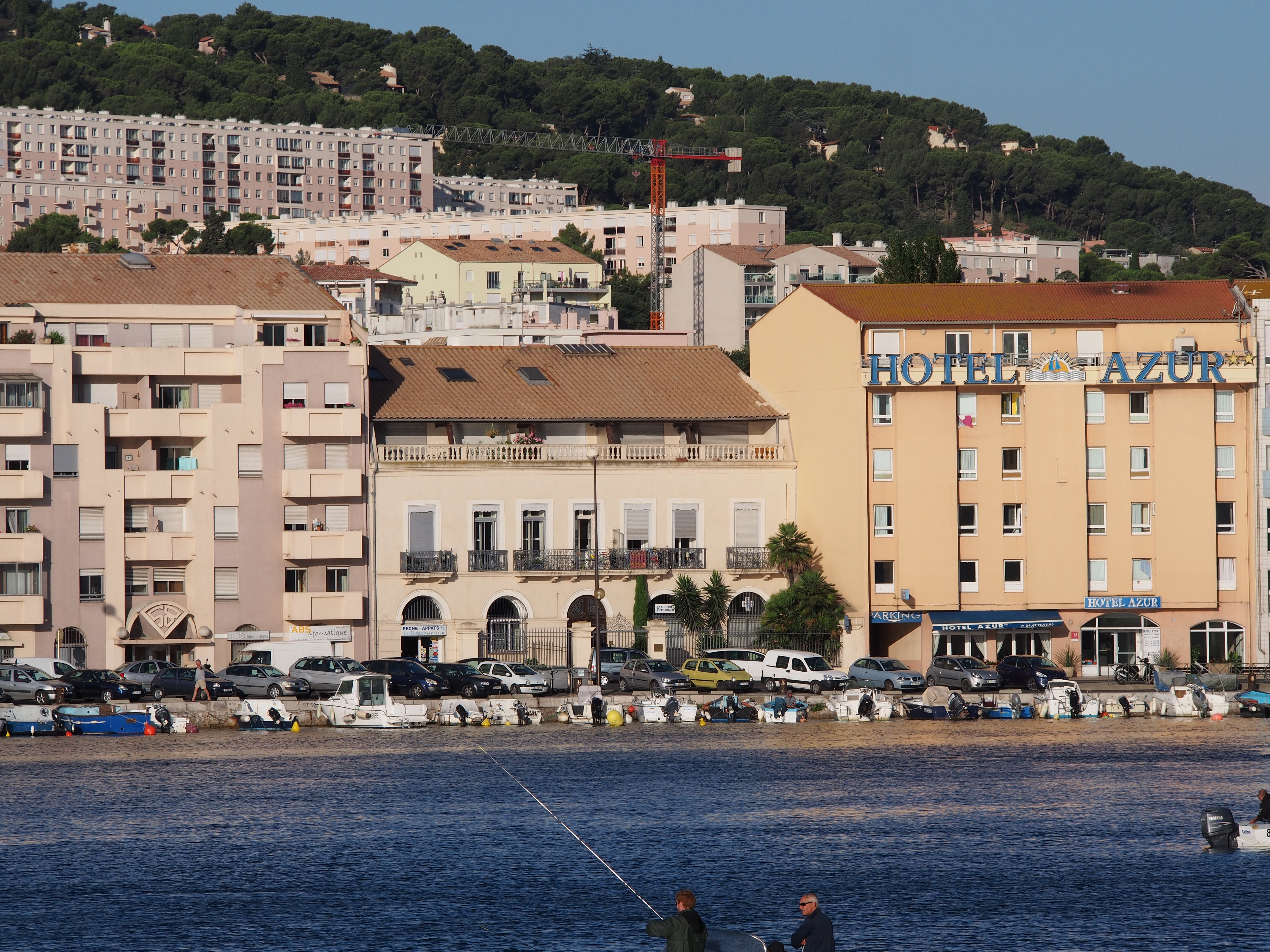
Main waterway through town
We all stayed in town for two nights taking in the sites, eating some good food and taking in a Miro exhibit at the local gallery. Early the last morning we clambered on to the train with our bicycles and headed off to Beziers where we dropped off our bikes.
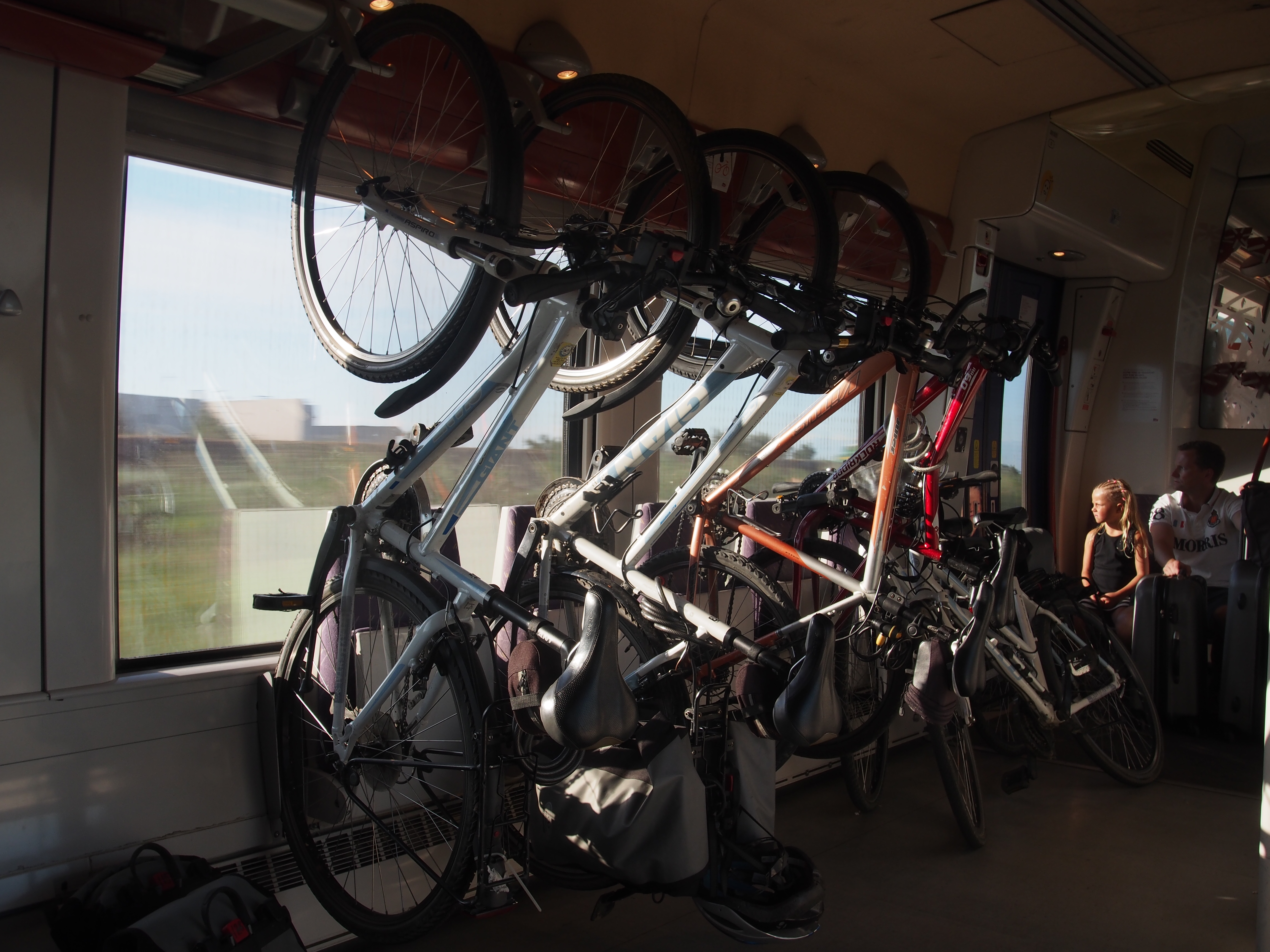
On the french train system SFR
As usual in Europe travelling on the trains with bicycles is a great way to go. Not all trains have bike facilities but the large majority do and at no cost. It makes travelling in Europe the easiest and even if you aren’t planning a week-long trip but rather going city to city then it’s a great way to travel. Having a bike once you are in a place makes sightseeing so easy as most cities are bike friendly.
Beziers was the terminus. We had cycled by Beziers on Day 4 of our trip but had not stopped in the city itself. So, we got there early, dropped off the bikes and walked around the town. It’s not a large city, 71,000 people, but is one of the oldest cities in France dating back to 570B.C.
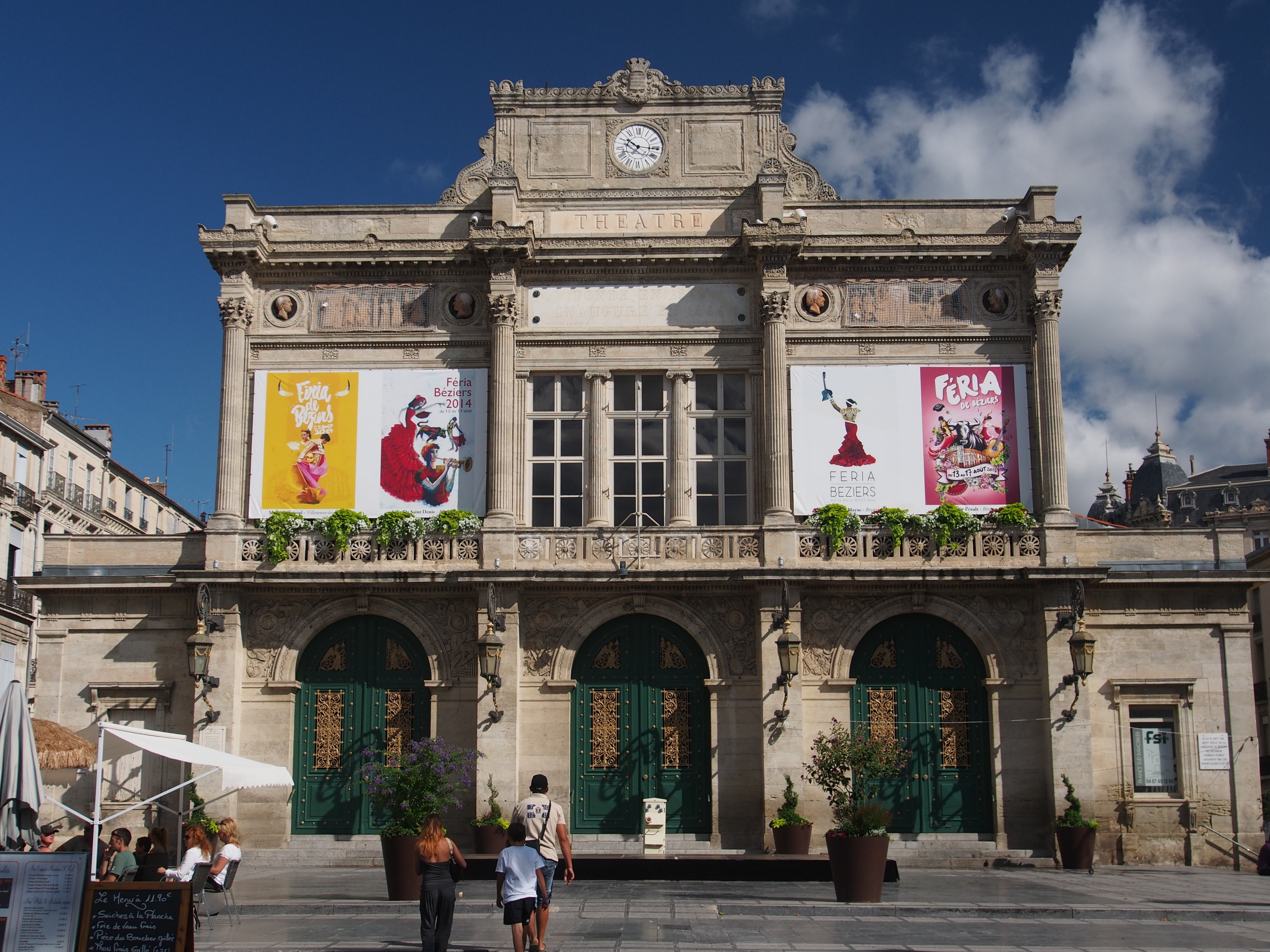
Beziers Theatre

St.-Nazaire Cathedral

Inside St.-Nazaire Cathedral
Time to head back to Saissac. Our cycle trip was over and we were heading back to the mountains. We knew it would be cooler up there so it was a bit of relief to get back. However, we were all sorry the trip was over. We thoroughly enjoyed the trip and the company of Dave and Leslie. Till next time…

Connie and Leslie

Leslie waiting for the ‘mouth-watering’ food

Thanks Leslie, Connie and Dave for a great experience. The intrepid cyclists
Canal du Midi – Day Four
Yawn. Have to leave this wonderful Vin Auberge and get going but we’re taking our time. However, that’s not a good thing as we know we’re getting close to the coast of the Mediterranean, it’s the height of the summer tourist season and we may have difficulty in finding a hotel/accommodation for the night. So…
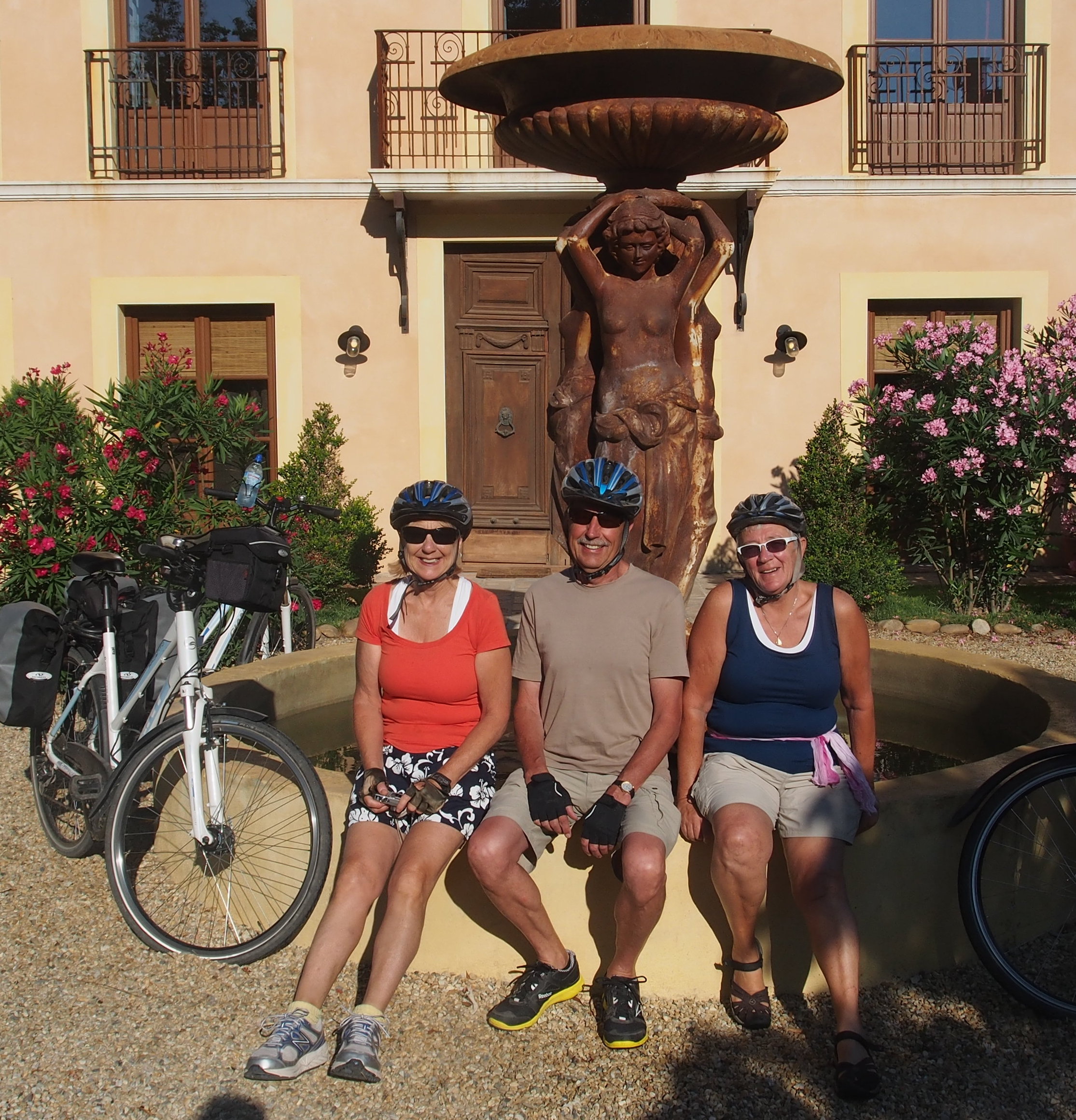
Getting ready to go from the Vin Auberge – Lesley, Dave and Connie
This was going to be a long day. We did not want to stop in Beziers, a larger city, as we were going to be returning our bikes to Beziers at the end of our trip and we wanted to stay in a smaller place. So off we went prepared for a longer than normal riding day.
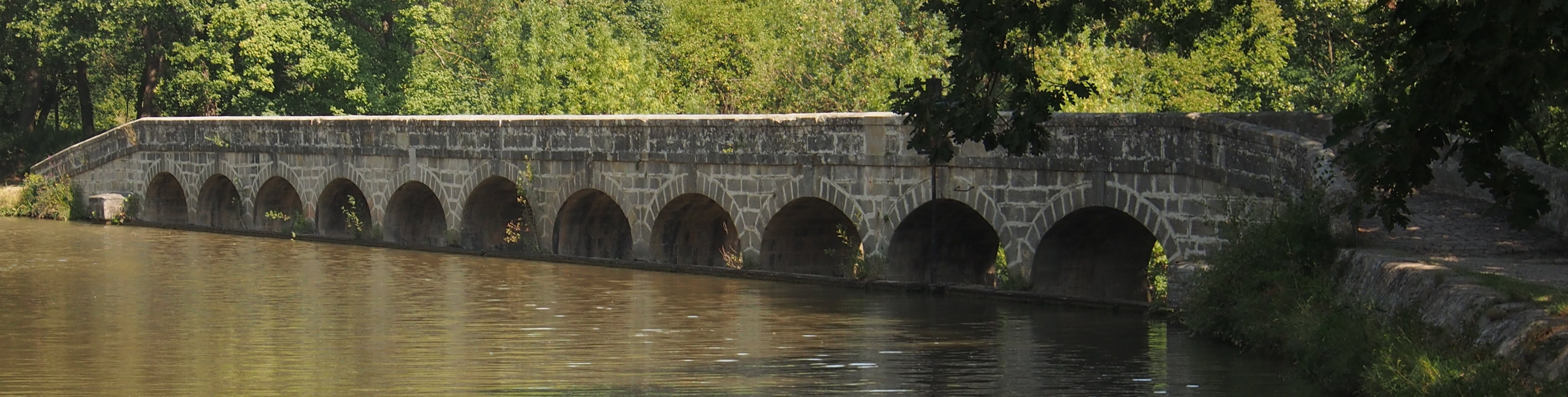
12 arched bridge across the Canal du Midi
The architecture of the canal is amazing. A lot of the water that supplies the canal comes from the Montagne Noir which is where Saissac is located. It always amazed me as we cycled along that this was built almost 400 years ago. Anyway we are glad to see that there is a Canal authority in existence that is doing its best to maintain the canal providing funds to local communities that want to do improvements in their section.
The variety of condition varies greatly and is nothing like the trail along the Donau which is in magnificent condition. However, we were never deterred from using the path along the canal although at times it got a little rough. If we had been doing this in the rain it would have been a different story.
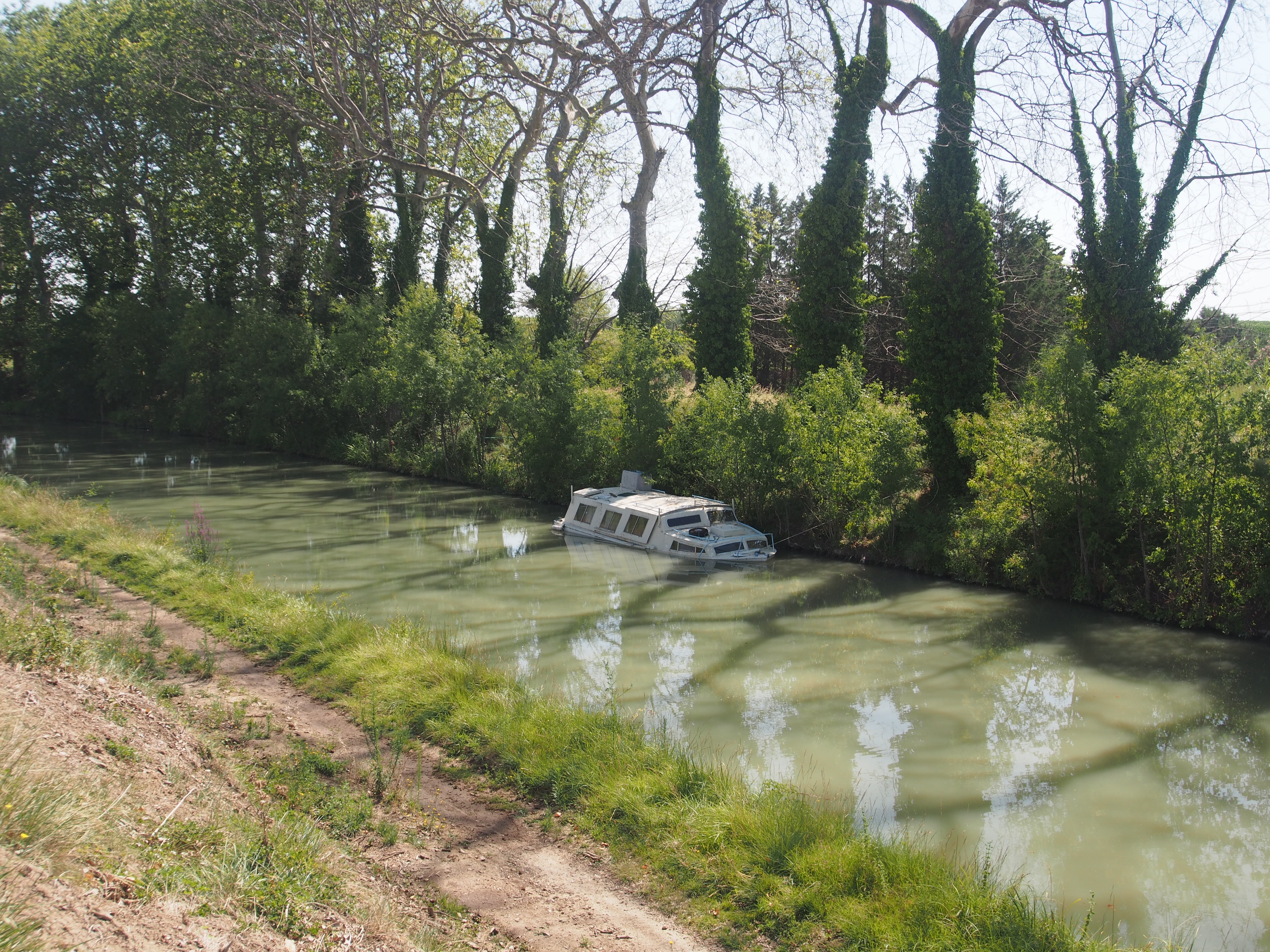
Some people aren’t so lucky. we would not want this to happen to Sage
Having said that about the trail here is an example of a slightly rougher section and all you have to do is add rain to this path and you can imagine what it would be like. As for the boat – well, some people either just tie their boats to the bank and leave them to rot or they’ve sprung a leak and end up as above.
The other item to note here is the condition of the plane (platanus) trees. “Ceratocystis platani, a wilt disease, has become a significant problem in recent years in much of Europe” (Wikipedia). For the canal, and a lot of the roads, in France it’s a big problem. Who knows what they will be replaced with. They are great shade trees and for cycling along the canal provide relief from the relentless sun.
Next stop was the Oppidium d’Ensurene. This was located on the route and included one of the few hills we had to climb. How easy can it get, eh? Well, it was my suggestion that we go up. And what a grind. After cycling 3 km almost straight up we got to the steepest point. We all started the last grind at the same time weaving all over the road to get to the top. We moved over when cars came by but to make it all the way up we needed to traverse the road to make it a little easier. At the top I was confronted by an irate driver who was in the parking lot who started to berate us for not staying on the right side of the road. I tried to explain, in my high school french, the difficulty of going up a slope like that without weaving. He wasn’t willing to listen and turned away in anger while the other young french couple listening shook their heads incredulously. I have to say this was the only negative incident in our whole cycle trip.
The oppidium dates back to the Romans. Unfortunately it was not open when we got there. But the view from above across the plain was incredible.
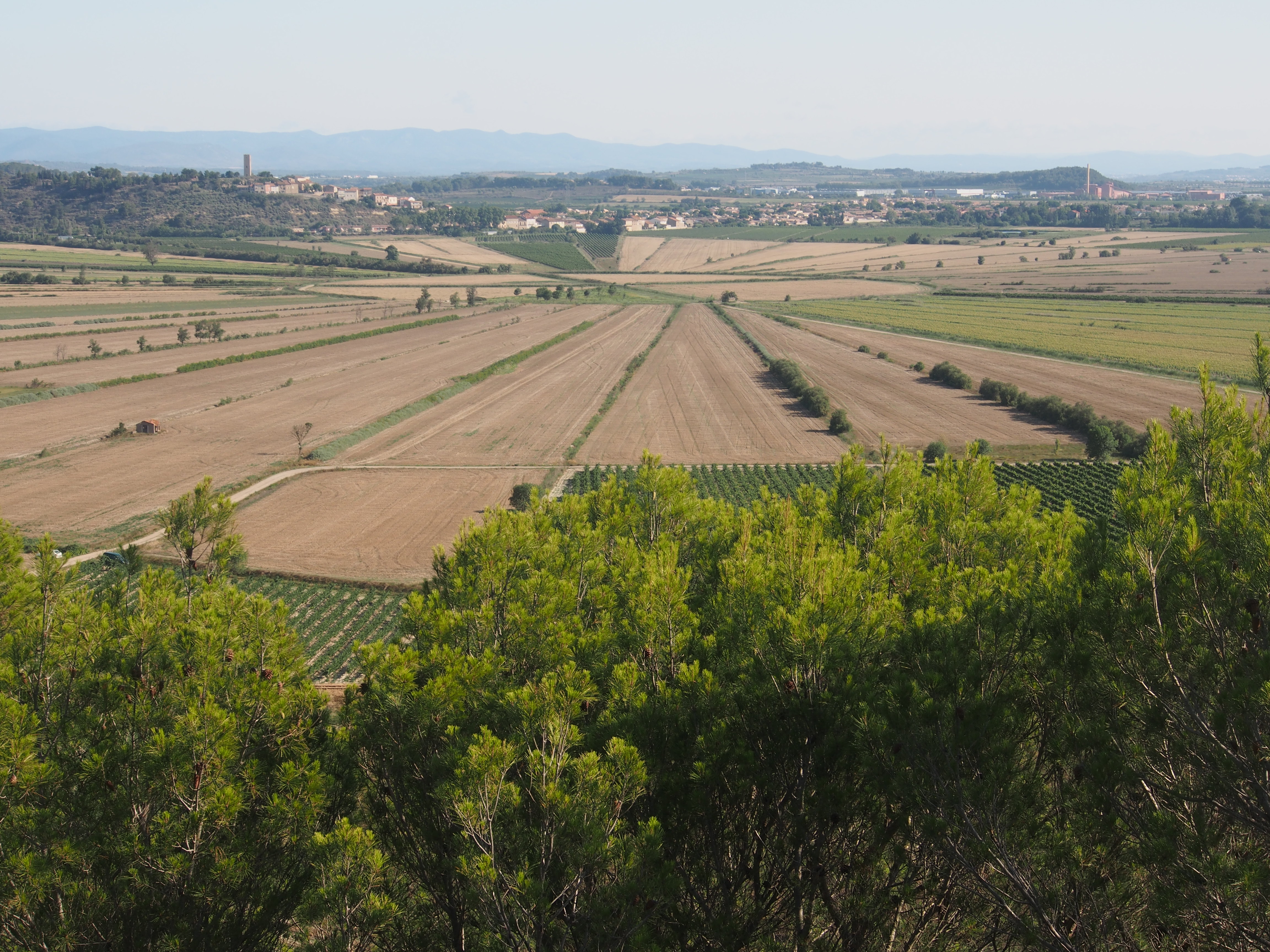
View over the Etang of Montady from the Oppidium d’Enserune
The picture above is taken from the Oppidium and overlooks the Etang of Montady which at one time was a salt lagoon which in 13thC was drained and turned to cultivation. I think this was my one regret from our cycle trip that we didn’t wait for the Oppidium to open allowing us to walk through the ruins and the museum. Perhaps we’ll return when we finish off cycling the Canal between Toulouse and Carcassonne.
Had a great ride down the hill back to the canal to continue on. Our next challenge was to find our way around the city of Beziers.
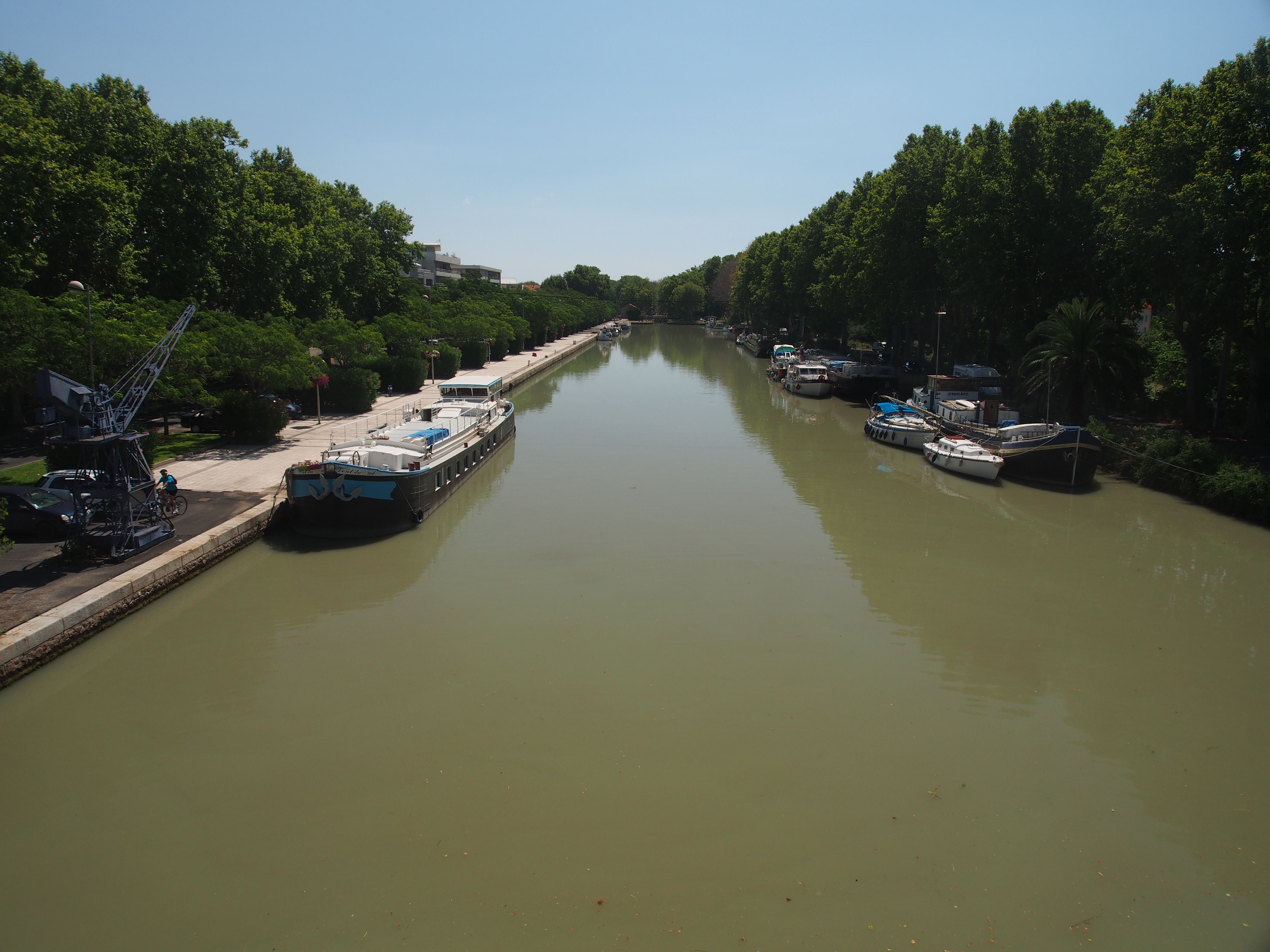
Beziers
The guide-book we were using, Cycling the Canal du Midi by Declan Lyons, warned us about the difficulty of finding our way past Beziers as the Canal takes many twists and turns and can be confusing. However, what amazed us again was the engineering that went into this section of the canal. Not only were there sections of the canal that incorporated multiple locks in one place
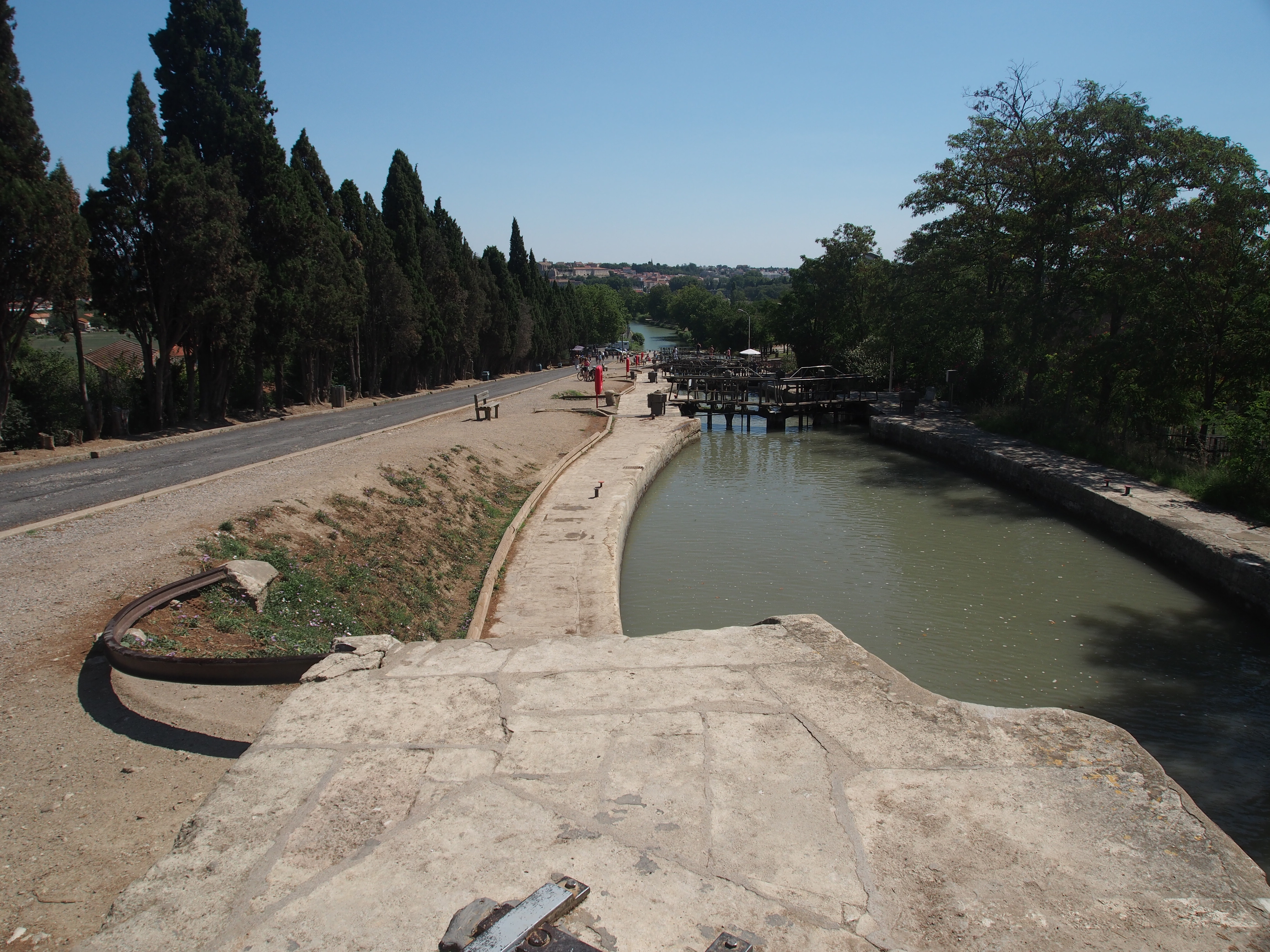
There were 5 locks in just this one spot
but there were sections of the canal that were bridges of water going over other waterways

Leslie rides along the canal du midi which is built over the River L’Orb
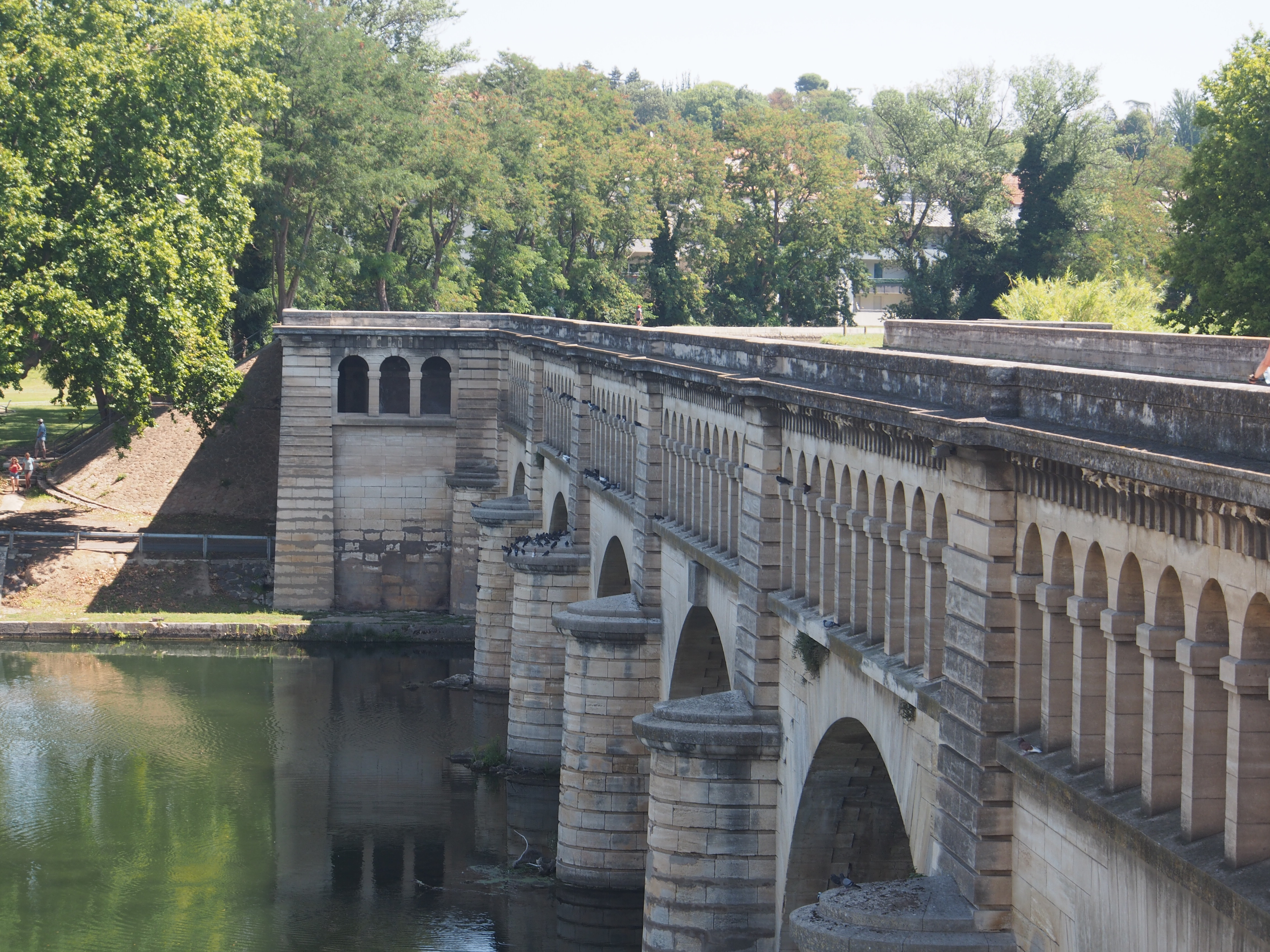
Another view of the canal and the River L’Orb
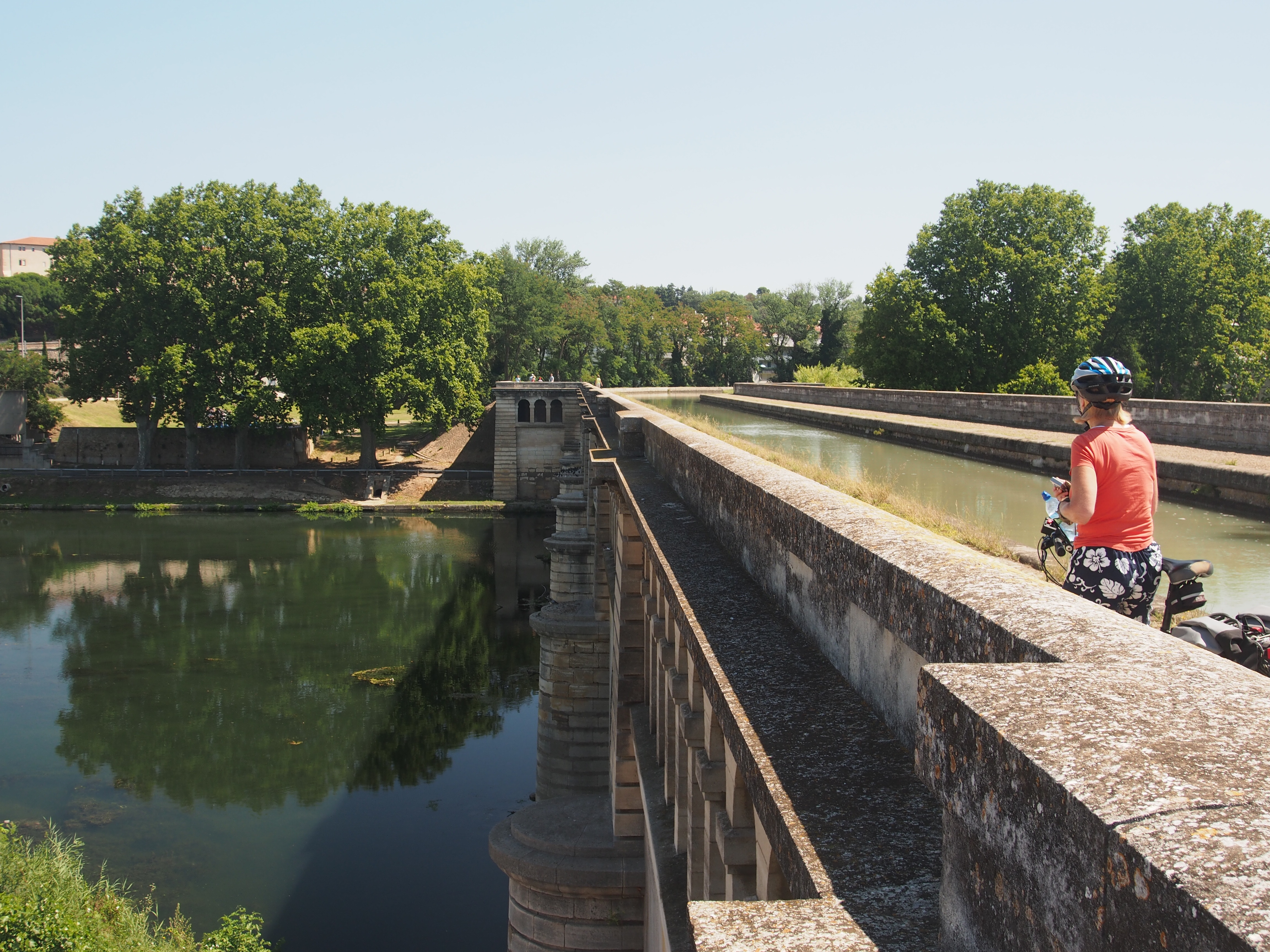
Atop the River L’Orb
We finally make our way around Beziers and onwards to the Mediterranean coast. True to the book’s description even here the path is questionable. However, sighting of cranes on the low marshy areas boosts our spirits and makes the going pretty easy.

Cranes along the route
We finally made it to our destination, Villeneuve les Beziers. Am afraid that I have no pictures from here and through the next day. I can’t remember if I took some and lost them or….
Canal du Midi – Day Three
Ah yes, the sun has risen, the bikes are cleaned the croissants eaten, the coffee slurped and off we go. Another day of great scenery but not so far to go this day. We slowed down a little covering less distance and taking more time to enjoy the scenery, have lunch and generally take it easy as this is no marathon and was never designed that way.
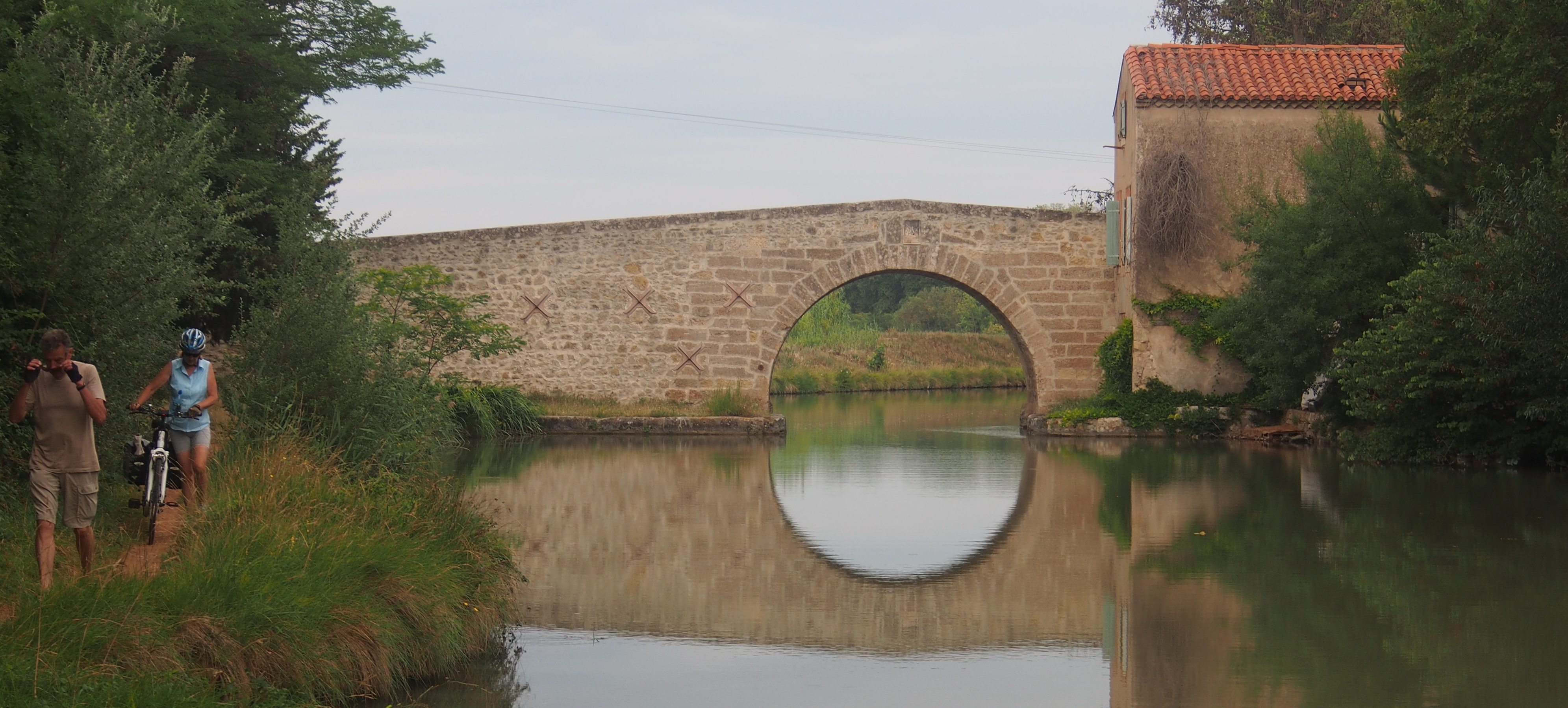
What wonderful bridges
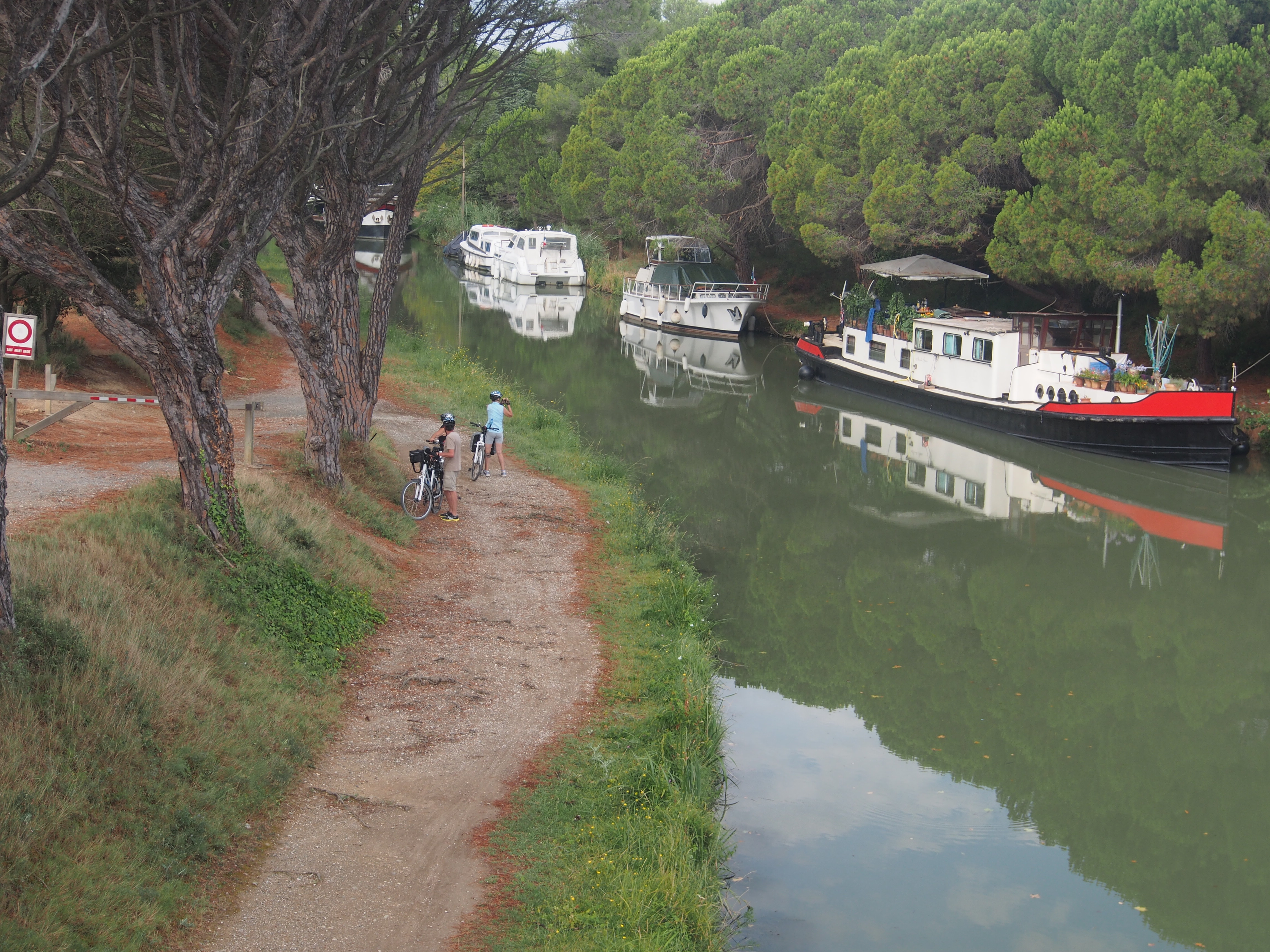
Tow paths remained in fairly good condition
12 arched bridge across the Canal du Midi

Dave “I’ve had enough”.
We ended up stopping for the night in Poilhes, a beautiful small town where many of the barges owned by foreigners stay for the winter time tied up to the banks and under the bridges of town.
We lucked out scoring a great deal for a suite that would accommodate the 4 of us for 160 euros, 80 euros per couple. It was a huge self-contained suite complete with a kitchen two bedrooms and huge entranceway. It was located at one end of the town, quite and well-appointed. The name of the hotel as Vin Auberge. Click on this name to see more.
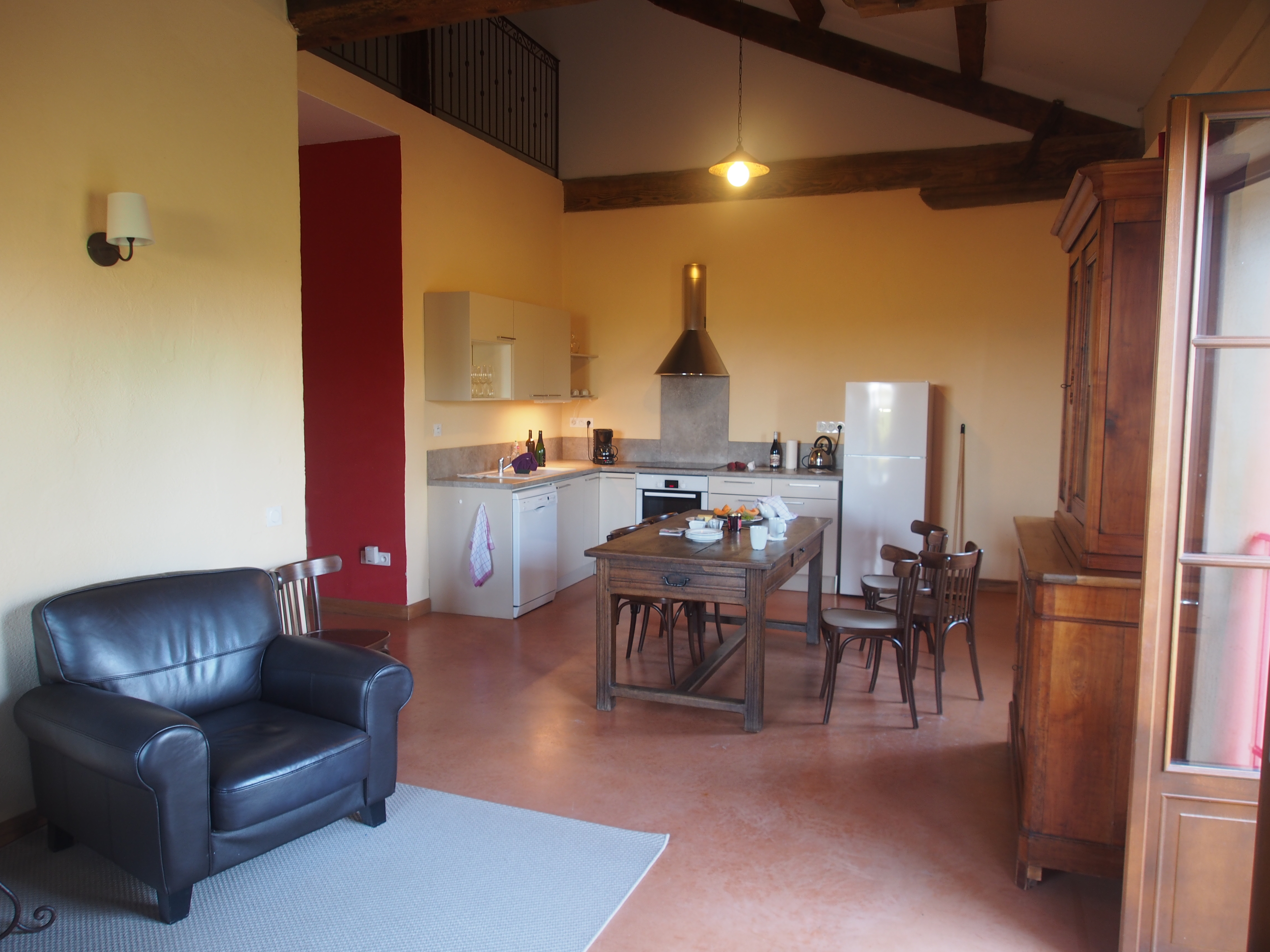
Dining room at the Vin Auberge
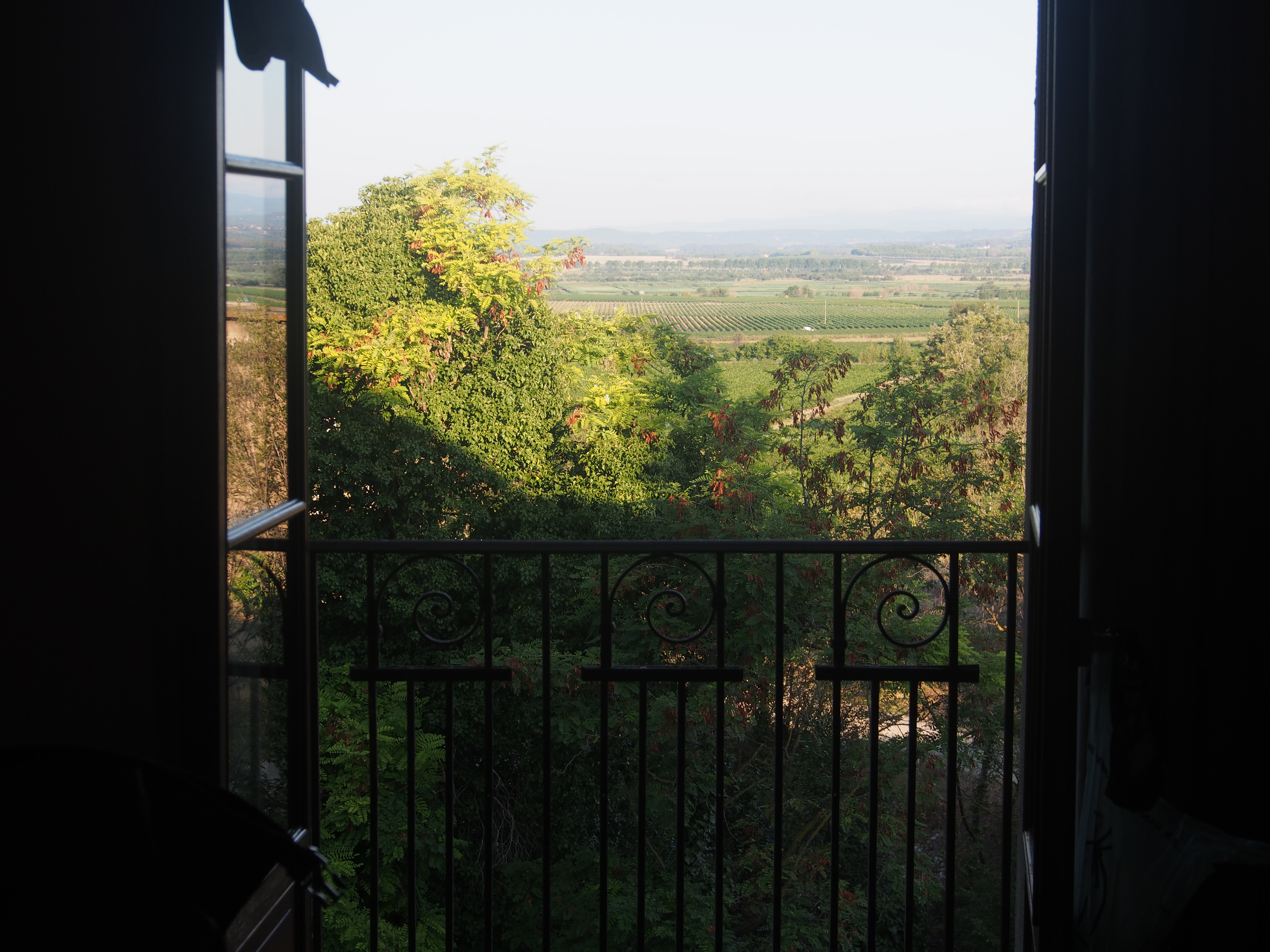
View over the local vineyards
Another day on the canal comes to an end.
 Sage on sail