Mon Kontan Sesels
With nothing better to do we decided to go up – up to Trois Freres. It’s not that we don’t have anything to do but we love getting out-of-town when we have the chance. As our friends, Bob and Elaine,
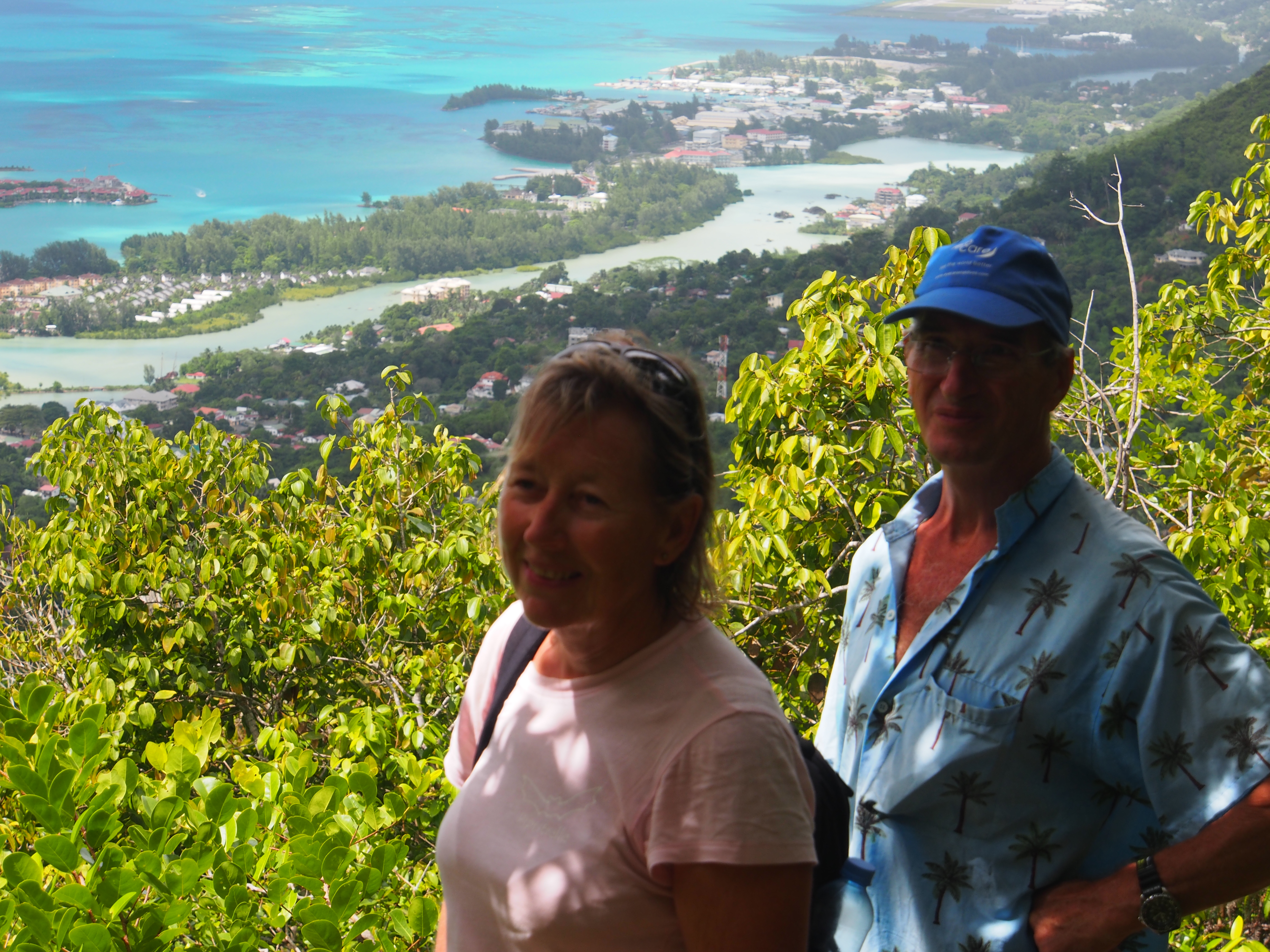
Bob and Elaine
had a car we suggested a stroll up the path to the 438 metre high Trois Freres mountain that looks down on our anchorage and over the town of Victoria.

Most of the boats you see at anchor here belong to locals
We climbed and climbed and had some great views over the islands. The day was perfect with a strong breeze blowing and with added increase in height the temperature was perfect – about 28C.
We only made it 2/3rds of the way as Elaine was recovering from a bout of the flu and we didn’t quite make it to the top. We’ll save that for later. We were taken with the view and can hardly wait to make it to the top to see both sides of the island.
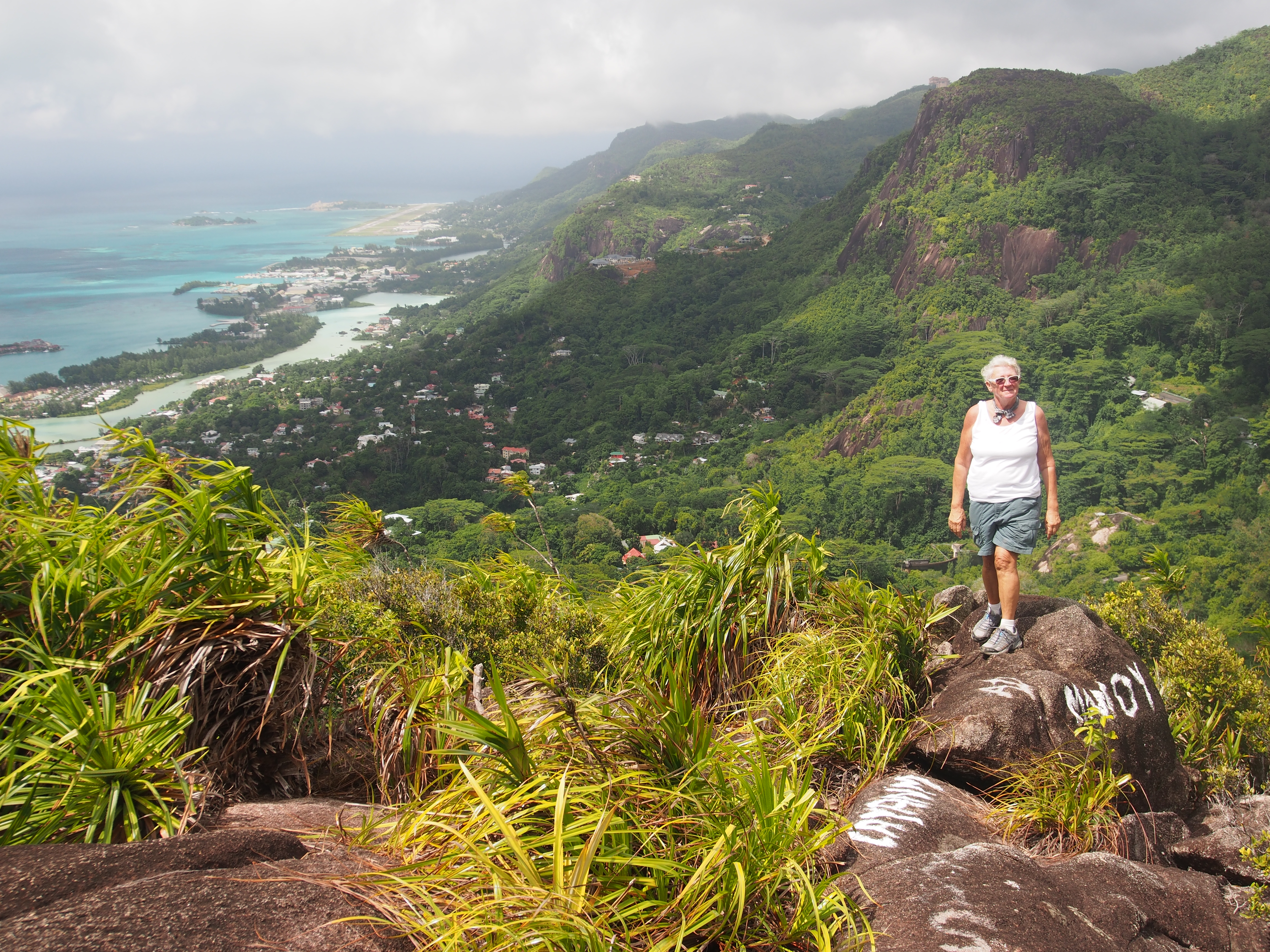
Connie at the highest point we reached
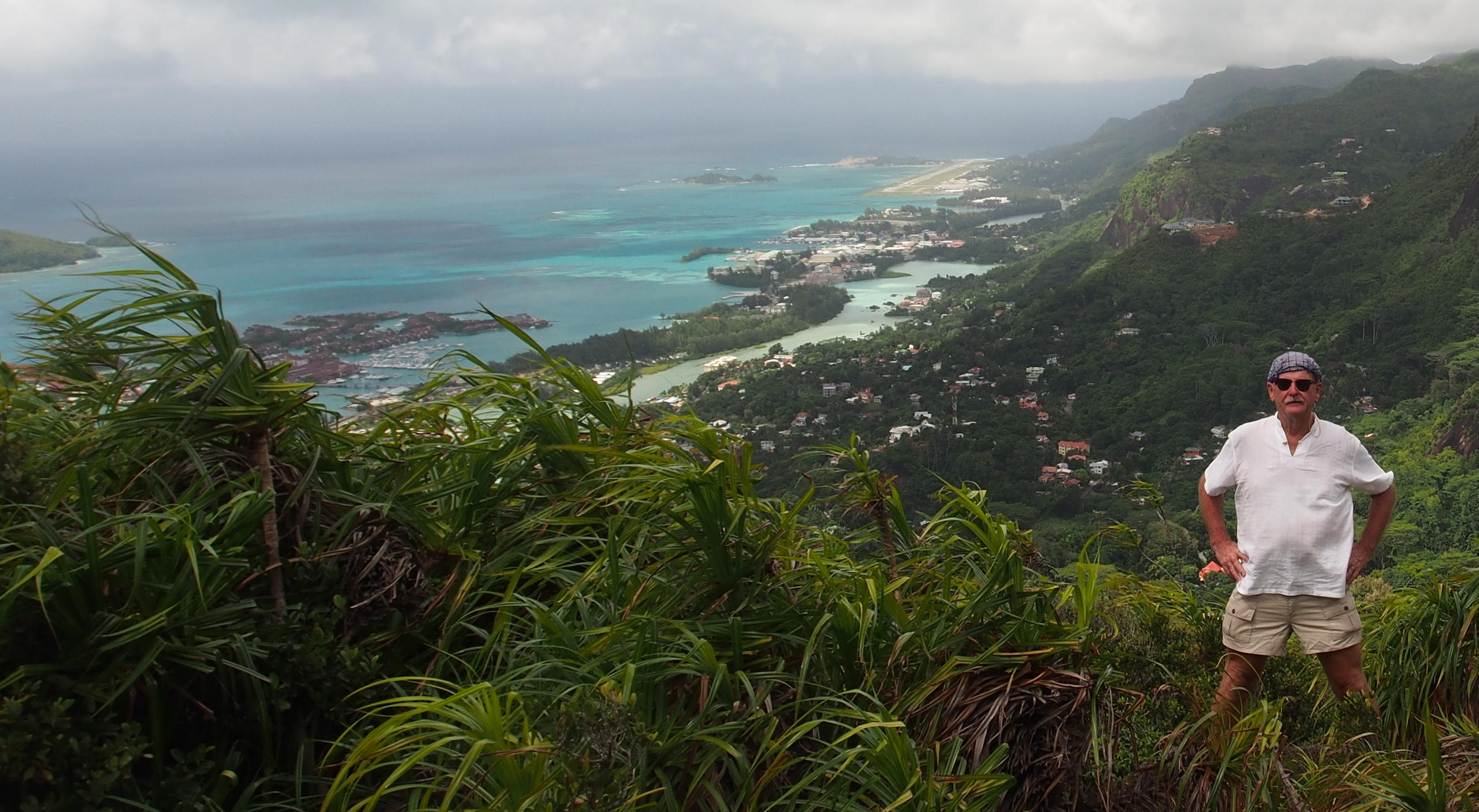
Tony at the highest point we reached
On our way down we met a few wild creatures providing a little fun with the camera. We’re quite happy there are no threatening animals in the Seychelles other than tourists like ourselves
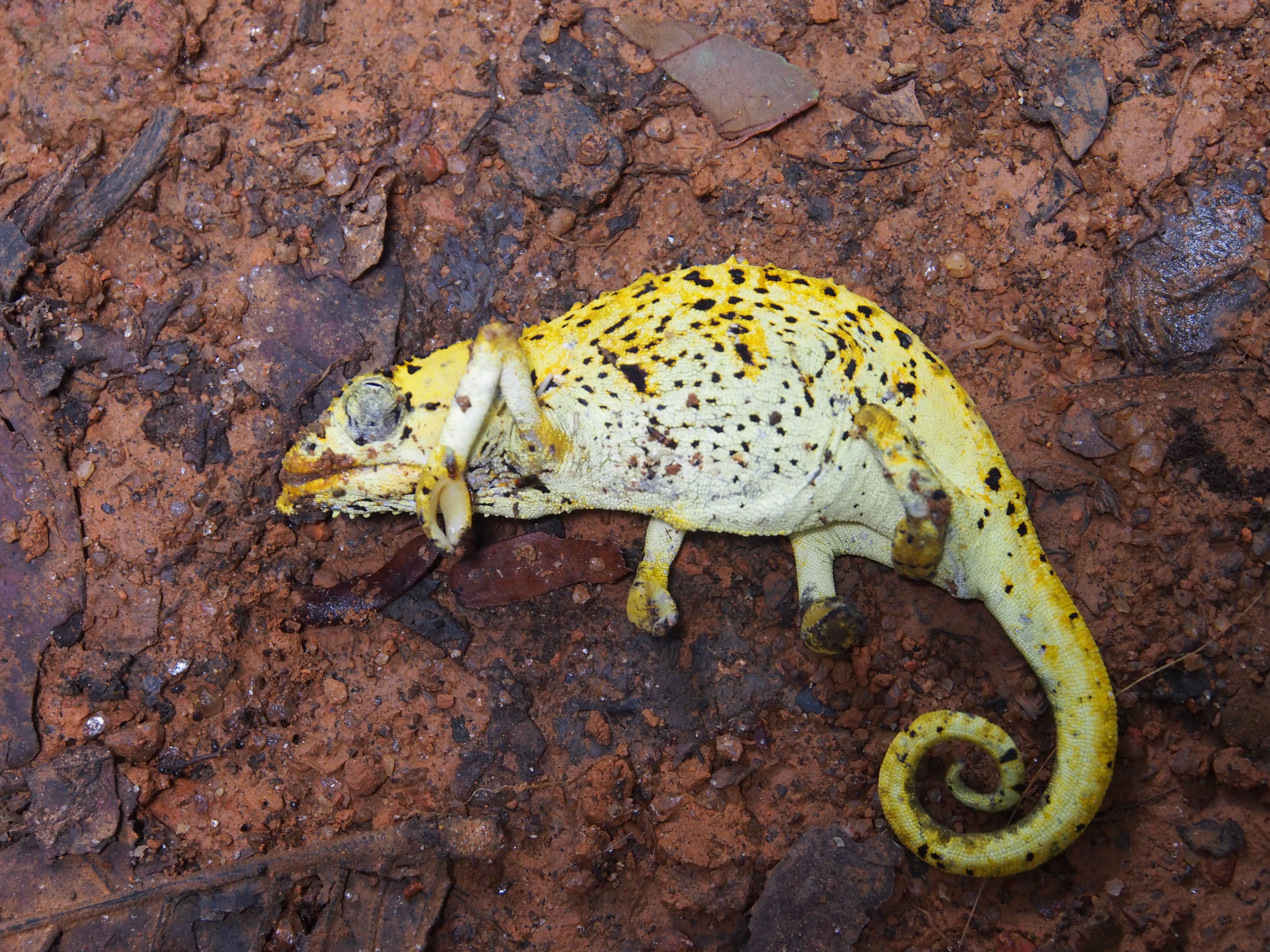
Found on the path
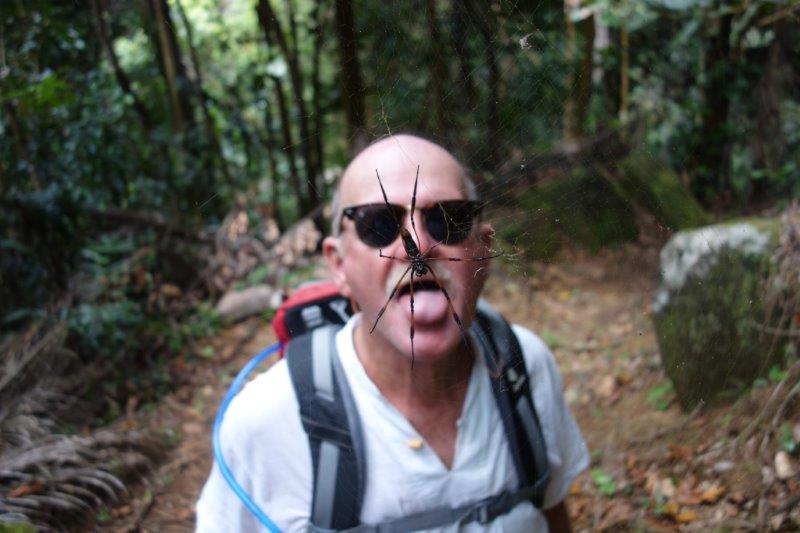
And a spider or two stringing webs across the path to catch tourists
Of course, with all the energy expended getting up and down the mountain a stop at The Station is mandatory.

The Station Spa and Hotel
The Station Hotel is beautifully situated at the beginning of the trail to Trois Freres – it’s too tempting a spot to miss. Beautiful views over the town and a very relaxed atmosphere makes it a great place for a coffee or a meal after the hike.
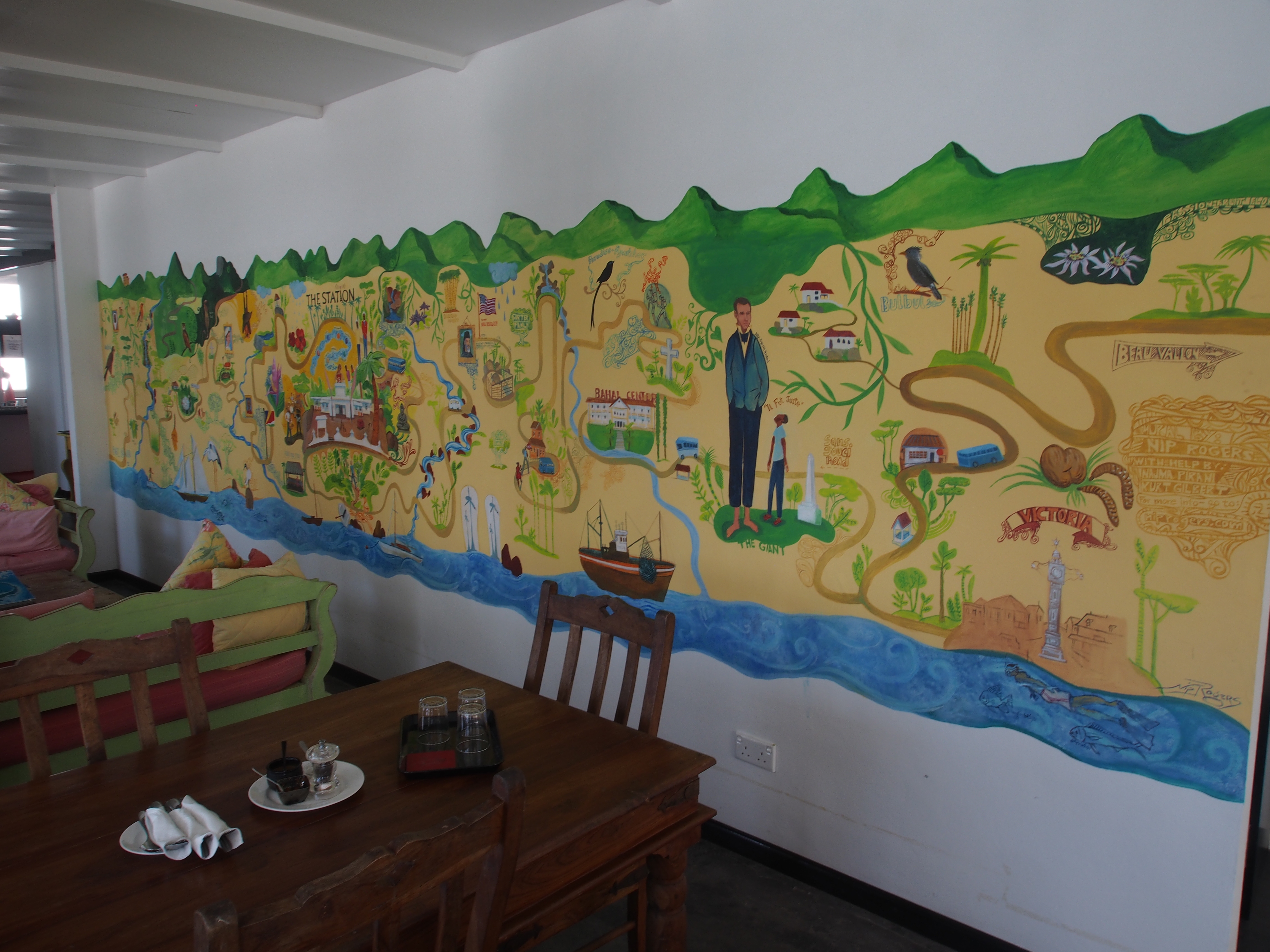
The lounge dining area has a great mural map of Mahe
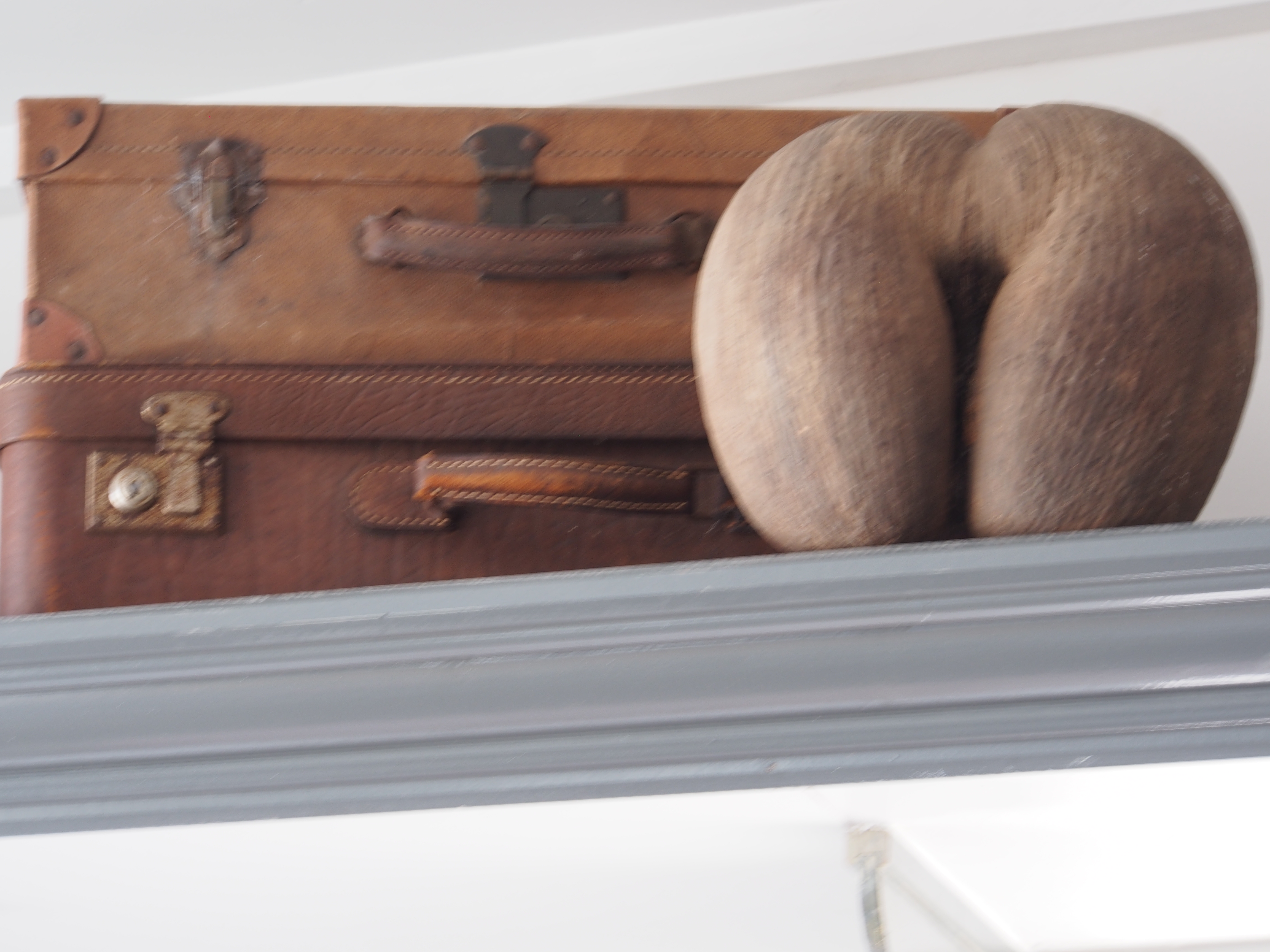
A great example of the indigenous Coco de Mer – a palm only found in the Seychelles
A Sunday stroll around town
Everything here shuts down on a Sunday – kind of like Canada in the 1950s. It’s wonderful – the city is quite a distance from most of the tourist accommodation so the tourists aren’t strolling around and the locals know there’s nothing open so they stay away. One can almost walk down the middle of the main street and not have to worry about being run over and you can take your time gawking in the store windows looking at plastic buckets next to razor blades or anything the merchandiser can find to add to the window that might sell.
So this is a pictorial of a Sunday stroll through Victoria.

The official Seychelles logo with sailfish, turtle and coco de mer – Finis Coronat Opus (The end crowns the work)
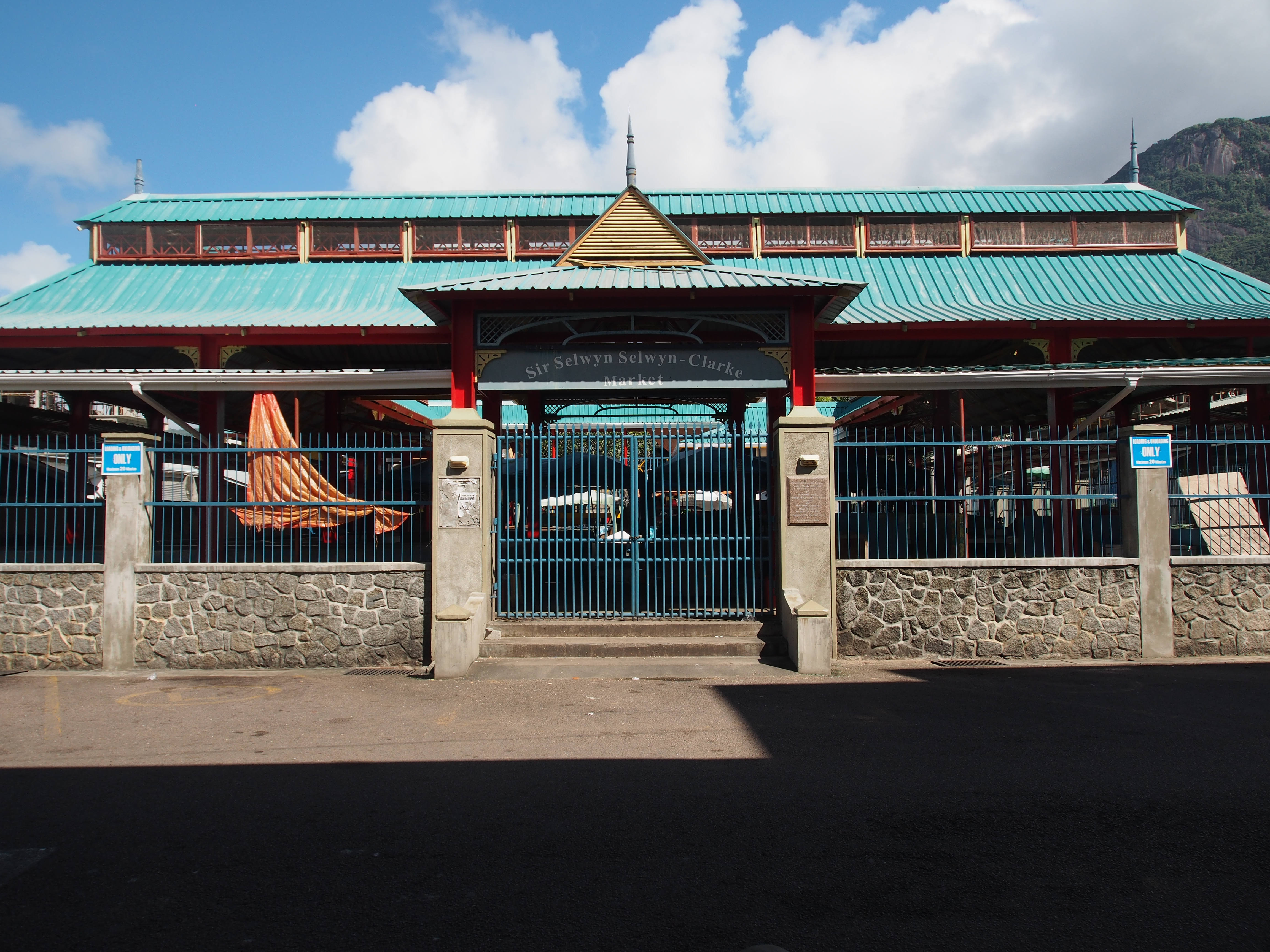
Entrance to the main market – expensive but huge amounts of fresh tuna and snapper

80% are catholic here but can still here the call to prayer from the Mosque
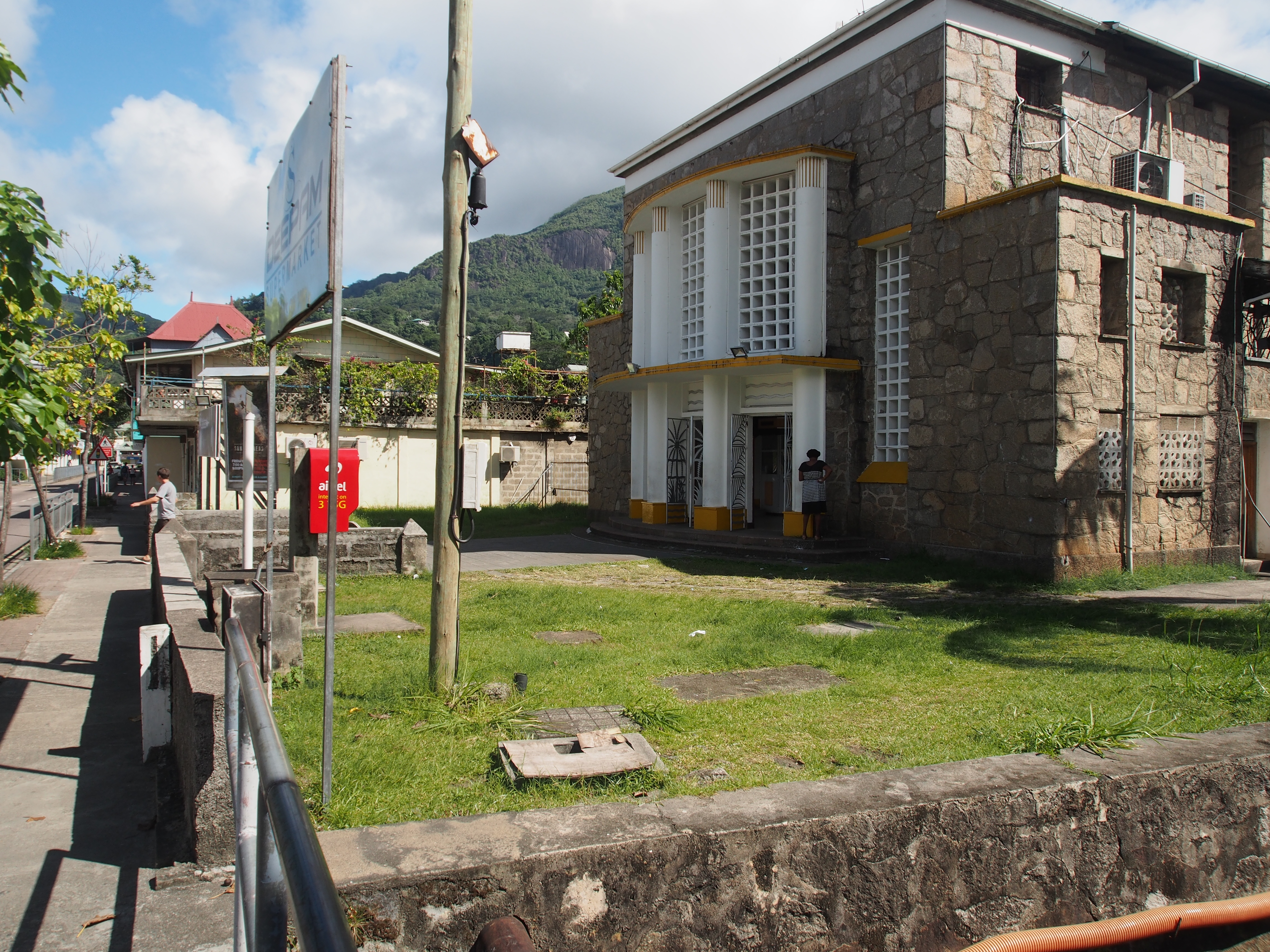
The movie theatre – hasn’t yet been a movie we want to see but we keep hoping
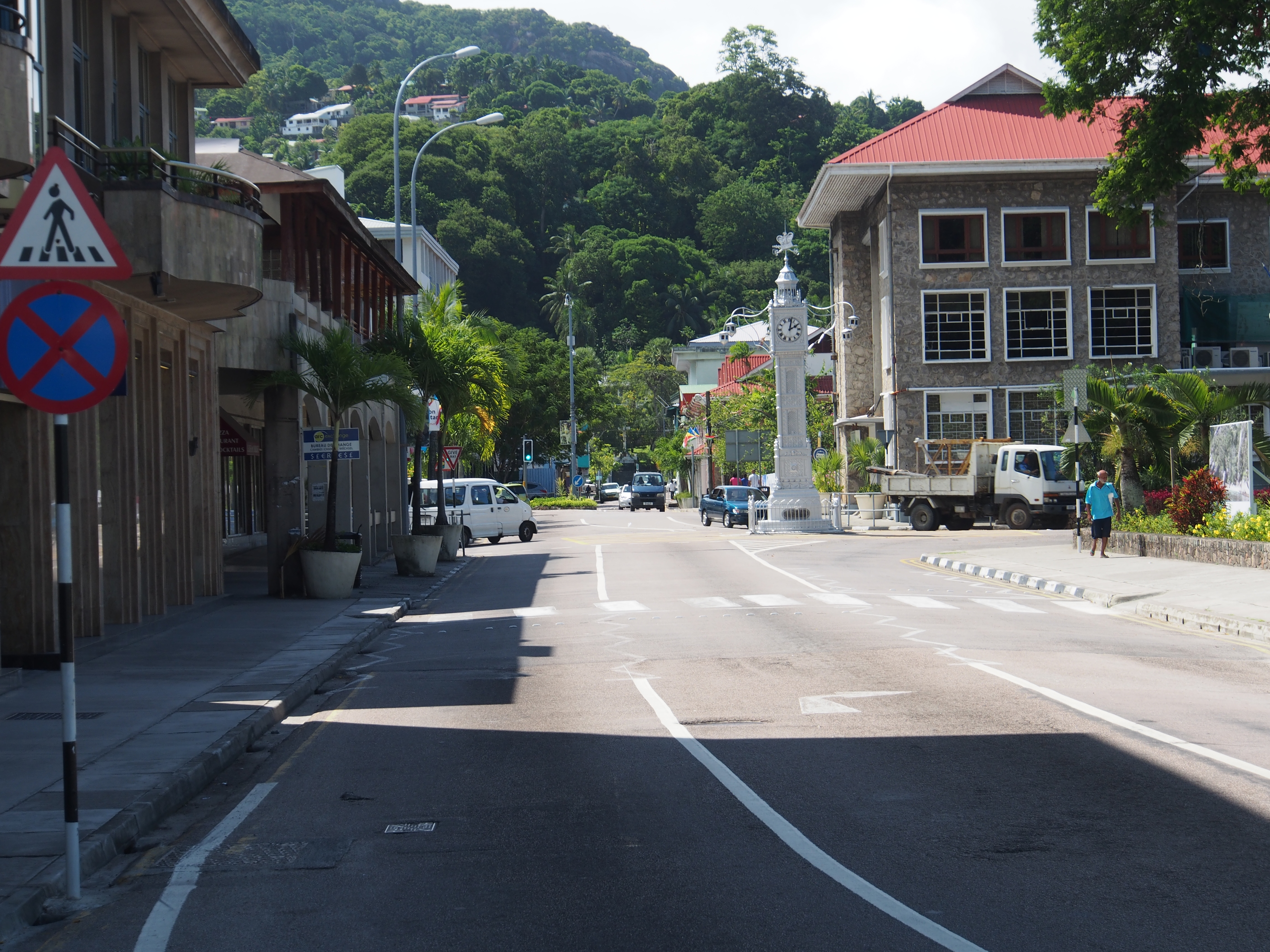
The clock-tower roundabout in the centre of downtown
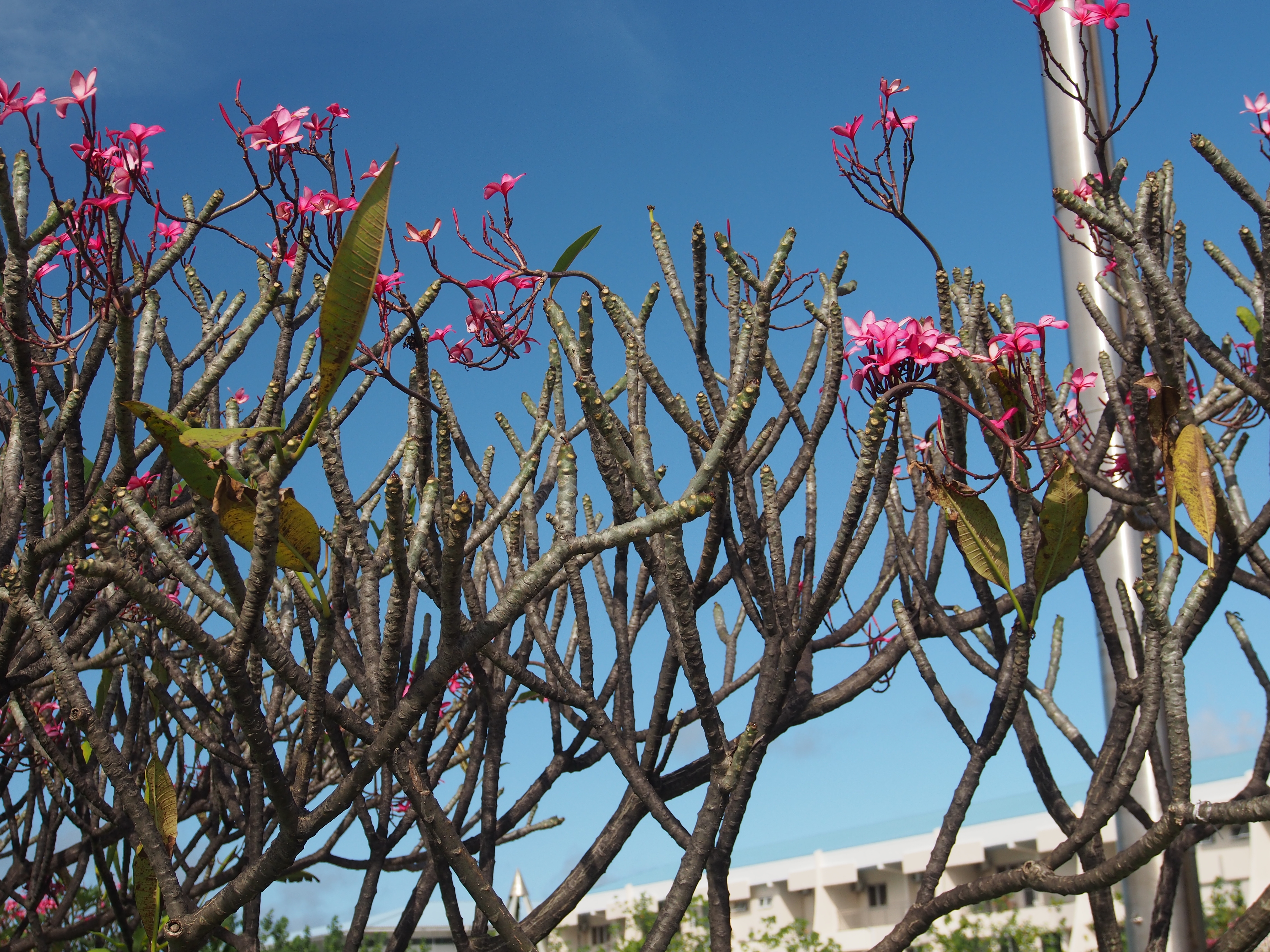
Gorgeous blue sky with frangipani flowers (plumeria rubra)

Being the tropics plants abound and quickly take over
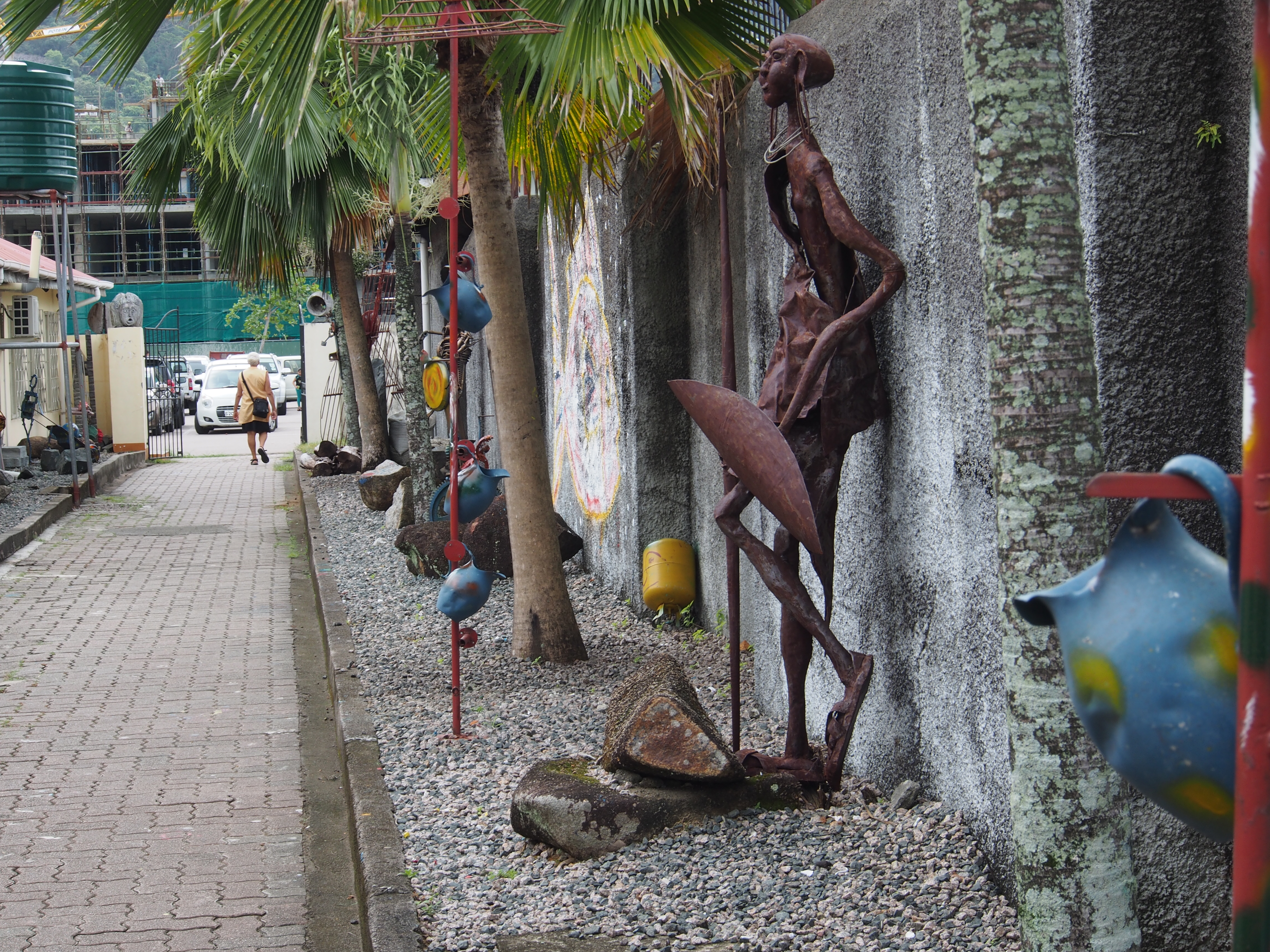
A stroll down by the art centre

Land turtles abound
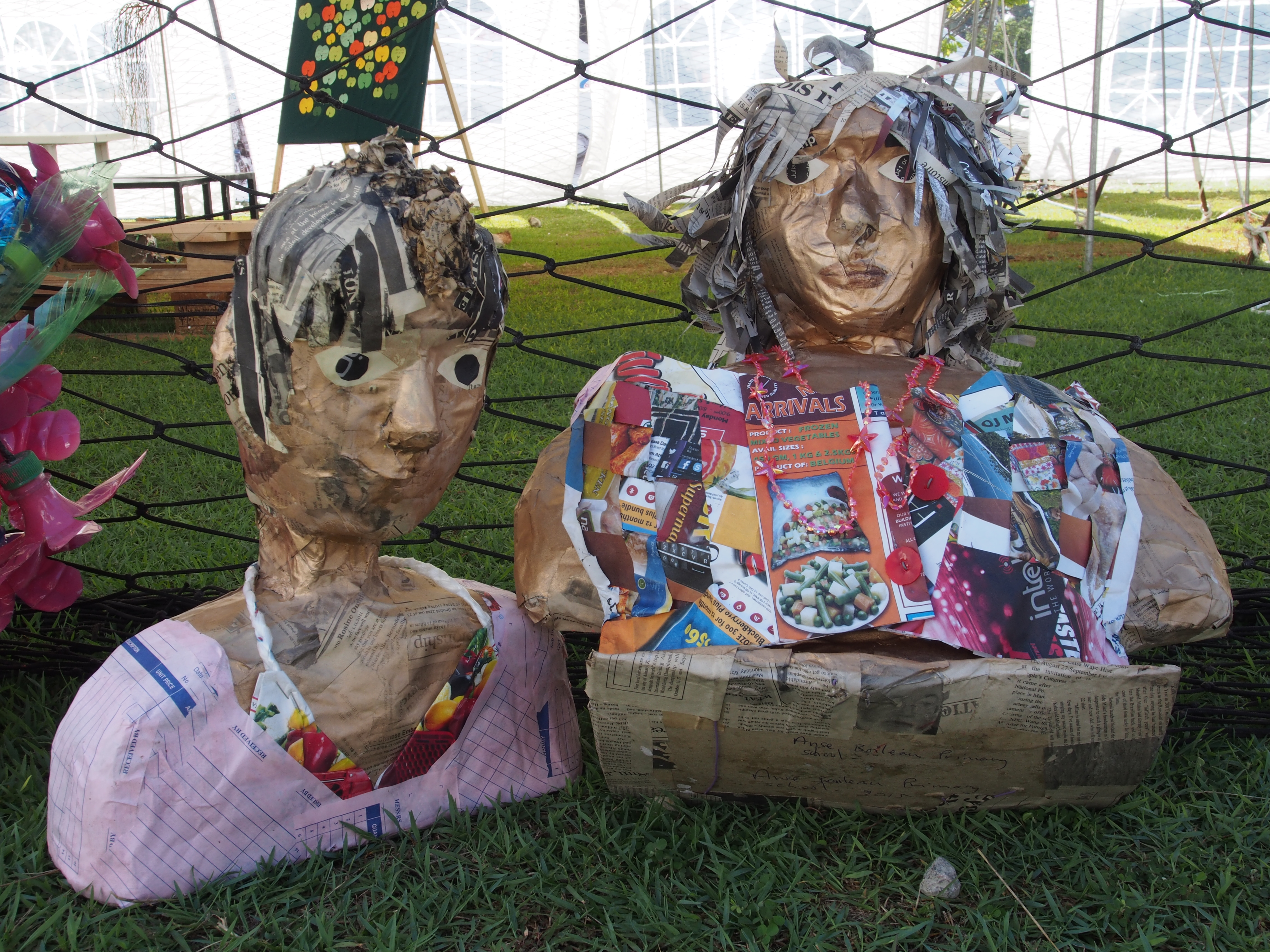
People to meet on Sundays
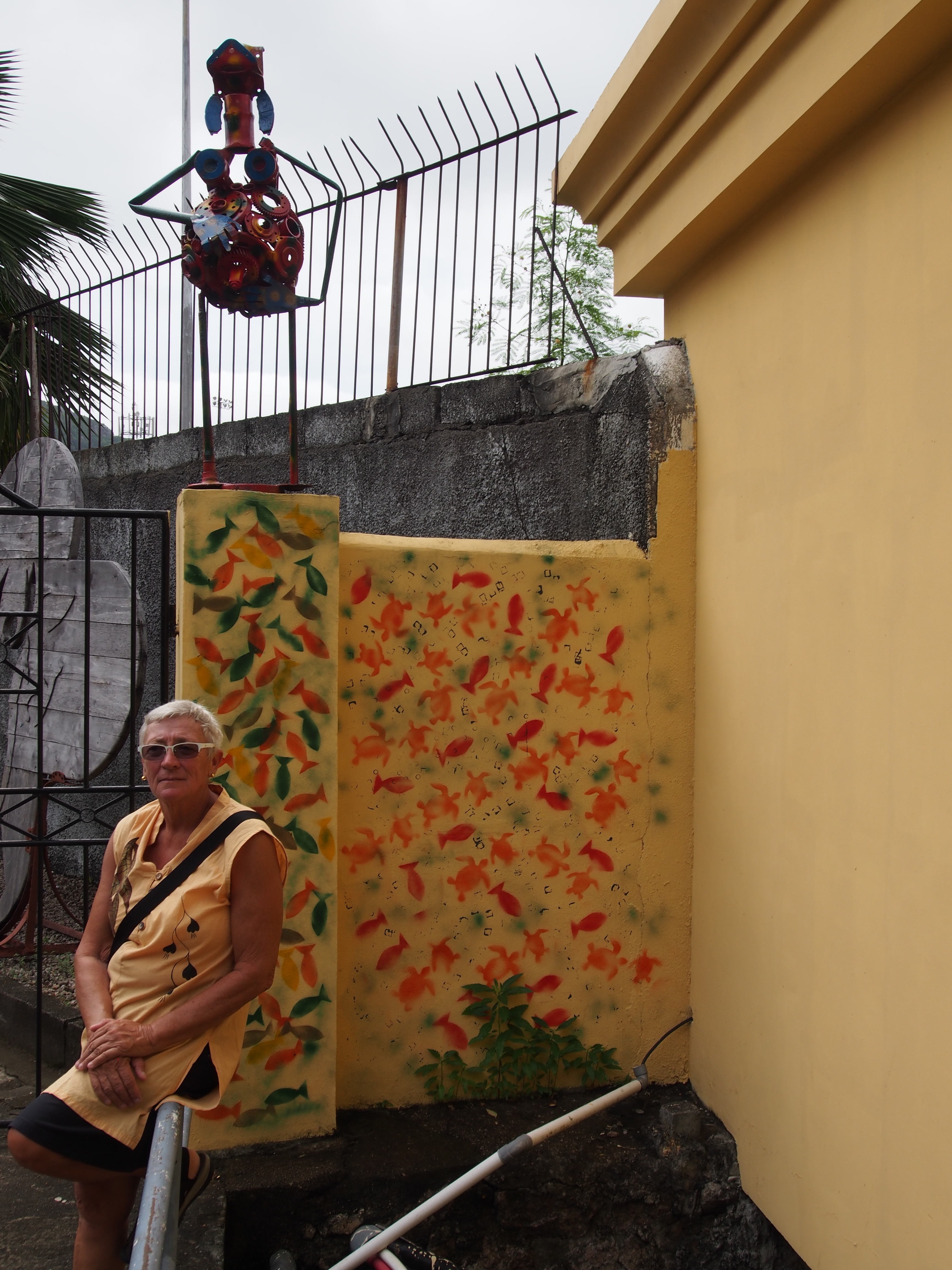
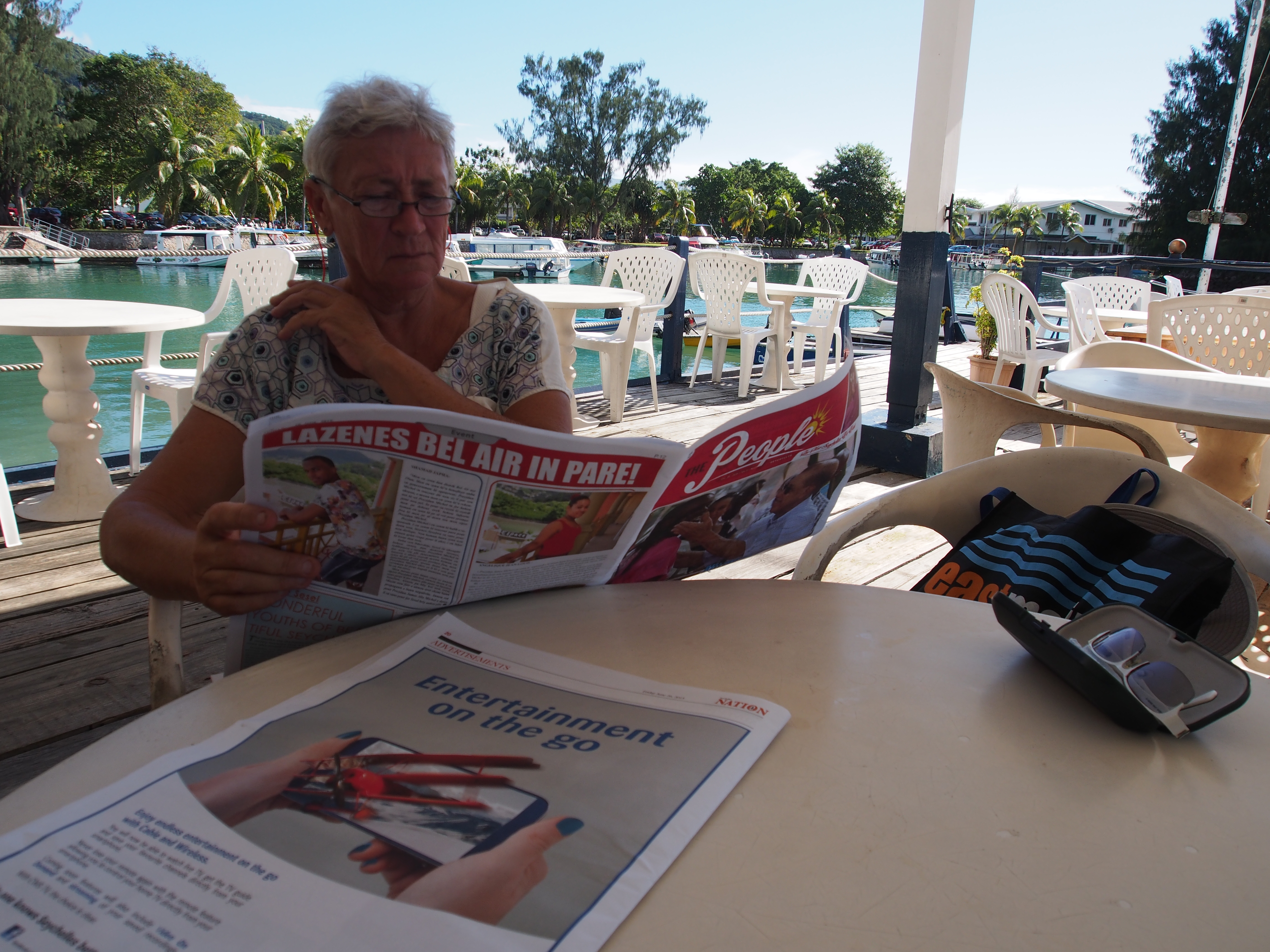
The yacht club is very close to downtown so returning to the club for lunch and reading of the local papers is a good idea on Sundays

Friday night party time
Seychelles etc

Not our boat – Ferry harbour, Victoria
Oh yes, we have been very lazy. We are so enjoying the time here in Victoria that we haven’t been out to any of the outer or inner islands. Time has flown by and we are coming up to our fourth week here.
It doesn’t mean that we have been able to go anywhere anyway. The first order of business was to get the fridge back in full operation. That we did quickly with local assistance. The next order of business was to get the spare part installed that came from San Francisco – $80 for the part and $130 for couriering!
With those two items done we thought we would head out for an extended weekend to one of the closer anchorages. Went to start the engine, which it did quickly, but with an odd sound. With Connie down below and the engine running she called up to say there was smoke. Running down below we determined it was coming from the starter motor. Okay, turn off the engine and cancel the night of music at the bar in Eden Island and cancel the quiet anchorage in the national park.
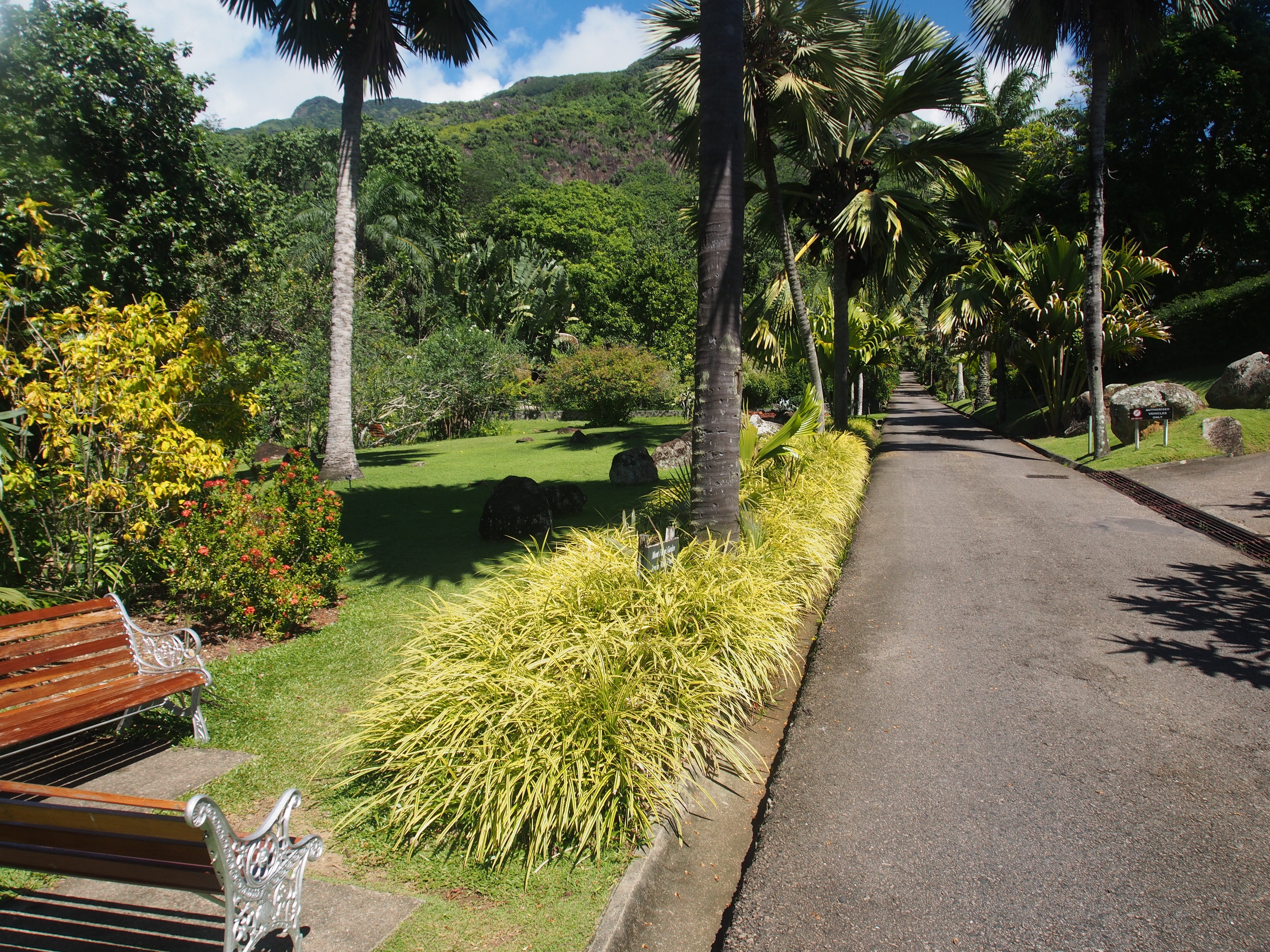
Entrance to the botanical gardens
We solved our problem fairly quickly with again land based help. Hauled out the starter motor, gave it to Tony for repair and he had it back in 18 hours (no island time here) and we got it reinstalled on the Monday and the engine up and going again without having to turn the fridge off (no sun).
That was great but now the weekend was gone and we awaited the arrival of our friends on Pipistrelle, Elaine and Bob. They have been the two unluckiest sailors we’ve met and we were hoping they had a good trip from Chagos to Seychelles. We followed their progress and were relieved to hear winds were good and they were doing well. As they approached the Seychelles the weather deteriorated and being cautious they anchored to wait till the morning to enter the quarantine anchorage and clear customs. We now have 11 foreign boats in the area – Pipistrelle, Nightfly, Garamar, Divinity, Totem, Imagine, Paradocs, Utopia, Zephyr, Helias and ourselves. Most are anchored out in the quarantine anchorage but Nightfly, Paradocs and ourselves are in the Inner Harbour.
The harbour holding is not great but we are on a mooring close to the yacht club. We are serenaded every night but the live music at Club 55 on one side and the Japanese, Korean fishboats on the other side and then occasionally by announcements forward of the bow by the either Oz, American, British warships/submarines that are in and out of the harbour on the hunt for pirates.
As for the weather – the favourite subject of Canadians. Here are the local headlines – Strange Weather.

Strange weather

Excessive rain, cloudy, high winds etc. Climate change? Certainly makes it a challenge to predict where to go and what to do. Yes, it’s cloudy but you know what we are enjoying it. Above the anchorage lie the mountains allowing cooler air to cascade down the hills in the evening spreading a cool scent laden layer across the anchorage making sleeping at 4 degrees south of the equator a pleasant experience. We have no complaints even though it rains intermittently every day.The article talks about Madden Julian Oscillation (MJO) by Wikipedia interacting with a low over the Arabian Peninsula. Interesting but complicated. One learns something new every day which is wonderful. This is something I have not heard about before and it’s quite complicated and not something easy to explain. Read the Wikipedia if your are interested .
In the meantime we will enjoy the Independence Day celebrations and watch closely the political antics that are starting due to an upcoming election
Stay tuned
Mahe, Seychelles
Where do you dream of having a vacation? Not everyone wants sea, sand and surf but if that’s what you are looking for then contemplate the Seychelles. (I think I’m sounding like a tourist brochure!). It’s a mountainous group of islands with some wonderful hikes through verdant jungle, alongside spectacular waterfalls and beautiful vistas.
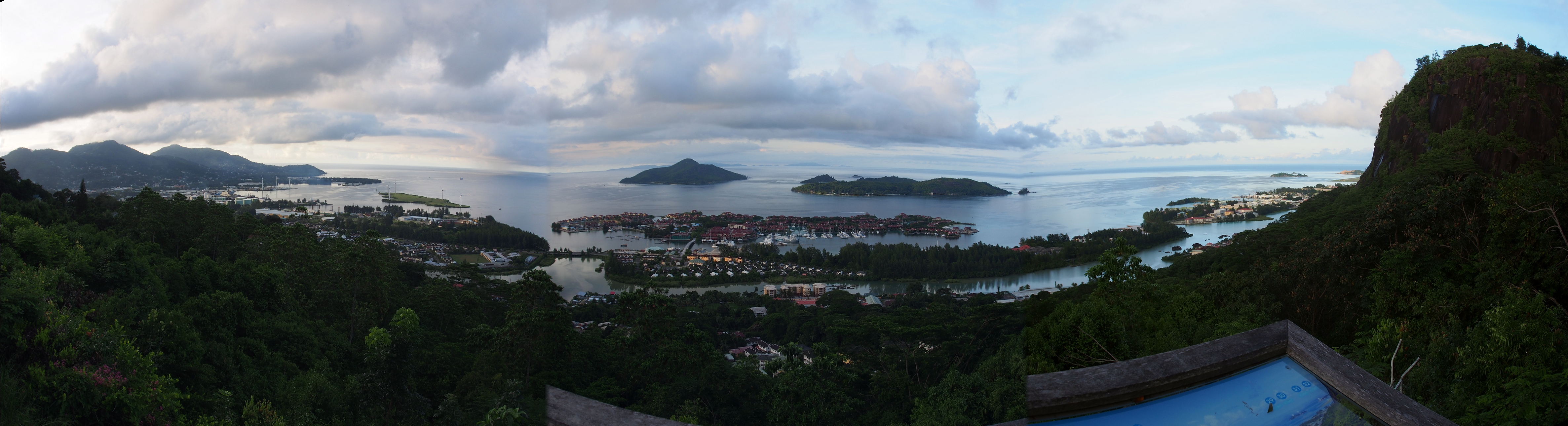
Overview of the Mahe coastline and Victoria
We have been here for two weeks and have nothing negative to say about the Seychelles. From the friendly welcome the fisherman gave us 60 miles off the coast to the post office philatelic counter everyone couldn’t smile more or be more accommodating.

Who, me?
We have spent the last week finding and getting someone to look at and repair our refrigeration, getting our bearings as to where to find everything from sugar to internet, setting up our folding bikes and enjoying the independence day holiday.
Well, I guess that isn’t all we have been doing. The anchorage in Victoria, Mahe is quite tight. There is little room to maneuver and find good holding. It’s a very well protected harbour with hills towering 300 metres over the town and the harbour. However, the bottom is not good holding and for the first time since we have owned Sage we dragged. Luckily it wasn’t in the middle of the night but was first thing in the morning. Connie we serving me tea in bed (as usual) and I felt/heard the anchor bouncing along the bottom of the water. At the same time Connie called out we were dragging. Racing into the cockpit to get the engine going I of course forgot clothes! Just habit I guess.
We managed to stop Sage from backing into all the fish boats on the wharf and got ourselves re-anchored. Later in the day we found a mooring we could use much to the good graces of the tourist catamaran Anahita.
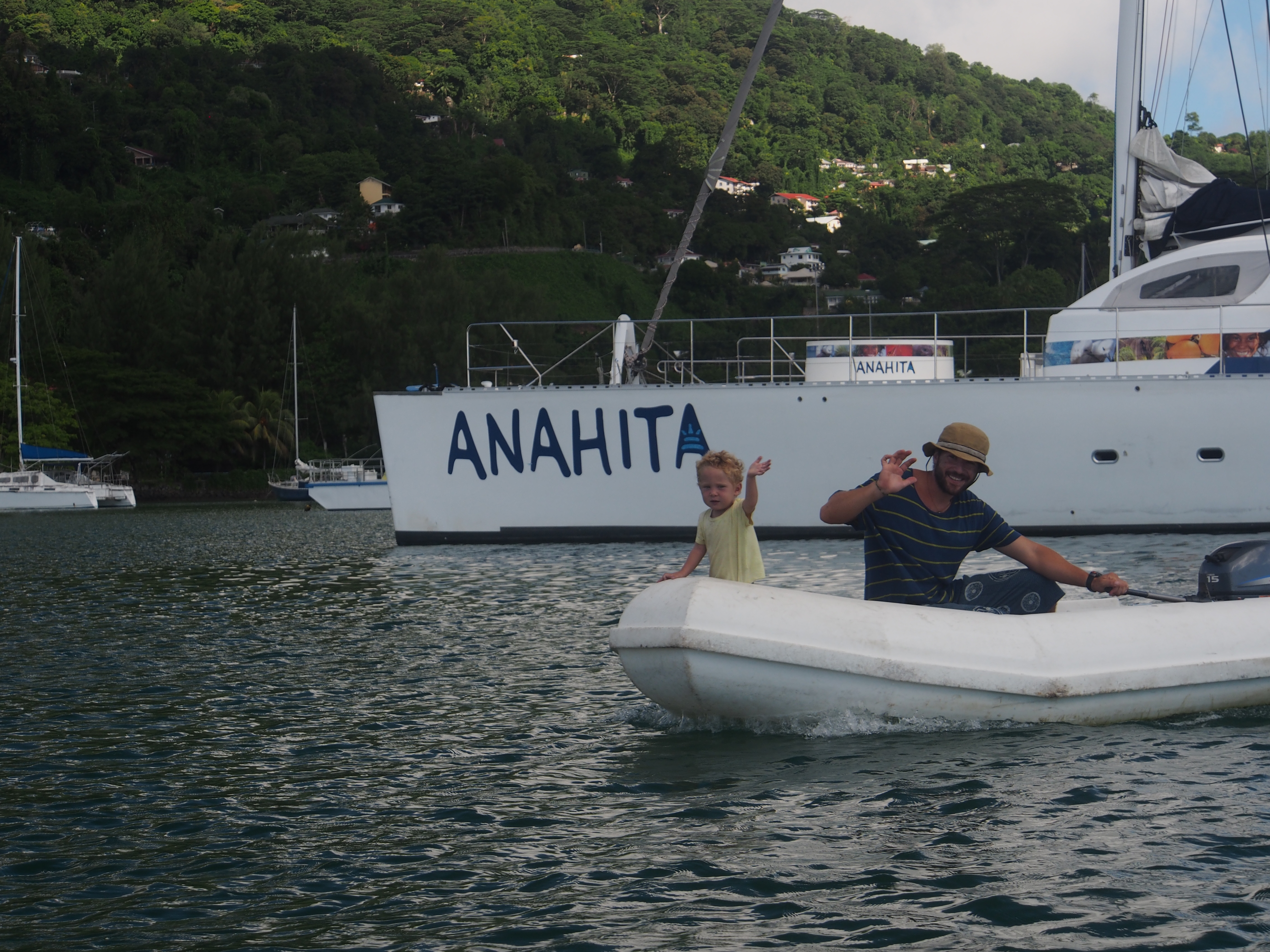
Anahita and two other cruisers from Mexico in the anchorage – Ben and Nicolas
We went to start the engine to go over to the mooring but I noticed that the water coolant was low and I had just filled it the day before. Ummm – now what. Sure enough a rubber hose connector had rotted through and squirted the water all over the engine. This must have finally collapsed totally when we had the engine going to stop our dragging.
We got a tow over to the mooring and felt secure once again (not that we trust someone else’s mooring). So not having a spare part and one not being available in the Seychelles we put a call our to our friends in the states who quickly found a supplier and mailed the part to us via DHL couriers. Was mailed to us from San Francisco late Thursday and arrived today, Tuesday, and now installed. Not cheap! $80 for the part and $130 for shipping! Ummm, I think shipping must the business to be in.

Only 5 years old but seen a little wear and tear
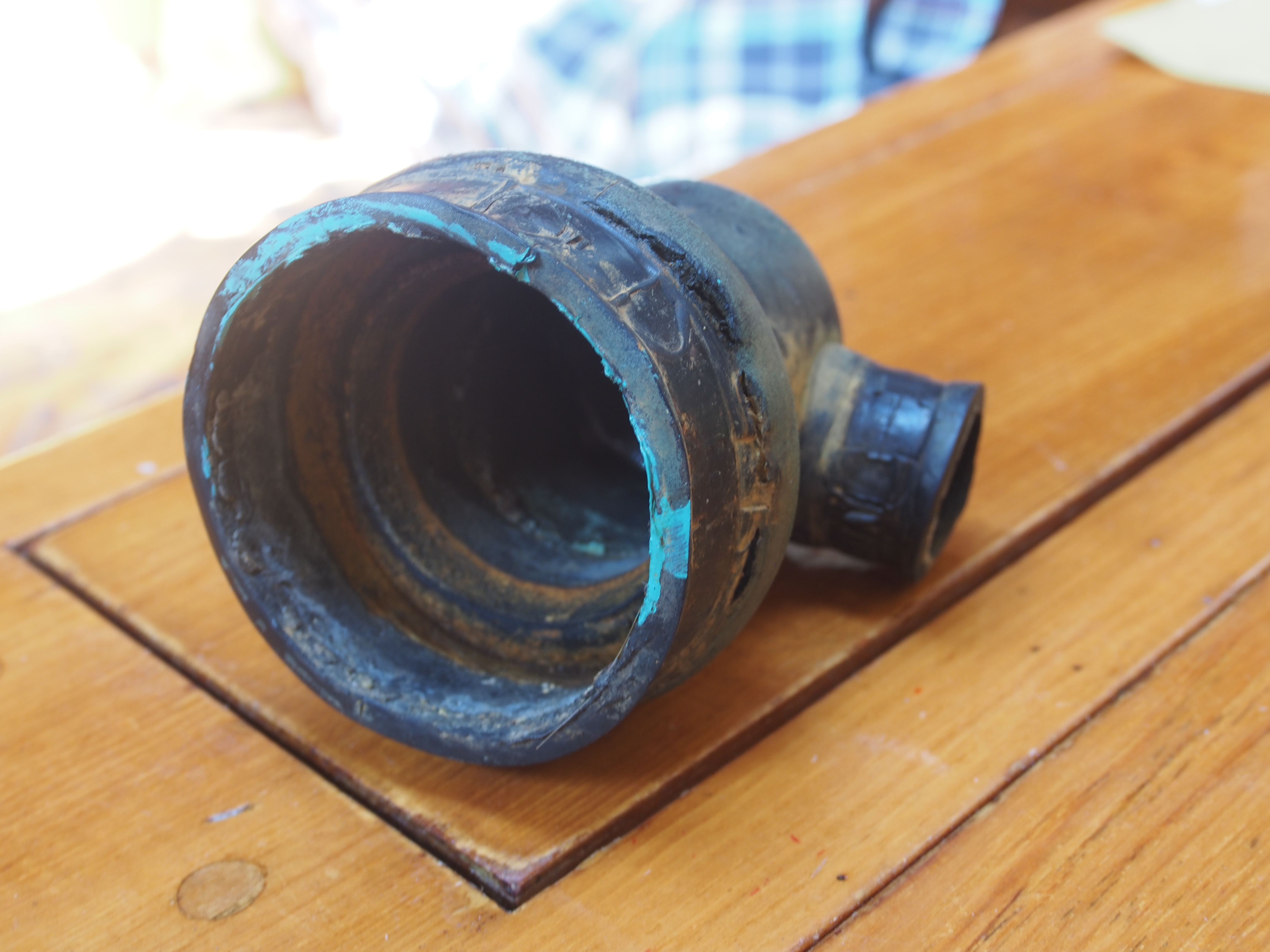
If you enlarge you can see the cracks just back from the leading edge
Without the part for the engine we were immobile. That was OK though. The weather was lousy, rain off and on, a new place to discover and a friend here working on assignment for the Nature Conservancy.
Jo is working with Seychellois stakeholders to come up with a Marine Management Plan with a target of 30% protected area for their key coastal and offshore waters. It’s an ambitious target and the work monumental. Jo is from Smithers, BC and travels down here at key times to move the process along. In her spare time we have commandeered her and had ocean swims, tours of the island, dinners out and dinners both on the boat and at her temporary home. Jo has been a wonderful connection for us right at a time we were immobile and we have greatly enjoyed hearing the stories she has of working here and simply hanging out.
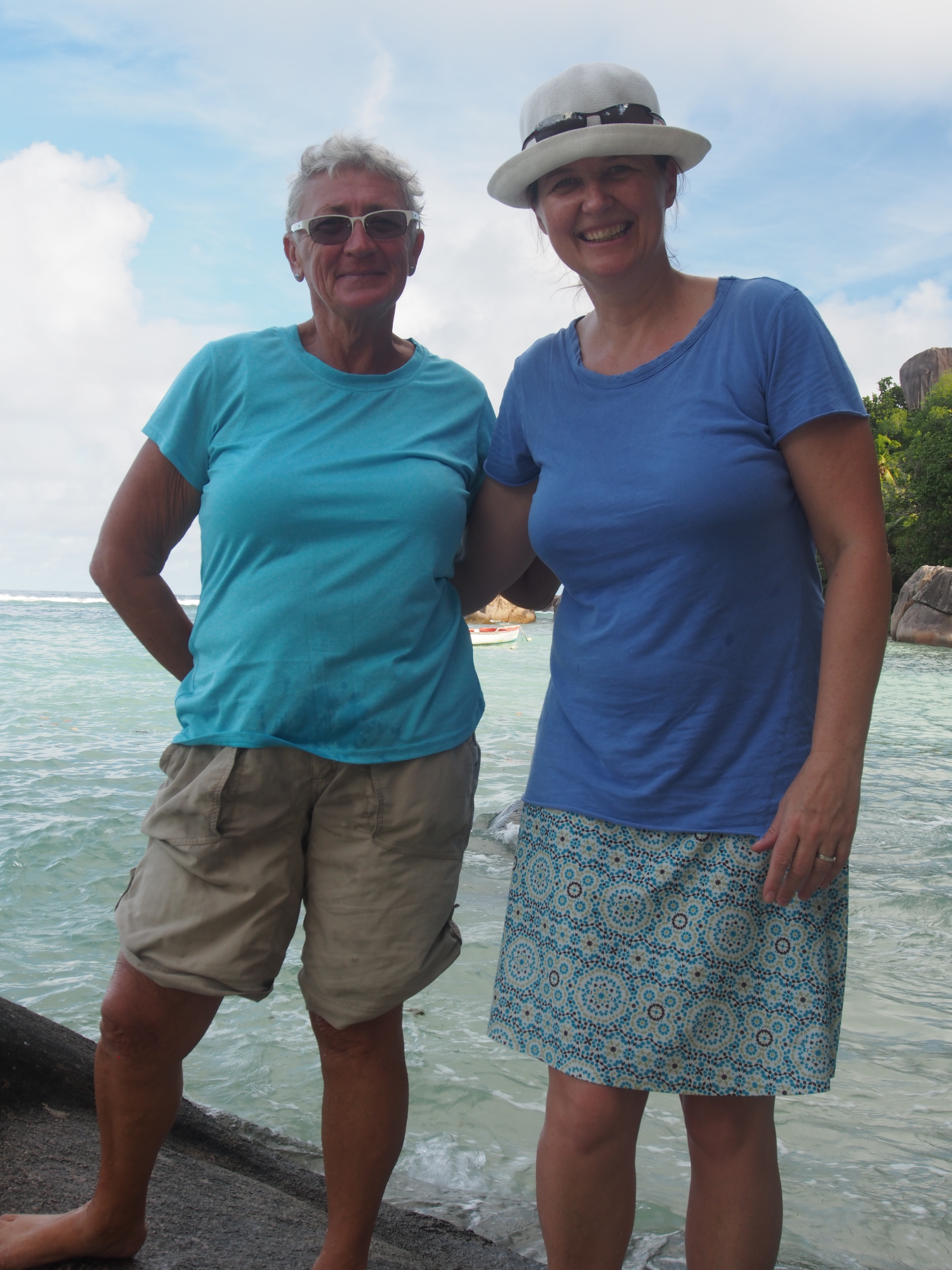
Connie and Jo on our round the Mahe Island tour
And hanging out is great. We love sitting at the Yacht Club

Seychelles Yacht Club and anchorage
for a sunset drink meeting a few of the locals. The club is incredibly friendly and one of the best eating deals in town. Best of all though is just to sit and listen to the people talking. Here people speak three languages – Creole, English and French. The resulting mix is this wonderful sing-song lilting language for which they mix all 3 languages and more. One minute you think you understand what they are saying and the next just shaking your head. The life is relaxed (don’t expect to get anything done in a hurry), the food interesting, the music wonderful, the ambience tropical and the weather almost ideal.
The market is one of our daily stops. Some things are a little expensive compared to other stores as the market does attract a lot of tourists. The fish choices are spectacular with mainly fresh tuna and snapper. There are also hints of the spices grown from cinnamon, nutmeg. allspice, vanilla etc. Get there early – the best produce both imported and local are on offer.

Market day

Snapper at the market
The market is colourful, loud, fish smelly and full of life. It’s located on Market Street (surprise, surprise) which is closed off to traffic and which is also the location of a great gelato and Italian food deli. Yes, almost everything is available here at a price.
I can’t say it’s cheap but then when one has been in Asia as long as we have nothing is cheap! I have put a picture of a menu in the blog and the prices are in rupees – divide by 11 to get the equivalent value in Canadian dollars
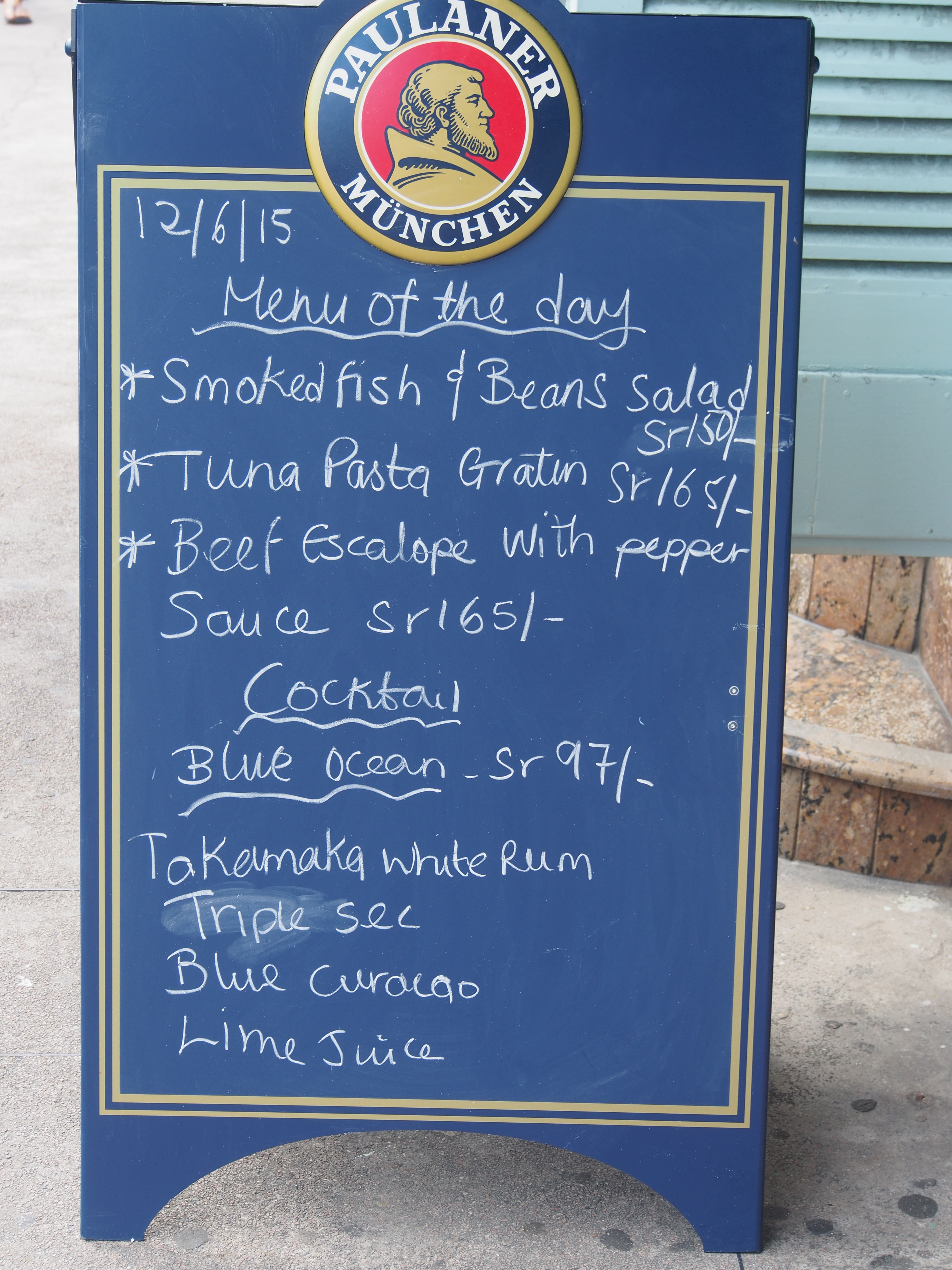
Local lunchtime menu – they love their big lunches here

The ‘other’ gelato shop
From a cruising boats perspective it’s not so expensive depending on what you choose to eat and where you eat.

Takamaka rum distillery. A beautiful property on their old estate
Liquor is unaffordable ($50 dollars for a bottle of rum but we buy the local – Takamaka Rum at $30/bottle) imported cheeses available at a price, fish at a bargain and steaks/meat being imported around $20/kilo. So, fish and local rum it is.
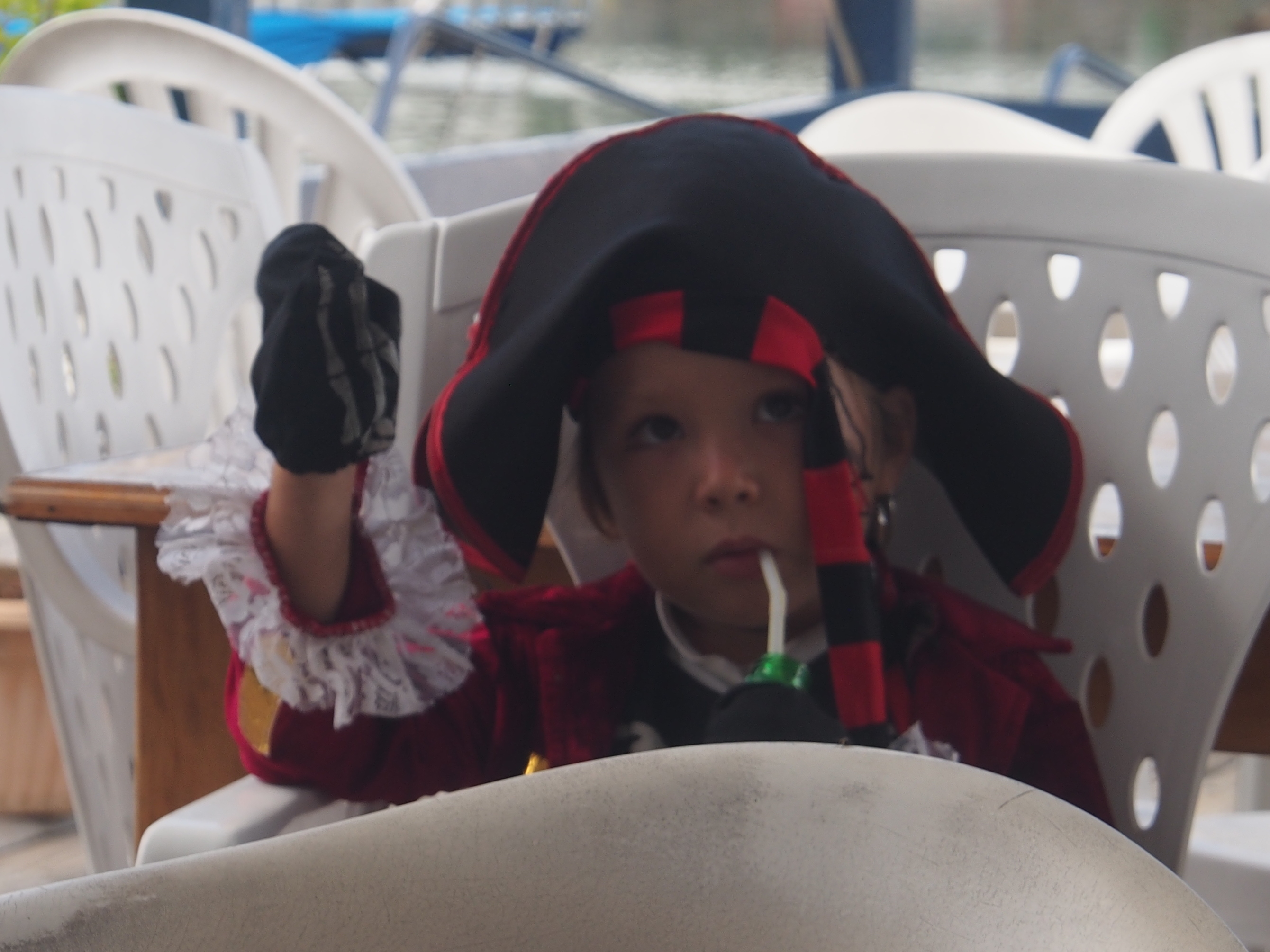
Our own Mexican pirate before he went on a raid
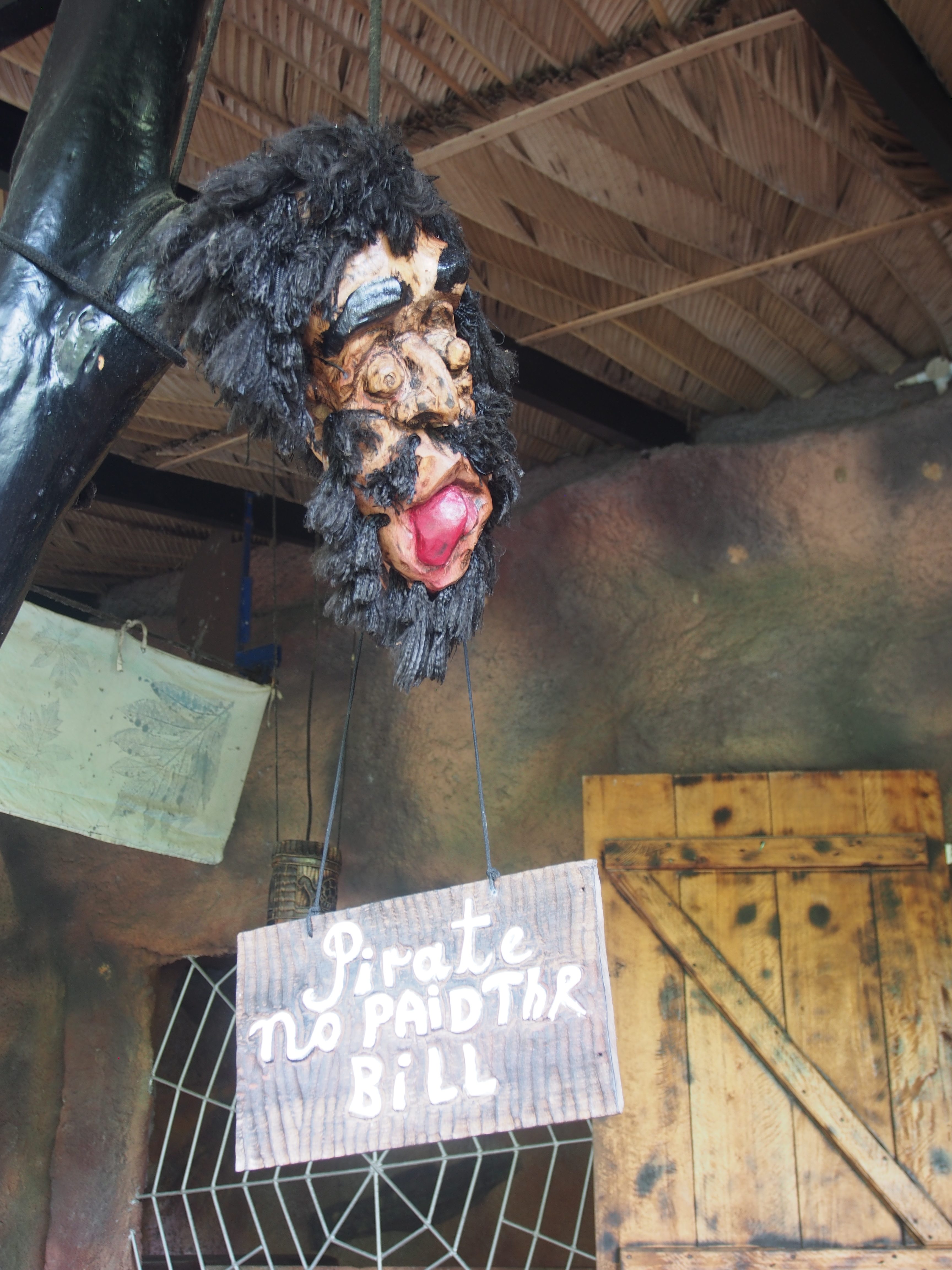
Our Mexican pirate after he came back from the raid
Chagos and Beyond

Approaching Chagos – 2 miles out. Notice how difficult it is to see the land
How long has it been? No internet, no phone calls, no weather reports and no shopping for X weeks. And did we really miss anything? Not really.
Connie did an awesome job on provisioning enabling creative simple menus supplemented by local catches of a variety of local fare. I can’t say that I didn’t dream of strawberry shortcake smothered in whipped cream but without that we are fit and healthy and look considerably lighter! Svelt I would say but then I am biased or myopic.

Chagos – a dune soon to become covered in mangrove then palms
We started our southern Indian Ocean affair by visiting Chagos, a protectorate of Britain, administered by BIOT (British Indian Ocean Territories).
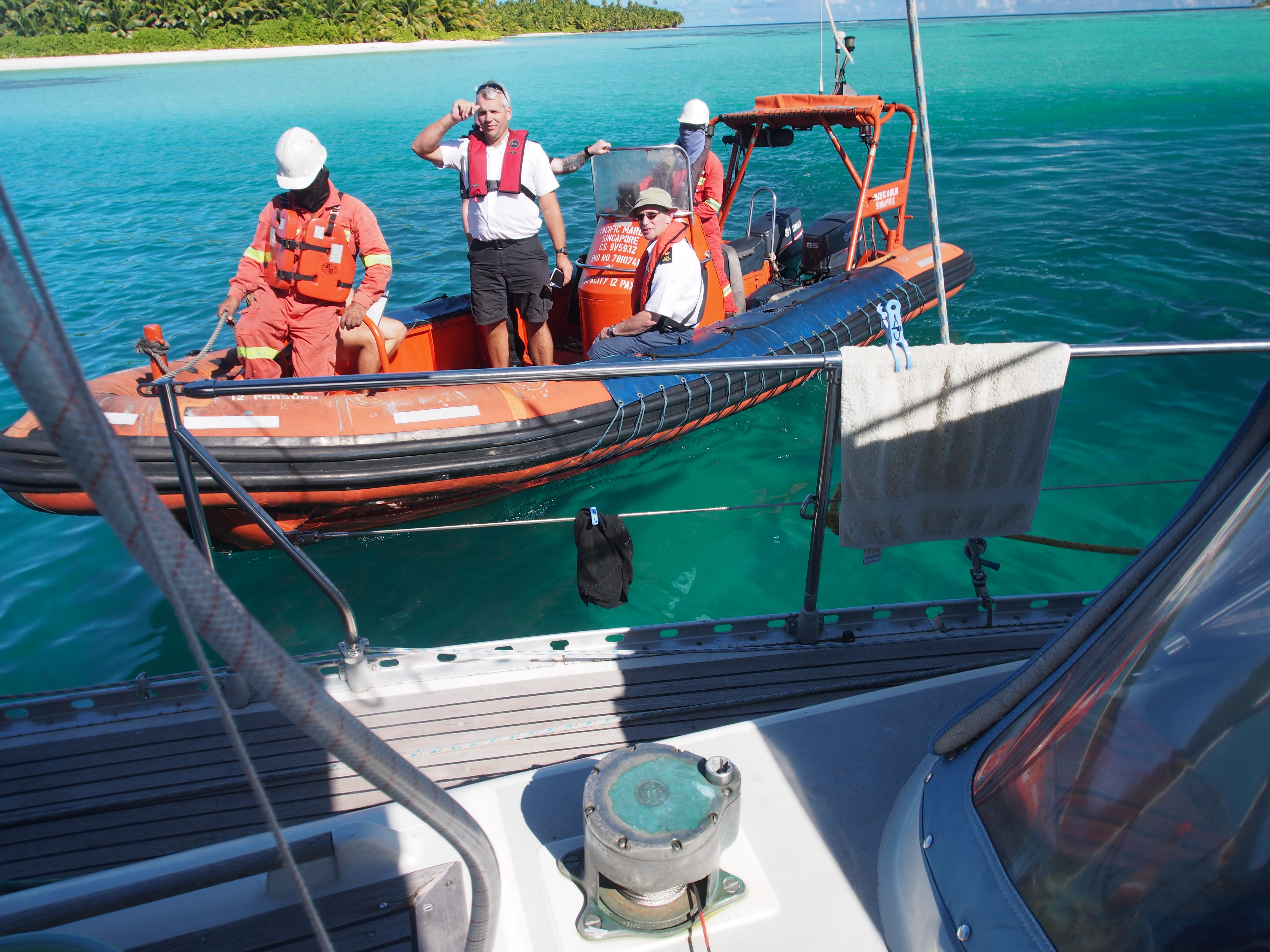
BIOT (British Indian Ocean Territories Organization) is looking for our paperwork
There is no-one who currently lives in Chagos unless you include Diego Garcia which is an American military base, key to their strategy of penning in China’s expansionist desires. Chagos was inhabited up until the mid 70s but the population was forcibly removed by the British. For an interesting documentary watch John Pillger’s video called Stealing A Nation.

This photo is taken from a go pro mounted on a drone. We are the boat far off to the right. What looks like patches of brown rock are actually ‘bombies’ underwater coral heads and there are hundreds to navigate around within the atoll Photo by Mark
Now, only parts of Chagos are open to visitors. The only way of reaching the atolls is by sea and no commercial vessel is provided a permit. The longest length of stay allowed is 28 days and one must have both yacht and health insurance neither of which we normally carry. However, we wanted to visit so now we are insured for a year.I doubt though our insurance company will ever pay out a claim!
We shared the Chagos anchorage with up to as many as 12 other sailing yachts from Germany, Austria, France, Australia, Britain, America, Seychelles and Canada. We supped on the beach through numerous BBQs, drank copious amounts of various liquids during sundowners, foraged in the jungle, swam with numerous sharks, fished for dinner, hunkered down during vicious squalls, madly collected water during intense rainfalls, kayaked over coral reefs and chased rainbows across the lagoons. I think the only thing that was missing was a local population to connect with and share stories and life experiences.
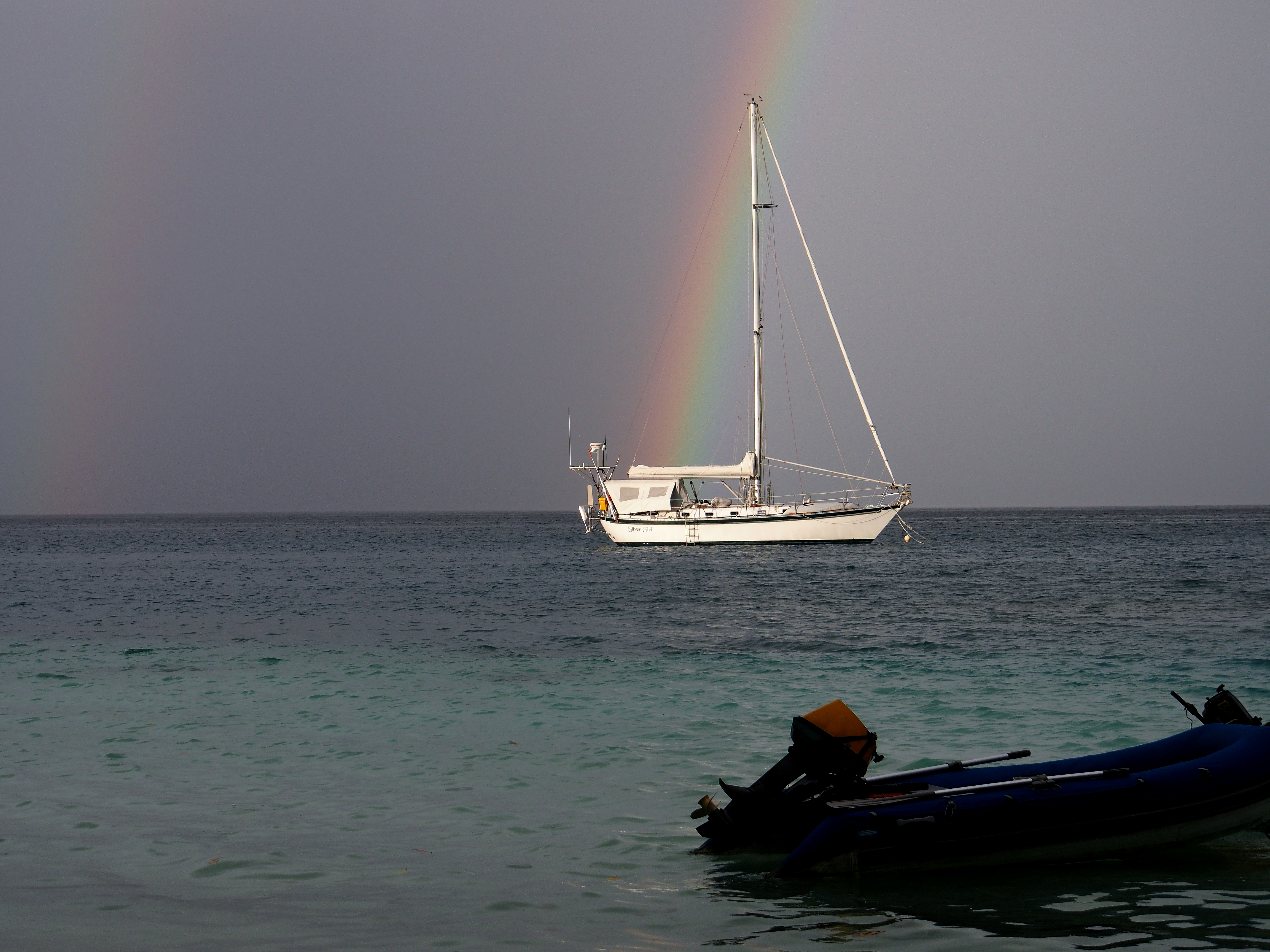
Silver Girl blessed with a pot of gold
However, there is always drama once more than 2 boats are in an anchorage together. That’s why we opened the Couples Therapy Centre (see photo). There wasn’t much business for the centre. The biggest drama involved a change of crew, one person jumped ship and left Chagos on a different boat, a French catamaran I was druelling over that is able to average over 200 miles per day at sea. The boat was an Outremmer 49 and I am sure the new crew had the voyage of a lifetime. Apart from that drama, crew on all boats remained the same as they were when they arrived. I think that the therapy centre can put that down as one of their successes. It’s not easy living in a small space for a long period of time with one other person!

Signage a group of us posted at the main collection site onshore
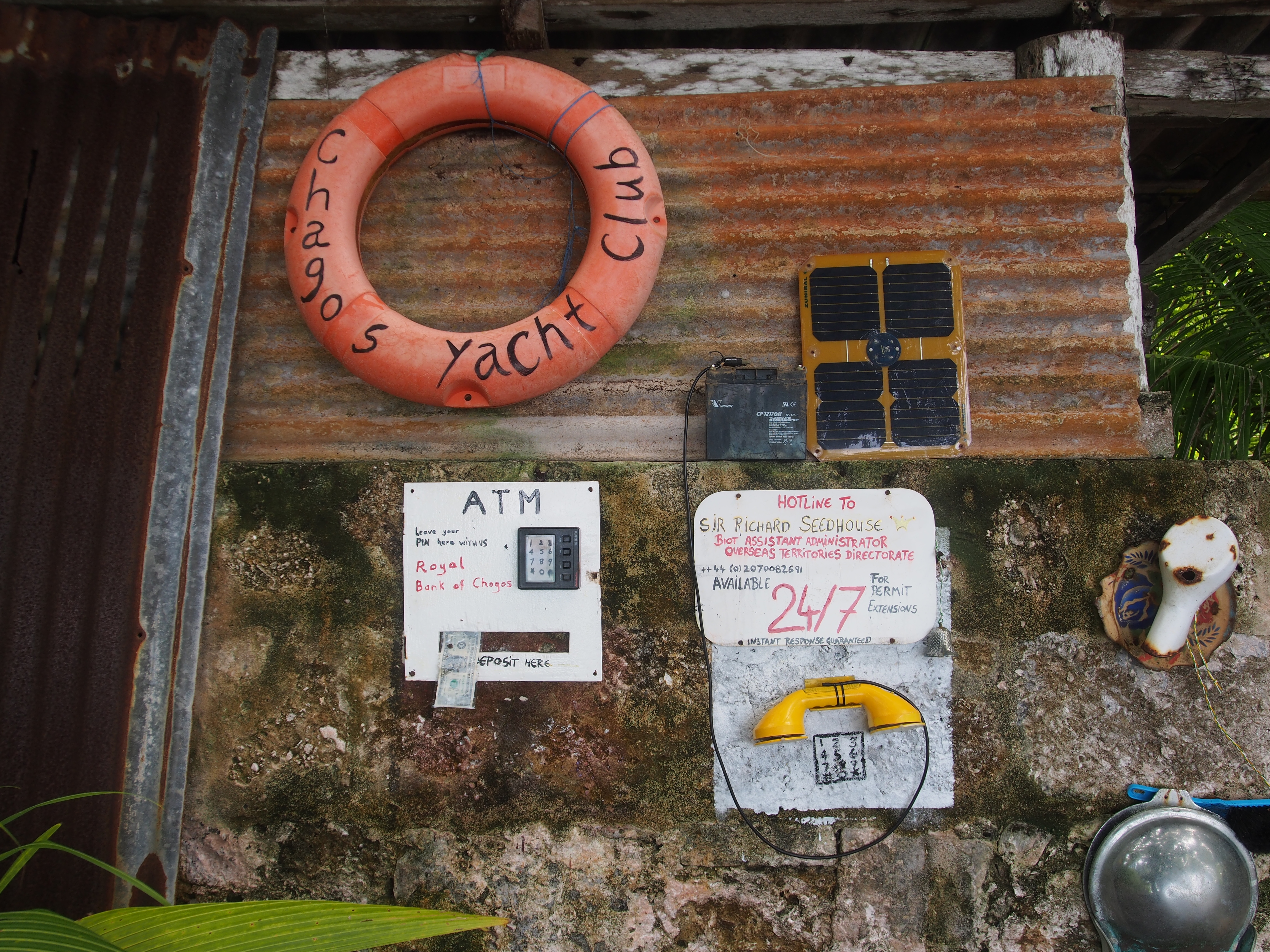
The Chagos Yacht Club

Coconut crabs abound on the islands as there is no resident population. Coconut crabs can grow to 1 metre in length and live as long as 60 years
After 20 days everyone was itching to leave but the SE trades were not cooperating. Planning ahead and making an early departure was not working. Long periods of calm hot weather persisted and day after day the required winds did not arrive. Finally the grib files showed a change and people started to prepare. A last potluck on the beach for the yachts headed to Rodrigues. Those headed to Madagascar and the Seychelles waited.
May 22nd our day came. The previous night had brought rain and easterly wind. Looked promising for a good start.

Note the blue line indicates the direct route between Chagos and the Seychelled. In order to keep the wind we headed south and then looped back north and into Victoria
Offshore sailing provides plenty of time for reading. It’s not like we can just get off and go for a stroll. Supine is the best description for offshore sailing especially when there’s not much wind and the temperatures are in the mid 30s. So, supine and reading take up many of our hours and here’s a list of the books read:
Path Between rhe Seas by David McCullough – a story of the building of the Panama Canal
by Gavin Young – a story of a Vietnamese family the writer befriended in the 1960s in Hue
Lonely Planet’s guidebook for the Seychelles, Mauritius and Reunion – have to know something about the place we’re visiting
The Last Train to Zona Verde by Paul Thoreaux – a recent account of a travel odyssey through South Africa, Namibia and Angola
Amy, My Daughter by Mitch Winehouse – a father’s account of a daughter’s struggle with fame, fortune, drugs and alcohol and her eventual death
Return of a King by William Dalrymple an historical narrative about the English in Afghanistan in the early to mid 1800s
After Dark by Haruki Murakami – I love the way he twists reality
Dark Age Ahead by Jane Jacobs – a must read for those intrigued by urban design
The Devil’s Teeth by Susan Casey – A true story of obsession and survival among white sharks set on the Farallone Islands
Apart from being supine, things that keep us busy are; changing sails with changing conditions, navigation (although with electronic charts and chart plotters the time here is severely reduced from our time with a sextant), making a flag for the next country we enter, repairing or trying to repair broken down refrigeration, avoiding crashing into other boats and all the other mundane day-to-day duties of cooking, cleaning and personal hygiene. All this in a space no bigger than your suburban bathroom!
The most unusual event on this crossing was seeing, at very early dawn, a sail not far in front of us. This is an exciting event and one that happens rarely. Of course, whoever is on watch has to alert others. There ensues a mad attempt to get even closer for identification purposes and to say hello. In this case catching up was not a problem and soon enough we were close enough to realize it was an american boat called Zephyr, a 48 foot Liberty, sailing from the Maldives direct to the Seychelles. Greetings were short and soon enough they disappeared and on we moved.
A few days later we are roaring along under a full moon across the eastern Seychelles bank towards the island of Mahe and the capital Victoria. The last 12 hours of sailing saw us averaging 6.8kn yet no water on deck. Excitement built as we approached the lights of Victoria and dropped our anchor down at 0800hrs at the quarantine buoy to await clearance.
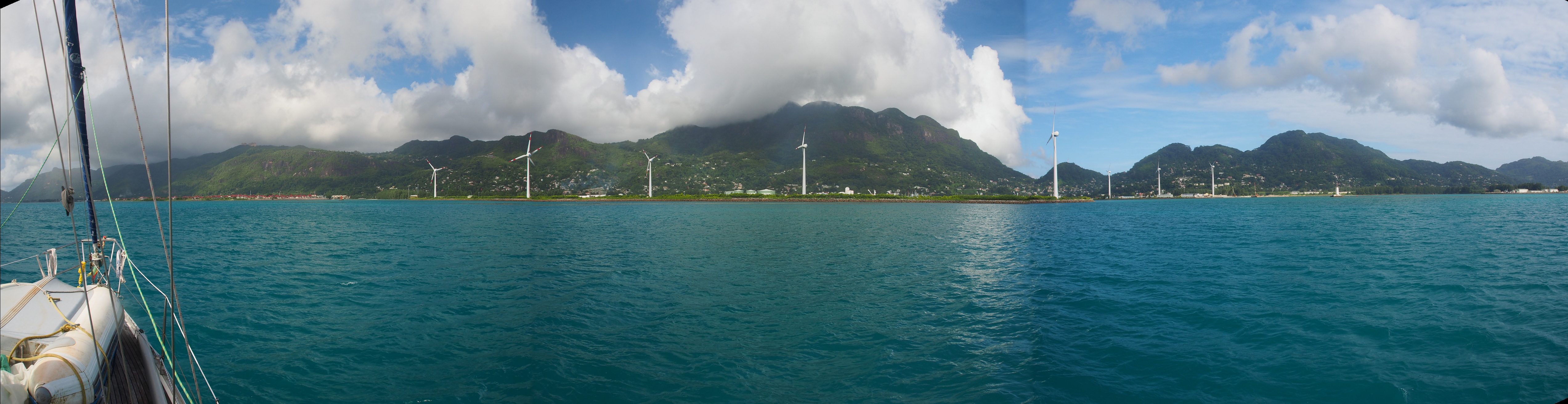
Seychelles – Victoria Harbour
We were happy to be in and glad to have taken only 10 days. I can’t say we loved the trip. The seas were like a washing machine despite generally light winds. However, we had wind all the way and we only turned on the motor a couple of times to generate a little more electricity.
We are happy to be here.
_________________________________________________________________________________________________
Postscript: since we have arrived we have three close friends where tragedy has struck
1 – Silver Girl – our Australian sailing buds we met in the Maldives were dismasted 220nm NE of Rodrigues and lost mast, boom and sails as everything had to be cut away quickly due to heavy seas. They motored the remaing distance and now have a big job to get r
2 – Nausicaa – our Italian sailing friend was hit by lightning sailing north from the Philippines to the Aleutians. He lost self steering, HF radio, radar and GPS. He is now in Hong Kong affecting repairs
#7 A Picture A Day for Seven Days
BYE – Yes we are waving goodbye. It’s time to leave Gan, say goodbye to the flies and fly south.
It’s also time to say there will be no more blogs for at least eight weeks as we wander through an internet free southern Indian Ocean. I know my last posting in this series is not a picture but rather a video. I am so glad I won’t have to read your complaints until much later.
Till later, ciao…
#6 A Photo A Day For Seven Days
For most of the time since I started this series we, or at least one of us, has had to have been on the boat. The gusts that have come with the squalls have been intense. We are OK but the potential for something onboard Sage to go wrong or for something to happen on another anchored boat to impact Sage is high. Hence one of us is here to watch and act if necessary.
The other issue is rain. We thought potable water would be in ample supply here. Either the water we could buy or collect. In terms of buying there are only two 5 litre containers left in any of the stores. We found the wholesaler who supplies the store but he has none left as it stands today. That comes as a real surprise. Our agent has asked why we don’t collect the rainwater. A really good question.
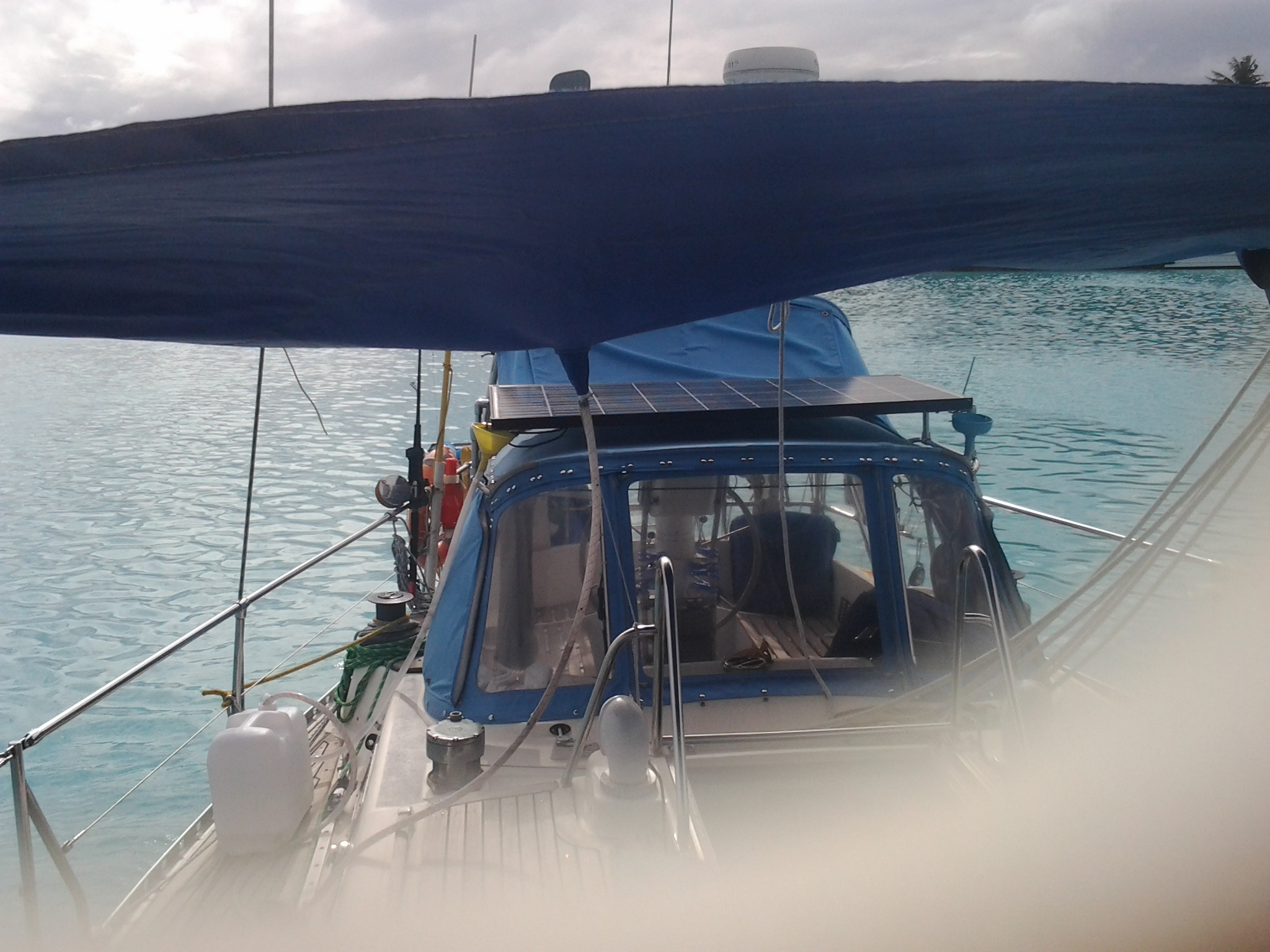
To collect rainwater one has a variety of choices. Collect it off the deck which we can’t do as there are no scuppers to collect the rainwater and hold it on the deck for collection. Another method is to collect it off other flat surfaces. We do that with the solar panels but the surface area is small so collection in rain like we have is minimal.The most effective method is to have a tarp with a dip in it to collect the water and direct the water through an attached hose to a container or directly to the tanks. This is what we have.
Our dilemna is that we are about to embark on a one month trip to Chagos followed by a 10 day ocean passage. There is no water on Chagos. There is no water here in Gan to buy. There is copious amounts of water falling from the sky. So what’s the problem?
Yes, the tarp collects water but when the rain is accompanied by 40+ knots of wind the water the tarp collects is immediately thrown skyward to be lost. We can’t keep the tarp steady enough and the rain doesn’t come when the wind abates. So todays picture is dedicated to the tarp in the hopes we can fill our two 200 litre tanks to get us through the next 6 weeks. So your job, as readers of this blog, is to send positive thoughts our way for winds of under 10 knots and plenty of rain. Thanks
#5 A Photo A Day For Seven Days
Getting around, especially onboard a boat, first means having to get ashore or back to the boat with some form of waterborne craft. Most ‘yachties’ these days have inflatable dinghies that are stable, safe, carry volumes of stuff and are powered by engines that push them along like they are on a race track.
I remember many years ago when we first went sailing we had a hard dinghy that we rowed back and forth to the shore. Soon we converted to a very small inflatable and still rowed to shore. Next we added a seagull engine made in England that belched blue smoke, dripped oil over everything and sounded like a wounded cow. Slowly, over the years we have succumbed to the appeal of moving quickly and in comfort in the style of something on the road would be referred to as a sedan.
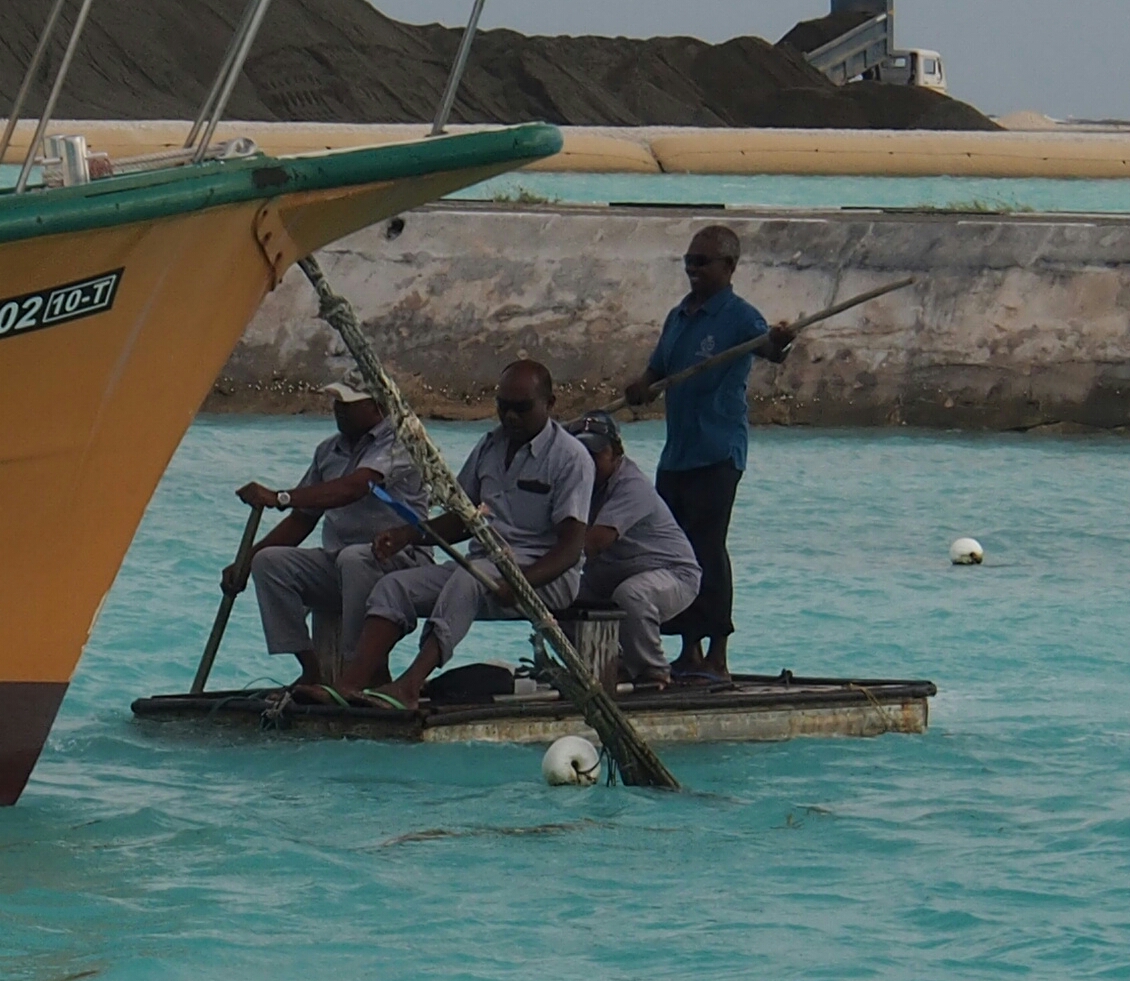
I long for the days of having a dinghy that is a pleasure to row so when I saw the latest model in our anchorage the other day I put my order in. Connie may not be too happy but it meets all the criteria of being enviromentally friendly and very economical. Enjoy and orders can be processed here in Gan…
#4 – A Picture A Day for Seven Days
As I said anchorages are deceptive. What is idyllic one moment can become lethal the next. Well it happened. We have been experiencing tremendous gusts with pelting pounding rain. Last night was the worse.
For the four of us behind the reef in 3 metres of water ( at low tide) we faired well with only torn awnings, wet decks and a bouncy night due to high tide being at 0200hrs. For those outside the reef the wind came from the worse direction possible. They were caught in an onshore wind and sea. Already during the day two boats came in behind the reef while four stayed outside. The day saw them trapped on their boats as some of them had their bows buried in the waves as they pitched up and down. They hung tight though and late in the day they had a reprieve as the wind lightened and seas abated.
As nightfall came hopes for a calmer night were tempered by an ever darkening sky. By 0200hrs we were pitching, albeit lightly, but with gusts approaching 55knots the boats outside were definitely worried. With visibility in the gusts being practically zero they clung on with only one of them dragging towards the reef. The one dragging boat managed to get their engines going before they hit the reef and motored out to deeper water to try and again anchor.
Needless to say everyone is on tenderhooks, tired from 2 days and two nights of worrying conditions. It’s been a good lesson in perseverance, patience, group support and the need for good strong anchoring gear.

Storm coming
#3 – A Picture A Day for Seven Days
After the last couple of photos I thought I had best include a more idyllic picture of life in the tropics. Our anchorage has only one other sailboat, Silver Girl, anchored inside the reef. It’s not a large anchorage but it’s very secure. There are a few local boats at anchor and a number of others that are tied to a concrete wall. The Maldives coastguard has two small boats tied to the wall and there is a police boat.
The other cruising boats, 9 of them, have opted for the anchorage outside the reef leaving them exposed to weather but generally now the wind is from the south-west and that puts them on the lee side of the land providing flat water protection. They don’t get the flies we do!
So, here it is in all its glory….

Panorama shot of the Gan anchorage
 Sage on sail