Bequia – The Windward Islands Gem
We knew the first time we sailed into Bequia it wouldn’t be the last time.
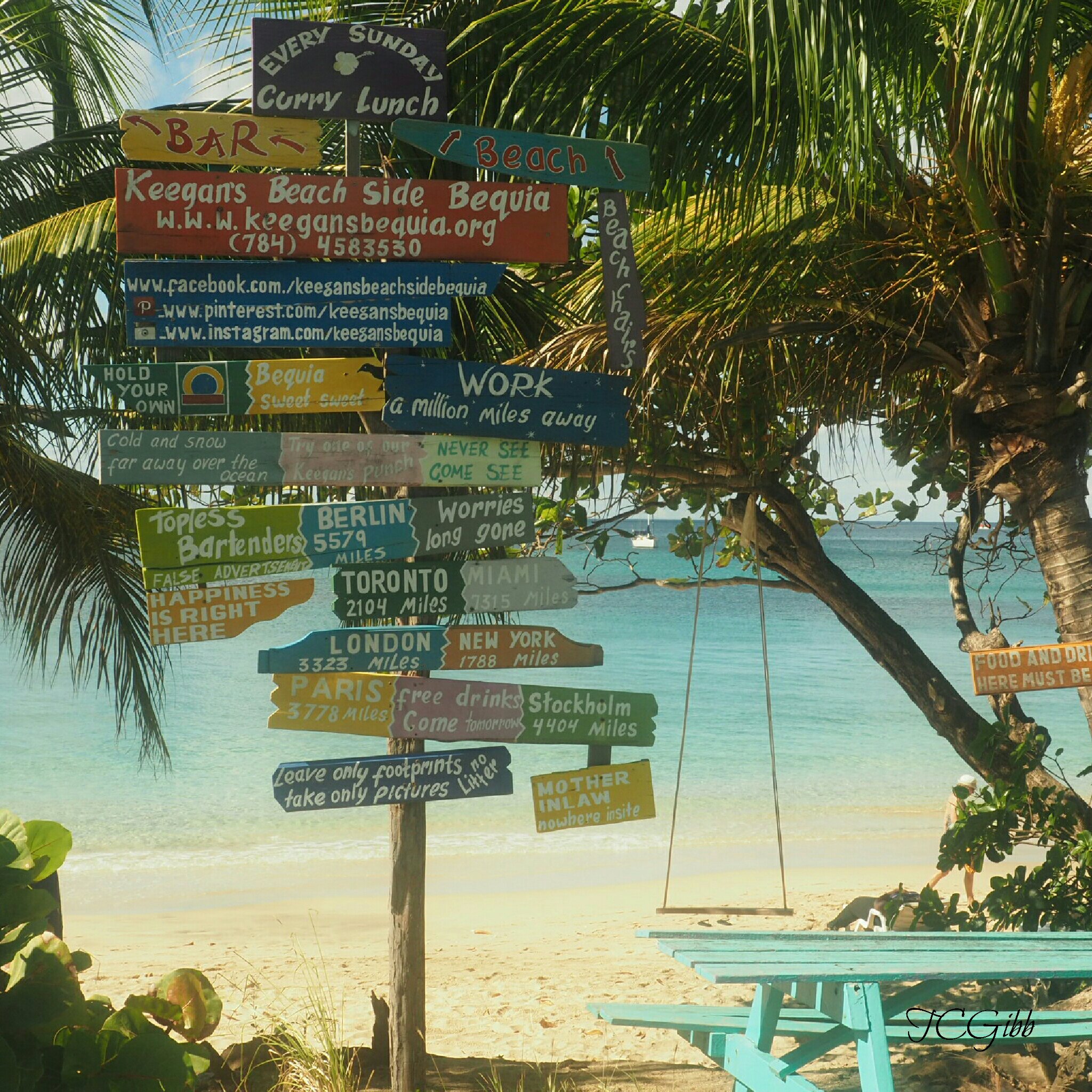
Which way should I go?
Bequia is a long way from anywhere. We first came here in March and returned again in July on our way south to Grenada for the hurricane season. This time our return was dramatic; sailing past the south-western point of the island in yet another squall and in company with two other boats.
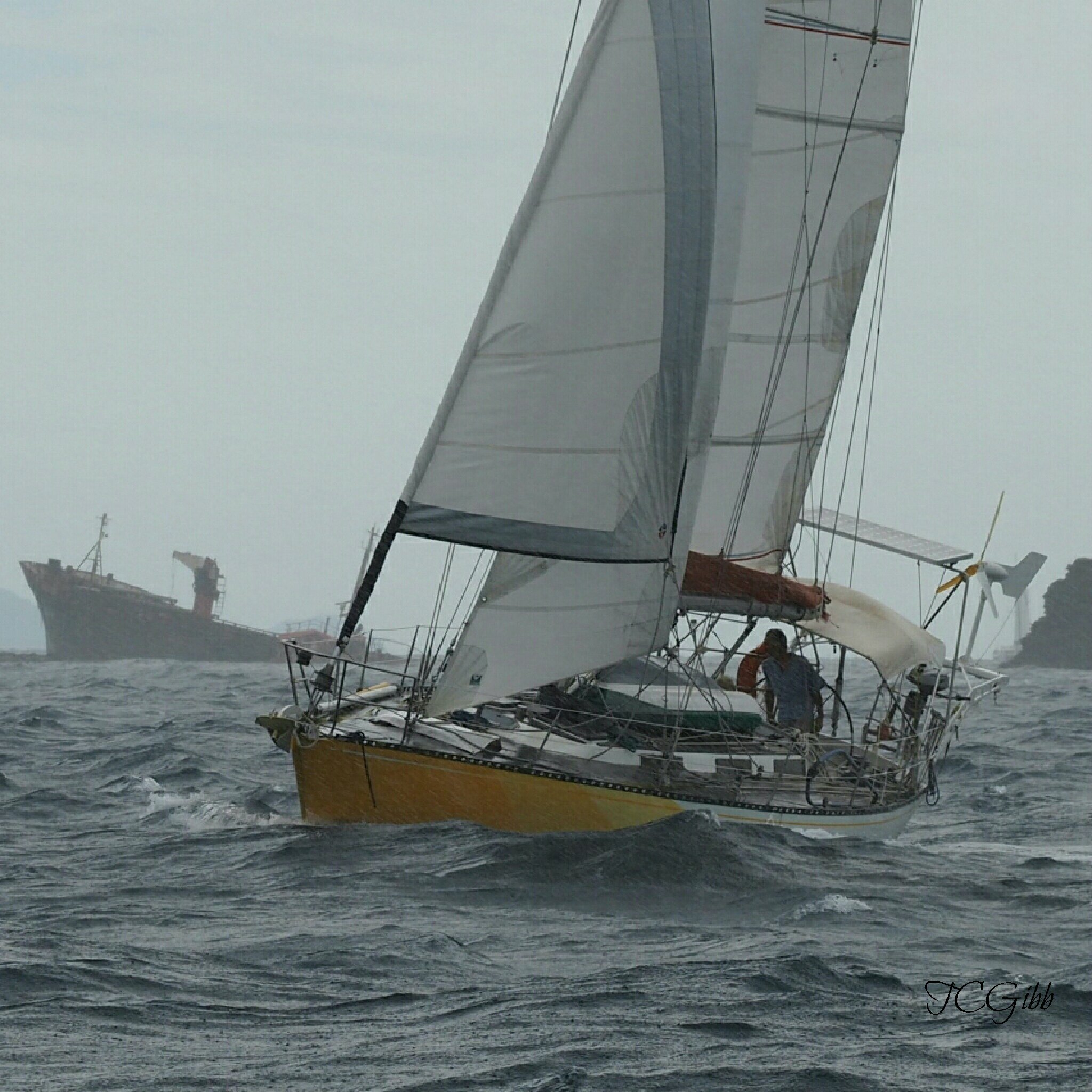
I am still looking for the owner of this boat as I have a few other pictures to share with bim/her
I first read about Bequia in a sailing magazine back in the 1970s. It was an article about the traditional boatbuilders of the island. Although one still sees some of the old sailboats around there aren’t many.
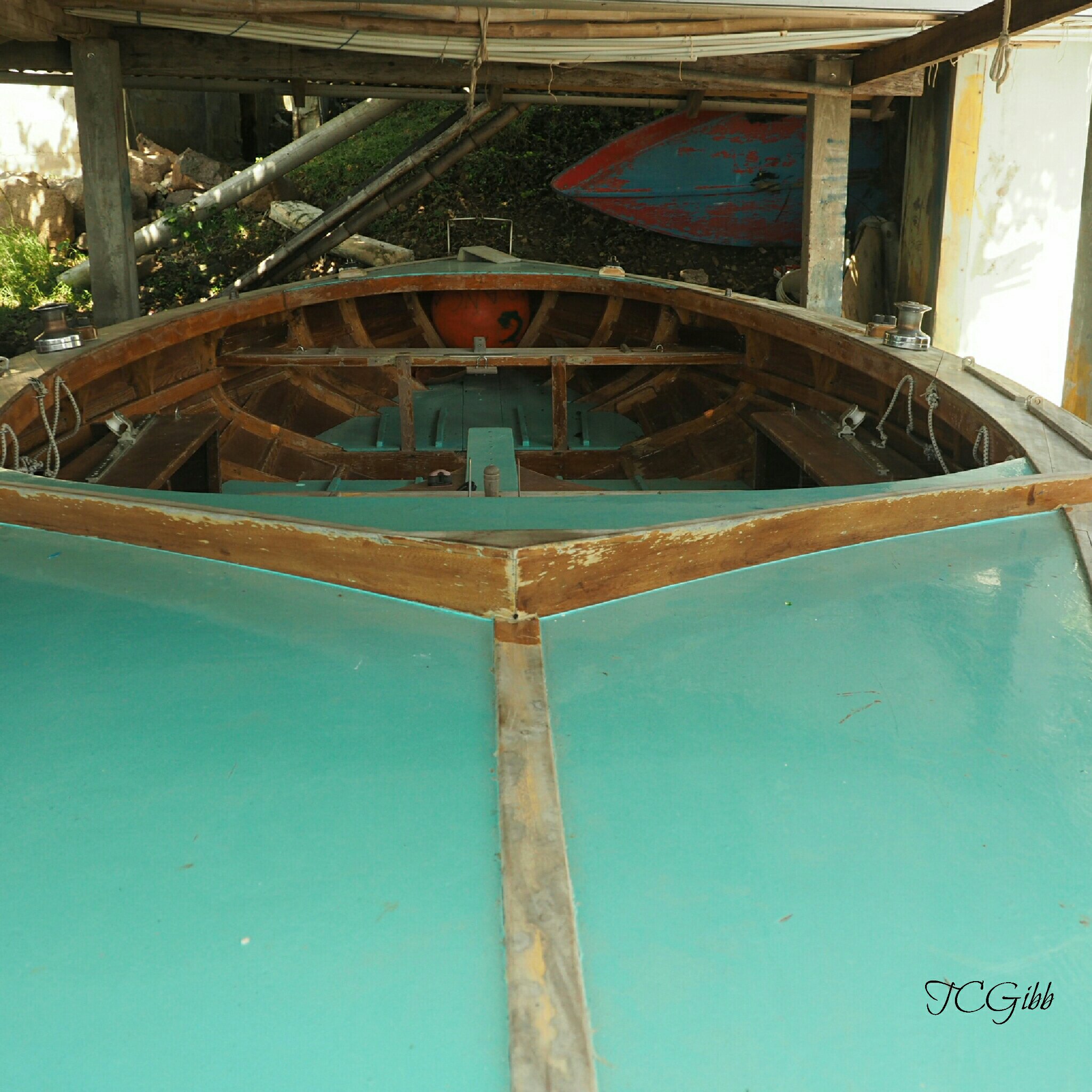
A classic Bequia sailboat which may have been, at one time in its life, could have been a working fishboat
Where most of those skills are evident is in the fishboats. These are coastal fishboats best designed for skipping over the east trade winds chasing the mahi mahi and barracuda.

But that’s not all they catch. Bequia is one of the few areas left in the world where the hunting of whales is legal. We went to visit one of the villages on the east coast, Paget Farm, to see what evidence there is of whaling. Taking the local bus for EC $2 we were treated to a 20 minute ride over the hills to the east and a short run out and along the west coast with the blaring soca music to a small village close to the airport.
We got off the bus at Toko’s Bar and walked back through the village which creeps up the steep hillside bordering the rocky coastline. Tucked into the shoreline are a few places where local fishermen can drag their boats out of the water for protection. Here, there was evidence of whaling.
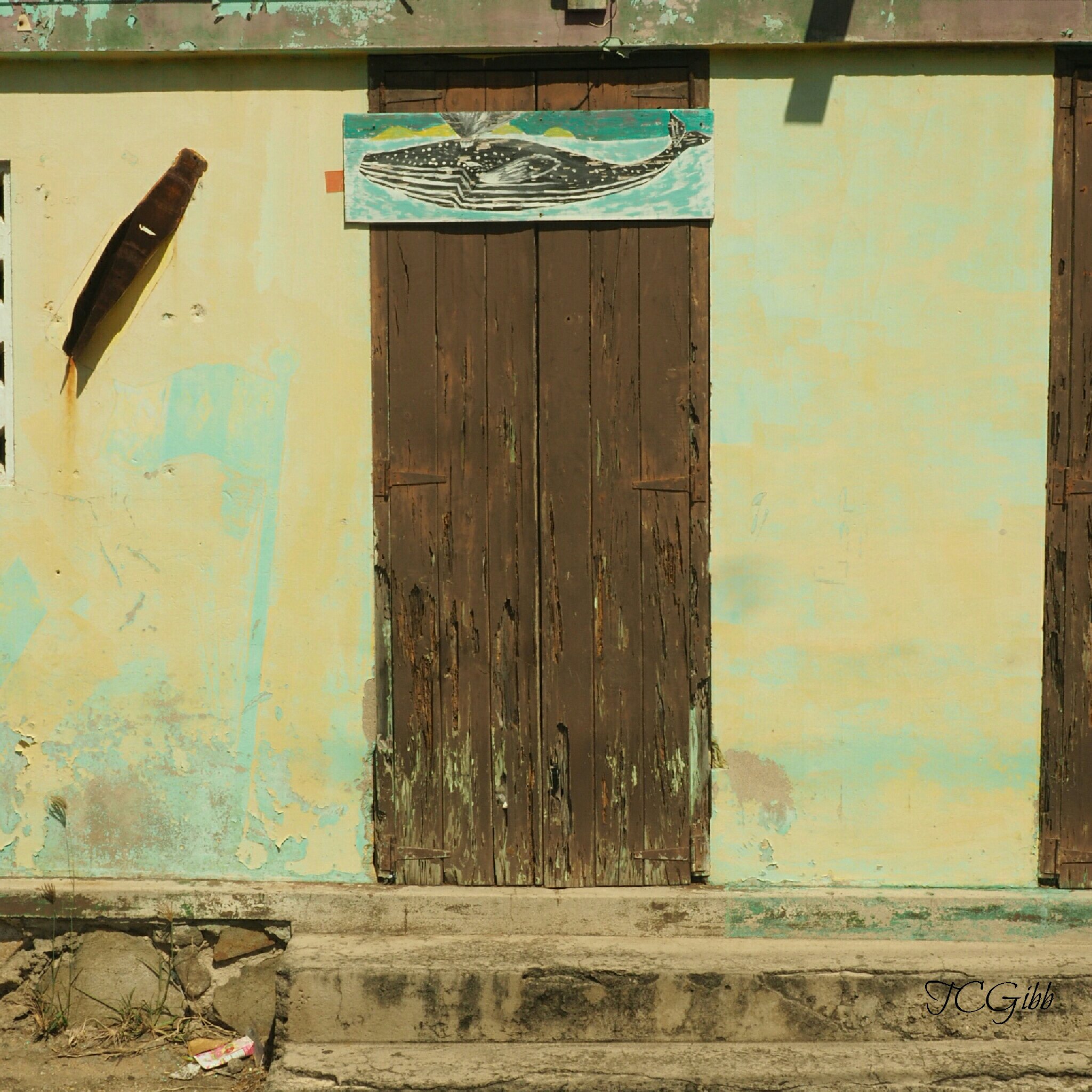
Is this the place where they keep the whale oil and ambergris?
Not only on doorways was there evidence of whaling but stories abound if one listens, and believes, the local folklore. I think though what happens these days is best represented by the boat below. When they do hunt and kill whales they still use traditional methods and are in open boats. Not a task for the unitiated.
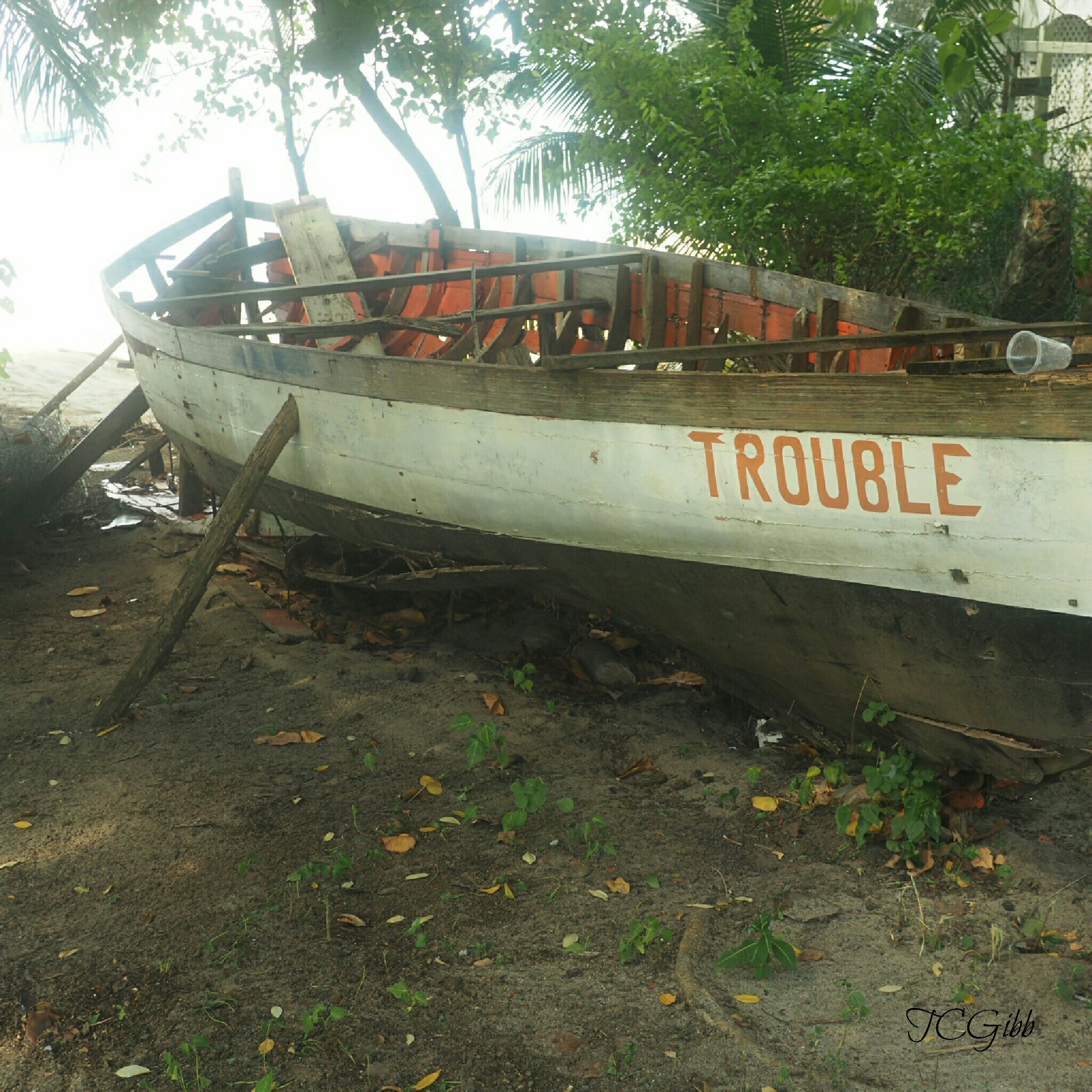
Aptly named
Walking through the fishing fleet we caught a few glimpses from the boat names signifying who they put their faith in to return from the sea.
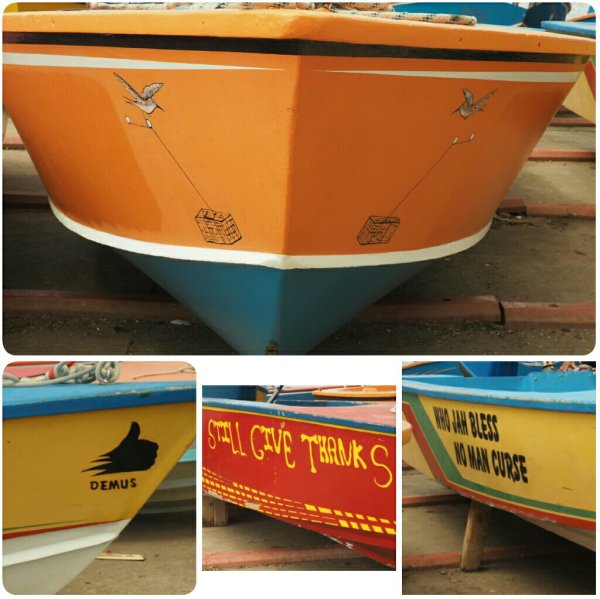
Jah takes the prize. Jah keeps them safe and Jah brings them back from the sea. I’m now wondering if I should have a portrait of Haile Selassie up on the bulkhead?
Looking for a little relaxation we headed back to Toko’s Bar, a place we had heard about on one of our previous visits but was also featured in a recent travel article in the Guardian. Toko’s is tucked under the shade of several trees and perched on the beach across from the small airport runway. There is no menu, lots of beer, friendly faces and a welcoming cook who greets you with the words “what would you like to eat today”. Of course, it has to be something from the sea so for the first time in a restaurant we said ‘lobster’ and lobster it was.
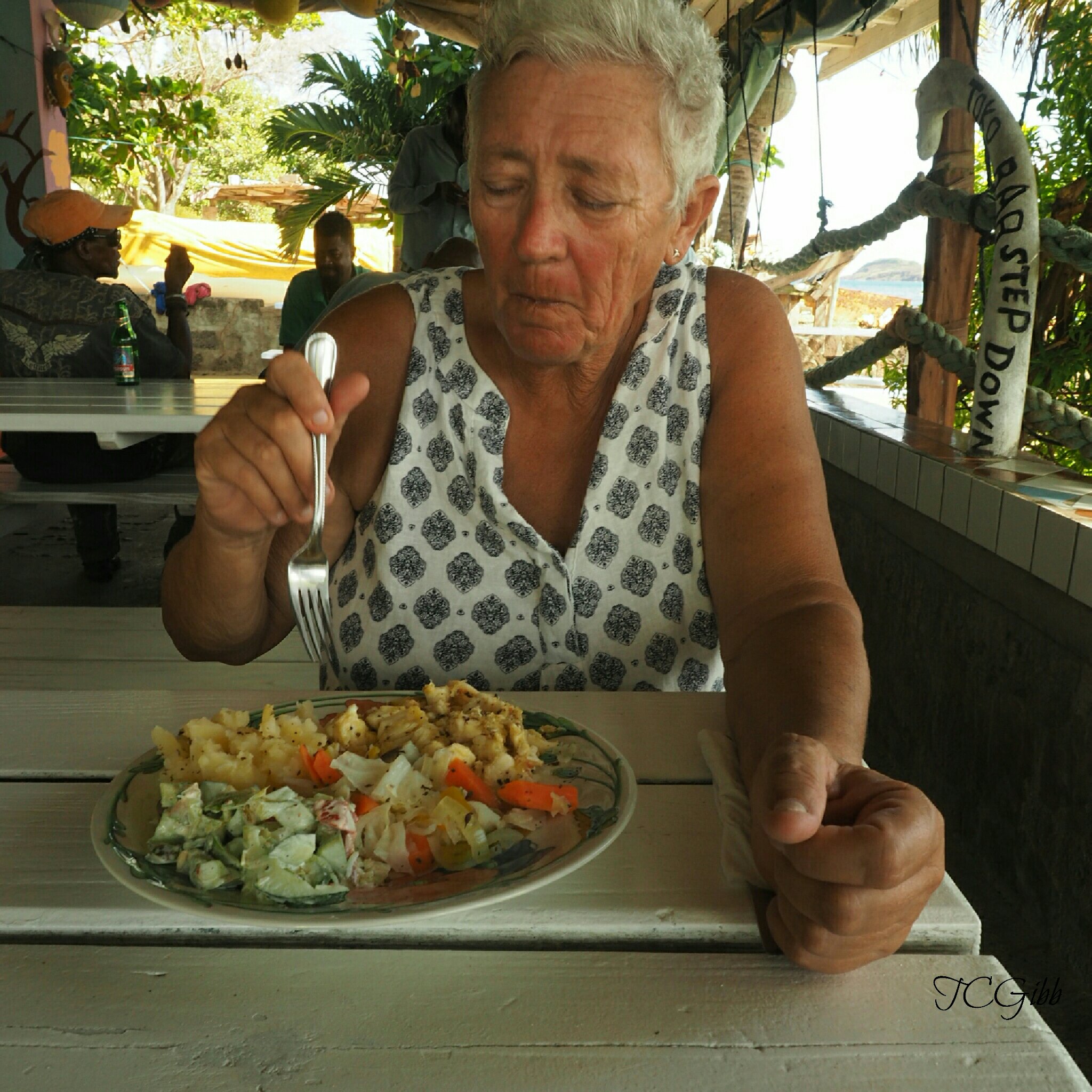
So good she won’t even look at the camera!
A huge plate of lobster with several salads and a Hinano for EC $90 for two!. Here we sat enjoying our meal with soaring frigate birds grabbing chunks of fish thrown to them by the fisherman and a very lively table of staff from the electric company having a liquid lunch with raucous and ribald conversation.

The kitchen window at Toko’s
Getting late so time to head home with stomachs full and a smile on our faces. That’s not hard to do in Bequia.

Connie just can’t let the political side down.

Cheryl , the owner of The Fig Tree restaurant, getting ready for the evening flood of customers and the yachties amateur jam session
Tobago Cays

The Tobago Cays are located approximately 6 nm north-east of Union Island in the Grenadines. On the chart it looks like one of those idyllic anchorages isolated from nearby villages and towns.
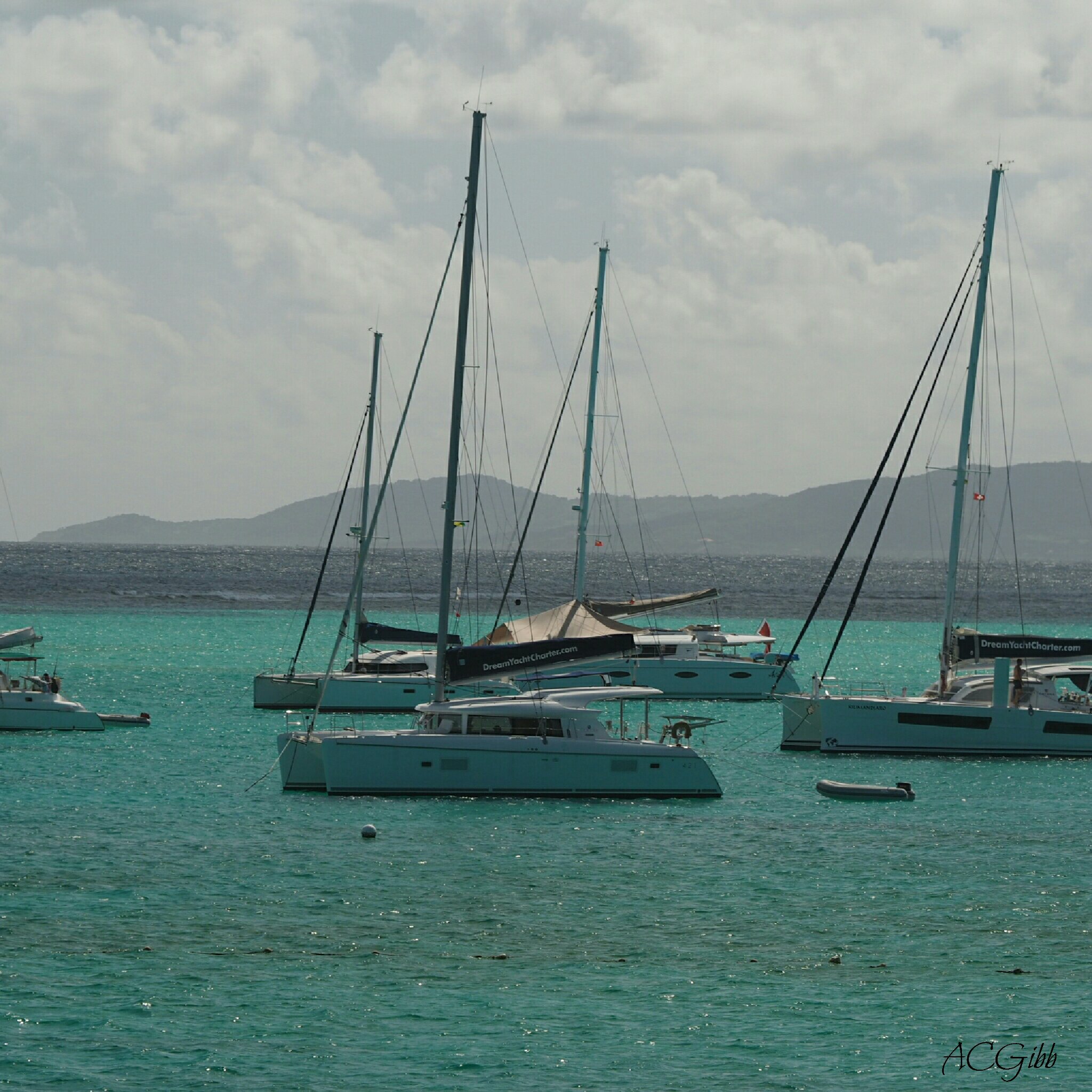
Looking south over the anchorage and the reef towards Union Island
Idyllic? Yes. Isolated? Yes. Free from tourists? No. We ourselves are tourists so nowhere we go is free of tourists but the Tobago Cays stretch the imagination for being isolated and idyllic with the occasional itinerant sailor dropping their anchor over the bow into crystal clear tropical waters. Here it’s a constant stream of boats big and small that move in and out of the anchorage as though it were Piccadilly Circus. This is a marine park and like many protected areas is oversubscribed with visitors.
By definition (taken from the TC’s Park pamphlet) the Tobago Cays Marine Phark is:
A non-profit government organization which is based on the principles of sustainable use, cooperation amongst resource users, active and enlightened local participation and the equitable sharing of benefits and responsibilities amongst stakeholders
Umm, does this sound like the principles of what I regard as a park? There is nothing here the speaks to the environment like protecting the turtle breeding areas or the reef strewn ecosystem.
The park is beautiful. The most visited park area is uninhabited and has numerous beaches, a corralled no-go area for boaters which protects a miniscule area for turtle grazing and then a large area of exposed reef protecting the islands.

Looking east towards Barbados
As long as the wind isn’t screaming out of the east like a banshee this is a wonderful place to spend a few nights at anchor.
I did kayak almost everywhere including over the reef, through the crystal clear water covering sand a cement company would druel over and walked a number of the higher points.
I’m not sure if the mountains of conch shells were recent
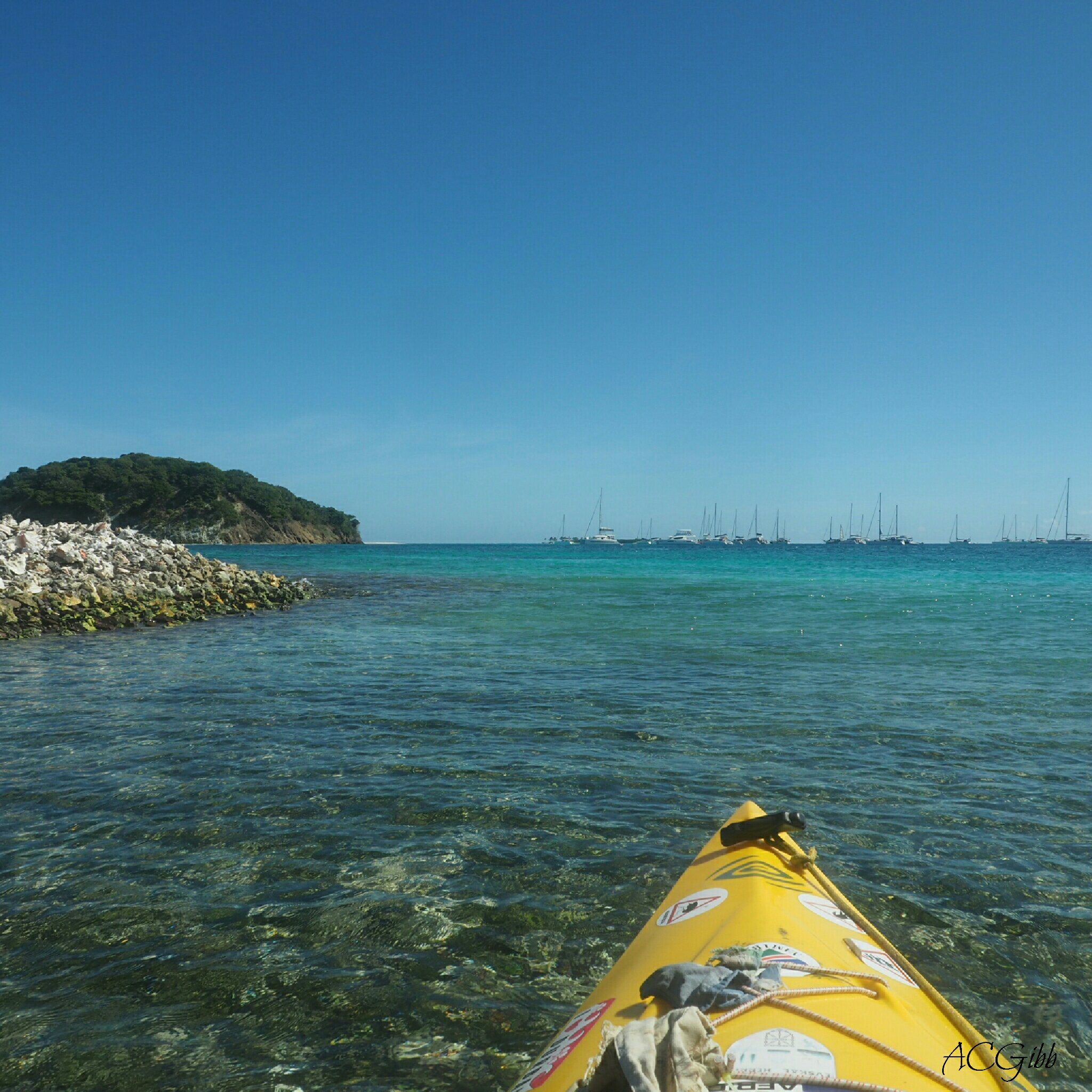
Conch mountain on the left
but one of the local activities that is attractive to the charter yachts are the beach BBQs sold to boaters the minute one’s anchor hits the sand bottom.
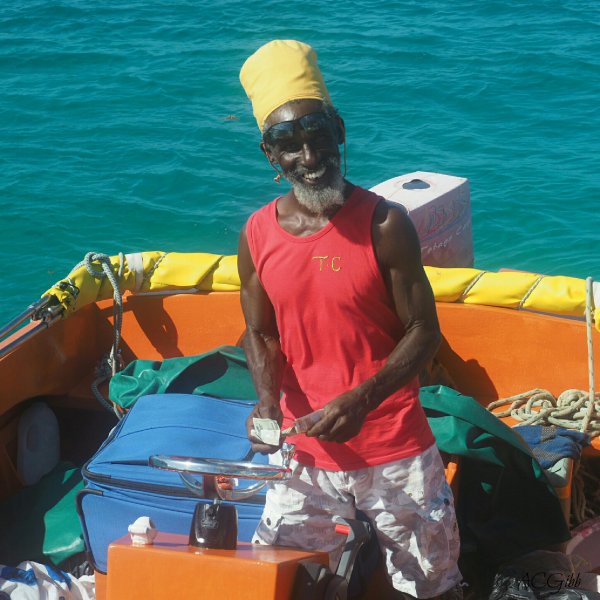
Our favourite salesman was this chap, sorry that I don’t remember his name, who started a conversation with us about the great BBQ on shore but then not feeling there was any chance of a sale (beach BBQ was $100EC/person) he moved the conversation on to the war in Afghanistan. 30 minutes later of liming he motored away promising us banana bread the next morning. Sure enough the morning banana bread arrived ($25EC – $12cdn) mostly unrisen and not cooked throughout. We still enjoyed it and continued our liming in the morning.
So another island group visited and another new anchorage but it’s time to move further north.
Kiteboarding anyone?
For years I’ve druelled over the idea of kiteboarding possibilities. So what else is there to do in Clifton but kiteboard. Every day kiteboards skim over the waters at our bows making it all look so easy. Except, that is, the foiling kiteboard that hit out boat with his kite. No damage done and I can’t say I was sorry to see him getting dragged past our boat as his kite lay on the water half filled with air. As he drifted by I did ask him if he needed help but he declined as his kite headed towards another boat.
So, now it was my turn. Lesson time. Yes, I am crazy but I couldn’t miss this opportunity.

No, Tony, these are paddle boards NOT kiteboards!
Okay, so strap on the gear and start the lesson.
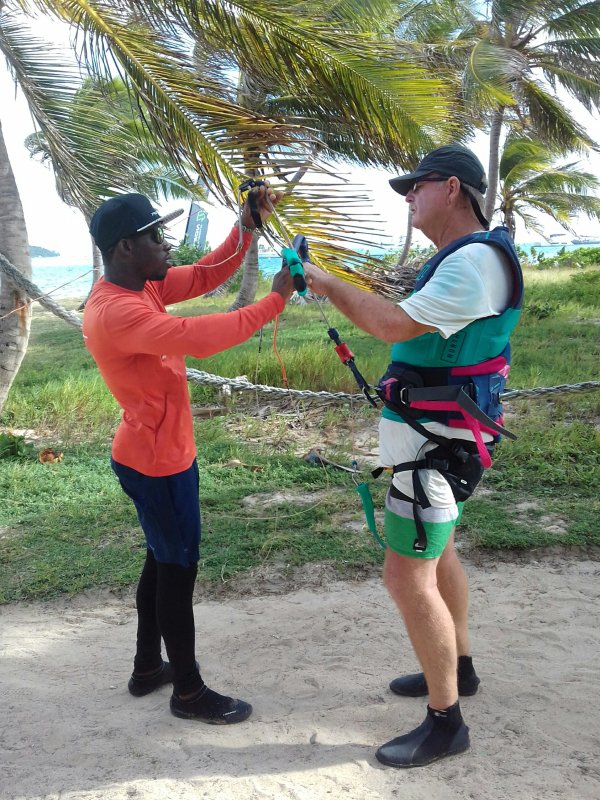
No, Tony, it’s not remote controlled you actually have to learn how to control the kite.
Okay, so no big deal. The first hour of the lesson is learning how to inflate and handle the kite. Laying out the lines is crtical as you don’t want tangled lines. After that’s done then a little lesson in hooking yourself up on the beach.
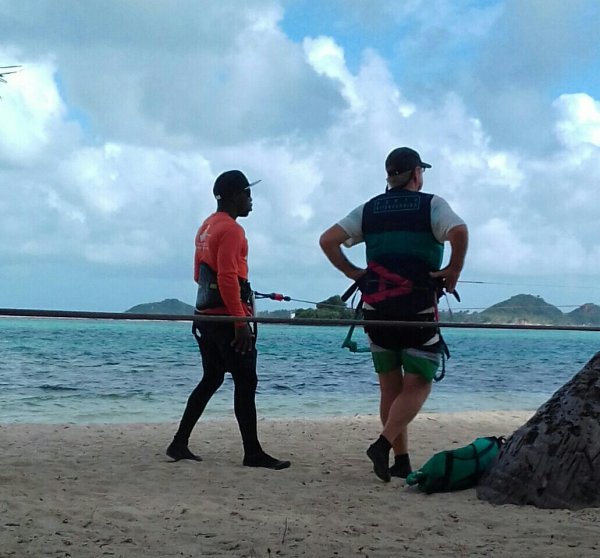
Okay there were too many trees onshore to let an amateur like me fly the kite so Butta, the instructor takes over and then said it’s ‘in-the-water-time’.
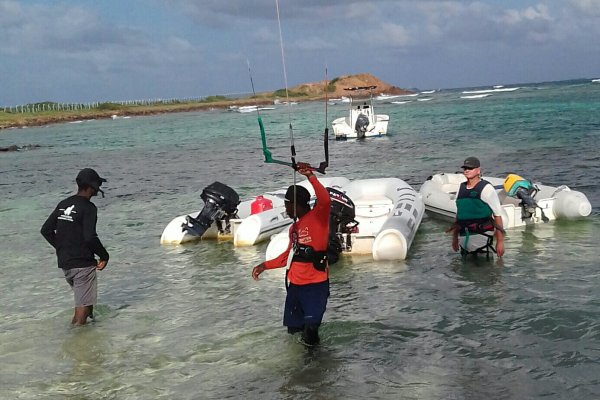
“What, no I don’t think I’ve had enough land based instruction.” “Too bad,” Butta said “get in the water and it’s time to learn how to actually fly the kite.”
Pause here, as Connie, the official photograper, cannot join us in the water and is restricted to land so not many photos. That’s good though. No evidence.
So out in the water where I learned, I think, the principles of kite flying without the board. The last 20 minutes of the lesson was to use the board and get up and off into the horizon. Well I did that but

Help, rescue me! Yes, that’s me holding onto the kite but not quite on the board.
For a better picture of me on the board see below in centre of boarders.
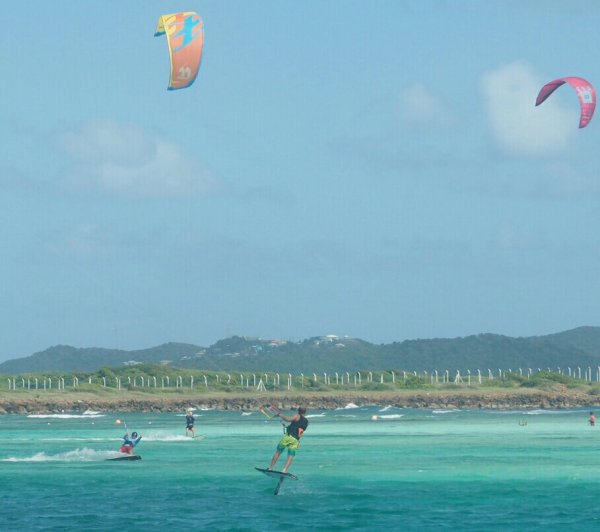
Well not exactly but close ha, ha
I’m hooked though but have to wait for another opportunity as we have got to head north.
Northwards
Final departure was a relief. Work stopped on the boat and the summer months of improving many small things onboard has finally ended and we can look forward to the rewards. I liken it to having a house and being able to see the flowers in full bloom, the vegetables thriving and the summer project completed. Kick back, pull out the lawn chair and pick up a good drink in the left hand and a book in the right.
Well, sailing is a little like that but it can have a bumpy road. Our first bump came in the first anchorage of Tyrell Bay in Cariacou when the alternator quit as we arrived and then the engine starter quit. I won’t say I put my drink down but I was stressed. Over a few days and a few less hairs as well as some help from some fellow sailors we’re back on route again and continuing northward albeit slowly.
Anchorages become a blur when each night sees us in a different place. Hillsborough, Petit St. Vincent, Clifton and soon Petit Rameau, Baradal and Bequia. Exotic? A little, but then everywhere is somewhat exotic for us as it’s another place to ‘drop the hook’ and explore.
November is quiet. We are travelling through areas we last visited in March and July but it’s much quieter and laid back. The towns aren’t as frenetic to serve the tourists, the anchorages are quieter and the assortment of veggies not as numerous. Europeans are here on the charter boats taking advantage of the discounted prices at low season and many of the more permanent cruisers haven’t left the southern islands of Trinidad, Tobago and Grenada for points north.
The weather is better as well. There is clarity in the air and the temperatures are starting to moderate although for Canadians that may sound odd as temperatures in the daytime are still in the low 30s and nightime in the high 20s. How are we ever going to adapt to living in Canada again?
In the meantime we will enjoy the Kiteboarding in Ashton (click to view video) right off of Sage’s bow. Actually it should read ‘kiteboarding in Clifton’.
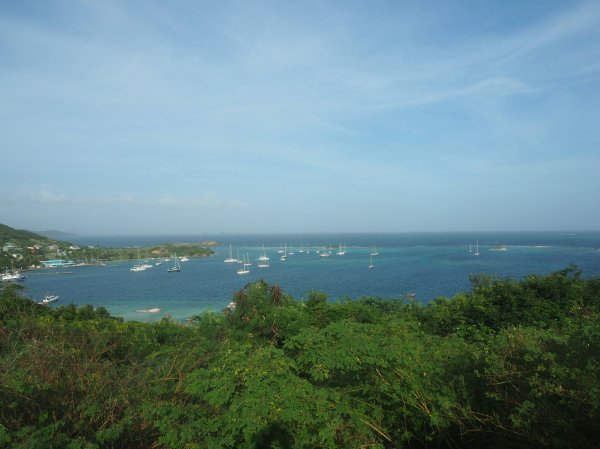
Overlooking Clifton Harbour on Union Island
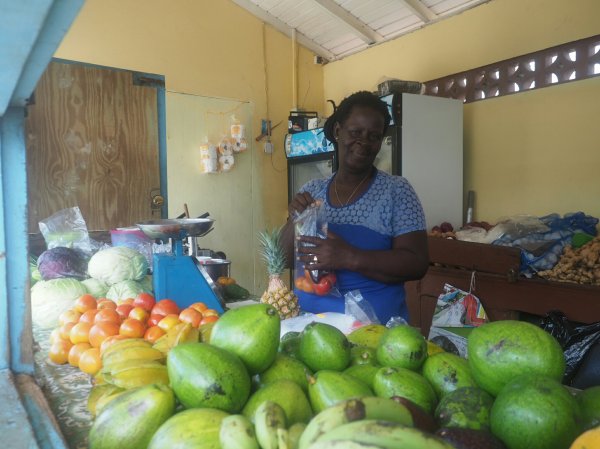
Shopping at the one-stall market in Clifton

Hillsborough anchorage
Thoughts on Grenada
2017 summer in Grenada proved to be the best decision we could have made. No doubt everyone has read the reports from the devastating hurricane season in the Caribbean. We’ve already met three people who lost their boats in the northern islands and are here in Grenada looking to purchase a replacement.
Luckily Grenada escaped a hurricane this year. I am a little premature in saying this as the season hasn’t officially ended and doesn’t till the end of the month. However, I feel confident that we’re OK and can start slowly moving north while keeping an eye on the weather reports.
Grenada has been a good place to stop for us. Not cruising, we decided to take the opportunity of a marina slip with close access to the main town, transportation to most of the island, and the freedom to come at go at will as opposed to anchorages on the east side of the island which are sometimes exposed to the weather and are not as convenient to get back and forth to.
We’ve done a lot of small jobs on Sage as well as hauled out for new bottom paint and a few other small ‘below the water line’ jobs.
However, Grenada is not cheap nor is it an easy place to get or do work on the boat. All imported items are subject to a hefty tax and then on top of that the shipping to the island costs a lot. All imported boat items have to be imported through an agent which again adds a cost to the item.
Having work done for you here brings another dimension to the maintenance of boats. Our experience is quite typical. We had a new awning built which, if we had a strong enough sewing machine and a space to work, we could have made quite easily ourselves. We thought having someone make it would be easy.
First we had to get some quotes. The quotes varied by as much as 50%. Getting quotes took a week to coordinate with the respective companies to come to the boat and talk about what we wanted done. After another week we received the quotes and made a decision. Since there is no-one here who stocks the material used it has to be ordered from the US. We assumed that was easy, quick and included in the price. 4 weeks later the material arrived. That wasn’t without constantly contacting the awning maker to ask why the material was held up in Miami, Trinidad and Brazil according to the tracking information. With comments from the maker like ‘god willing’ and responses from me saying it has nothing to do with god but needs some severe prodding to the courier company the material finally arrives.
Now the hard part starts. The maker has the material, he has the order, he has 1/2 the cost so when is it going to be done? In the end, 8 weeks from placing the order the items are finished. A good job but like everything here it’s like pulling teeth.
In conclusion, I hope I never have to make a major repair in Grenada. Expensive, frustrating and slow. On more technical projects I would worry greatly about expertise.
Not only have we worked on the boat but we have also volunteered teaching kids to read. Saturdays were the days to head up to the school and jump in with the kids to read a story, play a game, sing a song and help the kids with their literacy. It was a great opportunity to connect locally and I think we’ll miss the foray to the school.
Trips around the island, Tuesday nights at the Brewery for the cruisets amateur music nights and visits to the waterfalls will be good memories of Grenada.
The other side of Grenada life is well spelt out in the following article – – Grenada poverty
“Grenada, twice the size of Washington, DC, has a GDP per Capita of $3,900 USD. In 2011, domestic workers received a minimum monthly wage of $277.99 (formerly $148) and the minimum wage for a security guard was $2.96 per hour (formerly $1.48). The increase was negotiated by the Wage Advisory Committee (includes representatives from the Grenada Trades’ Union Council and Grenada Employers’ Federation).
Living in the capital of Grenada, Saint George, can be expensive. Research finds that it is 87.2% more expensive than Houston, Texas for groceries; 60.5% more expensive for household costs than Kuala Lumpur, and 43.6% more expensive for transport costs than Dubai. In addition, medical treatment is expensive and medical facilities are considered adequate for general treatment; however, serious emergencies may require evacuation.”
Yes, life here in the islands is not idyllic. It is expensive, it is poor, it is friendly, it is difficult to get around, it is an expert on growing nutmeg and cocoa, it is slow, it is generally safe from hurricanes, it is full of wonderful chocolate and various spices, it is hot and humid in the summer months and it has lots of music (sometimes too much!).
And we’re leaving! So, here are a few memories in photo form.
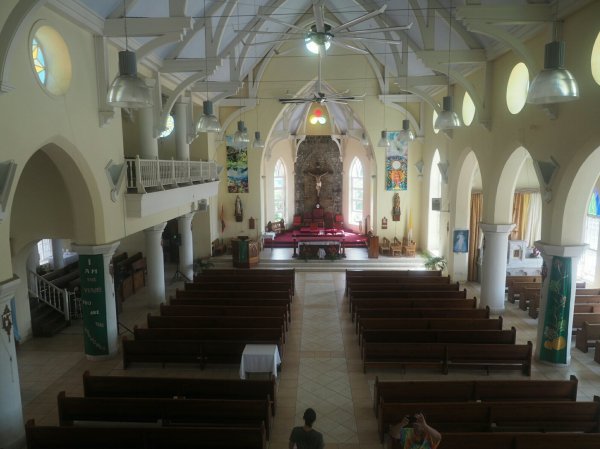
Church of the Immaculate Conception
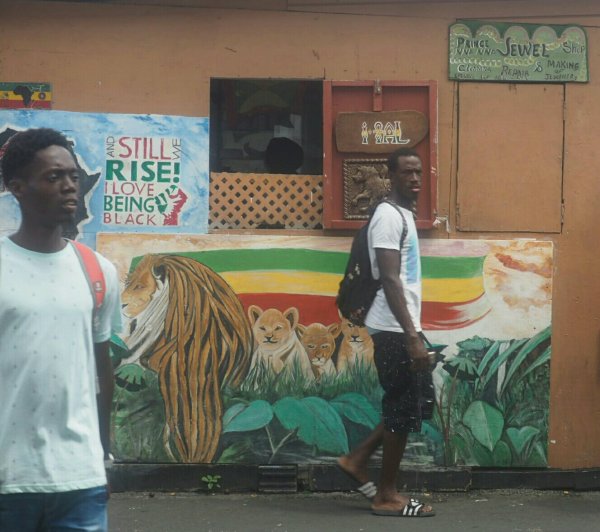
Feeling good
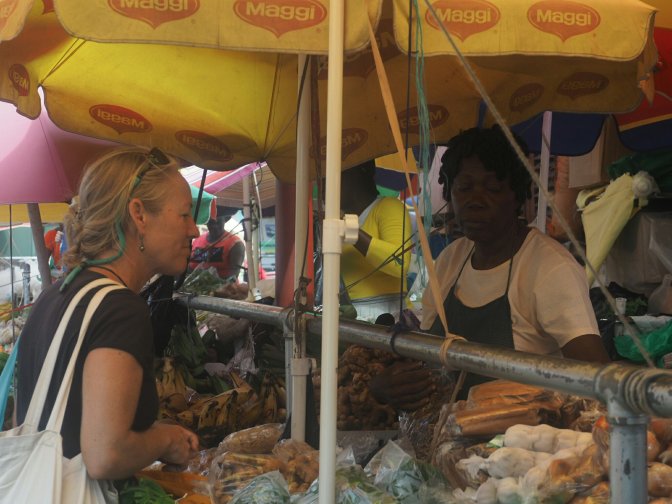
Behan, from SV Totem, shopping in the St. George market and getting some cooking advice
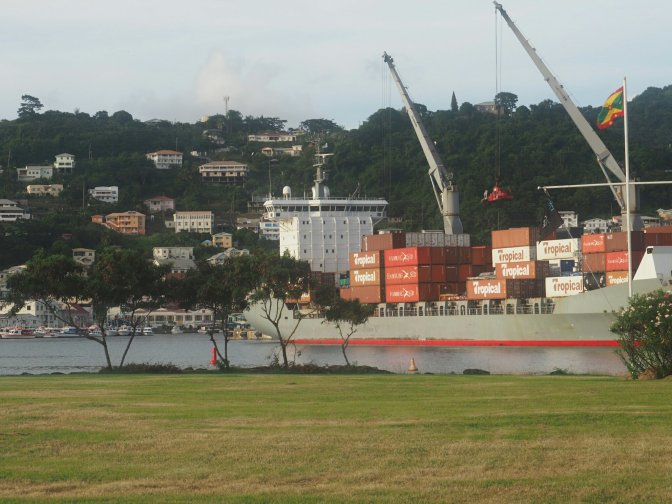
Ships and the port are the lifeblood of Grenada
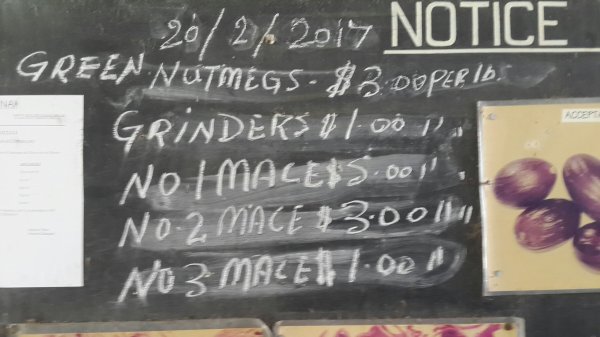
Nutmeg and mace prices at the cooperative

Party central
And a few people we’ve met
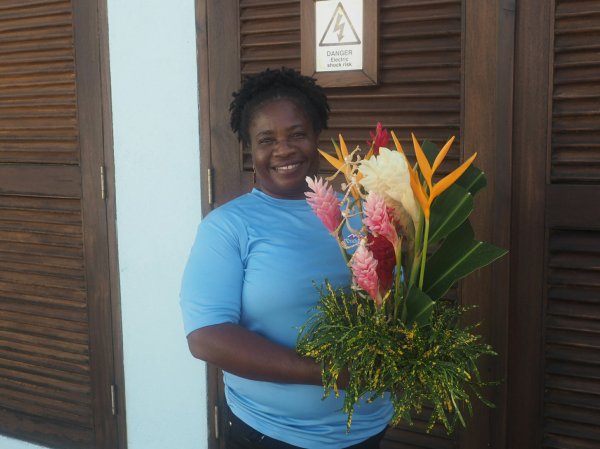
One of the charter boat staff taking care of the last minute details
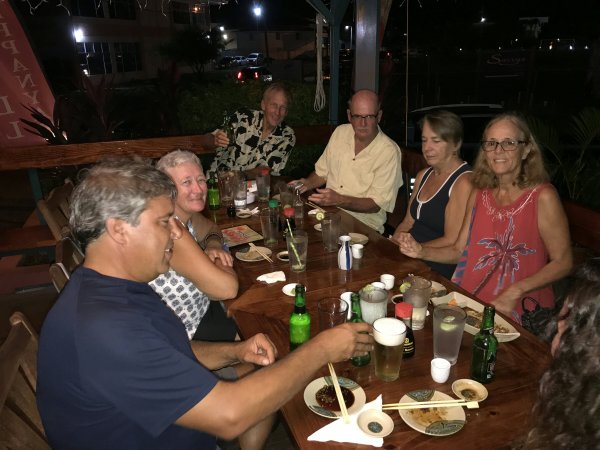
From left to right: Tim, Connie, Charlie, Tony, Karen and Margarita

Philip, Martin and Louise

Gary keeping busy

Torie having a windy day

Arliss and Eric getting ready to sail westward on Corroboree
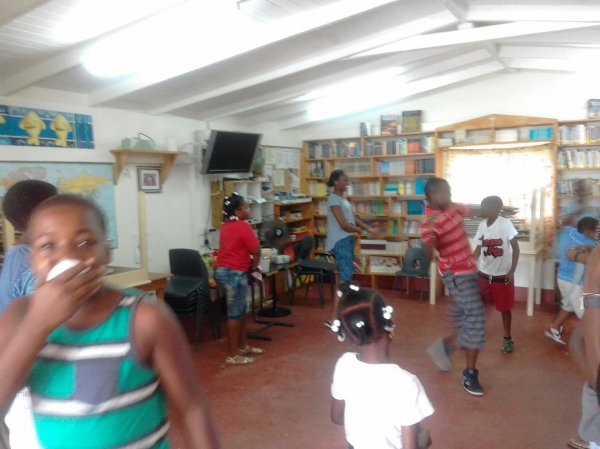
Kids at school
False Start
After three months in Grenada we were looking forward to severing our ties to the land life. Storing everything onboard in its proper place takes a while but is necessary when crossing open channels between the islands.
We cut the dock lines, unhooked to what was the best internet reception in the Caribbean, filled the water and fuel tanks, put away the electrical cord and headed to the anchorage outside St. George’s Harbour.

Looking out over St. George’s harbour to the anchorage off Grand Anse Beach
Getting out to the anchorage allows us to complete the transformation from a ‘boat-home’ to an actual sailing vessel that will take us to unexplored ‘exotic’ locations! Dropping anchor for the first time in a while was a thrill. The boat spins to the wind. Ventilation below no longer relies on fans but blows freely through the hatches facing the wind and the boat gently, at least this time, rolls to the swell.
A pleasant and quiet night was spent with an early rise to a gentle wind from the east blowing us out of the harbour. No need to start the engine so we drifted out under full mainsail and genoa heading north along the east coast of Grenada.
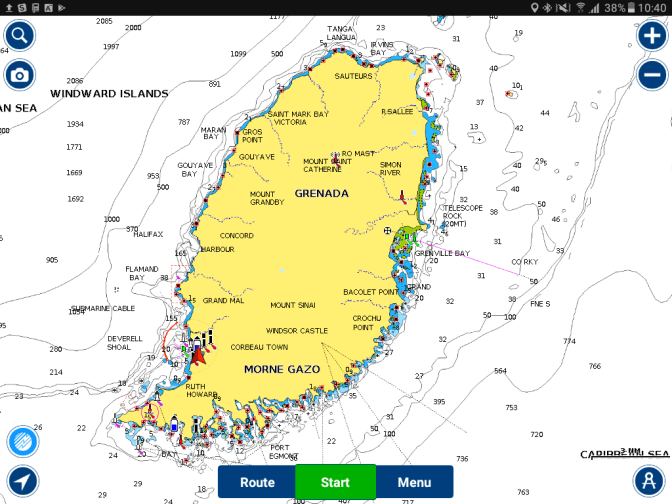
Grenada
Sailing north we passed by Grand Mal but with the mountains of central Grenada towering to the east the wind soon died and dark, black threatening clouds tumbled down the leeward slopes providing gusts of rain soaked winds to batter us with and then depart leaving us drifting in circles. There was more calm than wind so we decided to motor for a while. Motoring is not what I like but with still a way to go we decided this would be the best tactic. Engine started well, speed was good, skies cleared waiting for the next gust and since the engine was running it was time to power up some of the portable devices.

Sunset in the Grand Anse anchorage
After plugging in a few devices I thought it best to check the voltage, which, with the engine running, should be at between 13.8 and 14.2V but it was at 13.2V. That immediately tells me the alternator is not charging but the solar panels are working. So, the decision must be made to keep going or turn back.
Best to turn back with St. George’s the nearest place with the possibility of getting the alternator removed and checked out.
There is only one person on the island who bench tests and repairs alternators. He is Al at Bernadine Enterprises – 473-444-8016. But, on calling, we find out he’s retired! The good part of the story is that he’s willing to take a look at it. He’s not in St. George’s, so, after a few taxi rides, we pass on the alternator to his nephew working at the Nissan garage, and returning to the boat await the prognosis. The next day Al tells us the alternator is fine. It’s returned by a reverse process of nephew and taxi/buses and we re-install the alternator. I change the fuse just in case, check the electrical lines for loose connections and start the engine.
A miracle – everything seems to be working.
Now it’s time to reverse the docking process and store everything once again and try once more to head north.
Dominica Update
Here is an interesting but sad update on the state of Dominica post hurricane Maria.
Getting Prepared (warning: this post is not for vegetarians)
It’s fall and the anchorages and boatyards are buzzing with activity. The hurricane season is slowly winding down and thoughts are directed to moving on. People are flying in from all over the world to ready their boats for another season. Those who stayed the summer south of the hurricane belt doing odd jobs on their boats, volunteering on hurricane relief, teaching children how to read or simply enjoying life in the tropics are turning thoughts to moving on.
For Sage that means getting prepared for a movement northwards travelling through islands devastated by the past season’s hurricanes and further northward to remote islands lacking in supplies or unaffordable and dubiously dated products . With the hull being painted below the waterline, worn parts being replaced, old awnings replaced with new our attention moves to canned goods.
For 20 years of sailing adventures we have always canned our own meat to get us through those areas that don’t have fresh supplies. We choose to can as we don’t have a freezer and besides that we have been many places where freezers on other boats have failed, and, like flies, other cruisers have been beneficiaries of others failed refrigeration. For us that doesn’t happen. I won’t say we haven’t had failed refrigeration but if we have we haven’t lost a season’s supplies.
For canning we need space, a good stove with oven, refrigeration and a store with a selection of meats (you guessed it we’re not vegetarian). Close to where Sage is moored we found the perfect spot. A rental unit ($55 Cdn) with all the necessary equipment 150 metres from Sage’s stern. So our work begins. We have to dig deep into the hidden corners of Sage’s lockers to find the pressure canner , jars, lids etc. We loaded all the supplies into amarina wheelbarrow and headed off to our new two night accommodation.

Connie carting over the supplies and as usual she’s keeping ‘left’
It’s the end result we are most interested in. It’s a long time coming as each batch takes 90 minutes to process. Each load takes either 5 pint jars or 10 1/2 pint jars and sometimes during the processing one of the jars breaks in the pressure canner
we manage to can 32 jars of meat which means 1 can per day for a month. We don’t use it like that but rather as a supplement to what is available locally. Throughout most of the Caribbean we should be able to use local products but once in the Bahamas our understanding is supplies are limited and expensive. We hope to be in deserted anchorages with crystal clear waters covered in conch. We’re a little tired of ‘lambi’ (conch) as it’s a feature in all the Caribbean islands so our cans of meat will be welcomed.

The End Result
Equipment needed:
1 pressure canner – must be capable of maintaining a pressure of 10-15 lb/sq.in Preference is for a canner with a gauge
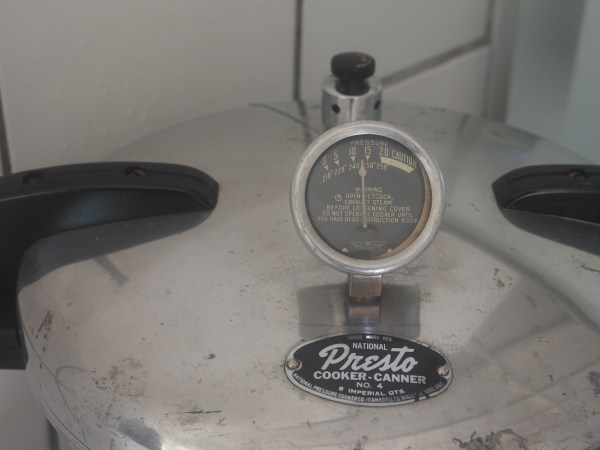
Glass jars with accompanying screw rings and disposable lids

Tool for lifting hot jars
Stove top with oven if possible
Lots of hot water
Meat – your choice. Remember the meat is gets well cooked so no need to buy expensive cuts
A bundle of towels for handling and drying equipment
Summertime in the tropics
Summertime -in the tropics? It’s not something I can recommend but the one good thing is that it has saved us from the devastating effects of the hurricanes that have ravaged the northern windward islands of the Caribbean.
Or:
Love both versions
We haven’t been very adventurous preferring to stay in Grenada for the past three months enjoying the various Grenadian offerings of carnival, waterfall visits, jerk chicken and occasionally a movie at the local theatre (best show yet has been Bladerunner 2040).
We have also managed to get a little bit of work done on the boat. We hauled out at the end of September, Connie returned to Ontario and I have been getting the odd jobs done on the boat while on dry land and then re-launched where work continued. We should be ready for the winter season and a migration that will take us northwards.

Food is always of interest. I won’t say the Caribbean is the food-hounds paradise. Choices vary from jerk chicken to fish with what they call provisions which is things such as plantain, breadfruit, taro and potatoes
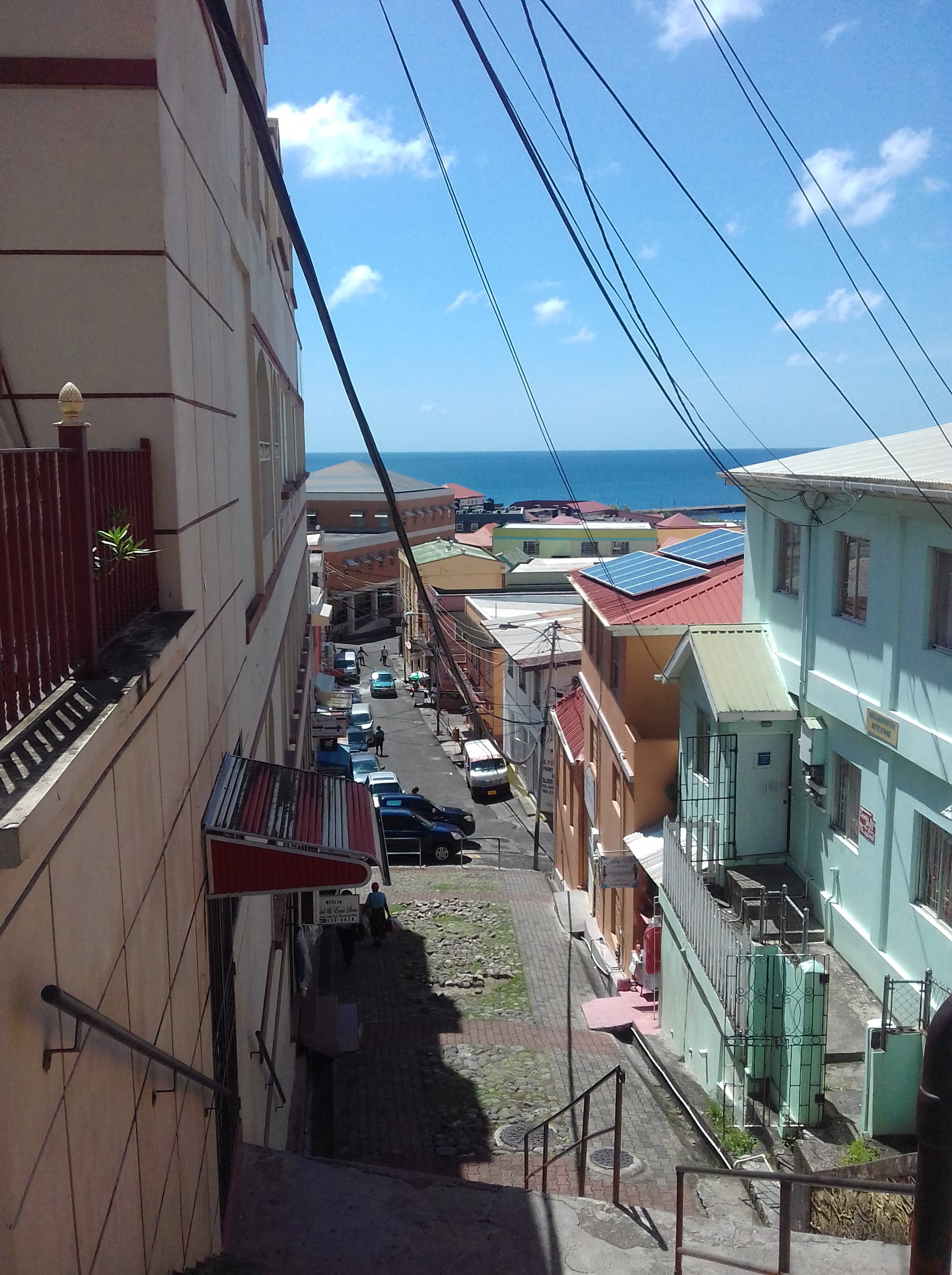
St. George’s is built on a hillside so as soon as one leaves the core it’s climb up the hill with the positive results of getting nice views
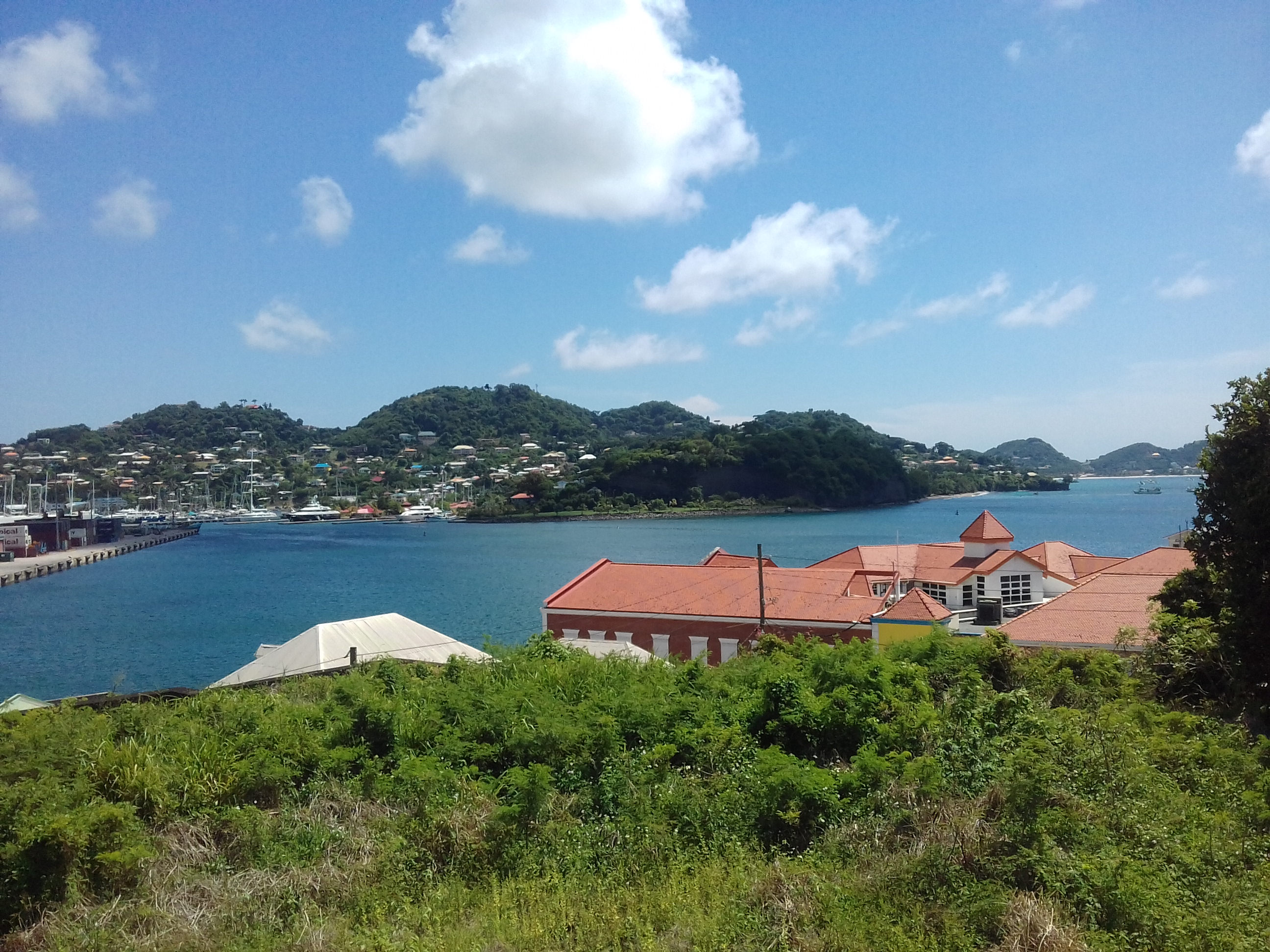
View overlooking St. George’s harbour towards the marina we are in called Port Louis
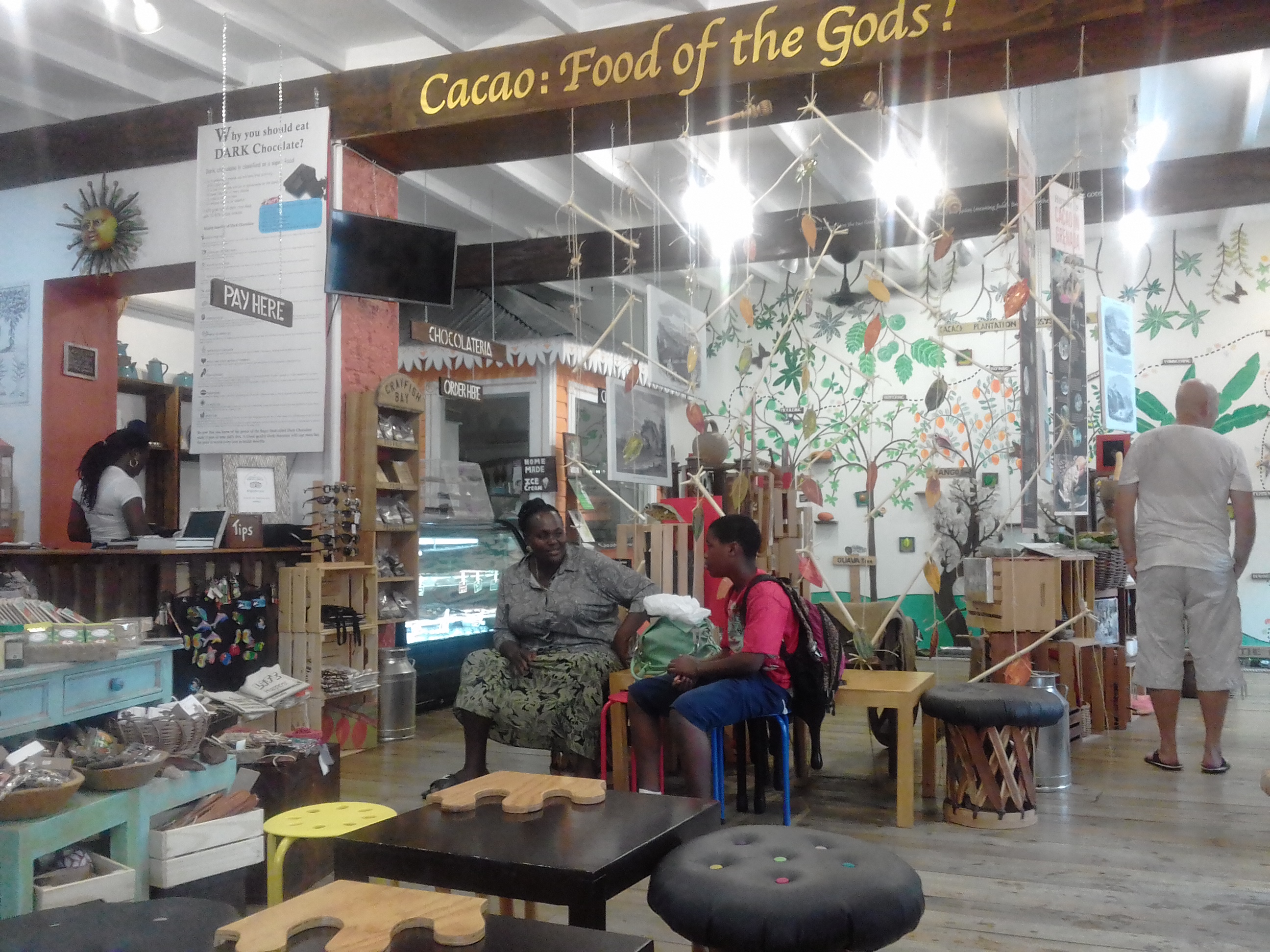
Now Grenada does have great chocolate. This is my favourite downtown shop also known as the chocolate museum. Has great milkshakes
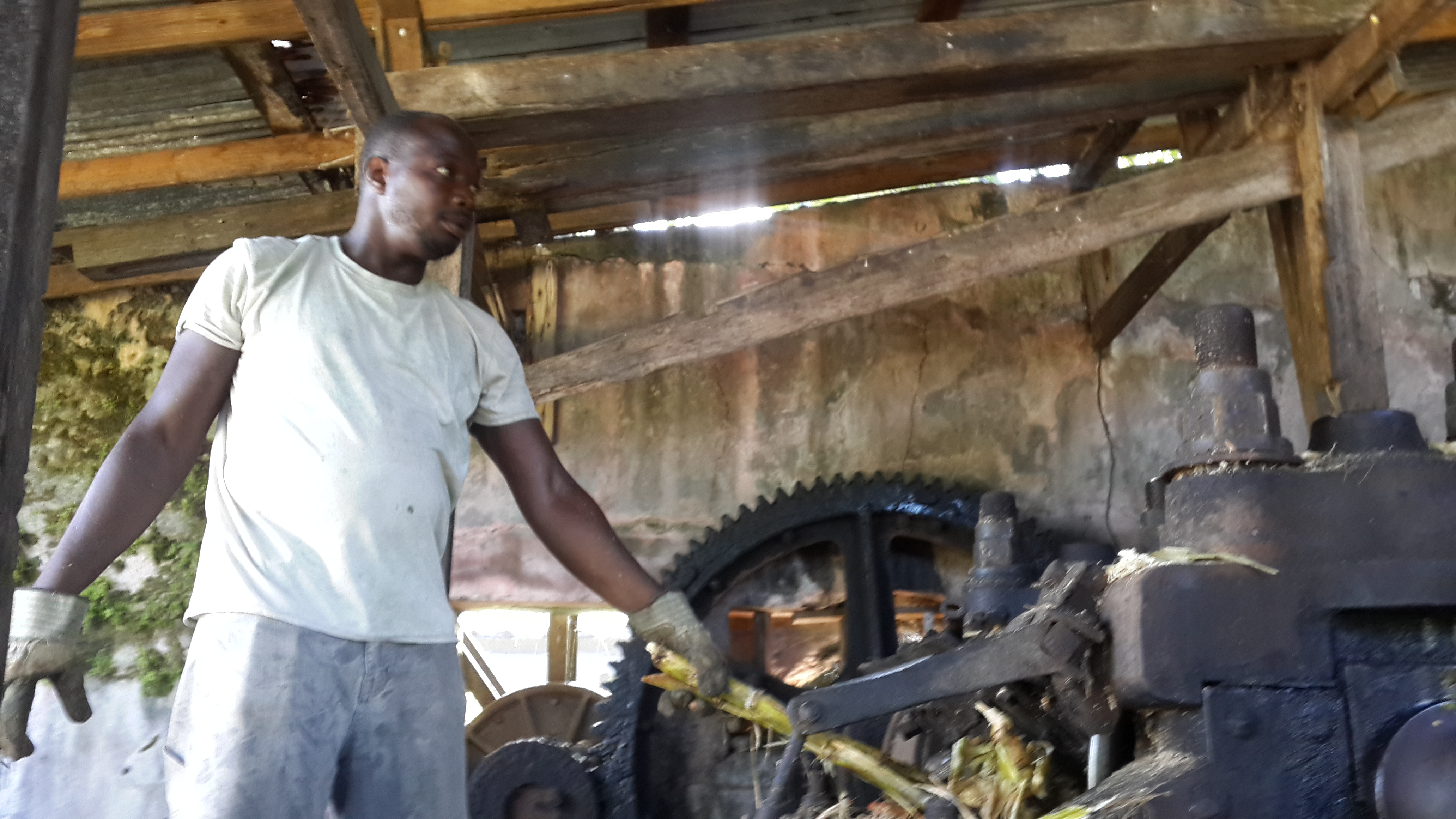
Then there are the rum factories. here is one still using a water wheel to crush the cane. There’s such a variety of rum one can have a great time sampling them all
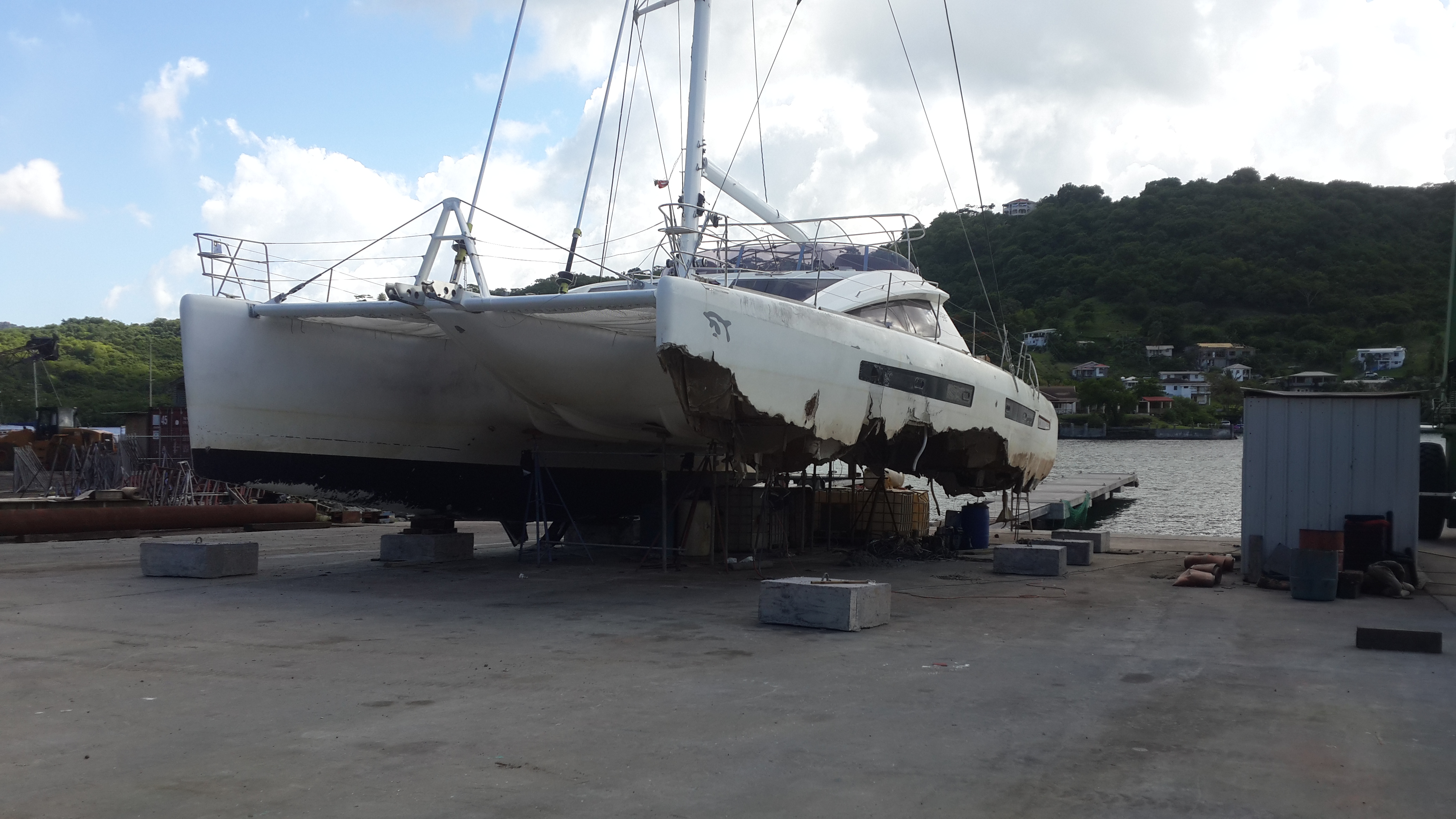
And then there are always the dramas that happen.
Post Hurricane Maria – Dominica – how to help
Dominica is one of our favourite Caribbean Island nations. Historically Dominica was invaded and controlled by France and England. In 1978 Dominica gained independence from Britain and since then has charted its own course. It’s often referred to as the ‘island of nature’ with volcanic craters, a lake called ‘Boiling Lake’, a large rainforest and lush flora and fauna. The national GDP is approximately $520 million with an estimated population of 75,000.

Most other Caribbean island nations maintain close ties to their colonizers; Martinique/Guadeloupe/St. Marteen are departments of France with full financial supports nd robust economies. US Virgin Islands (USVI) and the British Virgin Islands (BVI) have connections to the United States and Britain respectively and have high powered wealthy residents like Richard Branson to advocate and rebuild.
Dominica is alone. With few cruise ships, only one large resort now under construction, a rural economy and a few yachties visiting it has few resources to recover. When we toured the island earlier in the year they were still using ‘temporary’ bridges that were constructed after the extensive damage caused from flooding in tropical storm Erica in 2015.
How can one help a country that doesn’t have a resident celebrity to advocate for them nor a robust tourist sector rebuild from a Force 5 hurricane? According to early reports Rouseau, the capital, has been devastated with over 85% of homes blown down or roofs missing and major institutions crippled. Little has been heard from the back country as I am sure bridges have once again disappeared and communication towers and power lines destroyed. We do know in the north, Portsmouth, that the hospital’s roof got blown off.
Here in St George’s, Grenada, boats are headed north with supplies. There are tugs, barges, motor and sailboats headed up with emergency materials today and over the next couple of weeks for which we have helped buy goods. But it’s the longer term where help is needed and where perhaps you as readers of the blog can find somewhere to donate/help Dominica directly.
We don’t want Dominca’s plight to be lost in the onslaught of calls for help from the more ‘star-studded’playgrounds of the Caribbean. Their plight is real but Dominca will get lost and forgotten in the mix.
Hurricane Maria
Media – recent media coverage on Dominica and Hurricane Maria
October 19th NYCEastern Caribbean Relief Fund
NY Times update on how to help
The Guardian’s recent story on Hurricane Maria
Possible places to give help – we will update this section as time goes on
 Sage on sail