Dodger aka the Gazebo
Some people have been making disparaging remarks about our gazebo, oops I mean our dodger. I think these remarks are simply expressions of envy.
The other day we decided to head out to the workshop and see how things were progressing. We always enjoy the drives we head out on around the Cape area. From Simons Town we have limited choices as to roads. There is the coast road which passes through communities with names such as Fish Hoek, Kalk Bay and Muizenberg and follows along the railway that makes its way into Cape Town

A view overlooking the coastal road starting in the marina on the right and stretching to Muizenberg in the distance

Part of the cape peninsula from Simon’s Town to Muizenberg
or it’s up and over the Kaapeseweg, 315m, a mountainous route that provides stunning views over both the South Atlantic and False Bay. There is a third route but only if you are heading to Hout Bay and into Cape Town but this route takes you over the Chapman Highway once of the most scenic drives in the world.
The coastal route is fraught with problems. It’s a two lane road that hugs the coast and which is presently being torn apart due to much-needed maintenance and replacement of the ancient water supply pipes. It’s stop and go and in several sections down to one lane of traffic. Long waits are the norm.
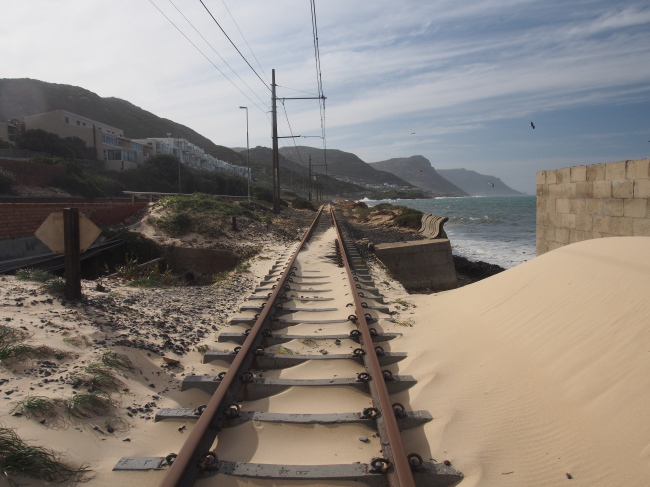
The railway line from Simon’s Town which runs along the ocean side of False Bay and then into Cape Town
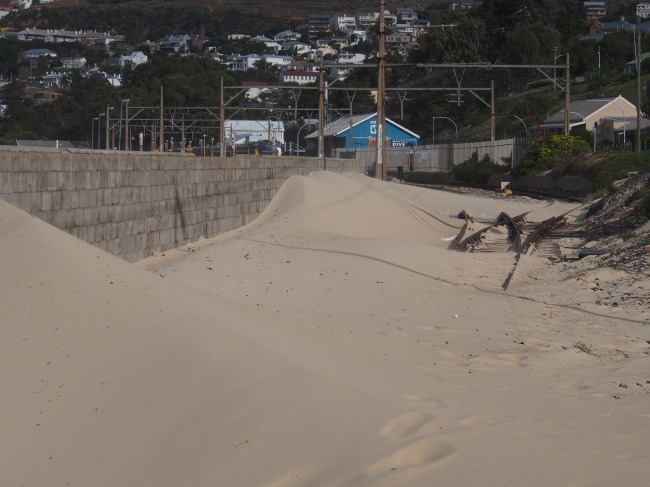
The day this picture was taken it was a blustery day with the sand driven completely across the railway lines stranding two trains in the Simon’s Town railway station
The Kapeseweg, although beautifully scenic, as is the coast road, is a long roundabout routing that at times can be clogged with traffic. Despite the negatives it is usually better to go over the Kapeseweg. So, waiting for the rush hour traffic to abate we headed over the Kapeseweg and onwards to Ottery a suburb of Cape Town.
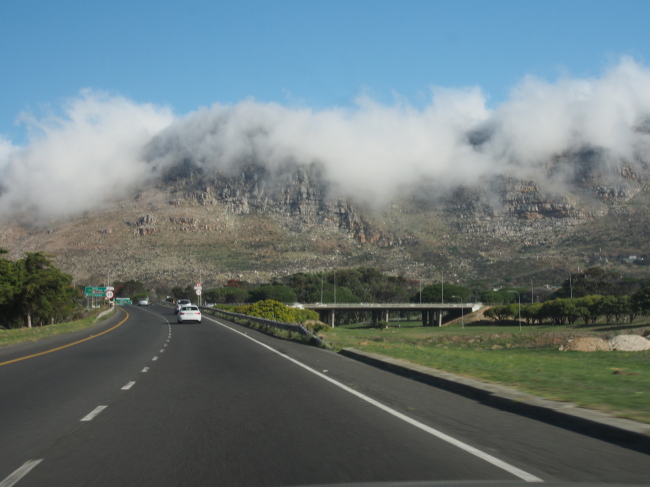
A view of the Kapeseweg heading towards Simon’s Town from the north i.e. Cape Town. One must climb up into the clouds, down to the south-west side of the peninsula then back over to False Bay through a valley and into Simon’s Town
Just a little detour here to describe the third route through Hout Bay. This route starts in Noordhoek on the south-west side of the peninsula a little ways from Simon’s Town. The road clings to the cliff along what is known as Chapman’s drive and the views are stunning. With a 20o metre drops off on one side in to the Atlantic and on the other the mountains rising straight above you. The winds are vicious and at times the road is closed but on those days you can drive along here one can never be disappointed. Definitely one of the most beautiful drives one can make.

Look carefully and one can see the road along the cliff-side

Looking across the Hout Bay
Okay back on track to the workshop. We were excited about seeing the dodger and after travelling through a few suburbs, across major freeways, through fields of cabbage and tomatoes and weaving through a few industrial areas we finally came to the workshop.
Francois, a hands on manager and magician extraordinaire was keen to show us the recent work done. Not finished but getting very close. The insides and outsides had been glassed, the hi-build primer applied and much of the sanding of the hi-build completed in preparation for the application of the paint. Also the windows had been installed except for the centre one which will be an opening window to allow good flow through ventilation in the tropics
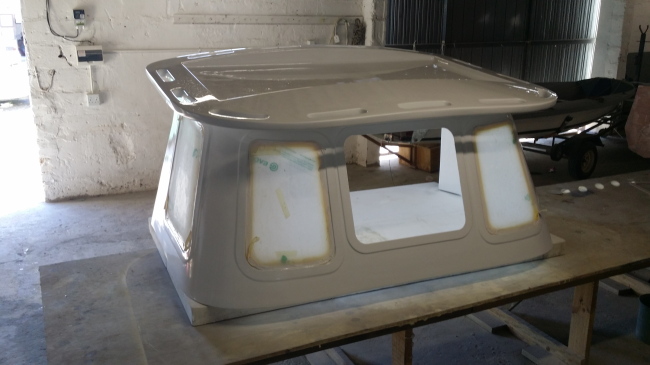
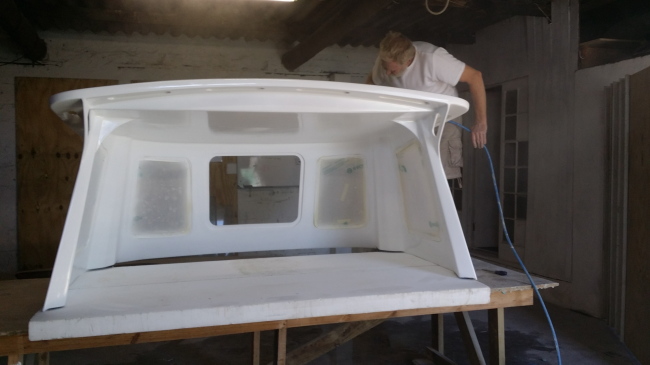

And here below, the day after our viewing is a picture of the first layer of applied final paint.
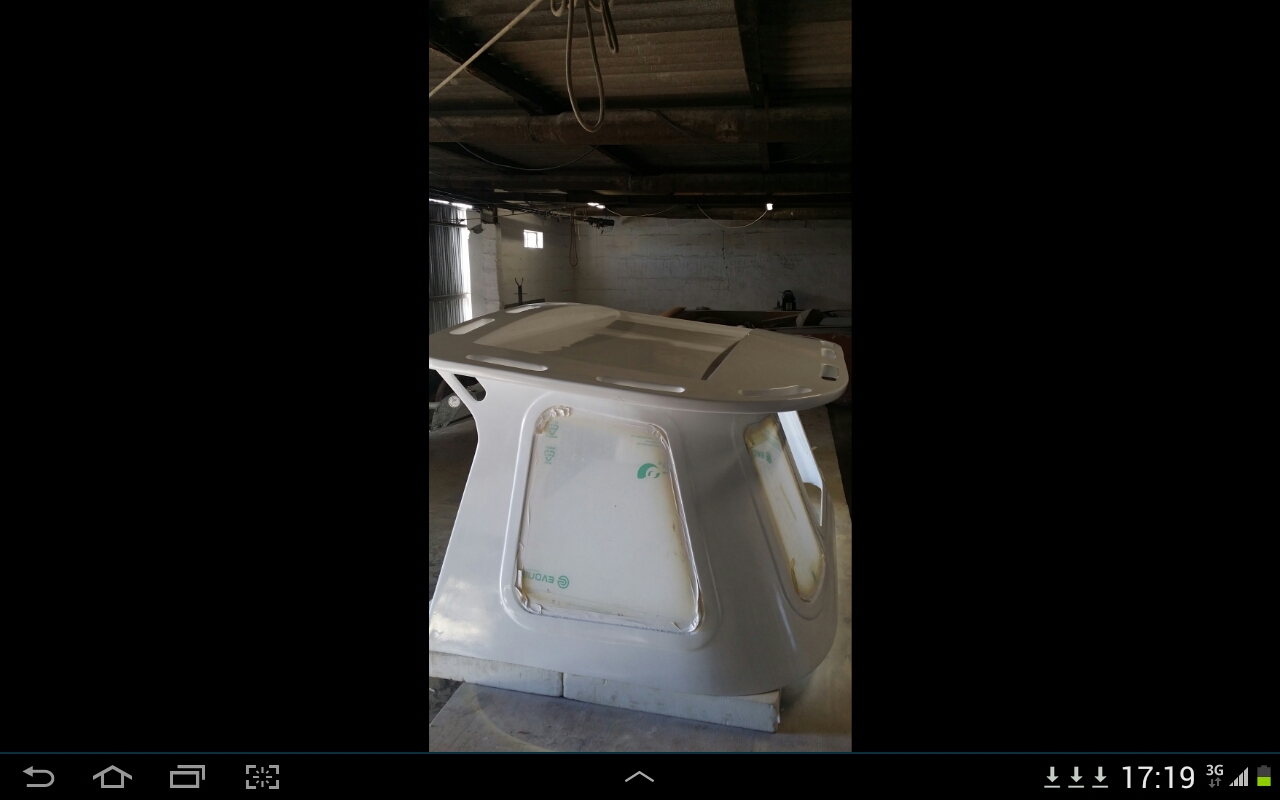
But what really intrigued me with the other projects Francois has on the go. Take a look at these photos and tell me you can’t be enthralled with some of the ideas Francois is moving to reality.
For legal issues these photos have been deleted
Back to reality. OK, so we are going away for a while and when we come back we expect to have to deal with the bottom of Sage which we expect will look like this.
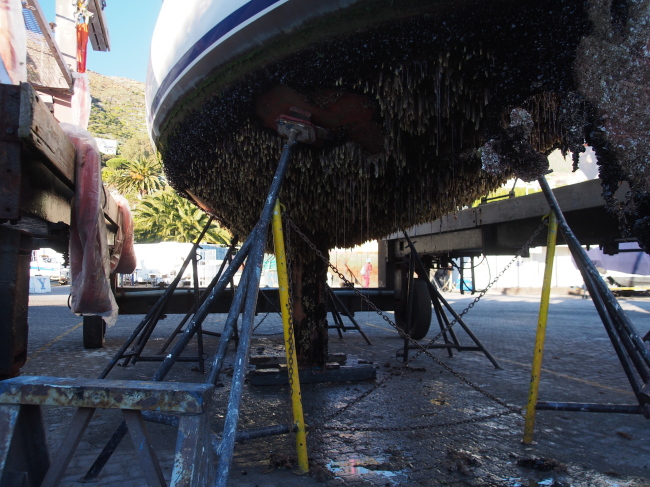
Oh my god. How will we ever get the bottom of Sage clean!
Dodger Suspense
I know you are all anxiously waiting for the next dodger installment and I have been lax. I forget how addictive these HBO serirs are and my responsibilities to my audience. So here you are. What you have all been waiting for.

Francois seeing to the details
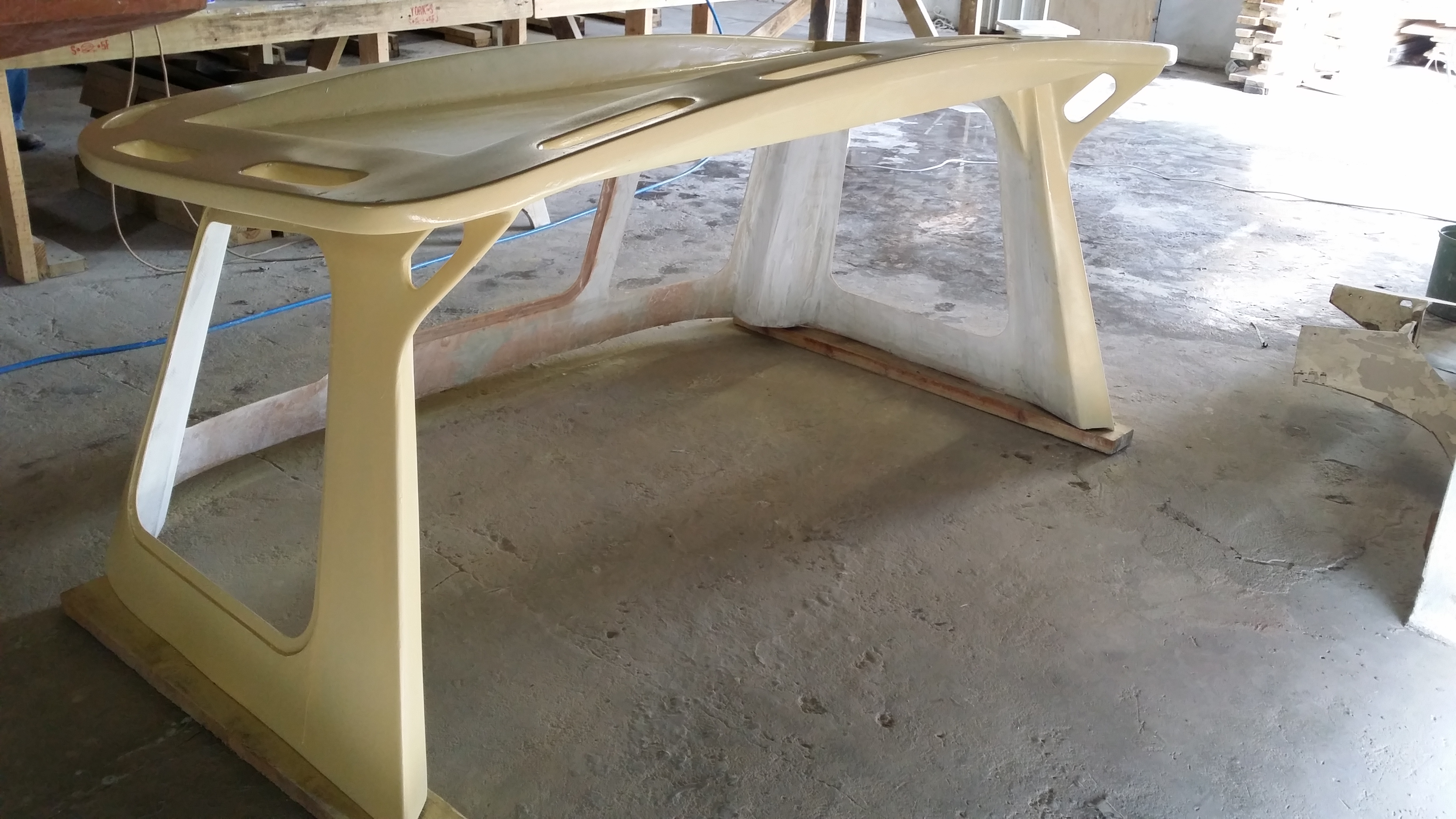
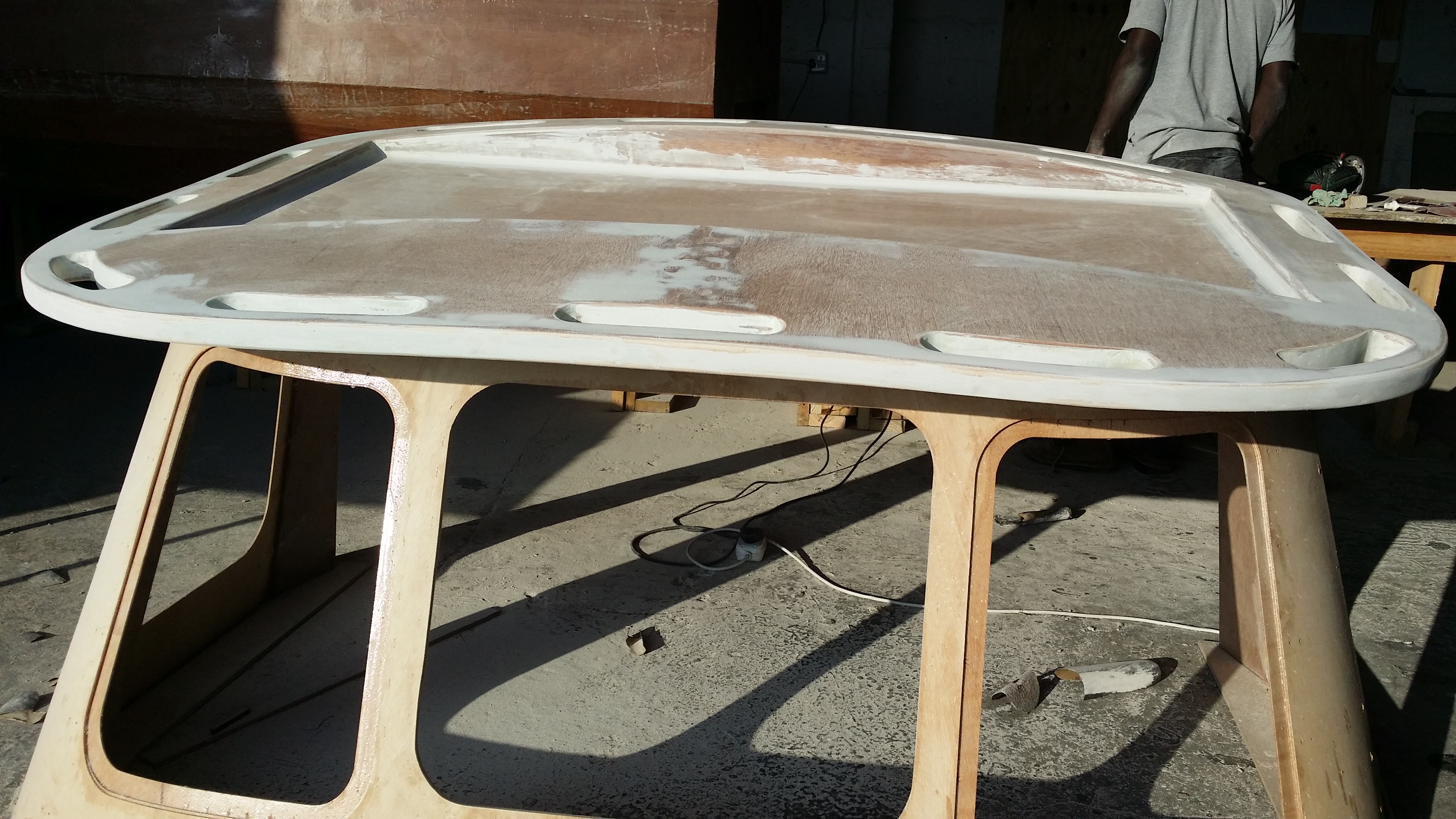
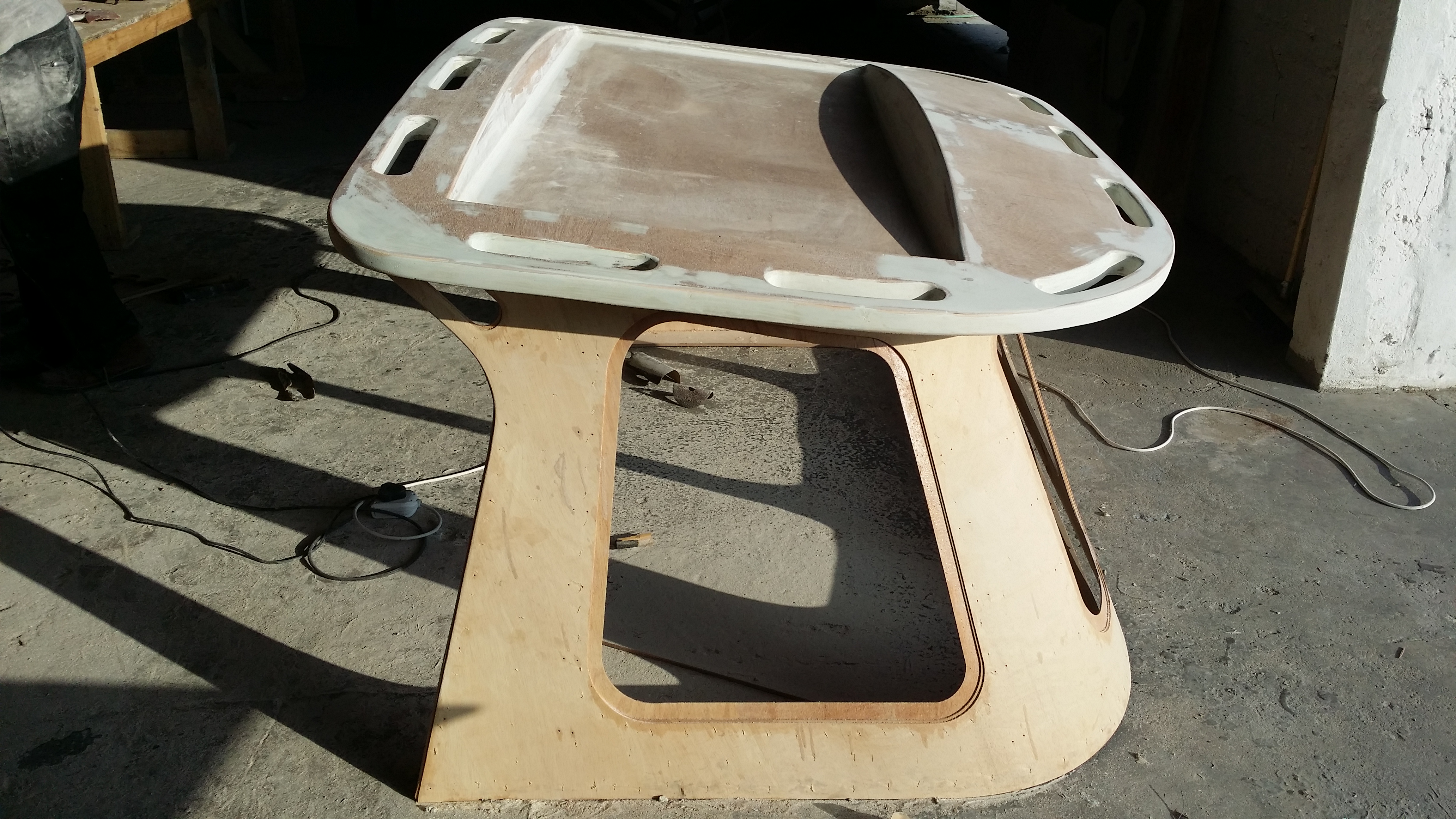
After completion of the basic wood structure the unit had to be prepared for fiberglassing which takes a lot of work making coved corners and preparing the surface structute. Here the inside has been glassed and thecoutside has been glassed and received the first coating of fairing compound. The fairing compound is actually an easily sandable paint which is applied in several layers before the final paint coatings are applied.
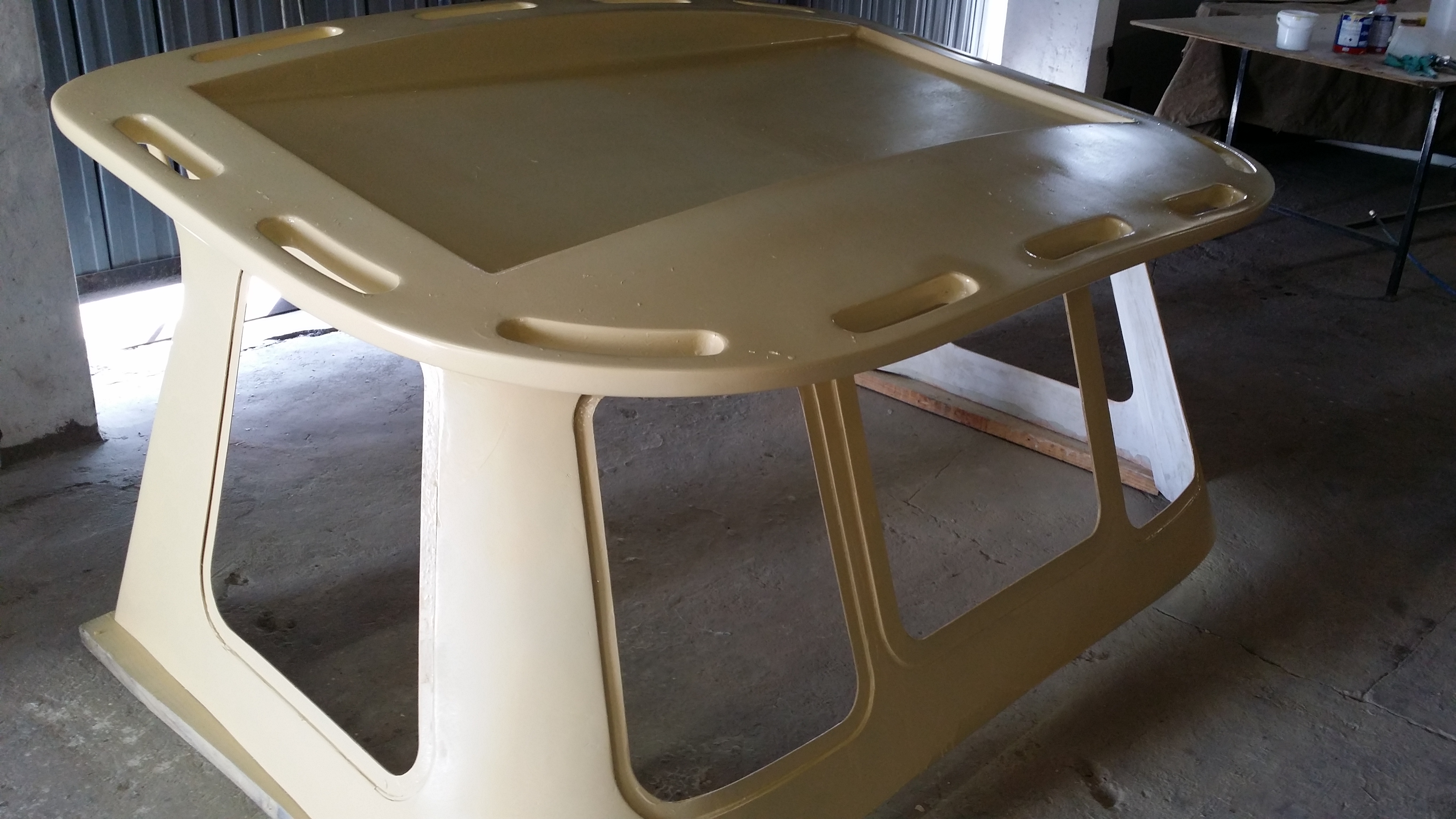
Outside still needs paint but it’s getting close.
A quick trip to downtown Cape Town
A quick trip to down-town Cape Town allowed for a few photos. These photos were all taken on one of the main streets of down-town Cape Town and show a little of what used to be. Glad to see some buildings saved. This is now repeated in the industrial areas where buildings are being converted rather than torn down.
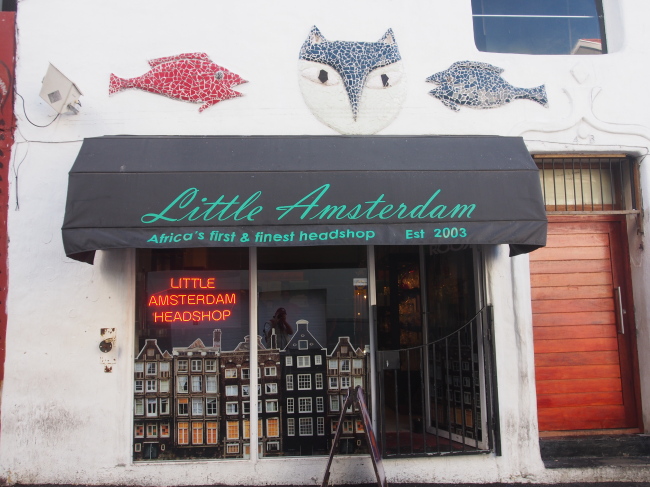
Doesn’t quite have the supplies of Amsterdam but…

Does it make you feel like someone is watching

A great selection of African music

A great bar with over 90 different beers

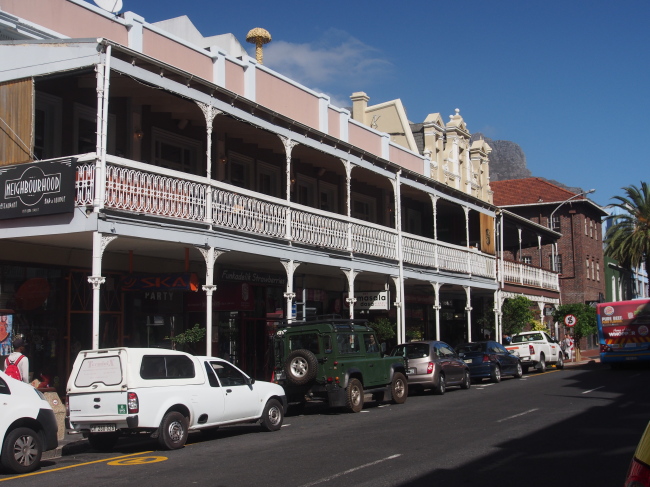
Love the balconies
Meanwhile back at the Marina
Umm, the first major winter season storm. We clocking winds at upwards of 53 knots from the north-west. The outer docking is at a 25 degree list to leeward, boats are rocking around, some boats are chewing away at the docks while others are struggling with lines to limit damage.
It’s all a bit wild. Sage lies in the inner sections of the harbour and is well protected from the brunt of the storm yet fine tuning is needed to keep her well positioned. In a few hours we should see the maximum winds abate and the wind turn more to the west which means williwas screaming down from the 500m cliffs above us. However the seas should abate a little as they move to come off the land. Apparently seas offshore are to rich as high as 15m! No place to be in a small boat so hope everyone is safely in harbour.
The video below is not great but I have saved you from a long viewing keeping it to about 20 seconds!
Dodger – Part 6
Just to make things even more exciting (!!!!) here is a short video
Dodger – Part 5
More pics

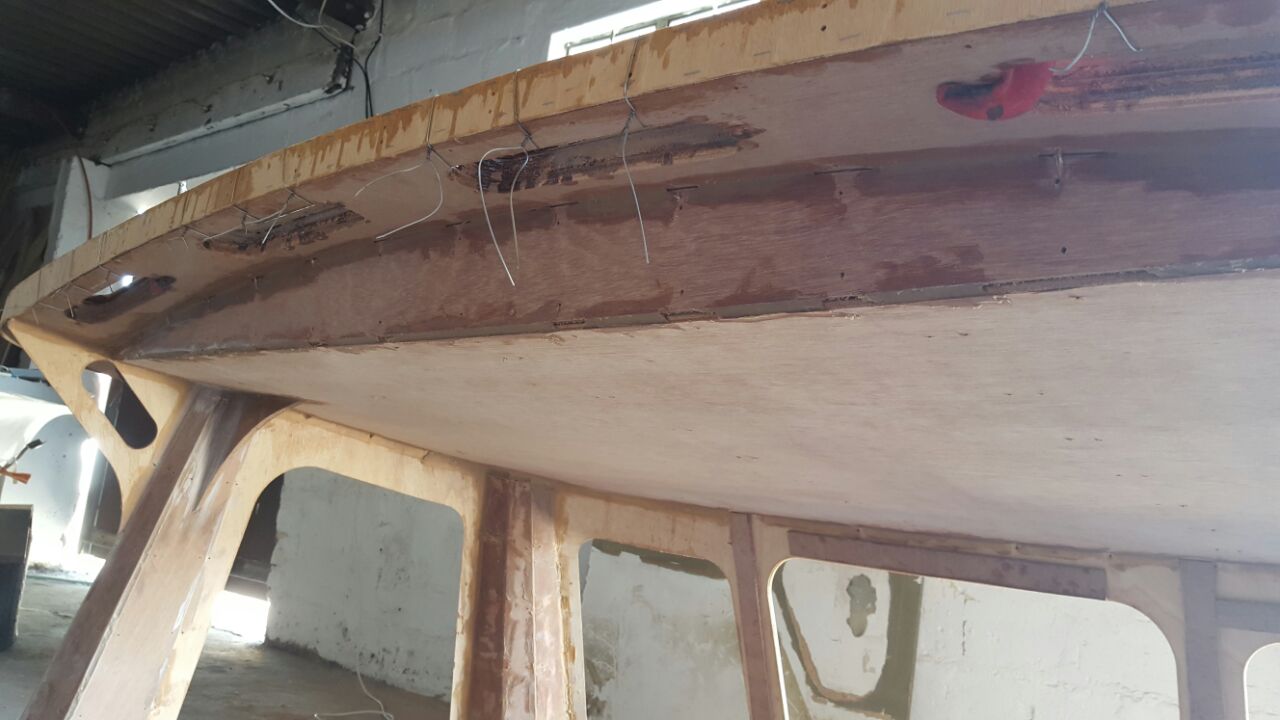


I know lots of boring pictures but I am excited. At least the two below show some good progress. All the glueing/epoxying is mostly done and the fairing compounds are going on. Unfortunately today and tomorrow we are in the midst of a storm with rain and 55 knot winds so work has come to a halt.
Dodger – Part 4
Moving along and looking good.


Have to go to town today to choose paint colour. Seems things are all on schedule which is great.
Dodger Part 3
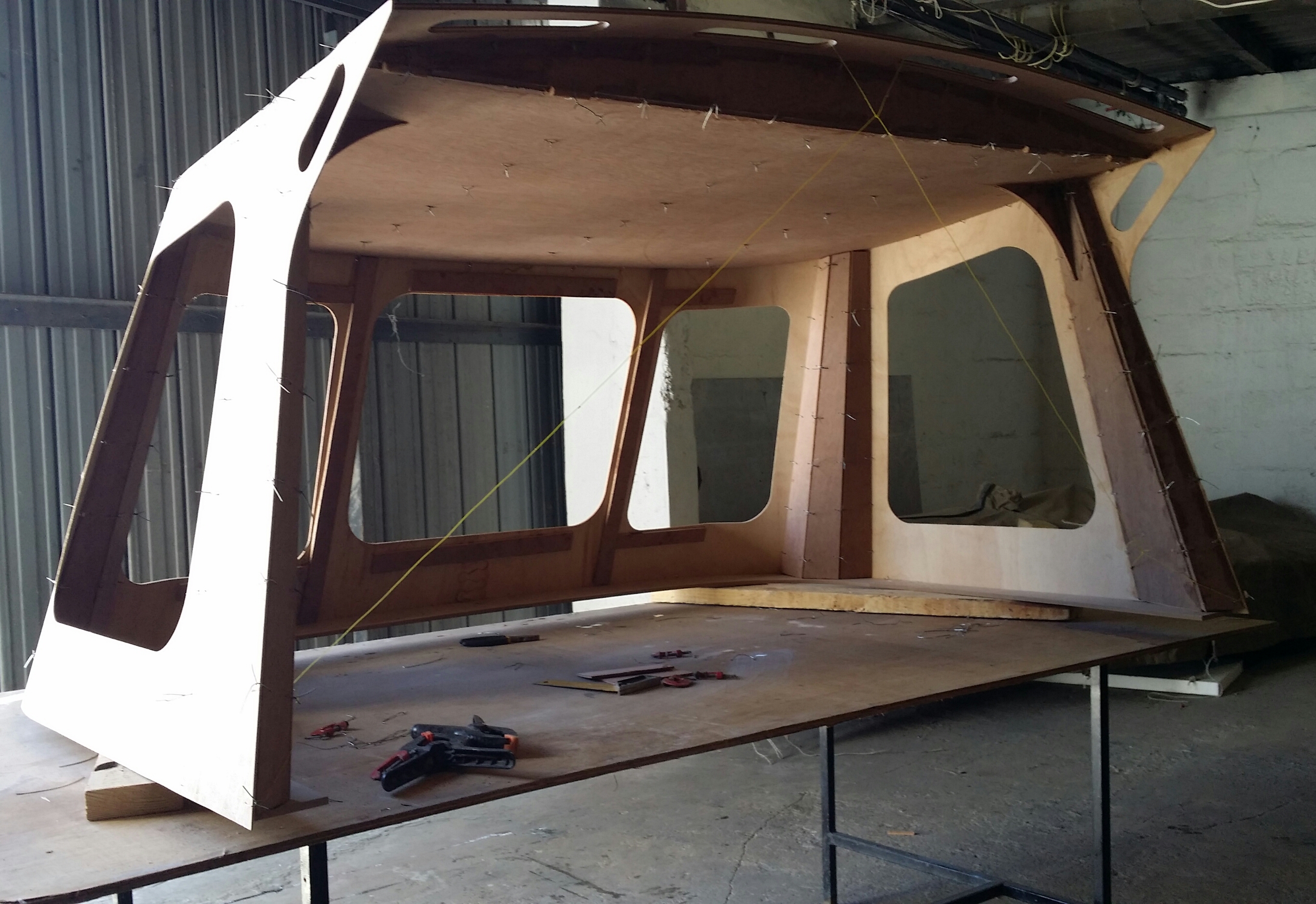
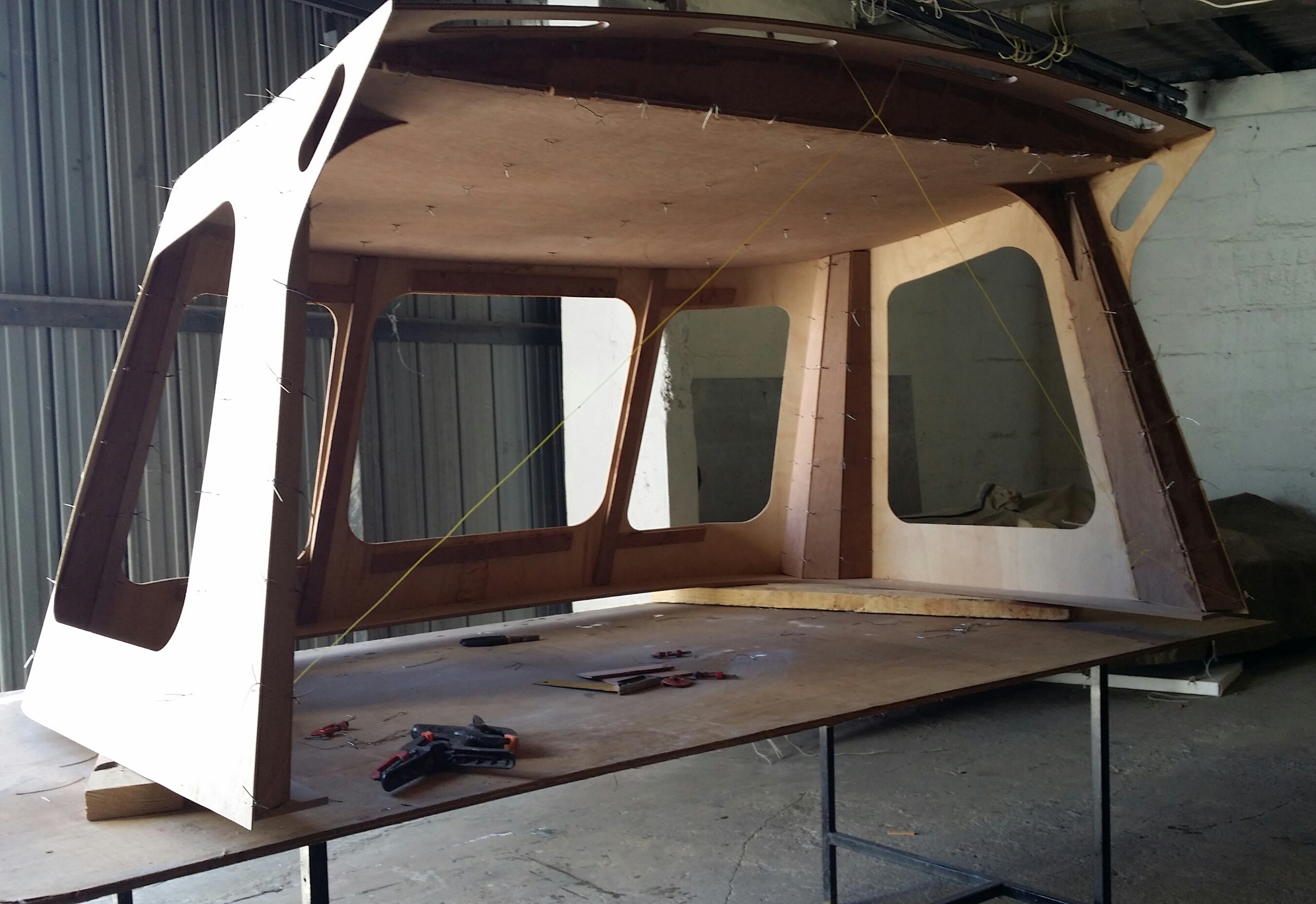
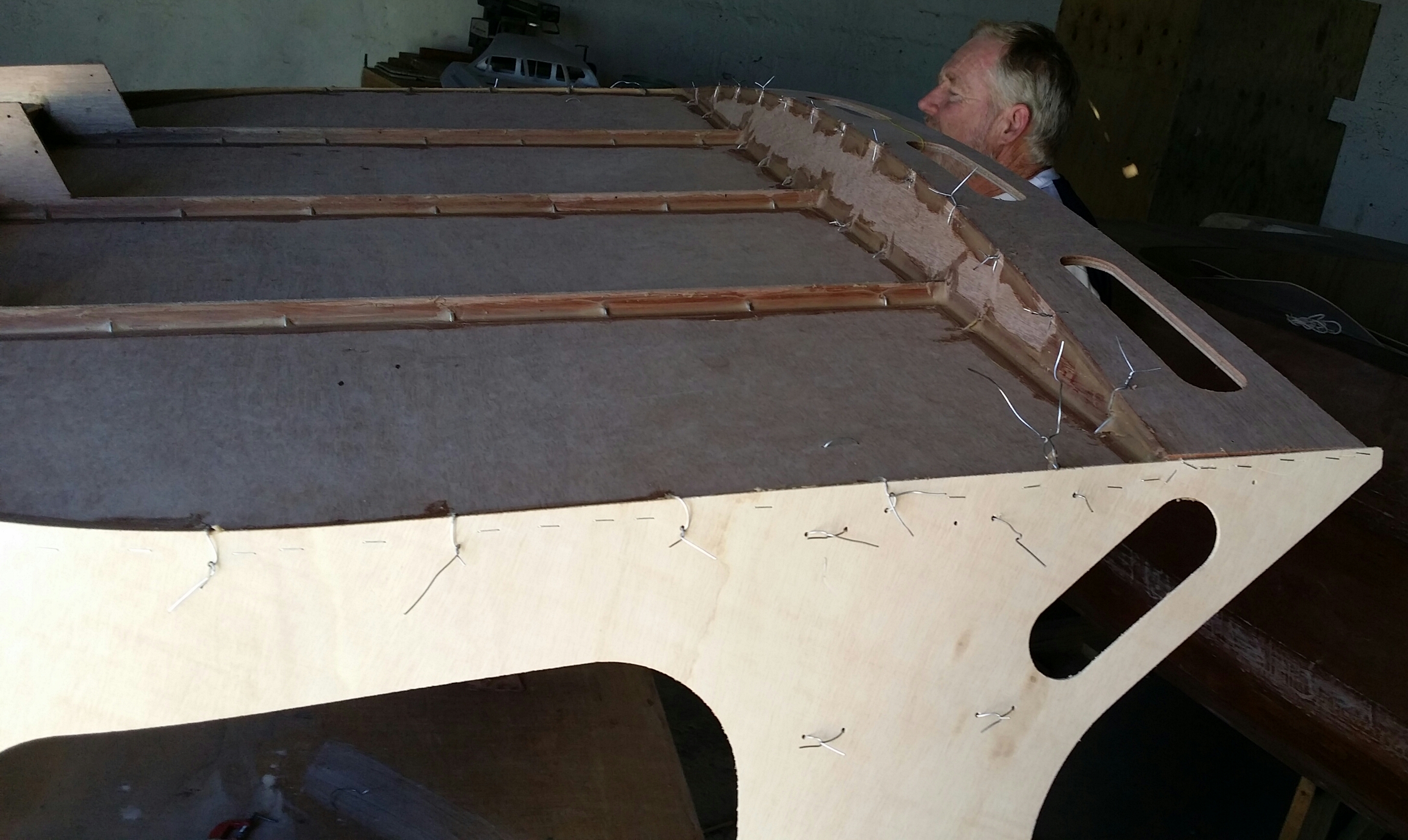
The dodger is assembled in layers buildi g up in most areas to a thickness of 9mm. Each layer is epoxy saturated and eventually one has the basic unit without windows and othe fittings.
Here are a few more pictures:

Dodger – Part 2
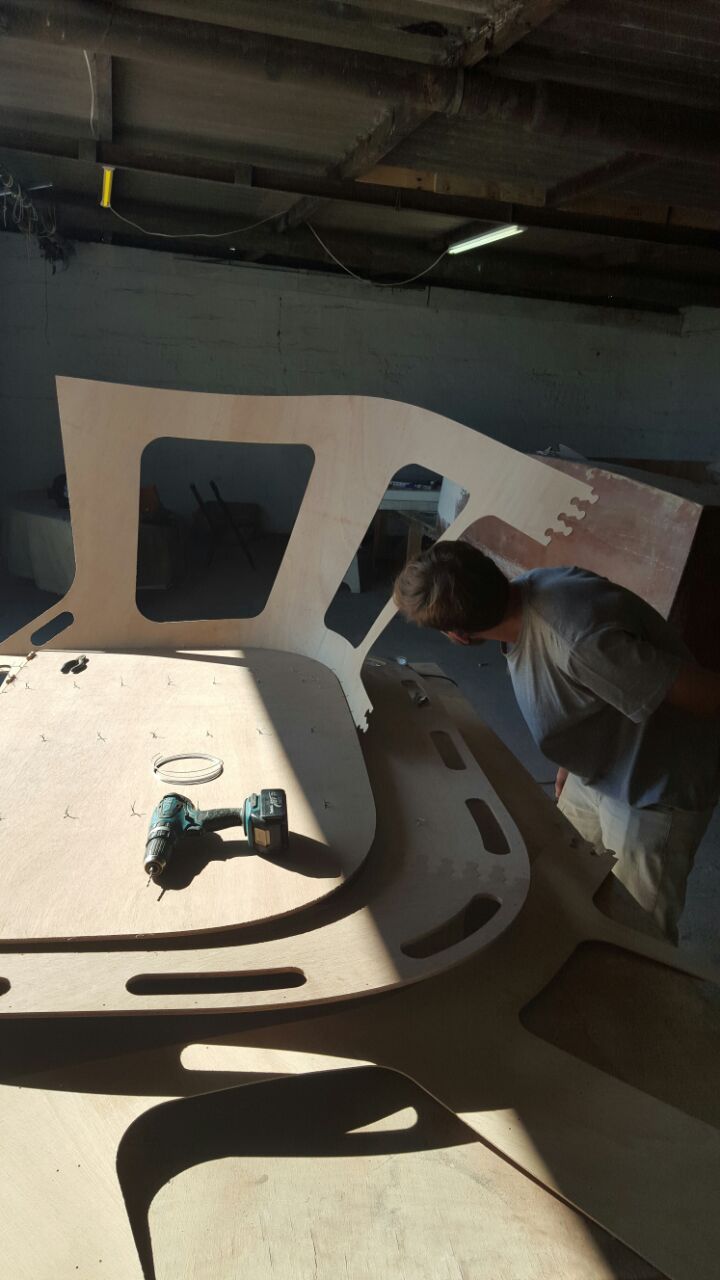
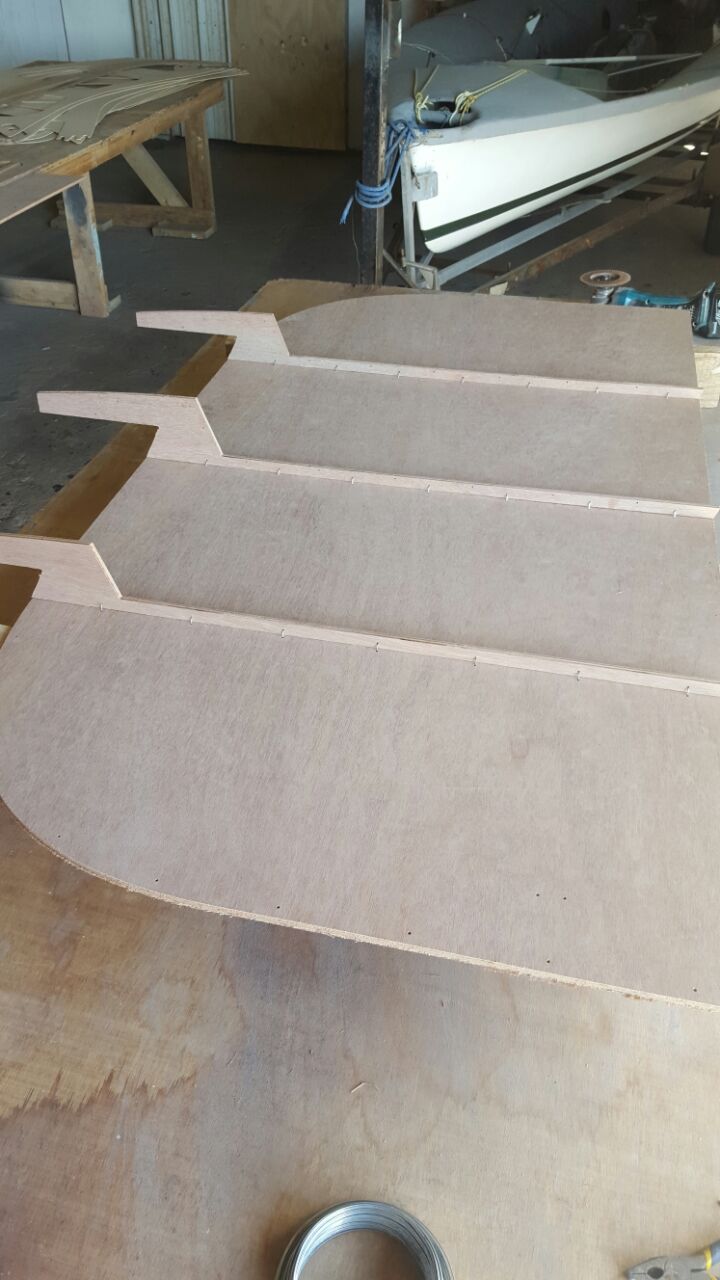
Okay, the materials and cut files were handed over the the CnC cutter late Tuesday. By late Thursday the puzzle pieces were cut and roughly assembled. Here are some photos.


Okay, next steps….
What are we doing?
As mentioned previously we are doing a lot of work on preparing Sage for wherever we end up going in the Atlantic Ocean. We are also enjoying the wine, the food, the hikes, the sea and whatever special events are on offer.
The biggest task though is getting Sage spruced up after a number of years of hard use. One of the projects has me very excited as, for me, it’s a new way in which boats, or boat parts, are constructed.
We are working with a CAD expert and designer here on making a new dodger for Sage. The old dodger is showing its age by leaking in the rain, zippers giving out due to sun damage, staining and wearing of the material and just general wear and tear.
The design process is interesting. It all starts with making very precise measurements and using a Computer Assisted Drawing (CAD) program all the information is put into a computer. From there the design down to the finest detail is worked out. We are able to see the design in all its dimensions and in the finest detail.
The design is finalized with signatures and the cut files then sent to the cutter. We went to purchase the materials yesterday and took the pieces of wood and the plexiglass to the person with the laser cutter. Once the files are put into the laser cutter’s computer and the button pushed that’s it.
The dodger is now ready to assemble.It’s very exciting to see this working and we hope we are very happy with the end result.
Here is the signed off drawing as it went to laser cutter. Note the embedded solar panel under which lies the water collection trough. Not shown is the opening centre window which folds up into the inside.
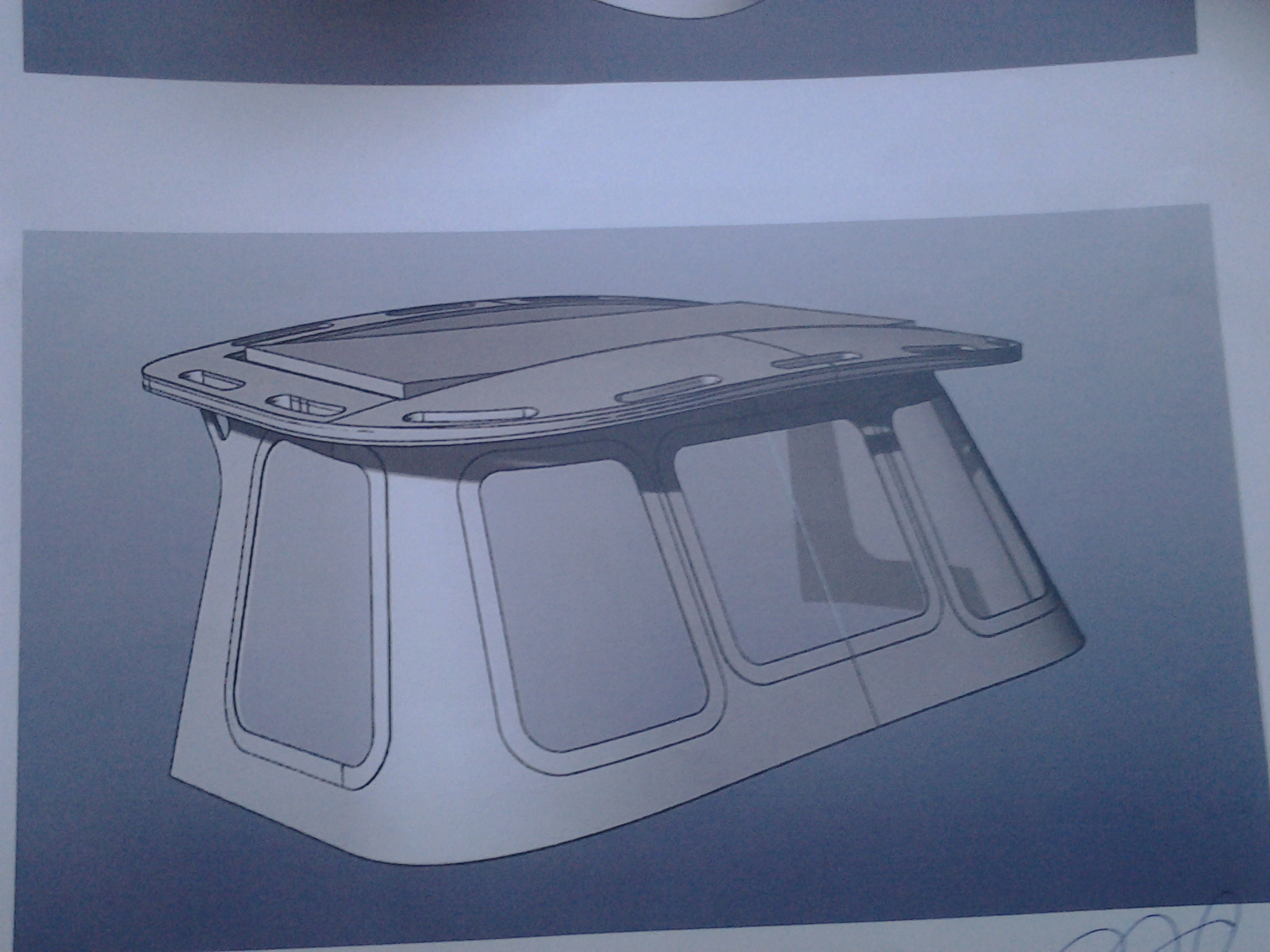
CAD of Sage’s new dodger
 Sage on sail